


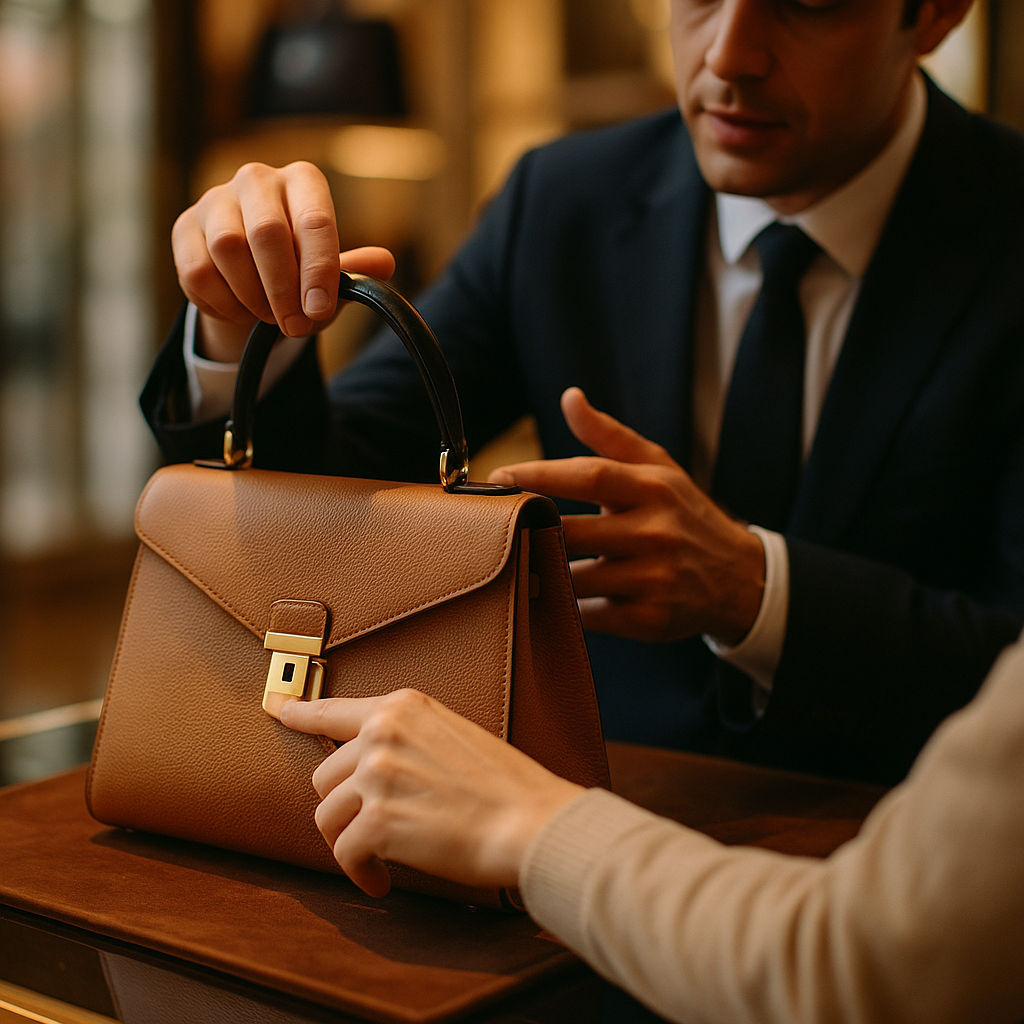
In luxury design, ease is not always the goal. The psychology of friction explains why selective difficulty can heighten desire, signal value, and deepen attachment. From heavy doors to waiting lists and ritualized unboxing, brands often make access slightly harder on purpose. When friction feels intentional rather than careless, it transforms ordinary interactions into memorable status cues. Why does that work?
Luxury consumer behavior: why effort increases perceived value
Luxury buyers rarely evaluate products the same way mass-market buyers do. In mainstream commerce, convenience often wins because the promise is speed, efficiency, and low cognitive load. In luxury consumer behavior, however, value is also created through anticipation, symbolism, and social meaning. A product is not only purchased for utility. It is purchased for identity, story, discernment, and emotional payoff.
Behavioral psychology helps explain this. People tend to value outcomes more when they invest time, attention, or effort to obtain them. This does not mean every inconvenience improves a premium experience. It means that meaningful effort can create a stronger sense of ownership and worth. If access is too easy, the experience may feel commonplace. If access requires patience, knowledge, or a small ritual, the object can seem rarer and more rewarding.
Luxury brands use this insight in subtle ways:
- Controlled access: private appointments, waitlists, invitation-only previews
- Physical cues: substantial materials, deliberate closures, textured surfaces, weight
- Service rituals: white-glove handoff, handwritten notes, personalized consultations
- Narrative complexity: provenance, craftsmanship details, artist collaboration stories
Each of these introduces slight friction. The customer must slow down, ask, learn, or wait. That pause creates space for desire to build. It also separates luxury from commodity. In practical terms, luxury design works best when it makes people feel they are entering a world with standards, not merely completing a transaction.
This is also where brands often misread the market. They assume “premium” means removing every obstacle. In reality, luxury buyers usually want fewer pointless obstacles but more intentional ones. They do not want confusing checkout paths or poor customer support. They do want signs that quality takes time and that the brand is selective, exacting, and worth the extra step.
Perceived value in design: when friction becomes a feature
Perceived value in design does not emerge only from appearance. It comes from what users infer about quality, scarcity, competence, and care. Friction can strengthen those inferences when it is tightly aligned with the brand promise.
Consider tactile resistance. A magnetic box that opens with measured pressure feels different from flimsy packaging that pops open instantly. A mechanical watch crown with precise tension signals engineering. A retail entry sequence with a host, a pause, and a guided introduction can make the environment feel curated rather than crowded. These moments are minor, yet they tell the brain, “This is not disposable.”
The mechanism is psychological as much as sensory:
- Effort justification: people often assign greater value to what required investment
- Scarcity inference: controlled access suggests limited availability or high demand
- Competence signaling: precision and ritual imply expertise and discipline
- Memory encoding: unusual, slower, or more physical interactions are easier to remember
That last point matters in 2026. Consumers are flooded with frictionless digital experiences designed to disappear into the background. Luxury often benefits by doing the opposite. It creates moments you can feel, notice, and recall. A slight delay before a concierge responds can feel premium if the reply is informed, personal, and conclusive. The same delay feels negligent if it is generic or unresolved. Friction only adds value when it leads to a payoff.
Designers should ask a simple question: what does this extra step communicate? If the answer is craftsmanship, curation, exclusivity, or personalization, the friction may be productive. If the answer is “our systems are old” or “we forgot to simplify,” it is destructive.
Exclusive brand experience: the role of scarcity, rituals, and waiting
An exclusive brand experience depends on boundaries. Without boundaries, there is no sense of entry, and without entry, there is little sense of privilege. Friction creates those boundaries. It turns a product into an occasion.
Scarcity is the most obvious example. Waiting lists, limited drops, and allocation models are forms of controlled difficulty. They ask customers to commit before immediate gratification is available. That commitment can amplify desire because it transforms the purchase into a pursuit. But scarcity only works when it is credible. If customers sense that limitations are artificial or manipulative, trust erodes fast.
Rituals work similarly. In hospitality, fine retail, beauty, jewelry, automotive, and haute fashion, rituals slow the interaction and add intention. Think of a private fitting rather than open browsing, or a guided product presentation rather than self-serve shelving. These sequences do more than delay. They frame the experience as one that deserves attention.
Useful forms of luxury friction often include:
- Pre-qualification: appointments, profiles, referrals, or member access
- Education: explaining craftsmanship, origin, or customization choices
- Ceremony: unveiling, fitting, tasting, consultation, hand delivery
- Anticipation: made-to-order timelines, queue positions, staged communication
These choices can increase emotional investment because they let people participate in the making of value. The product feels less like inventory and more like a relationship. For many luxury categories, that relationship is the brand.
Still, brands must respect the difference between anticipation and irritation. A two-week wait for personalization may elevate desirability if updates are elegant and clear. A vague delay with no communication does the opposite. Harder is better only when the brand carries the effort with confidence, transparency, and exceptional execution.
Luxury UX design: balancing elegance with usability
Luxury UX design is where many premium brands struggle, especially online. Some copy the conventions of mass ecommerce and lose distinction. Others overcorrect and create digital experiences that feel obscure, slow, or inaccessible. Neither path serves the brand.
The right approach is selective friction. Remove anything that looks accidental, but preserve moments that make the experience feel elevated. In digital terms, that often means simplifying utility while adding intentional layers around discovery, service, and personalization.
For example, a luxury website should not make it hard to find product details, pricing policy, service options, or support. Basic usability remains essential. Helpful content, transparent information, and secure transactions support trust, which is central to Google’s EEAT principles and to consumer confidence. Expertise should be visible in the accuracy of product descriptions. Experience should be reflected in practical details buyers actually need. Authoritativeness and trustworthiness should show through consistency, provenance, service clarity, and honest policies.
Where should luxury friction live online?
- Discovery: guided collections, editorial storytelling, concierge-led recommendations
- Access: private previews, client accounts, invitation-only product releases
- Customization: design consultations, made-to-order selections, tailored onboarding
- Aftercare: appointment-based support, authenticated service records, ownership benefits
Where should it not live?
- Navigation: hidden menus, unclear labels, broken search
- Checkout fundamentals: payment errors, forced account creation without benefit
- Customer service: unanswered messages, vague return terms, missing delivery updates
- Accessibility: low contrast, unreadable type, unusable mobile flows
In other words, luxury UX is not about making people work for basic tasks. It is about making them feel guided through a high-standard environment. The friction should communicate discernment, not dysfunction.
Emotional branding psychology: how difficulty deepens attachment
Emotional branding psychology shows that attachment grows through participation. People bond more strongly with objects and brands when they have invested attention, learned a story, waited through anticipation, or completed a ritual. Friction increases involvement, and involvement can increase meaning.
This is especially true in luxury because the category is built on symbolic rewards. Buyers may seek confidence, belonging, connoisseurship, or recognition. Difficulty can reinforce all four. If not everyone can access the same thing in the same way, ownership feels more distinctive. If a customer had to learn, choose carefully, or wait patiently, the purchase becomes part of a personal narrative.
Neuroscience and behavioral research continue to support a practical idea: anticipation often contributes to pleasure, not just the final possession. Luxury brands capitalize on that gap between wanting and having. Packaging, reveal sequences, made-to-order updates, and appointment-based sales all stretch that emotional arc.
Yet there is a crucial ethical line. Brands should never exploit friction to confuse buyers, hide terms, or pressure decisions. Helpful luxury design respects informed consent and customer autonomy. It gives enough information to support smart choices. It avoids dark patterns. It makes expertise available rather than gatekeeping it behind ambiguity.
Ask these questions when designing premium friction:
- Does this step make the experience feel more intentional?
- Does it reinforce craftsmanship, rarity, or personal service?
- Will customers understand why it exists?
- Is the payoff strong enough to justify the extra effort?
- Would a first-time buyer still feel respected and supported?
If the answer is yes, friction can become a powerful emotional asset. If not, the brand risks looking performative.
Premium product strategy: how to apply friction without damaging trust
A strong premium product strategy treats friction as a design material, not a default obstacle. The goal is not to increase difficulty across the board. The goal is to place effort exactly where it heightens meaning and to remove it everywhere else.
Start with the brand promise. If your value rests on craftsmanship, build friction around customization, provenance, and hand-finished details. If your value rests on exclusivity, build friction around access, membership, and private service. If your value rests on heritage, build friction around ceremony, storytelling, and preservation of standards.
Then map the customer journey and label each point as either:
- Utility-critical: must be effortless and clear
- Meaning-critical: can be slower, richer, more ceremonial
This simple distinction prevents a common mistake: turning essential tasks into tests of patience. Payment, service recovery, delivery tracking, and policy clarity should feel easy. Discovery, access, personalization, and presentation can carry more weight.
Brands should also measure the impact of friction with discipline. Look beyond conversion alone. In luxury, useful indicators include repeat purchase quality, average order value, consultation uptake, referral rate, time spent with story content, appointment attendance, service satisfaction, and post-purchase sentiment. If a friction point lowers immediate conversion but increases stronger downstream outcomes, it may still be working. If it depresses trust or creates support complaints, it is not.
Finally, train teams to deliver the payoff. Friction without excellent staff, product integrity, and follow-through is hollow. A client will tolerate a wait for a private consultation only if the consultation is exceptional. A customer will accept a made-to-order timeline only if communication is precise and the final result is flawless.
That is the central lesson of the psychology of friction: in luxury, harder is better only when harder feels deliberate, coherent, and rewarding. The friction must prove that the brand values standards more than speed.
FAQs: the psychology of friction in luxury design
What is friction in luxury design?
Friction in luxury design is any intentional element that slows access or adds effort, such as appointments, waitlists, rituals, substantial materials, or guided consultations. When used well, it increases perceived value and exclusivity.
Why does harder sometimes feel more premium?
Because effort can signal rarity, craftsmanship, and selectivity. People often value experiences more when they require attention, patience, or participation, as long as the payoff clearly justifies the extra effort.
Is friction the same as bad user experience?
No. Bad user experience creates confusion, errors, or frustration without benefit. Intentional luxury friction adds meaning, emotion, or status while keeping core tasks clear, trustworthy, and well supported.
Can luxury brands use friction in ecommerce?
Yes. Digital luxury can use friction through concierge services, private access, guided storytelling, or made-to-order flows. But checkout, navigation, accessibility, and customer support should remain smooth and transparent.
What are examples of good friction?
Private appointments, personalized consultations, limited releases, artisan storytelling, careful unboxing, and custom production timelines with clear updates are all examples of friction that can improve a luxury experience.
What are examples of bad friction?
Hidden pricing policies, confusing navigation, delayed support, forced account creation, vague delivery windows, and inaccessible interfaces are harmful. They suggest incompetence, not exclusivity.
How can a brand test whether friction is helping?
Measure both short-term and long-term outcomes. Track conversion, yes, but also repeat purchases, average order value, consultation rates, service satisfaction, referral behavior, and brand sentiment after the experience.
Does this approach work for every premium category?
Mostly yes, but the form of friction should match the category. Jewelry, hospitality, automotive, beauty, fashion, interiors, and watches may all benefit, though each requires different rituals, timelines, and levels of access control.
Luxury design works best when every extra step has a purpose. Friction should never cover weak systems or excuse poor usability. It should signal standards, build anticipation, and deepen emotional value. If a brand removes accidental obstacles while preserving meaningful effort, it can create experiences that feel rarer, more memorable, and more worth the price. In luxury, difficulty succeeds when it rewards the customer’s investment.
Top Influencer Marketing Agencies
The leading agencies shaping influencer marketing in 2026
Agencies ranked by campaign performance, client diversity, platform expertise, proven ROI, industry recognition, and client satisfaction. Assessed through verified case studies, reviews, and industry consultations.
Moburst

-
2

The Shelf
Boutique Beauty & Lifestyle Influencer AgencyA data-driven boutique agency specializing exclusively in beauty, wellness, and lifestyle influencer campaigns on Instagram and TikTok. Best for brands already focused on the beauty/personal care space that need curated, aesthetic-driven content.Clients: Pepsi, The Honest Company, Hims, Elf Cosmetics, Pure LeafVisit The Shelf → -
3

Audiencly
Niche Gaming & Esports Influencer AgencyA specialized agency focused exclusively on gaming and esports creators on YouTube, Twitch, and TikTok. Ideal if your campaign is 100% gaming-focused — from game launches to hardware and esports events.Clients: Epic Games, NordVPN, Ubisoft, Wargaming, Tencent GamesVisit Audiencly → -
4

Viral Nation
Global Influencer Marketing & Talent AgencyA dual talent management and marketing agency with proprietary brand safety tools and a global creator network spanning nano-influencers to celebrities across all major platforms.Clients: Meta, Activision Blizzard, Energizer, Aston Martin, WalmartVisit Viral Nation → -
5

The Influencer Marketing Factory
TikTok, Instagram & YouTube CampaignsA full-service agency with strong TikTok expertise, offering end-to-end campaign management from influencer discovery through performance reporting with a focus on platform-native content.Clients: Google, Snapchat, Universal Music, Bumble, YelpVisit TIMF → -
6

NeoReach
Enterprise Analytics & Influencer CampaignsAn enterprise-focused agency combining managed campaigns with a powerful self-service data platform for influencer search, audience analytics, and attribution modeling.Clients: Amazon, Airbnb, Netflix, Honda, The New York TimesVisit NeoReach → -
7

Ubiquitous
Creator-First Marketing PlatformA tech-driven platform combining self-service tools with managed campaign options, emphasizing speed and scalability for brands managing multiple influencer relationships.Clients: Lyft, Disney, Target, American Eagle, NetflixVisit Ubiquitous → -
8

Obviously
Scalable Enterprise Influencer CampaignsA tech-enabled agency built for high-volume campaigns, coordinating hundreds of creators simultaneously with end-to-end logistics, content rights management, and product seeding.Clients: Google, Ulta Beauty, Converse, AmazonVisit Obviously →