


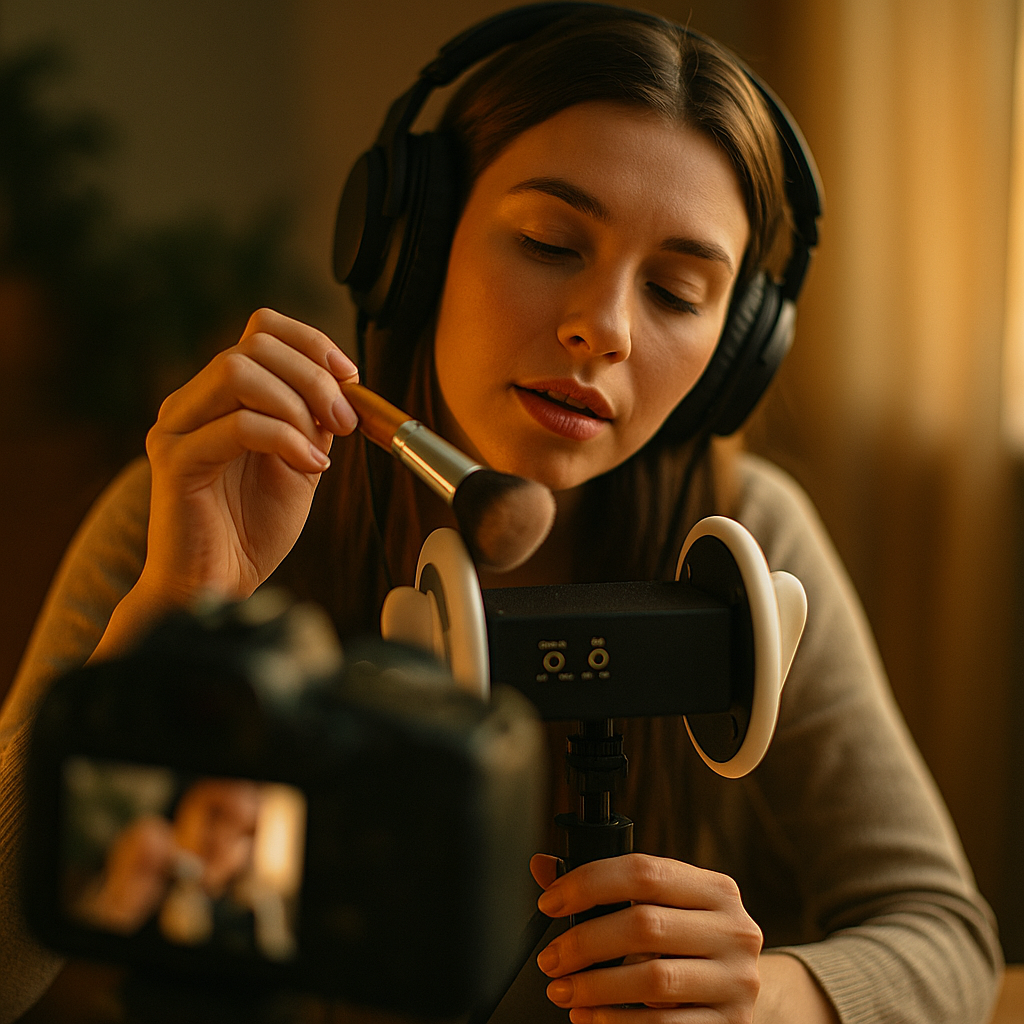
The Quiet Content Revolution Algorithms Can’t Stop Rewarding
ASMR and tactile demonstration videos now generate save rates 3.2x higher than standard product content on Instagram and TikTok, according to internal benchmark data shared by several agency holding groups in early 2026. Haptic and sensory content formats — think close-up texture shots, whispered unboxings, slow-motion product pours — have moved from niche curiosity to serious performance lever. Brands in beauty, food, and consumer electronics are rewriting creator briefs around these formats, and the results are reshaping how we think about completion rates, algorithmic distribution, and downstream conversion.
Why Saves and Completions Matter More Than Likes Now
Let’s get the strategic context right. Platform algorithms — TikTok’s recommendation engine, Instagram’s Explore ranking, YouTube Shorts’ suggestion logic — have steadily shifted weighting toward save rate and completion rate as primary distribution signals. A like is cheap. A save signals intent. A full watch signals captivation.
Sensory content is disproportionately good at both.
Consider the mechanics: ASMR and tactile content creates what psychologists call “attentional capture” through novel auditory and visual stimuli. The viewer doesn’t just watch — they feel compelled to keep watching. That crinkle of packaging, the slow drag of a finger across a matte lipstick surface, the satisfying click of a magnetic phone mount snapping into place. These aren’t gimmicks. They’re neurological hooks that suppress the scroll impulse.
Sensory-first content doesn’t just perform differently — it performs on the exact signals that AI recommendation systems now prioritize. High completion feeds the algorithm. High saves extend shelf life. The compounding effect is what makes these formats disproportionately efficient.
When you combine high completion with high save rates, you get what platform engineers call a “quality flywheel” — the algorithm surfaces the content more aggressively, which generates more completions and saves, which triggers further distribution. This is why a well-executed ASMR unboxing from a 30K-follower creator can outperform a polished studio spot from a brand account with 2M followers. The format itself carries algorithmic advantage. For more on how formats interact with recommendation systems, see our guide on vertical video formats for algorithm ranking.
What Forward-Thinking Brands Are Actually Briefing
The shift isn’t just “tell creators to whisper.” Brands running effective sensory campaigns are building highly specific briefs that prescribe audio capture quality, lighting angles, pacing cadence, and even surface textures to include in the frame. Here’s what we’re seeing across the three verticals leading this movement:
Beauty. Brands like Glossier, Rhode, and several K-beauty labels are briefing creators to shoot macro-lens texture content — the squeeze of a serum dropper, the first swipe of a cream across bare skin, the snap of a compact closing. The brief typically specifies: no background music, external microphone required, natural lighting only, minimum 80% close-up framing. Rhode’s creator campaigns featuring slow-application ASMR content reportedly drove a 47% average completion rate on TikTok Reels — roughly double the beauty category benchmark.
Food and beverage. Think beyond mukbang. Brands like Liquid Death, Graza olive oil, and artisan chocolate companies are briefing “sound-first” content where the audio of pouring, sizzling, crunching, or snapping is the hero element. One Graza campaign brief instructed creators to film the pour from bottle to pan in a single unbroken shot, capturing the oil’s viscosity and the sizzle of contact with a hot surface. No voiceover. No text overlay until the final two seconds. The constraint is the format.
Consumer electronics. This is where tactile demonstration shines. Brands like Nothing, Samsung, and Anker brief creators around the feel of their products — the click of a keyboard switch, the heft of a device being picked up, the magnetic alignment of a charger. Nothing’s Phone (3) launch included creator briefs specifying binaural audio capture of the Glyph interface sounds, which generated some of the highest-performing organic content of the campaign.
The common thread across all three verticals: the brief constrains the creator toward sensory purity rather than narrative complexity. This is a significant departure from traditional influencer briefs that prioritize talking points and brand messaging hierarchies. If you’re rethinking brief architecture more broadly, our resource on algorithm-proof production briefs covers the structural principles.
The Algorithmic Mechanics: Why AI Systems Favor Sensory Content
This isn’t speculation. There are clear, measurable reasons why sensory content gets preferential algorithmic treatment.
Completion rate correlation. TikTok’s recommendation system, as detailed in the platform’s own transparency documentation, heavily weights video completion — particularly full loops. Sensory content’s hypnotic quality drives completion. A viewer might not consciously choose to watch a 45-second lipstick application ASMR video, but the attentional capture keeps them through to the end.
Save behavior signaling. Instagram’s ranking signals treat saves as a high-value engagement action. Sensory content gets saved for two reasons: re-watching (the experience itself is pleasurable to repeat) and aspiration (the product becomes desirable through sensory association). Both behaviors signal to the algorithm that the content has lasting value, not just momentary appeal.
Low negative-signal rates. Sensory content rarely gets “Not Interested” flags, reported, or scrolled past quickly. The absence of negative signals is just as important as the presence of positive ones. When AI classifiers evaluate content quality, a video with high completion, high saves, and near-zero negative engagement hits every threshold for aggressive distribution.
Audio fingerprint differentiation. This is the underappreciated factor. Platform AI systems analyze audio tracks to categorize content. Sensory-first content with natural, non-music audio creates unique audio fingerprints that don’t cluster with oversaturated content categories. The algorithm treats it as novel, which triggers exploratory distribution — showing it to users outside the creator’s existing audience. For more on how to create content that avoids suppression, see our piece on formats that beat AI suppression filters.
Briefing for Sensory: The Operational Details
If you’re convinced the format has legs, the execution challenge is in the brief. Most creator briefs aren’t built for this. They’re structured around messaging, not sensation. Here’s how to adapt.
- Mandate external audio capture. Built-in phone microphones won’t cut it. Specify a clip-on or shotgun mic. The audio quality difference is the difference between a scroll-past and a save.
- Prescribe pacing, not scripts. Instead of talking points, give creators a shot list with timing cues. “0-3 seconds: close-up of sealed packaging. 3-8 seconds: slow tear of the seal, capturing the sound. 8-15 seconds: reveal of the product surface.”
- Ban background music. This is non-negotiable for true sensory content. Music competes with the tactile audio that makes the format work. If creators push back, compromise on ambient sound — but never a trending audio track.
- Require macro-lens or close-up framing. At least 70% of the video should be shot within 6 inches of the product. Wide shots break the sensory immersion.
- Specify surface textures in the scene. Marble countertops, linen fabric, wood grain — these contextual textures amplify the tactile impression. Brief the background, not just the product.
For brands running multi-format shoots, this type of brief integrates well with a modular production approach. Our template for multi-format creator production provides a framework for capturing sensory content alongside standard assets in a single session.
The most common mistake brands make with sensory content briefs: treating them as a variant of a standard product review brief. They’re not. Sensory content is experience-first, information-second. The product’s features should be felt, not explained.
Measuring What Matters
Standard influencer KPIs need adjustment for sensory formats. Here’s the measurement framework that actually tells you if it’s working:
Save rate as primary KPI. Benchmark against your category average. Beauty typically sees 2-4% save rates on standard content; sensory content should target 6-10%. Track this at the individual asset level.
Completion rate by quartile. Don’t just measure “completed.” Use TikTok’s analytics and Instagram’s retention curves to see where drop-off occurs. Sensory content should maintain above 70% retention through the 75% mark.
Organic reach multiplier. Compare the ratio of views-to-followers for sensory content versus standard creator content from the same creator. A multiplier above 5x confirms algorithmic amplification is working.
Downstream conversion with assisted attribution. Sensory content often doesn’t convert on first touch. It builds desire. Use save-to-purchase windows of 7-14 days and track with Meta’s attribution tools or post-purchase surveys.
If you’re also running shoppable content alongside sensory formats, our guide on shoppable UGC amplification can help you architect the full funnel.
Your Next Move
Pick one product in your portfolio with strong tactile or auditory characteristics. Brief three creators using the sensory constraints outlined above — external mic, no music, close-up framing, pacing-based shot lists. Run it against your standard brief with the same product. Measure save rate, completion rate, and organic reach multiplier. The data will make the case for scaling.
FAQs
What are haptic and sensory content formats in influencer marketing?
Haptic and sensory content formats are creator-produced videos that prioritize tactile, auditory, and visual sensation over traditional narration or product messaging. They include ASMR content, macro-lens texture demonstrations, and sound-first product interactions designed to create an immersive sensory experience that drives higher engagement signals like saves and full video completions.
Why do AI recommendation algorithms favor sensory-first content?
AI recommendation algorithms favor sensory-first content because it generates high completion rates, elevated save rates, and minimal negative engagement signals — all of which are heavily weighted distribution factors on TikTok, Instagram, and YouTube Shorts. Additionally, the unique audio fingerprints of natural, non-music sound create novelty signals that trigger exploratory distribution to new audiences.
Which industries benefit most from ASMR and tactile creator campaigns?
Beauty, food and beverage, and consumer electronics are the three verticals seeing the strongest results from sensory content campaigns. These categories feature products with inherently strong tactile and auditory properties — textures, sounds, and visual transformations — that translate naturally into compelling sensory-first video content.
How should brands brief creators for sensory content?
Brands should brief creators with pacing-based shot lists instead of scripts, mandate external microphone usage for high-quality audio capture, ban background music, require close-up or macro-lens framing for at least 70% of the video, and specify contextual surface textures in the scene. The brief should prioritize sensory experience over brand messaging.
What KPIs should brands track for sensory content campaigns?
The primary KPIs for sensory content campaigns are save rate, video completion rate by quartile, organic reach multiplier (views-to-follower ratio), and downstream conversion using assisted attribution with 7-14 day save-to-purchase windows. Standard engagement metrics like likes are less relevant for evaluating sensory format performance.
Top Influencer Marketing Agencies
The leading agencies shaping influencer marketing in 2026
Agencies ranked by campaign performance, client diversity, platform expertise, proven ROI, industry recognition, and client satisfaction. Assessed through verified case studies, reviews, and industry consultations.
Moburst

-
2

The Shelf
Boutique Beauty & Lifestyle Influencer AgencyA data-driven boutique agency specializing exclusively in beauty, wellness, and lifestyle influencer campaigns on Instagram and TikTok. Best for brands already focused on the beauty/personal care space that need curated, aesthetic-driven content.Clients: Pepsi, The Honest Company, Hims, Elf Cosmetics, Pure LeafVisit The Shelf → -
3

Audiencly
Niche Gaming & Esports Influencer AgencyA specialized agency focused exclusively on gaming and esports creators on YouTube, Twitch, and TikTok. Ideal if your campaign is 100% gaming-focused — from game launches to hardware and esports events.Clients: Epic Games, NordVPN, Ubisoft, Wargaming, Tencent GamesVisit Audiencly → -
4

Viral Nation
Global Influencer Marketing & Talent AgencyA dual talent management and marketing agency with proprietary brand safety tools and a global creator network spanning nano-influencers to celebrities across all major platforms.Clients: Meta, Activision Blizzard, Energizer, Aston Martin, WalmartVisit Viral Nation → -
5

The Influencer Marketing Factory
TikTok, Instagram & YouTube CampaignsA full-service agency with strong TikTok expertise, offering end-to-end campaign management from influencer discovery through performance reporting with a focus on platform-native content.Clients: Google, Snapchat, Universal Music, Bumble, YelpVisit TIMF → -
6

NeoReach
Enterprise Analytics & Influencer CampaignsAn enterprise-focused agency combining managed campaigns with a powerful self-service data platform for influencer search, audience analytics, and attribution modeling.Clients: Amazon, Airbnb, Netflix, Honda, The New York TimesVisit NeoReach → -
7

Ubiquitous
Creator-First Marketing PlatformA tech-driven platform combining self-service tools with managed campaign options, emphasizing speed and scalability for brands managing multiple influencer relationships.Clients: Lyft, Disney, Target, American Eagle, NetflixVisit Ubiquitous → -
8

Obviously
Scalable Enterprise Influencer CampaignsA tech-enabled agency built for high-volume campaigns, coordinating hundreds of creators simultaneously with end-to-end logistics, content rights management, and product seeding.Clients: Google, Ulta Beauty, Converse, AmazonVisit Obviously →