


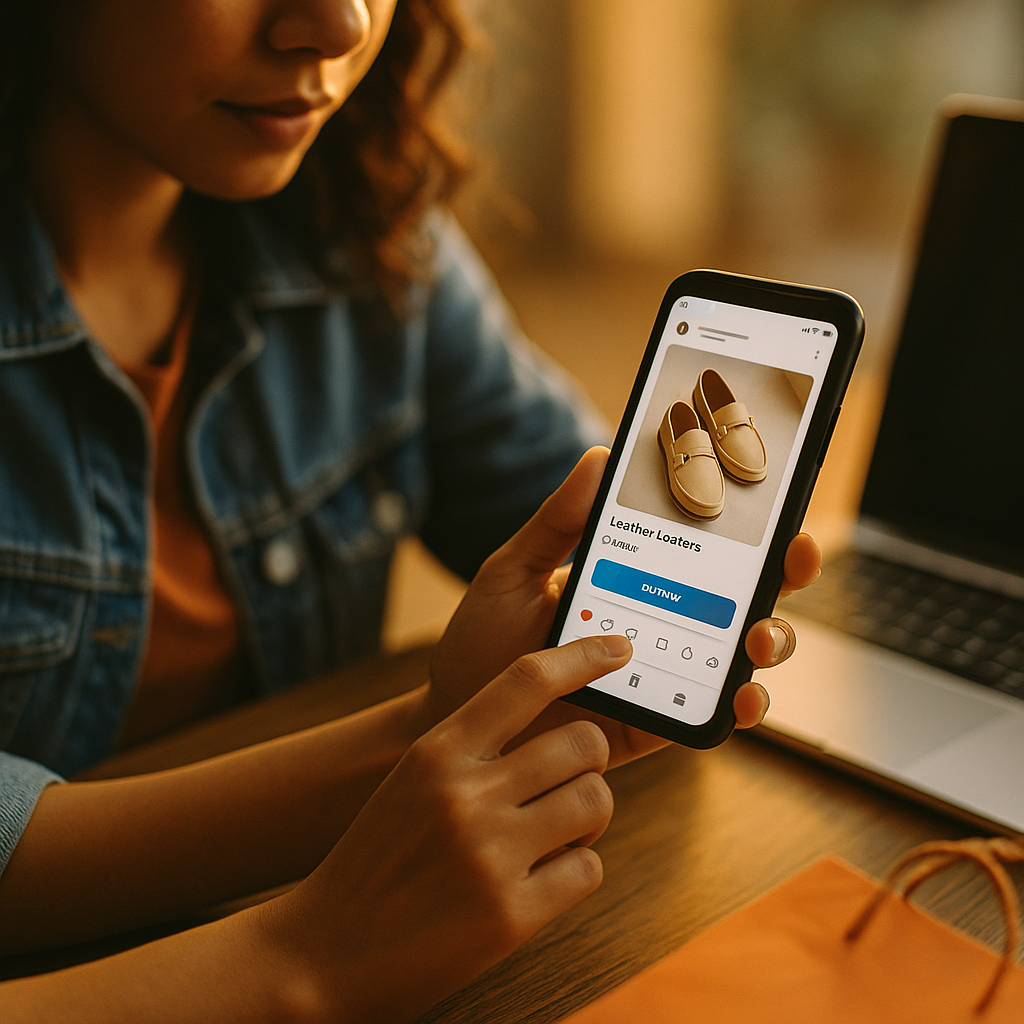
Social commerce has changed online shopping from a passive browse into a native, frictionless purchase journey. In 2026, users expect to discover products, evaluate proof, and check out without leaving their favorite platforms. This shift has redefined how brands earn attention and revenue. So how did social commerce move from inspiration to full in app buy?
Social commerce trends reshaping discovery
The earliest phase of social commerce focused on discovery. Brands posted product images, creators shared recommendations, and users clicked out to external stores. That model introduced purchase intent, but it also created friction. Every extra tap increased the chance that a user would abandon the journey.
Today, social commerce trends show a different reality. Discovery still matters, but platforms now design entire ecosystems around keeping users engaged through interest, evaluation, and purchase. Algorithms surface personalized products based on behavior, not just declared interests. A user who watches beauty tutorials, saves skincare routines, or comments on fashion posts is quickly matched with shoppable content aligned to that behavior.
This evolution happened because platforms learned a core lesson: attention is valuable, but conversion inside the platform is more valuable. As a result, social feeds now combine entertainment, community signals, and shopping mechanics in one stream. Product tags, live demos, creator storefronts, wish lists, and one-tap product detail pages all reduce distance between interest and action.
For brands, that means the top of the funnel is no longer separate from the point of sale. Awareness content can generate immediate purchases if the platform experience is seamless. It also means creative strategy has changed. A polished campaign image alone is less effective than content that feels native, useful, and proof-driven.
Readers often ask whether social commerce is replacing traditional ecommerce. The practical answer is no. Brand sites, marketplaces, and retail channels still matter. But social platforms now serve as high-intent commerce environments in their own right, especially for categories where visual demonstration and peer influence shape decisions.
In app shopping experience and the path to conversion
The rise of the in app shopping experience marks the biggest shift in social commerce. In the past, a customer might see a product on social media, tap a link, land on a mobile browser, load a product page, create an account, enter payment details, and finally purchase. That process created multiple failure points.
In 2026, full in-app buy flows solve those problems. Platforms have invested heavily in native checkout, stored payment options, autofill, customer support tools, shipping updates, and integrated returns. Users can now move from discovery to purchase in minutes, sometimes seconds, without leaving the app.
This change matters because mobile behavior favors speed and continuity. If a user is already immersed in scrolling, watching, or chatting, asking them to open a browser interrupts momentum. Native checkout preserves intent. That is especially important for impulse-friendly categories such as beauty, accessories, fitness products, home goods, and digital products.
Brands that want to improve in-app conversion should focus on five essentials:
- Clear product presentation: Use concise titles, sharp visuals, and transparent pricing.
- Fast trust signals: Show ratings, creator usage, and return information early.
- Simple offers: Limited-time bundles, first-order discounts, and free shipping work best when easy to understand.
- Mobile-first creative: Design every asset for vertical viewing, sound-off consumption, and quick comprehension.
- Low-friction checkout: Reduce form fields and support familiar payment methods.
Many marketers also ask whether users trust in-app checkout enough to buy. The answer increasingly depends on platform maturity and brand credibility. Major platforms have normalized native transactions. But trust still rises when a product page includes accurate delivery dates, clear refund terms, authentic reviews, and recognizable creator or customer proof.
Shoppable content strategy built on trust and utility
A strong shoppable content strategy does more than add product tags to posts. It aligns creative, merchandising, and platform behavior around one goal: helping users make confident decisions quickly. That requires understanding what customers need at each stage.
At the discovery stage, users respond to content that feels useful or entertaining. Tutorials, before-and-after clips, unboxings, comparisons, and problem-solution videos tend to outperform overt sales messaging. Once attention is captured, users want context. How does the product work? Is it worth the price? Does it fit their lifestyle? What do real buyers think?
This is where helpful content principles matter. Google’s EEAT framework emphasizes experience, expertise, authoritativeness, and trust. Even inside social platforms, those signals influence performance because users look for the same reassurance. Content should reflect real product knowledge, not generic claims.
To build EEAT into social commerce content:
- Show real use cases: Demonstrate products in realistic settings, not only in studio-style shots.
- Answer practical questions: Include sizing details, compatibility information, ingredients, setup steps, or maintenance guidance where relevant.
- Use authentic proof: Feature customer reviews, creator testimonials, and honest demonstrations.
- Avoid exaggerated promises: Credibility drops when claims sound inflated or unsupported.
- Keep post-purchase expectations clear: Communicate shipping, availability, and return terms accurately.
One common mistake is treating every social platform the same. A live shopping format may work well in one environment, while short educational clips perform better elsewhere. Another mistake is over-optimizing for clicks instead of sales quality. Brands should measure not only conversion volume but also refund rates, customer satisfaction, and repeat purchases.
Useful shoppable content reduces hesitation. It acts like a knowledgeable salesperson, but without pressure. That is one reason social commerce has expanded so quickly: when content answers objections directly, buying feels natural rather than forced.
Creator led commerce and the rise of social proof
Creator led commerce has become one of the strongest engines behind full in-app buying. Consumers trust people they follow more than polished brand ads, especially when creators have built credibility through consistent expertise or transparent reviews. In social commerce, creators shorten the evaluation phase by combining recommendation, demonstration, and validation in a single piece of content.
Not every creator partnership works equally well. Reach matters, but relevance matters more. A smaller creator with a highly engaged community often drives better results than a broad lifestyle account with weak product fit. Brands should ask practical questions before launching creator campaigns:
- Does this creator have believable authority in the category?
- Is the audience aligned with the product’s buyer profile?
- Can the creator explain benefits clearly, not just show the item?
- Has the creator built trust through consistency and transparency?
The strongest creator content often looks less like an ad and more like a recommendation from a well-informed peer. A creator demonstrates how a product solves a problem, compares it with alternatives, addresses likely concerns, and gives viewers a direct path to purchase. That combination reduces uncertainty.
Social proof extends beyond creators. Comments, saves, shares, user-generated content, and verified reviews all contribute to purchase confidence. Buyers often scan the discussion around a product before checking out. Negative feedback is not always harmful. In some cases, a balanced mix of praise and practical critique makes the content appear more trustworthy.
Brands should also think about creator relationships beyond one-off activations. Long-term collaborations build familiarity and improve performance over time because the audience sees repeated, credible use instead of a single sponsored mention. In full in-app buy environments, repeated exposure can move users from passive interest to active purchase without leaving the platform.
Social commerce analytics and measuring full funnel impact
As social platforms become transaction channels, social commerce analytics must evolve too. It is no longer enough to track impressions, engagement, and outbound clicks. Brands need a measurement model that connects discovery signals with checkout behavior, customer quality, and long-term value.
The most useful social commerce metrics usually include:
- Product view rate: How often users move from content to product details.
- Add-to-cart rate: A strong indicator of purchase interest.
- Checkout completion rate: The clearest measure of in-app friction or efficiency.
- Average order value: Helps assess merchandising and bundling strategy.
- Refund or return rate: Signals potential gaps in product representation or fit.
- Repeat purchase rate: Shows whether social buyers are valuable beyond the first order.
- Creator or content-level conversion: Identifies what actually drives revenue.
Attribution remains a challenge because customers may discover a product on one platform, research it on another, and buy later through a different touchpoint. That does not reduce the importance of social commerce. It simply means brands need blended measurement. Platform reporting, ecommerce analytics, incrementality testing, promo code tracking, and customer surveys all help create a more complete picture.
Another follow-up question marketers often ask is whether full in-app buy cannibalizes website sales. In some cases, it shifts where the transaction happens. But if total revenue, new customer acquisition, and lifetime value improve, the channel is doing its job. The better question is not where the sale happened, but whether the social commerce ecosystem creates profitable growth.
Brands should also monitor operational readiness. Strong demand from social commerce can strain inventory, fulfillment, and customer support. If a campaign drives instant purchases but post-purchase service fails, trust declines quickly. Analytics should therefore include operational metrics, not just media performance.
Future of social retail and what brands should do now
The future of social retail points toward more integrated, more personalized, and more conversational buying experiences. As platforms improve recommendation engines, messaging tools, AI-assisted discovery, and payment infrastructure, users will expect shopping to feel as fluid as consuming content.
We are already seeing stronger connections between short-form video, live interaction, community recommendations, and native checkout. The next competitive advantage will come from how well brands unify these elements. Winning brands will not treat social commerce as a side experiment. They will treat it as a core revenue channel with dedicated creative, merchandising, support, and measurement.
Here is what brands should prioritize now:
- Audit the customer journey inside each platform. Find every point where confusion or hesitation appears.
- Invest in native creative production. Platform-first content outperforms repurposed ads when it respects user behavior.
- Build product pages for decision-making. Include details that answer objections quickly.
- Create a creator system, not isolated campaigns. Develop repeatable partnerships with credible voices.
- Connect marketing and operations. Align inventory, fulfillment, and service before major promotions.
- Measure quality of revenue. Focus on retention and satisfaction, not only immediate conversion.
Social commerce has evolved because it solves a real user need. People want to move from inspiration to action without unnecessary friction. Platforms want to keep users engaged. Brands want higher conversion and stronger purchase intent. Full in-app buy sits at the center of those incentives.
The businesses that succeed in 2026 will be the ones that combine native content, credible proof, operational consistency, and intelligent analytics. The opportunity is substantial, but so is the standard. Users reward seamless experiences and punish friction fast.
FAQs about social commerce evolution
What is social commerce?
Social commerce is the sale of products directly through social media platforms. It allows users to discover, evaluate, and often purchase items without leaving the app.
What does full in-app buy mean?
Full in-app buy means the entire purchase journey happens within the social platform, including product discovery, product detail view, checkout, payment, and post-purchase updates.
Why has social commerce grown so quickly?
It has grown because it reduces friction, fits mobile behavior, and combines entertainment, trust signals, and shopping in one place. Users can act on purchase intent immediately.
Which products perform best in social commerce?
Products that benefit from visual demonstration and social proof tend to perform well. Common examples include beauty, fashion, wellness, home products, accessories, and certain consumer electronics.
Do brands still need their own ecommerce website?
Yes. A brand-owned site still supports search visibility, customer data strategy, deeper storytelling, and broader merchandising. Social commerce should complement, not automatically replace, owned channels.
How can brands build trust for in-app purchases?
Brands build trust through accurate product details, transparent pricing, clear shipping and return policies, credible reviews, authentic creator partnerships, and consistent customer support.
What metrics matter most in social commerce?
Key metrics include product view rate, add-to-cart rate, checkout completion, average order value, return rate, repeat purchase rate, and customer lifetime value.
Is creator marketing essential for social commerce?
It is not mandatory in every case, but it is highly effective. Creators often improve product understanding and credibility, especially when they have real expertise and strong audience trust.
Social commerce now connects discovery, evaluation, and purchase in one seamless mobile journey. The move to full in-app buy has raised expectations for speed, trust, and relevance. Brands that win in 2026 will create helpful native content, remove checkout friction, partner with credible creators, and measure revenue quality, not just volume. The takeaway is simple: make buying feel natural where attention already lives.
Top Influencer Marketing Agencies
The leading agencies shaping influencer marketing in 2026
Agencies ranked by campaign performance, client diversity, platform expertise, proven ROI, industry recognition, and client satisfaction. Assessed through verified case studies, reviews, and industry consultations.
Moburst

-
2

The Shelf
Boutique Beauty & Lifestyle Influencer AgencyA data-driven boutique agency specializing exclusively in beauty, wellness, and lifestyle influencer campaigns on Instagram and TikTok. Best for brands already focused on the beauty/personal care space that need curated, aesthetic-driven content.Clients: Pepsi, The Honest Company, Hims, Elf Cosmetics, Pure LeafVisit The Shelf → -
3

Audiencly
Niche Gaming & Esports Influencer AgencyA specialized agency focused exclusively on gaming and esports creators on YouTube, Twitch, and TikTok. Ideal if your campaign is 100% gaming-focused — from game launches to hardware and esports events.Clients: Epic Games, NordVPN, Ubisoft, Wargaming, Tencent GamesVisit Audiencly → -
4

Viral Nation
Global Influencer Marketing & Talent AgencyA dual talent management and marketing agency with proprietary brand safety tools and a global creator network spanning nano-influencers to celebrities across all major platforms.Clients: Meta, Activision Blizzard, Energizer, Aston Martin, WalmartVisit Viral Nation → -
5

The Influencer Marketing Factory
TikTok, Instagram & YouTube CampaignsA full-service agency with strong TikTok expertise, offering end-to-end campaign management from influencer discovery through performance reporting with a focus on platform-native content.Clients: Google, Snapchat, Universal Music, Bumble, YelpVisit TIMF → -
6

NeoReach
Enterprise Analytics & Influencer CampaignsAn enterprise-focused agency combining managed campaigns with a powerful self-service data platform for influencer search, audience analytics, and attribution modeling.Clients: Amazon, Airbnb, Netflix, Honda, The New York TimesVisit NeoReach → -
7

Ubiquitous
Creator-First Marketing PlatformA tech-driven platform combining self-service tools with managed campaign options, emphasizing speed and scalability for brands managing multiple influencer relationships.Clients: Lyft, Disney, Target, American Eagle, NetflixVisit Ubiquitous → -
8

Obviously
Scalable Enterprise Influencer CampaignsA tech-enabled agency built for high-volume campaigns, coordinating hundreds of creators simultaneously with end-to-end logistics, content rights management, and product seeding.Clients: Google, Ulta Beauty, Converse, AmazonVisit Obviously →