


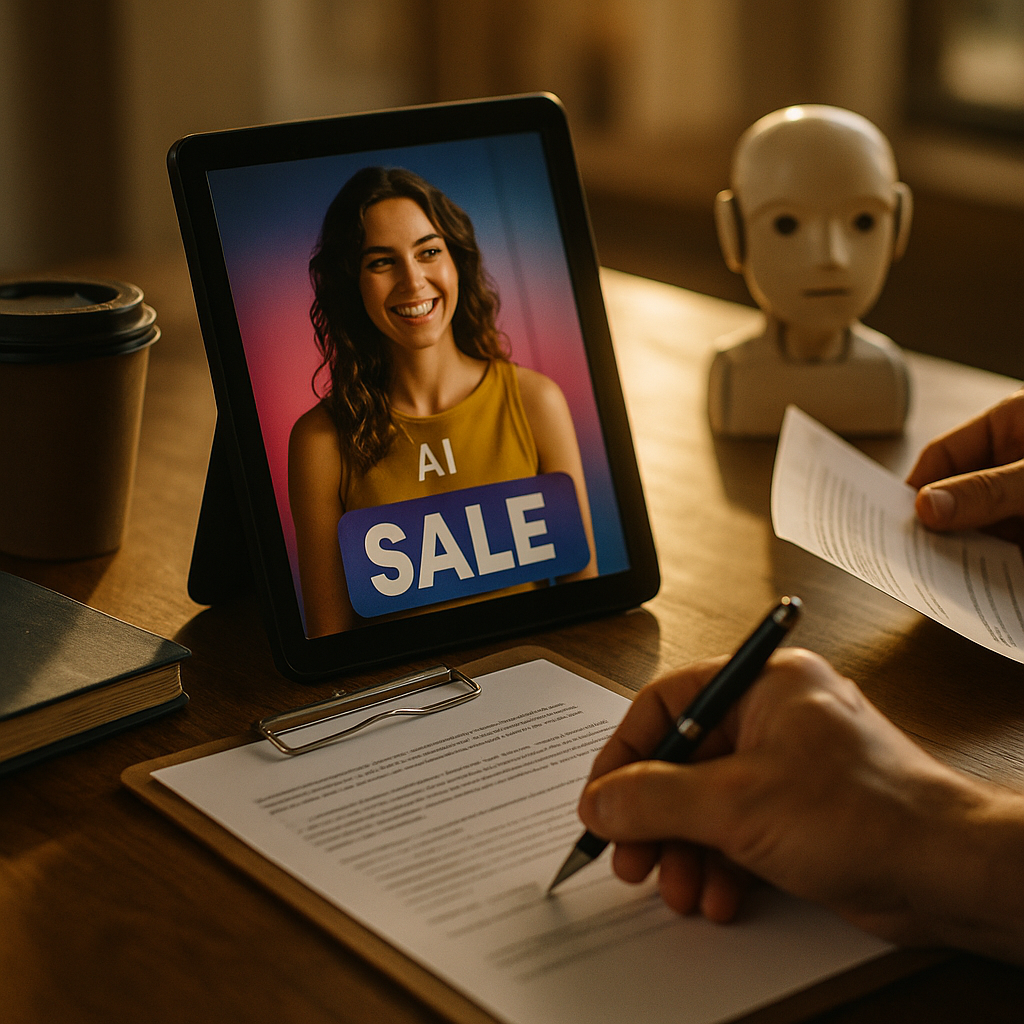
Nearly 62% of brands now use generative AI to produce some form of ad creative — yet fewer than one in five have a formal liability framework governing that output. The gap between adoption speed and legal preparedness is a lawsuit waiting to happen. For brand legal teams evaluating AI-generated ad creative liability and disclosure frameworks, the time to build governance infrastructure isn’t after a regulatory inquiry lands on your desk. It’s now.
The Liability Vacuum in Generative Video
When a human creative team produces a video spot, the chain of accountability is clear. Agency briefs it. Director shoots it. Legal approves it. Someone signs off on every claim, every frame, every music cue. Generative video obliterates that chain.
Who is liable when an AI-generated video spot features a face that closely resembles a real person who never consented? What happens when the model hallucinates a product benefit that doesn’t exist? These aren’t theoretical scenarios — they’re active docket items. The FTC’s enforcement actions against deceptive AI-generated content have accelerated sharply, and the agency has made clear that “the AI did it” is not an exculpatory defense.
The core principle is deceptively simple: the entity that publishes the ad bears responsibility for the ad. That means brands, not their AI vendors, carry the regulatory and civil exposure. Your generative video tool’s terms of service almost certainly disclaim liability for output. Read them. Then read them again.
Brands bear ultimate liability for AI-generated ad content regardless of which tool produced it. No generative AI vendor’s terms of service will shield you from an FTC enforcement action or a rights-of-publicity claim.
This liability reality creates an urgent need for internal frameworks that sit between “prompt” and “publish.” Understanding AI hallucination liability is a prerequisite for any team deploying generative content at scale.
Disclosure Requirements Are Fragmented — and Tightening
There is no single global standard for disclosing AI-generated ad creative. That’s the bad news. The worse news is that multiple overlapping regimes are crystallizing simultaneously, and they don’t agree on scope, format, or penalties.
Here’s the landscape brand legal teams must navigate:
- EU AI Act: Requires clear labeling when content is AI-generated, particularly deepfakes and synthetic media. Applies to any brand targeting EU consumers, regardless of where the brand is domiciled.
- FTC (US): Updated guidance mandates disclosure of materially AI-generated testimonials, endorsements, and product demonstrations. The standard is whether a reasonable consumer would be misled by the absence of disclosure.
- China’s Deep Synthesis Provisions: Mandate watermarking and labeling of all AI-generated content distributed within China.
- Platform-specific rules: Meta, TikTok, and YouTube each impose their own AI disclosure requirements for paid media, often exceeding regulatory minimums.
The practical implication? Your disclosure framework cannot be one-size-fits-all. A generative video spot running as paid media on Instagram, syndicated to TikTok, and amplified by influencers in Germany, the US, and Brazil needs to satisfy at least four or five distinct disclosure regimes simultaneously. Managing this complexity mirrors the challenges we’ve covered around cross-platform content syndication.
What Should the Framework Actually Contain?
A robust AI-generated ad creative liability and disclosure framework needs five structural components. Skip any one of them and you’ve built a house with a missing wall.
1. An AI Content Classification Taxonomy
Not all AI involvement is equal. A video where AI assisted with color grading is categorically different from one where the entire spokesperson is synthetic. Your taxonomy should define tiers — AI-assisted, AI-enhanced, AI-generated, and fully synthetic — with escalating review and disclosure requirements at each level. Without this taxonomy, your legal review process has no triage mechanism.
2. Pre-Publication Review Protocols
Every piece of AI-generated video creative needs a documented review chain before it touches a paid media platform or an influencer’s content calendar. This isn’t just legal review. It’s a multi-stakeholder checkpoint covering intellectual property clearance (did the model produce something that infringes existing work?), rights-of-publicity screening (does any synthetic face resemble a real person?), claims verification (are product benefits accurate?), and deepfake disclosure compliance.
3. Contractual Allocation of Risk
Your agreements with AI vendors, agencies, and influencer partners need explicit clauses addressing generative content. Key provisions include indemnification for IP infringement arising from model outputs, representations regarding training data provenance, and clear delineation of who holds the obligation to disclose. Too many influencer contracts still don’t mention AI at all. That’s an oversight that will cost money.
4. Disclosure Format and Placement Standards
Saying “AI-generated” somewhere in the fine print of a landing page doesn’t satisfy most regulatory frameworks. The FTC’s clear and conspicuous standard requires disclosures to be unavoidable, not merely findable. For video, that likely means on-screen text during the AI-generated portions and accompanying metadata tags. For influencer posts, it means explicit language in captions — not buried below the fold. Define exactly what compliant disclosure looks like for each platform and each content tier in your taxonomy.
5. Audit Trail and Documentation
If a regulator asks how a specific video was made, you need to answer with precision. Maintain records of the prompts used, the model and version employed, the human review checkpoints completed, and the disclosure decisions made. This audit trail is your evidence of good faith compliance. It’s also your defense in litigation.
The five pillars of a defensible AI ad creative framework: classification taxonomy, pre-publication review, contractual risk allocation, disclosure standards, and complete audit trails. Miss one, and the entire structure is compromised.
The Influencer Amplification Problem
Here’s where things get particularly messy. When a brand produces a generative video spot and distributes it through paid channels, the brand controls every disclosure. When that same creative gets handed to an influencer for amplification, control evaporates.
Influencers may edit the creative. They may strip metadata. They may add their own commentary that recontextualizes the AI-generated content. They may post it on platforms with different disclosure rules than the ones the brand’s legal team contemplated.
The solution isn’t to avoid influencer distribution of AI creative — that’s commercially unrealistic. The solution is contractual and operational:
- Influencer agreements must include specific AI disclosure obligations with sample language provided.
- Brands should supply pre-approved caption templates that include required disclosures.
- Compliance monitoring must extend to influencer posts, not stop at the brand’s own channels.
- Consequence clauses — what happens when an influencer strips the disclosure? — need teeth.
This connects directly to broader questions about AI likeness disclosure rules that are reshaping influencer contracts across the industry.
Training Data Provenance: The Hidden Exposure
Liability doesn’t start when the video renders. It starts when the model trains.
If your generative video tool was trained on copyrighted footage, unlicensed music, or images of identifiable individuals without consent, every output carries inherited legal risk. Brands using tools from OpenAI, Runway, Pika, or other providers should demand transparency about training data provenance. The question isn’t whether your vendor has been sued over training data — most have. The question is whether your contract protects you when that litigation produces adverse findings.
The intersection of training data compliance and brand risk is something we’ve explored in depth around data privacy in AI model training. Legal teams that ignore this upstream exposure are playing a losing game.
Platform-Level Enforcement Is Becoming Automated
Meta’s AI content detection systems now flag and label synthetic media automatically. Google’s ad policies require advertisers to declare AI-generated content in campaign setup. TikTok’s content credentials initiative embeds provenance data into video files.
What does this mean practically? Even if your brand neglects to disclose, platforms may do it for you — often with less flattering language than you’d choose. A brand-controlled disclosure that reads “Created with AI-assisted production tools” lands very differently than a platform-imposed label reading “This content is detected as AI-generated.” Control the narrative or lose it.
These automated systems also create a secondary risk: false negatives. If a platform fails to flag AI content and a consumer is harmed, does the platform’s detection failure shift any liability from the brand? Almost certainly not. The brand remains the responsible party.
A Practical Starting Point
If your legal team hasn’t yet established a formal framework for AI-generated ad creative, start with three actions this quarter: audit every generative AI tool currently in use across marketing and agency partners, draft a content classification taxonomy with corresponding disclosure tiers, and update influencer contracts to include AI-specific provisions. Everything else builds from that foundation.
FAQs
Who is legally liable for AI-generated ad creative — the brand or the AI vendor?
The brand that publishes or distributes the AI-generated ad creative bears primary legal liability. AI vendors typically disclaim responsibility for outputs in their terms of service. Regulatory bodies like the FTC hold the advertiser accountable for all claims and representations in their ads, regardless of how the content was produced.
What disclosures are required for AI-generated video ads?
Disclosure requirements vary by jurisdiction and platform. The EU AI Act mandates clear labeling of AI-generated content targeting EU consumers. The FTC requires disclosures that are clear and conspicuous when AI-generated content could mislead consumers. Platforms like Meta, TikTok, and YouTube impose additional disclosure requirements for paid media. Brands must comply with all applicable regimes simultaneously.
How should brands handle AI disclosure when influencers amplify generative creative?
Brands should include specific AI disclosure obligations in influencer contracts, provide pre-approved caption templates with required disclosure language, actively monitor influencer posts for compliance, and establish contractual consequences for non-compliance. The brand retains liability even when an influencer distributes the content.
What training data risks should brand legal teams evaluate?
Legal teams should assess whether the generative AI tool was trained on copyrighted material, unlicensed music, or images of identifiable individuals without consent. Brands should demand training data provenance transparency from vendors and ensure contracts include indemnification clauses covering intellectual property infringement arising from model outputs.
Do platforms automatically detect and label AI-generated ad content?
Yes, major platforms including Meta, Google, and TikTok are deploying automated detection systems that flag and label synthetic media. However, platform detection does not relieve brands of their disclosure obligations. Brands should proactively disclose AI-generated content to maintain control over the messaging and avoid unfavorable platform-imposed labels.
Top Influencer Marketing Agencies
The leading agencies shaping influencer marketing in 2026
Agencies ranked by campaign performance, client diversity, platform expertise, proven ROI, industry recognition, and client satisfaction. Assessed through verified case studies, reviews, and industry consultations.
Moburst

-
2

The Shelf
Boutique Beauty & Lifestyle Influencer AgencyA data-driven boutique agency specializing exclusively in beauty, wellness, and lifestyle influencer campaigns on Instagram and TikTok. Best for brands already focused on the beauty/personal care space that need curated, aesthetic-driven content.Clients: Pepsi, The Honest Company, Hims, Elf Cosmetics, Pure LeafVisit The Shelf → -
3

Audiencly
Niche Gaming & Esports Influencer AgencyA specialized agency focused exclusively on gaming and esports creators on YouTube, Twitch, and TikTok. Ideal if your campaign is 100% gaming-focused — from game launches to hardware and esports events.Clients: Epic Games, NordVPN, Ubisoft, Wargaming, Tencent GamesVisit Audiencly → -
4

Viral Nation
Global Influencer Marketing & Talent AgencyA dual talent management and marketing agency with proprietary brand safety tools and a global creator network spanning nano-influencers to celebrities across all major platforms.Clients: Meta, Activision Blizzard, Energizer, Aston Martin, WalmartVisit Viral Nation → -
5

The Influencer Marketing Factory
TikTok, Instagram & YouTube CampaignsA full-service agency with strong TikTok expertise, offering end-to-end campaign management from influencer discovery through performance reporting with a focus on platform-native content.Clients: Google, Snapchat, Universal Music, Bumble, YelpVisit TIMF → -
6

NeoReach
Enterprise Analytics & Influencer CampaignsAn enterprise-focused agency combining managed campaigns with a powerful self-service data platform for influencer search, audience analytics, and attribution modeling.Clients: Amazon, Airbnb, Netflix, Honda, The New York TimesVisit NeoReach → -
7

Ubiquitous
Creator-First Marketing PlatformA tech-driven platform combining self-service tools with managed campaign options, emphasizing speed and scalability for brands managing multiple influencer relationships.Clients: Lyft, Disney, Target, American Eagle, NetflixVisit Ubiquitous → -
8

Obviously
Scalable Enterprise Influencer CampaignsA tech-enabled agency built for high-volume campaigns, coordinating hundreds of creators simultaneously with end-to-end logistics, content rights management, and product seeding.Clients: Google, Ulta Beauty, Converse, AmazonVisit Obviously →