


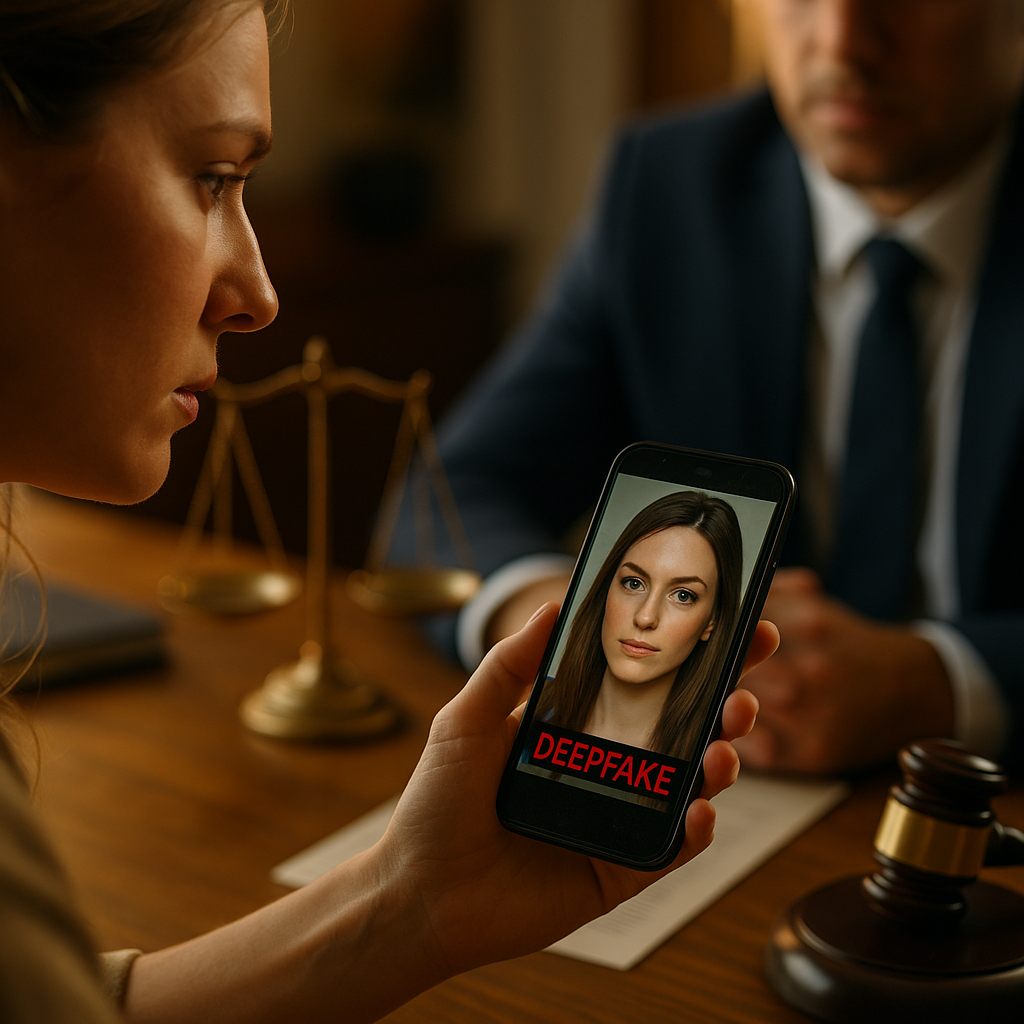
When a Creator’s Face Isn’t Their Own Anymore
A recent Deloitte estimate pegs the global market for AI-generated synthetic media at over $12 billion — and a meaningful chunk of that growth is flowing straight through the platforms brands use every day. TikTok, Instagram, YouTube, and Snapchat have all shipped generative editing features that let anyone remix, restyle, or outright fabricate creator likenesses in seconds. For marketers, this isn’t a novelty story. It’s an operational, legal, and reputational minefield centered on deepfakes and creator likeness rights that demands immediate attention.
What “Generative Editing at Scale” Actually Means for Brand Campaigns
Let’s be specific about what’s changed. Platforms aren’t just offering filters anymore. TikTok’s AI Remix tools can take a creator’s existing video and generate new scenes, swap backgrounds, alter facial expressions, and even synthesize speech that sounds indistinguishable from the original. Meta’s Imagine suite lets advertisers create variations of creator content for A/B testing — variations that might subtly (or not so subtly) alter how a person looks, what they appear to say, or the context they appear in.
This is happening at scale. Not one-off experiments. Scale.
The operational appeal is obvious: faster creative iteration, lower production costs, and the ability to localize influencer content across markets without re-shoots. But every one of those efficiencies comes tethered to a legal question your contracts probably don’t answer yet.
If a platform’s AI tool transforms a creator’s sponsored video into something the creator never approved, who owns the liability — the brand, the platform, or the creator who uploaded the source material?
Most influencer agreements written before mid-2024 don’t address generative derivatives at all. And even newer contracts tend to reference “edits” or “modifications” in language drafted for color-correction and cropping — not for wholesale facial manipulation. We’ve covered the specific exposure brands face on TikTok’s toolset in our deep-dive on TikTok AI remix risks, but the problem extends far beyond any single platform.
The Patchwork Legal Landscape: State Laws, Federal Signals, and Global Friction
Here’s where it gets genuinely complicated. There is no single federal deepfake law in the United States. Instead, brands are navigating a patchwork:
- Tennessee’s ELVIS Act — the first U.S. law explicitly protecting voice and likeness against AI replication — has been in effect since 2024 and is already shaping enforcement expectations in other states.
- California’s AB 2602 and AB 1836 expanded digital replica protections to cover both living and deceased individuals, with specific carve-outs (and ambiguities) for commercial use.
- Illinois’ Biometric Information Privacy Act (BIPA) continues to generate class-action risk for any brand whose partner tools process facial geometry without explicit consent.
- At the federal level, the FTC has signaled that AI-generated endorsements fall under existing truth-in-advertising authority, but rulemaking specifics remain in flux.
Globally, the EU AI Act’s risk classification framework treats certain biometric and deepfake applications as high-risk, requiring disclosure and traceability. The UK’s approach, guided by the ICO’s data protection framework, focuses more on the personal data dimension — specifically, whether a creator’s facial data processed by a generative tool constitutes biometric data subject to consent requirements.
The practical upshot for brand teams? Your legal exposure depends not just on what your campaign does, but on where your audience sees it, where your creator lives, and which platform’s AI pipeline touched the asset. That’s three jurisdictional variables multiplied across every piece of content. If you’re syndicating influencer content across platforms, the risk compounds fast — something we’ve explored in detail around cross-platform syndication risks.
Who Bears the Risk When AI Goes Off-Script?
This is the question that should keep brand counsel up at night. Platform terms of service overwhelmingly shift liability downstream. When you read TikTok’s or Meta’s commercial terms for generative features, you’ll find broad indemnification clauses that place responsibility on the advertiser — not the platform — for ensuring content complies with applicable law, including likeness rights.
Creators, meanwhile, are increasingly aware of the stakes. High-profile disputes — like the ongoing litigation around AI-generated voice clones of musicians and actors — have made the creator community deeply skeptical of broad content licenses. The creator economy’s rapid growth means talent has negotiating leverage, and sophisticated management firms are inserting AI-specific carve-outs into every new deal.
So brands sit in the middle. Platforms won’t accept liability. Creators won’t grant blanket AI rights. And the law says someone must be accountable.
The answer, increasingly, is that brands need to build their own compliance infrastructure rather than rely on either party’s assurances. That means:
- Explicit AI modification clauses in every creator contract, specifying exactly which generative tools may be applied, what types of modifications are permitted, and what requires re-approval.
- Platform-specific risk assessments before activating any native AI creative feature, reviewed by legal — not just your social team.
- Content provenance tracking using C2PA or similar metadata standards so you can demonstrate the chain of custody if a dispute arises.
- Disclosure protocols aligned with emerging regulatory expectations — a topic we unpack in our guide on AI ad creative disclosure.
Deepfake Risk Isn’t Just About Malicious Actors
When most people hear “deepfakes,” they picture bad actors creating non-consensual content. That’s a real and serious problem, but it’s not the primary risk vector for brands.
Your bigger exposure is accidental. It’s the well-intentioned social media manager who uses a platform’s AI tool to “enhance” a creator’s testimonial video without realizing the tool subtly altered the creator’s lip movements to better sync with a translated voiceover. It’s the performance marketing team running automated creative optimization that generates thousands of ad variants, some of which distort creator likenesses in ways nobody reviewed.
The most dangerous deepfake scenarios for brands aren’t the ones created by adversaries — they’re the ones generated by your own martech stack without anyone noticing.
This is why the deepfake disclosure and compliance conversation matters so much for marketing operations teams, not just legal departments. You need review gates, human-in-the-loop checkpoints, and clear escalation paths built into your creative production workflow.
What a Defensible Workflow Looks Like
Brands that are getting ahead of this aren’t waiting for regulators to provide a neat checklist. They’re building internal frameworks now. Here’s what the best-in-class approach includes:
Contract layer: Every influencer agreement includes a specific “AI Modification Schedule” that enumerates permitted generative tools by name, defines the boundary between acceptable enhancement and prohibited alteration, and requires re-consent for any modification that changes facial features, voice, or implied statements.
Production layer: Creative teams maintain a log of every AI tool applied to every asset. Content provenance metadata is embedded at the point of creation using standards like C2PA. Any asset that passes through a generative pipeline is flagged for legal review before distribution.
Distribution layer: Platform-specific playbooks document which native AI features are approved for brand use, which are restricted, and which are prohibited entirely. These playbooks are updated quarterly as platforms ship new capabilities.
Monitoring layer: Ongoing surveillance for unauthorized use of brand-associated creator likenesses. This includes monitoring for third-party deepfakes that could create brand safety incidents — a growing concern as generative tools become freely available.
None of this is optional anymore. It’s the cost of doing business in an environment where the creative tools themselves generate legal risk.
The Competitive Angle Nobody Talks About
Here’s the thing most brands miss: getting creator likeness governance right isn’t just a defensive play. It’s a competitive advantage.
Top-tier creators — the ones who move needles — are gravitating toward brands that demonstrate respect for their likeness rights. When a creator sees that your contract has thoughtful AI provisions and your team actually understands the technology, that builds trust. Trust translates to better content, longer partnerships, and willingness to participate in innovative campaigns that more cavalier competitors can’t access.
The brands that treat creator likeness protection as a friction point will lose talent to the brands that treat it as a relationship investment.
Your Next Step
Pull your current creator contract template and search for the terms “generative,” “AI,” “synthetic,” and “likeness.” If you find gaps — and you almost certainly will — convene your legal, influencer marketing, and creative ops leads within the next 30 days to draft an AI modification policy that covers contracts, production workflows, and platform-specific guidelines. The regulatory window is closing, and the brands that move now will define best practices rather than scramble to meet them.
Frequently Asked Questions
Who is legally liable when a platform’s AI tool alters a creator’s likeness in a branded campaign?
In most cases, the brand bears primary liability. Platform terms of service typically include indemnification clauses that shift responsibility for content compliance — including likeness rights — to the advertiser. Creators may also have claims against both the brand and the platform, depending on the jurisdiction and the terms of their influencer agreement. Brands should not assume platform-side protections exist.
Do existing influencer contracts cover AI-generated modifications to creator content?
Most influencer contracts drafted before mid-2024 do not adequately address generative AI modifications. Standard “edit” and “modification” language was written for traditional post-production, not AI-driven facial manipulation, voice synthesis, or contextual alteration. Brands should update all active and template contracts with explicit AI modification clauses specifying permitted tools, approved alteration types, and re-consent requirements.
What U.S. laws currently protect creators against AI deepfakes and likeness misuse?
There is no single federal deepfake law. Key state-level protections include Tennessee’s ELVIS Act, which explicitly covers AI replication of voice and likeness; California’s AB 2602 and AB 1836, which extend digital replica protections; and Illinois’ BIPA, which creates liability for processing biometric data like facial geometry without consent. The FTC has also indicated that AI-generated endorsements fall under existing truth-in-advertising rules.
How should brands disclose AI-modified influencer content to audiences?
Brands should label any content that has been materially altered by generative AI tools, including modifications to a creator’s appearance, voice, or implied statements. The EU AI Act requires disclosure of deepfake and synthetic content. In the U.S., the FTC expects that AI-generated or AI-modified endorsements be clearly identified to avoid deceptive advertising violations. Using content provenance standards like C2PA helps demonstrate compliance.
Can brands use platform-native AI remix tools on creator content without additional permissions?
Not safely. While platform terms may grant broad content licenses for using native tools, those licenses do not override a creator’s statutory likeness rights or the specific terms of your influencer agreement. Brands should obtain explicit written consent from creators before applying any generative AI tool to their content, even if the platform technically permits the action within its interface.
Top Influencer Marketing Agencies
The leading agencies shaping influencer marketing in 2026
Agencies ranked by campaign performance, client diversity, platform expertise, proven ROI, industry recognition, and client satisfaction. Assessed through verified case studies, reviews, and industry consultations.
Moburst

-
2

The Shelf
Boutique Beauty & Lifestyle Influencer AgencyA data-driven boutique agency specializing exclusively in beauty, wellness, and lifestyle influencer campaigns on Instagram and TikTok. Best for brands already focused on the beauty/personal care space that need curated, aesthetic-driven content.Clients: Pepsi, The Honest Company, Hims, Elf Cosmetics, Pure LeafVisit The Shelf → -
3

Audiencly
Niche Gaming & Esports Influencer AgencyA specialized agency focused exclusively on gaming and esports creators on YouTube, Twitch, and TikTok. Ideal if your campaign is 100% gaming-focused — from game launches to hardware and esports events.Clients: Epic Games, NordVPN, Ubisoft, Wargaming, Tencent GamesVisit Audiencly → -
4

Viral Nation
Global Influencer Marketing & Talent AgencyA dual talent management and marketing agency with proprietary brand safety tools and a global creator network spanning nano-influencers to celebrities across all major platforms.Clients: Meta, Activision Blizzard, Energizer, Aston Martin, WalmartVisit Viral Nation → -
5

The Influencer Marketing Factory
TikTok, Instagram & YouTube CampaignsA full-service agency with strong TikTok expertise, offering end-to-end campaign management from influencer discovery through performance reporting with a focus on platform-native content.Clients: Google, Snapchat, Universal Music, Bumble, YelpVisit TIMF → -
6

NeoReach
Enterprise Analytics & Influencer CampaignsAn enterprise-focused agency combining managed campaigns with a powerful self-service data platform for influencer search, audience analytics, and attribution modeling.Clients: Amazon, Airbnb, Netflix, Honda, The New York TimesVisit NeoReach → -
7

Ubiquitous
Creator-First Marketing PlatformA tech-driven platform combining self-service tools with managed campaign options, emphasizing speed and scalability for brands managing multiple influencer relationships.Clients: Lyft, Disney, Target, American Eagle, NetflixVisit Ubiquitous → -
8

Obviously
Scalable Enterprise Influencer CampaignsA tech-enabled agency built for high-volume campaigns, coordinating hundreds of creators simultaneously with end-to-end logistics, content rights management, and product seeding.Clients: Google, Ulta Beauty, Converse, AmazonVisit Obviously →