


When the Script Is Yours, So Is the Liability
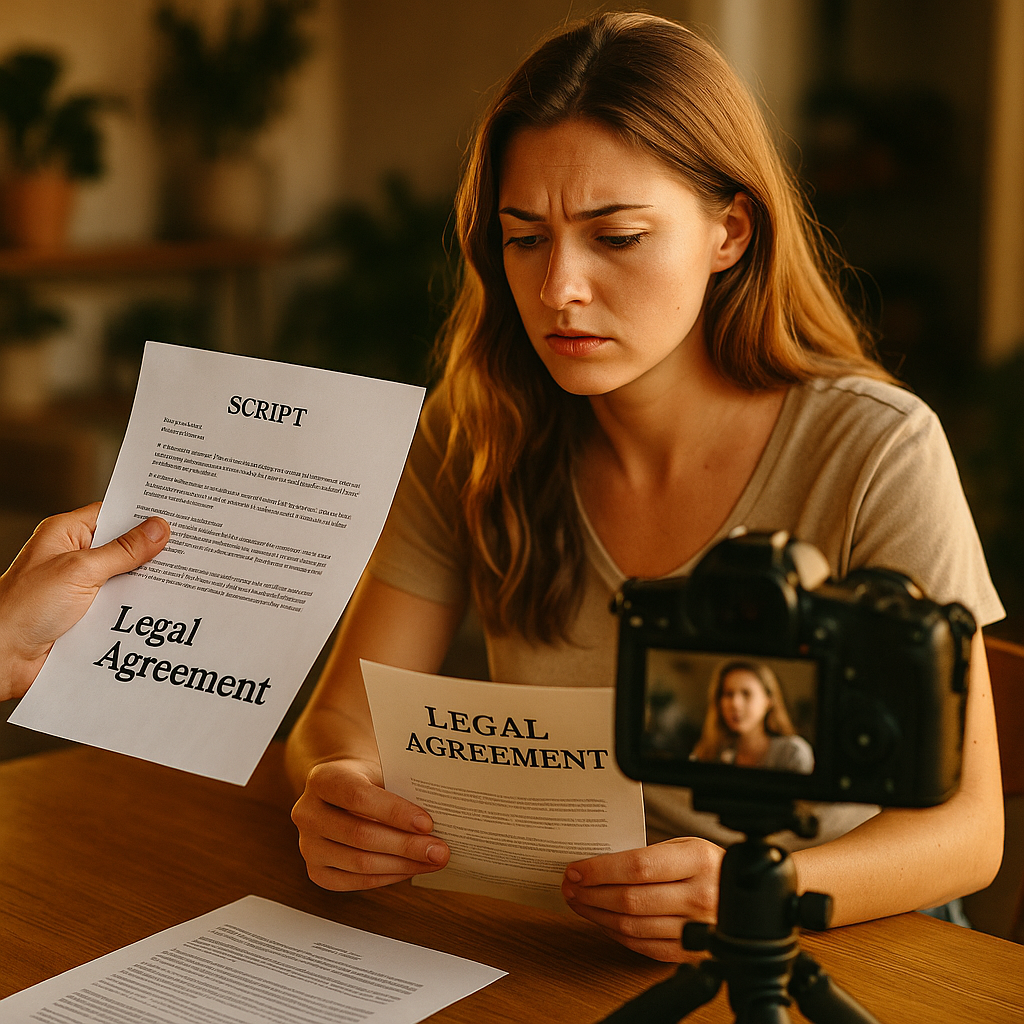
Here’s a number that should make every brand marketer pause: 63% of influencer campaigns now involve brand-provided talking points, approved scripts, or mandatory claim language, according to Statista’s creator economy data. That level of involvement is no longer just a creative choice. It’s a liability trigger. Brand-directed influencer scripts are rapidly becoming the focal point for regulators and plaintiffs’ attorneys who want to hold companies—not just creators—accountable for misleading sponsored content.
The question isn’t whether your brand works with influencers. It’s how much you’re shaping what they say—and whether your legal team knows the answer.
The Regulatory Shift: From Creator Fault to Brand Accountability
For years, FTC enforcement actions around influencer marketing focused primarily on disclosure failures. Did the creator say #ad? Was the sponsorship clear? Those cases still happen. But the enforcement frontier has moved.
The Federal Trade Commission has made increasingly clear—through updated guidance, warning letters, and consent orders—that brands bear responsibility for substantive claims made in sponsored content, especially when those claims originate from brand-provided materials. The logic is straightforward: if you wrote the script, you’re the advertiser. Full stop.
This isn’t theoretical. In recent enforcement actions, the FTC has examined the degree of brand involvement in creator content as a primary factor in determining liability. When a brand supplies specific product claims, mandates particular language about efficacy, or requires creators to convey health or performance benefits, regulators treat that content as the brand’s own advertising. The creator becomes a conduit, not an independent endorser.
The FTC’s current framework treats the level of brand control over content as a sliding scale of liability. The more you direct, the more you own—including the legal consequences of any false or unsubstantiated claims.
State attorneys general are following the same playbook. Several states have pursued actions against brands—not influencers—for deceptive claims in sponsored social content, particularly in health, wellness, and financial services verticals. And in civil litigation, plaintiffs’ attorneys are using brand creative briefs, approval chains, and Slack messages as evidence that the company, not the creator, authored the misleading statement.
What Counts as “Directing” Content?
This is where most brand teams underestimate their exposure. You don’t have to hand a creator a word-for-word script to trigger heightened liability. Courts and regulators are looking at a spectrum of involvement:
- Mandatory talking points — Requiring creators to mention specific product claims, ingredients, or outcomes
- Pre-approval of final content — Reviewing and approving posts before they go live, which implies editorial control
- Revision requests — Asking creators to change wording, add claims, or remove caveats
- Provided visual assets — Supplying graphics with embedded claims that creators must use
- Performance incentives tied to messaging — Bonusing creators for including specific claims or phrases
Each of these actions strengthens the argument that the brand functioned as the content’s author. And here’s the uncomfortable truth: most performance-based creator contracts include at least two or three of these elements as standard practice.
The distinction matters enormously. A creator who independently praises your product based on genuine experience is an endorser. A creator who reads your bullet points into a camera is your spokesperson. Regulators know the difference.
Why Content Approval Workflows Create Evidence Trails
Ironically, the compliance infrastructure many brands built to prevent problems is now generating the very evidence that can be used against them. Every tracked revision in your content approval workflows is a documented fingerprint of brand involvement.
Think about what your approval process reveals:
- Brand reviews draft content and requests the creator add a claim about “clinically proven results”
- Creator complies, submits revised version
- Brand approves final post
That three-step chain is a plaintiff’s exhibit. It shows the brand originated the claim, the creator dutifully included it, and the brand verified the final product. If “clinically proven” turns out to be unsubstantiated, the brand doesn’t get to point at the creator and say “that was their content.”
This doesn’t mean you should abandon approval workflows. It means you need to redesign them with litigation awareness. Your substantiation review must happen before claims enter the creative brief, not after they’re already embedded in a creator’s draft.
The AI Complication
Layer AI tools into this equation and the liability picture gets murkier. Brands increasingly use AI to generate scripts, suggest talking points, or even create initial draft content that creators then personalize. When an AI tool hallucinates a product claim—say, fabricating a clinical study that doesn’t exist—and that claim flows through a brand-provided script into a creator’s video, who bears responsibility?
Under the current regulatory framework, the answer is clear: the brand does. The FTC has consistently held that advertisers are responsible for the accuracy of their claims regardless of how those claims were generated. An AI hallucination in your creative brief is your problem, not OpenAI’s, not the creator’s.
This creates an urgent need for brands to audit their AI-generated ad creative liability exposure. If your team uses generative AI anywhere in the influencer content pipeline—from brief creation to script drafting to claim generation—you need a human substantiation checkpoint before that content reaches a creator.
Every AI-generated claim that enters an influencer brief without human verification is a latent regulatory violation waiting for a complaint to activate it.
What Legal Teams Must Do: The Campaign Involvement Audit
Here’s the practical framework. Before any influencer campaign publishes, your legal and compliance team should conduct a campaign involvement audit that categorizes your brand’s role along three dimensions:
1. Claim Origination
Map every factual claim in the creator’s content back to its source. Did the claim come from the brand’s brief? From the creator’s own experience? From a third-party source? Brand-originated claims require substantiation documentation before the brief ships. No exceptions.
2. Editorial Control Level
Score the campaign on a control spectrum. At one end: the brand provides product samples and lets creators say whatever they want. At the other end: the brand provides a verbatim script with mandatory inclusion requirements. Most campaigns fall somewhere in the middle, but you need to know exactly where. The higher your control score, the more your legal review should mirror the rigor you’d apply to a traditional advertisement.
3. Approval Chain Documentation
Review what your approval records actually show. If your process documents that the brand added, modified, or required specific claims, those records need to be backed by substantiation files. Treat every revision request as a potential exhibit and ask yourself: if a regulator saw this exchange, would it demonstrate responsible advertising practices or sloppy claim management?
This audit should be standardized. Build it into your campaign launch checklist alongside the creative risk framework your team already uses for brand safety. Make it repeatable, documentable, and—critically—completed before content goes live rather than reconstructed after a complaint arrives.
Practical Steps for Risk Mitigation
Beyond the audit, several operational changes can reduce exposure:
- Separate claim substantiation from creative review. Your legal team should verify every factual claim in the brief before it reaches the creative or influencer team. Don’t rely on the content approval stage to catch unsubstantiated claims.
- Train creators on what they can and cannot say. If your brief says “our product helps with sleep,” and the creator says “our product cures insomnia,” that escalation is partly your responsibility if you didn’t clearly delineate boundaries.
- Document creator independence where it exists. If a creator genuinely adds their own claims based on personal experience, document that. It may matter in an enforcement context.
- Audit AI-assisted content pipelines. If any AI tool touches the script or brief, flag that content for additional human review. The FTC’s guidance on AI makes clear that automated processes don’t absolve advertisers of responsibility.
- Revisit indemnification clauses. Many influencer contracts place all liability on the creator. That clause may be unenforceable if the brand directed the content that caused the violation. Work with outside counsel to ensure your contracts reflect realistic liability allocation.
For brands working with autonomous AI campaign tools, these steps are especially critical. Automated systems can scale bad claims faster than any human review process can catch them.
The Bottom Line
Start your next campaign planning cycle by asking one question: for every claim in our influencer brief, can we produce substantiation documentation within 24 hours of a regulatory inquiry? If the answer is no, your brand-directed influencer scripts are a liability—not a marketing asset—and the audit needs to happen before the next post goes live.
FAQs
Are brands legally liable for claims in influencer content they helped write?
Yes. The FTC and courts increasingly hold brands accountable for the truthfulness of influencer content when the brand provided scripts, mandatory talking points, or required specific claims. The greater the brand’s editorial involvement, the higher the liability exposure, regardless of contract language that attempts to shift blame to the creator.
What triggers brand liability versus creator liability in sponsored content?
The key factor is the degree of brand control. If the brand supplies specific claims, requires certain language, reviews and approves drafts, or requests revisions that add product claims, regulators treat the brand as the content’s author. Creators who independently share genuine opinions based on personal experience carry more of the liability themselves.
How should legal teams audit influencer campaigns for liability risk?
Legal teams should conduct a campaign involvement audit that maps every factual claim to its source, scores the brand’s editorial control level, and reviews approval chain documentation for evidence of brand-directed claims. Every brand-originated claim should have substantiation documentation completed before the creative brief reaches creators.
Does using AI to generate influencer scripts change the liability calculation?
No. The FTC holds advertisers responsible for claim accuracy regardless of whether claims were generated by humans or AI tools. If an AI tool hallucinates a product claim that ends up in an influencer’s content via a brand-provided brief, the brand bears full responsibility. AI-assisted content pipelines require additional human substantiation checkpoints.
Can indemnification clauses in influencer contracts protect brands from FTC action?
Not reliably. While indemnification clauses may shift some financial risk between parties in private disputes, they do not shield brands from FTC enforcement. If the brand directed the misleading content, the FTC will hold the brand accountable regardless of what the creator contract says. Brands should work with counsel to ensure contracts reflect realistic liability allocation rather than relying on boilerplate indemnification.
Top Influencer Marketing Agencies
The leading agencies shaping influencer marketing in 2026
Agencies ranked by campaign performance, client diversity, platform expertise, proven ROI, industry recognition, and client satisfaction. Assessed through verified case studies, reviews, and industry consultations.
Moburst

-
2

The Shelf
Boutique Beauty & Lifestyle Influencer AgencyA data-driven boutique agency specializing exclusively in beauty, wellness, and lifestyle influencer campaigns on Instagram and TikTok. Best for brands already focused on the beauty/personal care space that need curated, aesthetic-driven content.Clients: Pepsi, The Honest Company, Hims, Elf Cosmetics, Pure LeafVisit The Shelf → -
3

Audiencly
Niche Gaming & Esports Influencer AgencyA specialized agency focused exclusively on gaming and esports creators on YouTube, Twitch, and TikTok. Ideal if your campaign is 100% gaming-focused — from game launches to hardware and esports events.Clients: Epic Games, NordVPN, Ubisoft, Wargaming, Tencent GamesVisit Audiencly → -
4

Viral Nation
Global Influencer Marketing & Talent AgencyA dual talent management and marketing agency with proprietary brand safety tools and a global creator network spanning nano-influencers to celebrities across all major platforms.Clients: Meta, Activision Blizzard, Energizer, Aston Martin, WalmartVisit Viral Nation → -
5

The Influencer Marketing Factory
TikTok, Instagram & YouTube CampaignsA full-service agency with strong TikTok expertise, offering end-to-end campaign management from influencer discovery through performance reporting with a focus on platform-native content.Clients: Google, Snapchat, Universal Music, Bumble, YelpVisit TIMF → -
6

NeoReach
Enterprise Analytics & Influencer CampaignsAn enterprise-focused agency combining managed campaigns with a powerful self-service data platform for influencer search, audience analytics, and attribution modeling.Clients: Amazon, Airbnb, Netflix, Honda, The New York TimesVisit NeoReach → -
7

Ubiquitous
Creator-First Marketing PlatformA tech-driven platform combining self-service tools with managed campaign options, emphasizing speed and scalability for brands managing multiple influencer relationships.Clients: Lyft, Disney, Target, American Eagle, NetflixVisit Ubiquitous → -
8

Obviously
Scalable Enterprise Influencer CampaignsA tech-enabled agency built for high-volume campaigns, coordinating hundreds of creators simultaneously with end-to-end logistics, content rights management, and product seeding.Clients: Google, Ulta Beauty, Converse, AmazonVisit Obviously →