


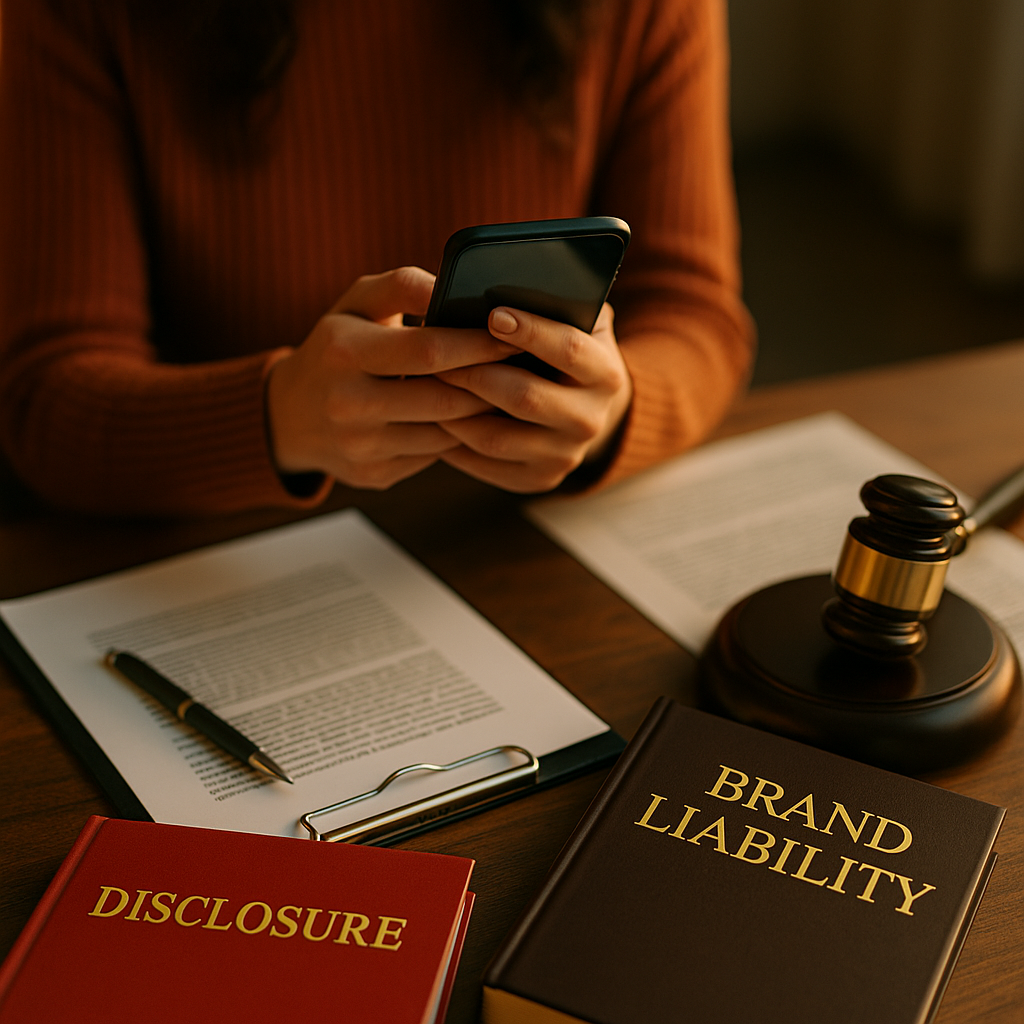
When Brands Hit “Share,” They Inherit the Liability
The FTC issued more than $17 million in penalties tied to influencer marketing violations in the last 18 months alone. That number isn’t slowing down. What’s changed is who regulators are targeting — and it’s no longer just the creators. The expanded brand liability analysis gaining traction in legal circles, most notably through The Fashion Law’s rigorous breakdown of advertiser responsibility, signals a fundamental shift: the moment a brand amplifies a creator’s post, it co-owns the compliance burden. Your marketing contracts, brief documents, and internal approval records need to reflect that reality. Now.
The Amplification Problem: Why Reposting Isn’t Neutral
For years, brands operated under a comfortable assumption. If a creator failed to disclose a material connection, that was the creator’s problem. The brand could point to a contract clause requiring #ad and walk away relatively unscathed.
That era is over.
The FTC’s endorsement guidelines, updated and enforced with increasing aggression, now explicitly treat brand amplification — resharing, boosting, embedding, or repurposing creator content — as a separate endorsement event. Each amplification carries its own disclosure obligation. A creator’s original post might have included a buried “#sponsored” in a sea of hashtags. When your brand account reposts that content to your 500K followers without a clear, conspicuous disclosure at the point of amplification, you are the violator.
Amplification is not passive distribution. Regulators now treat every brand reshare, boost, or embed of creator content as a distinct advertising event requiring independent disclosure compliance.
The Fashion Law’s analysis extends this further by arguing that brands exercising any creative direction — even light guidance on aesthetics, messaging tone, or product positioning — carry heightened liability. The more involved you are in shaping the content, the harder it becomes to claim the creator acted independently. This aligns with the FTC’s position that brand-directed creator content inherently transfers compliance risk upstream.
What Has to Change in Your Marketing Contracts
Most influencer contracts were written for a simpler world. They include a disclosure clause — usually a single line requiring creators to comply with FTC guidelines — and call it done. That’s no longer sufficient. Here’s what a defensible contract structure looks like under the expanded liability framework:
- Separate amplification rights section. Don’t bury reposting permissions in a general content license clause. Create a dedicated section that specifies how amplified content must be modified to include brand-side disclosures, who is responsible for adding them, and what format those disclosures must take on each platform.
- Disclosure format specifications per platform. “Include #ad” is legally insufficient. Your contract should mandate disclosure placement (first line of caption, verbal mention within the first five seconds of video, on-screen text overlay for Reels and TikToks), size, and duration. Reference platform-specific ad tools like TikTok’s branded content toggle and Instagram’s Paid Partnership label as minimum requirements, not optional add-ons.
- Mutual compliance warranties. The contract should bind both parties to disclosure standards. The creator warrants that original posts comply; the brand warrants that any amplification or modification maintains compliance. This creates shared accountability with documented expectations.
- Remediation and takedown protocols. Spell out exactly what happens when a non-compliant post is identified: notification timelines (24 hours, not “reasonable”), remediation steps (edit, re-upload, or remove), and financial consequences (holdback clauses tied to compliance verification).
If you’re running cross-border campaigns, the complexity multiplies. EU, UK, and Australian regulators each have their own disclosure frameworks, and a single contract clause won’t cover them all. We’ve explored this extensively in our guide to cross-border contract clauses.
Briefs Are Evidence — Start Treating Them That Way
Your creative brief is not an internal document anymore. It’s Exhibit A in an enforcement action.
When the FTC or a state attorney general investigates a brand for misleading influencer content, they subpoena the brief. They’re looking for something specific: evidence that the brand directed content creation in a way that made non-compliant outcomes predictable. A brief that specifies “keep the vibe organic” or “don’t make it feel like an ad” is a liability landmine.
Here’s the operational shift: every brief must contain an explicit disclosure instruction section, visually separated from creative direction. Not buried in footnotes. Not referenced via a link to your compliance portal that the creator may never visit. Right there, in the document, with specific language like:
“All content created under this brief must include a clear and conspicuous disclosure of the material connection between [Creator Name] and [Brand Name]. Minimum disclosure requirement: #ad or ‘Paid partnership with [Brand]’ must appear in the first line of any caption and as an on-screen overlay in the first three seconds of any video content.”
Go further. Include a checkbox or signature line where the creator acknowledges the disclosure requirement. This isn’t about trust — it’s about documentation. Understanding how creative control intersects with liability means recognizing that every instruction you give creates a paper trail regulators will scrutinize.
If your creative brief says “make it feel organic” without an equally prominent disclosure instruction, you’ve essentially documented your own intent to obscure the commercial relationship. Regulators will read it exactly that way.
Internal Approval Records: The Missing Shield
This is where most brands fail catastrophically.
You can have airtight contracts and perfectly written briefs, but if you can’t demonstrate that someone at your organization reviewed the creator’s content for disclosure compliance before it was approved for publication or amplification, your defense crumbles. The expanded liability framework treats approval as an affirmative act. If you approved it, you endorsed its compliance — or lack thereof.
What does a defensible approval workflow look like?
- Timestamped review logs. Use platforms like CreatorIQ, Aspire, or GRIN that automatically log when content was submitted, who reviewed it, and what feedback was given. Manual email chains are better than nothing, but purpose-built tools create cleaner audit trails.
- Dedicated compliance checkpoints. Separate creative approval (does the content look good?) from compliance approval (does it meet disclosure standards?). These should be distinct steps in your workflow, ideally handled by different team members. The person judging aesthetic quality shouldn’t also be responsible for catching a missing #ad tag.
- Pre-amplification review. Before any creator content is reshared, boosted, or embedded on brand channels, a second compliance check must occur. The original post might have been compliant, but does the amplified version preserve the disclosure? Does the reshare format on that specific platform display the disclosure prominently, or does it get truncated?
- Archival requirements. Store all versions of creator content — drafts, revisions, final posts, and amplified versions — along with corresponding approval records for a minimum of five years. The FTC’s statute of limitations on deceptive practices extends well beyond your average campaign cycle.
For brands integrating AI tools into their campaign management, the record-keeping requirements become even more nuanced. Our coverage of AI content approval workflows digs into how automated systems interact with compliance obligations.
What The Fashion Law Analysis Signals for Enforcement Trends
The Fashion Law’s expanded brand liability analysis isn’t happening in a vacuum. It reflects a convergence of regulatory signals from multiple jurisdictions. The UK’s regulatory bodies have been tightening influencer advertising standards in parallel with the FTC. Australia’s AANA Code of Ethics now explicitly addresses brand responsibility for influencer content shared on owned channels. The EU’s Digital Services Act creates additional transparency obligations for commercial content.
The practical implication for marketing leaders: assume that your most risk-exposed market’s standard applies everywhere. If your contracts, briefs, and approval workflows can survive FTC scrutiny, they’ll generally hold up in the UK and EU as well — but not always the other way around.
One underappreciated risk: compliance audits are becoming proactive, not reactive. The FTC isn’t just responding to consumer complaints anymore. They’re actively monitoring brand social channels, identifying amplified creator content, and checking for disclosure compliance. If your team is amplifying dozens of creator posts monthly without a systematic compliance review, you’re playing a numbers game you will eventually lose.
The Operational Playbook: Three Moves to Make This Quarter
First, audit every active influencer contract for amplification-specific disclosure language. If the contract only addresses the creator’s original post and says nothing about brand resharing obligations, it needs an amendment. Not next quarter. Now.
Second, redesign your creative brief template to physically separate disclosure requirements from creative direction. Use bold formatting, a distinct section header, and a creator acknowledgment mechanism. Run the new template past legal before it goes to your next creator partner.
Third, implement a pre-amplification compliance checkpoint in whatever project management or creator platform you use. Even if it’s a manual step — a Slack message to your compliance lead before hitting “Share” — it creates a documented moment of review. Tools from Sprout Social and similar platforms can help formalize this at scale.
The brands that survive the regulatory crackdown on influencer-driven content won’t be the ones who never made a mistake. They’ll be the ones who can prove they built systems designed to prevent mistakes — and that those systems were actually followed.
FAQs
Does a brand face FTC liability for resharing a creator’s post that already includes a disclosure?
Yes. The FTC treats each amplification as a separate endorsement event. If the original disclosure is truncated, obscured, or insufficiently prominent in the reshared format, the brand can be held liable regardless of whether the creator’s original post was compliant.
What specific language should influencer contracts include about brand amplification?
Contracts should include a dedicated amplification rights section that specifies how reshared content must be modified to include brand-side disclosures, which platforms require specific formats, who is responsible for adding disclosures to amplified posts, and what remediation steps apply if amplified content is found non-compliant.
How long should brands retain creator content and approval records?
Brands should retain all versions of creator content — including drafts, final posts, amplified versions, and corresponding approval records — for a minimum of five years. The FTC’s enforcement actions can reference campaigns well beyond their active period, making long-term archival essential for legal defense.
Can creative briefs be used as evidence in FTC enforcement actions?
Absolutely. The FTC routinely subpoenas creative briefs during investigations. Briefs that instruct creators to minimize the commercial feel of content without equally prominent disclosure instructions can be interpreted as evidence of intent to obscure material connections, significantly increasing brand liability.
What is the difference between creative approval and compliance approval in influencer workflows?
Creative approval evaluates whether content meets brand aesthetic and messaging standards. Compliance approval is a separate checkpoint that verifies the content meets disclosure requirements, including proper placement, formatting, and prominence of sponsorship disclosures. Best practice is to assign these to different team members to prevent oversight gaps.
Top Influencer Marketing Agencies
The leading agencies shaping influencer marketing in 2026
Agencies ranked by campaign performance, client diversity, platform expertise, proven ROI, industry recognition, and client satisfaction. Assessed through verified case studies, reviews, and industry consultations.
Moburst

-
2

The Shelf
Boutique Beauty & Lifestyle Influencer AgencyA data-driven boutique agency specializing exclusively in beauty, wellness, and lifestyle influencer campaigns on Instagram and TikTok. Best for brands already focused on the beauty/personal care space that need curated, aesthetic-driven content.Clients: Pepsi, The Honest Company, Hims, Elf Cosmetics, Pure LeafVisit The Shelf → -
3

Audiencly
Niche Gaming & Esports Influencer AgencyA specialized agency focused exclusively on gaming and esports creators on YouTube, Twitch, and TikTok. Ideal if your campaign is 100% gaming-focused — from game launches to hardware and esports events.Clients: Epic Games, NordVPN, Ubisoft, Wargaming, Tencent GamesVisit Audiencly → -
4

Viral Nation
Global Influencer Marketing & Talent AgencyA dual talent management and marketing agency with proprietary brand safety tools and a global creator network spanning nano-influencers to celebrities across all major platforms.Clients: Meta, Activision Blizzard, Energizer, Aston Martin, WalmartVisit Viral Nation → -
5

The Influencer Marketing Factory
TikTok, Instagram & YouTube CampaignsA full-service agency with strong TikTok expertise, offering end-to-end campaign management from influencer discovery through performance reporting with a focus on platform-native content.Clients: Google, Snapchat, Universal Music, Bumble, YelpVisit TIMF → -
6

NeoReach
Enterprise Analytics & Influencer CampaignsAn enterprise-focused agency combining managed campaigns with a powerful self-service data platform for influencer search, audience analytics, and attribution modeling.Clients: Amazon, Airbnb, Netflix, Honda, The New York TimesVisit NeoReach → -
7

Ubiquitous
Creator-First Marketing PlatformA tech-driven platform combining self-service tools with managed campaign options, emphasizing speed and scalability for brands managing multiple influencer relationships.Clients: Lyft, Disney, Target, American Eagle, NetflixVisit Ubiquitous → -
8

Obviously
Scalable Enterprise Influencer CampaignsA tech-enabled agency built for high-volume campaigns, coordinating hundreds of creators simultaneously with end-to-end logistics, content rights management, and product seeding.Clients: Google, Ulta Beauty, Converse, AmazonVisit Obviously →