


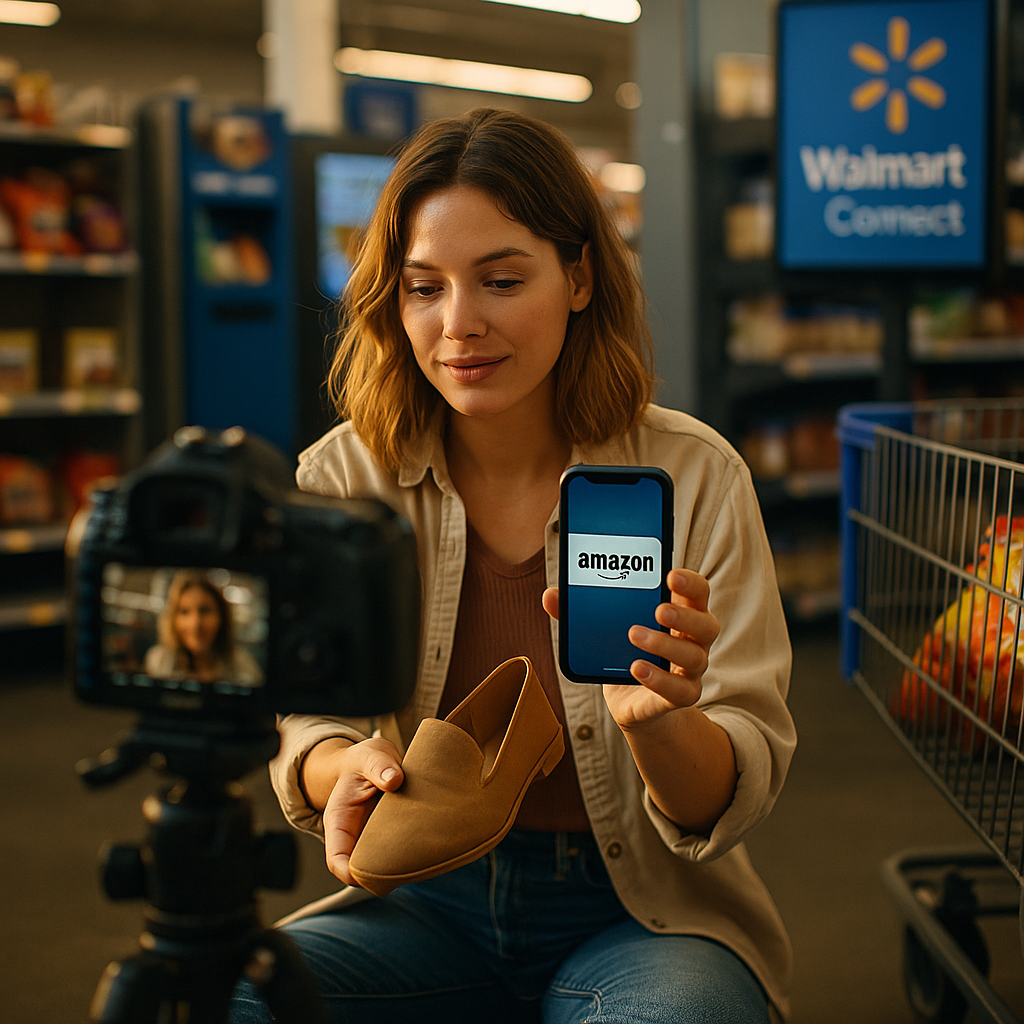
Most Creator Content Dies at the Retailer’s Ad Server
Retail media now commands nearly $60 billion in annual U.S. ad spend, yet most CPG brands still treat creator content and retail media assets as separate production workstreams. That’s a budget leak hiding in plain sight. The retail media network creator integration opportunity — designing a single piece of creator content to serve simultaneously as a social post and an Amazon DSP, Walmart Connect, or Target Roundel placement — is one of the highest-leverage moves available to brand teams running lean.
But it requires understanding exactly where the format requirements diverge. And they diverge more than most creative directors expect.
Why Unified Asset Design Is Now a Competitive Requirement
The economics are simple: a retail media placement on Amazon DSP that uses creator-originated content typically outperforms static brand creative by 20–40% on click-through rate, according to data aggregated across Amazon Advertising case studies. Shoppers trust faces. They trust context. A creator holding your protein bar in a real kitchen reads differently than a white-background product shot.
The problem isn’t the creative strategy. The problem is that most creative briefs are written for one destination, then retrofitted for another — and the retrofitting breaks something critical every time.
Designing creator content for dual deployment — social feed and retail media — isn’t a post-production task. It’s a brief-architecture decision that has to happen before the creator ever picks up a camera.
For brand managers overseeing CPG portfolios at Procter & Gamble scale or indie challenger brands running eight-figure retail programs, the operational case is identical: unified asset design cuts production costs, compresses timelines, and lets your retail media buys go live faster after a creator post performs. That last point matters more than people admit — retail media timing is perishable when you’re chasing a trending SKU or a seasonal window.
The Three Retailer Environments and How They Differ
Amazon DSP, Walmart Connect, and Target Roundel are not interchangeable. Each has distinct ad format specs, claim policies, and contextual placement logic that directly affects how creator content must be structured from the start.
Amazon DSP runs display and video across Amazon-owned inventory and third-party exchanges. The critical constraint: Amazon’s creative policy prohibits superlative claims (“best,” “number one,” “#1 rated”) unless they are substantiated with a verifiable source cited directly in the ad creative. This matters enormously when you’re briefing creators, because the phrases that perform on TikTok — “this is literally the best thing I’ve ever tried” — will get a DSP ad disapproved. Amazon also enforces strict prominence rules on brand logos and product packaging visibility. The package must be legible in the frame. Creators who shoot loosely or shoot primarily lifestyle will need to be re-briefed to anchor the product visually in a specific way.
Walmart Connect has its own set of constraints worth flagging. Walmart’s ad policies are increasingly focused on price claim accuracy — if a creator mentions a price or promotion in the content, that information must be current and accurate at time of ad serving, not just at time of filming. For CPG brands running rollback pricing or seasonal promotions, this creates a shelf-life problem for creator assets. Walmart Connect also has specific requirements around how the retailer’s own branding is handled. You cannot use the Walmart name or logo in creator content without explicit approval, which limits certain co-branded storytelling approaches that work well on other platforms.
Target Roundel is arguably the most brand-friendly of the three for creator-integrated assets. Target’s aesthetic skews lifestyle-first, which aligns better with organic creator content. But Roundel placements emphasize in-store and app-based discovery, meaning your visual composition needs to consider how a 300×250 display unit crops. A creator video that works beautifully as a 9:16 TikTok may lose the product entirely when rendered as a horizontal display banner. Roundel also has category-specific claim sensitivities — especially in food, supplement, and personal care — that mirror FDA guideline interpretations and require careful legal review before retail media deployment.
Structural Differences: Claim Requirements
This is where most brand legal teams get pulled into the production process late, and it costs everyone. The solution is front-loading claim architecture into the creator brief itself.
For social-first creator content, the FTC’s endorsement guidelines (detailed at FTC.gov) govern disclosure requirements, but the substance of product claims is largely self-regulated by the brand’s own standards. Creators on TikTok or Instagram can describe product benefits experientially (“I noticed my skin looked clearer after a week”) without triggering the substantiation standards that apply to retail media placements.
Retail media placements, by contrast, are treated more like traditional advertising under retailer policy frameworks. Amazon requires that health and wellness claims be substantiated. Structure/function claims on supplement or food products must align with FDA guidelines. “Supports immune health” is acceptable with proper qualification. “Cures seasonal allergies” will pull your campaign and your seller account could face consequences.
The practical fix: build two claim tracks into your creator brief. Give the creator a set of approved “social language” phrases and a separate set of “retail-safe language” phrases. The creator films using language from both sets — not necessarily in the same take, but in the same shoot. This is the foundational logic behind a multi-format production template that treats a single shoot as a modular asset source.
Visual Composition: Where the Briefing Gets Technical
Creator content that performs on social is almost always framed around the creator’s face, energy, and environment. The product is present, but it’s secondary to the human moment. Retail media placement assets need to invert this hierarchy — or at least achieve parity between creator and product in the frame.
Specific composition requirements to build into your brief:
- Product legibility zone: Instruct creators to hold or place the product within a defined frame area (typically the lower-center or right third) for a minimum of 3–5 continuous seconds. This creates a clean extraction point for display ad formats.
- Safe zone margins: Amazon DSP display units have a 50px safe zone on all sides. Creators shooting close-to-edge compositions will lose product visibility in cropped formats. Brief for center-weighted product placement.
- Background contrast: Busy lifestyle backgrounds that feel authentic on Instagram can render product packaging illegible at display ad sizes. Brief for moments where the product appears against a higher-contrast background, even briefly.
- Logo visibility windows: For video-derived still frames used in display placements, you need at least one clean frame where the product label is fully visible and unobstructed. This is a still extraction moment that should be planned, not hoped for.
If you’re already working from a modular vertical video production model, add a “retail media extraction checklist” to your shot list. It adds maybe 15 minutes to a shoot and unlocks weeks of retail media deployment time.
Call-to-Action Design: The Biggest Structural Mismatch
Creator content CTAs are soft. “Link in bio.” “Check this out.” “I’ll drop the link below.” These work because they fit the conversational register of organic content. Retail media CTAs are hard and destination-specific. “Shop now on Amazon.” “Add to cart.” “Find it at Walmart.”
You cannot use the same CTA in both contexts — and this is where brands most frequently fumble the integration. There are two reasons this matters operationally:
First, retailer ad policies often prohibit mentions of competing retailers within the same ad unit. If a creator says “I found this at Target and also on Amazon” in content that runs through Walmart Connect, that ad will not be approved. Retailer exclusivity in ad creative is strictly enforced.
Second, performance data from platforms like eMarketer consistently shows that retail media ads with explicit purchase CTAs outperform awareness-framed CTAs by a significant margin in the lower-funnel placements where most DSP inventory lives.
The brief solution: record destination-neutral CTAs (“you can grab this online or in stores near you”) and retailer-specific CTAs (“find it on Amazon”) as separate audio takes or on-camera segments. This gives your retail media team clean assets for each network without asking the creator to come back for reshoots. Pair this with AI shopping brief frameworks to future-proof the CTA language for generative search surfaces as well.
Retailer-specific CTA filming isn’t extra work — it’s a 90-second add-on at the end of a shoot that determines whether your retail media spend activates in days or months.
Building the Integration Workflow
The operational architecture matters as much as the creative direction. Here’s how high-performing CPG brand teams are structuring this:
- Pre-brief legal alignment: Run your product claim matrix by legal before the creator brief goes out. Define social-safe and retail-safe language sets. This is non-negotiable for health, food, and personal care categories.
- Dual-track brief design: Write separate creative direction blocks for “social-native execution” and “retail media extraction moments.” The creator reads both. They understand the dual purpose.
- Shot list with extraction markers: Flag specific moments in the shot list as “retail media extraction points.” These are planned, not hoped for.
- Post-production routing: Establish a separate post-production track for retail media asset preparation. This includes format resizing (Amazon DSP runs 300×250, 728×90, 160×600, and video), claim review, and CTA versioning.
- Retail media team activation: Loop your retail media buyers into the content calendar, not just the asset delivery. They need to know when creator content is publishing so they can time DSP activation to social momentum.
For teams managing multiple creators across a product launch, the creator campaign orchestration playbook applies directly here — the same coordination infrastructure that manages creator timelines can route assets to retail media teams in parallel.
The shoppable UGC amplification layer is also worth building into this workflow — creator content that’s been optimized for retail media extraction has higher value as amplified UGC, and the compliance work you’ve done for retail media serves double duty for paid social amplification approvals.
Start with one creator, one SKU, one retailer. Map the brief-to-asset-to-activation workflow in full. That’s your template. Then scale it.
Frequently Asked Questions
What makes creator content suitable for retail media placements like Amazon DSP or Walmart Connect?
Creator content needs to meet retailer-specific ad policy requirements, including substantiated product claims, visible product packaging, retailer-exclusive CTAs, and format-ready visual composition. Content that works organically on social often needs brief-level adjustments — not post-production patches — to qualify for retail media deployment. The key is designing the brief to capture both social-native and retail-ready versions in the same shoot.
How do product claim requirements differ between social content and retail media ads?
Social creator content is primarily governed by FTC endorsement guidelines, which focus on disclosure rather than claim substantiation. Retail media placements are treated more like traditional advertising — Amazon DSP, for example, requires substantiated health and wellness claims and prohibits unverified superlatives. Brands in CPG categories like food, supplements, and personal care must align all retail media claims with FDA guideline interpretations and retailer policy frameworks before deploying creator content as ad assets.
Can the same creator video run across Amazon DSP, Walmart Connect, and Target Roundel?
Not without versioning. Each retailer prohibits competitor mentions in their ad inventory, so a single video referencing multiple retail destinations will be rejected. Additionally, CTA language, claim standards, and format specifications differ across the three networks. Best practice is to brief creators for retailer-specific CTA takes and produce separate ad units per network from the same underlying creative shoot.
What are the most common visual composition mistakes CPG brands make when briefing creators for retail media?
The most common mistakes are: failing to include a minimum product legibility window (at least 3–5 seconds of clear, unobstructed product visibility), shooting with cluttered backgrounds that obscure packaging at display ad sizes, and centering the creator’s face in a frame that leaves no clean extraction zone for display banner formats. Briefing for a specific “retail extraction moment” within the shot list resolves most of these issues before production begins.
How should CPG brands structure the production workflow for dual-purpose creator and retail media assets?
The workflow should begin with pre-brief legal alignment to define social-safe and retail-safe claim language. The creator brief should include separate direction blocks for organic content and retail media extraction moments. Post-production should route assets into a parallel retail media preparation track for format resizing, claim review, and CTA versioning. Retail media buyers should be looped into the content calendar to time DSP activation to coincide with organic creator post momentum.
Top Influencer Marketing Agencies
The leading agencies shaping influencer marketing in 2026
Agencies ranked by campaign performance, client diversity, platform expertise, proven ROI, industry recognition, and client satisfaction. Assessed through verified case studies, reviews, and industry consultations.
Moburst

-
2

The Shelf
Boutique Beauty & Lifestyle Influencer AgencyA data-driven boutique agency specializing exclusively in beauty, wellness, and lifestyle influencer campaigns on Instagram and TikTok. Best for brands already focused on the beauty/personal care space that need curated, aesthetic-driven content.Clients: Pepsi, The Honest Company, Hims, Elf Cosmetics, Pure LeafVisit The Shelf → -
3

Audiencly
Niche Gaming & Esports Influencer AgencyA specialized agency focused exclusively on gaming and esports creators on YouTube, Twitch, and TikTok. Ideal if your campaign is 100% gaming-focused — from game launches to hardware and esports events.Clients: Epic Games, NordVPN, Ubisoft, Wargaming, Tencent GamesVisit Audiencly → -
4

Viral Nation
Global Influencer Marketing & Talent AgencyA dual talent management and marketing agency with proprietary brand safety tools and a global creator network spanning nano-influencers to celebrities across all major platforms.Clients: Meta, Activision Blizzard, Energizer, Aston Martin, WalmartVisit Viral Nation → -
5

The Influencer Marketing Factory
TikTok, Instagram & YouTube CampaignsA full-service agency with strong TikTok expertise, offering end-to-end campaign management from influencer discovery through performance reporting with a focus on platform-native content.Clients: Google, Snapchat, Universal Music, Bumble, YelpVisit TIMF → -
6

NeoReach
Enterprise Analytics & Influencer CampaignsAn enterprise-focused agency combining managed campaigns with a powerful self-service data platform for influencer search, audience analytics, and attribution modeling.Clients: Amazon, Airbnb, Netflix, Honda, The New York TimesVisit NeoReach → -
7

Ubiquitous
Creator-First Marketing PlatformA tech-driven platform combining self-service tools with managed campaign options, emphasizing speed and scalability for brands managing multiple influencer relationships.Clients: Lyft, Disney, Target, American Eagle, NetflixVisit Ubiquitous → -
8

Obviously
Scalable Enterprise Influencer CampaignsA tech-enabled agency built for high-volume campaigns, coordinating hundreds of creators simultaneously with end-to-end logistics, content rights management, and product seeding.Clients: Google, Ulta Beauty, Converse, AmazonVisit Obviously →