


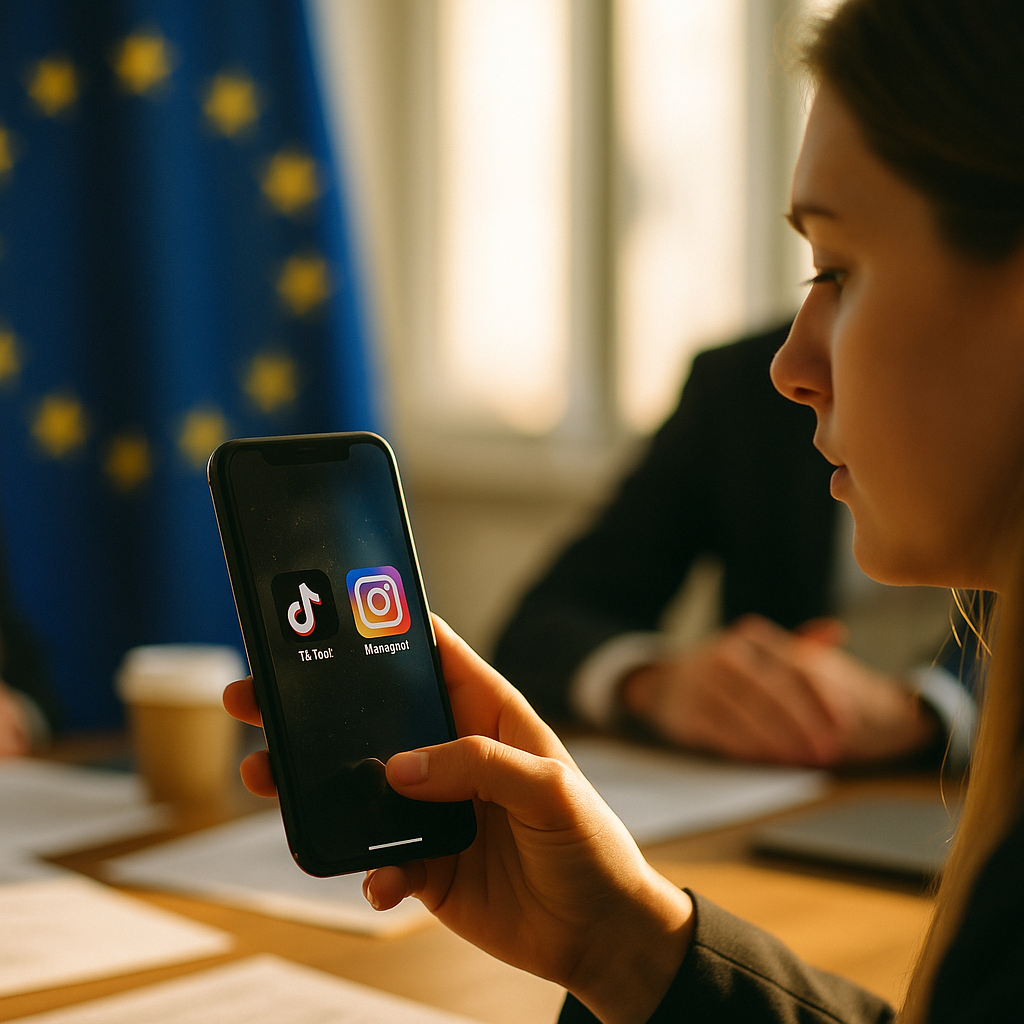
The EU’s Digital Services Act enforcement targeting addictive design is about to change the economics of every influencer campaign running on TikTok and Instagram. If your media plan still assumes infinite scroll delivers your audience on demand, you’re working from an outdated playbook.
What the EU Is Actually Targeting — and Why It’s Not Just a UX Problem
The European Commission’s crackdown isn’t abstract. Regulators have specifically called out infinite scroll, autoplay video loops, and aggressive push notification architectures as “systems that exploit psychological vulnerabilities” — particularly for users under 18. Both TikTok and Meta are under active DSA enforcement scrutiny, with the potential for fines up to 6% of global annual turnover.
This isn’t just about user welfare. It’s a structural intervention in how feeds surface content, how long sessions last, and therefore how often a piece of creator content — paid or organic — gets a second or third impression within a single session. The engagement loops that brands have been quietly relying on for years are exactly what Brussels is trying to dismantle.
For context: TikTok’s average session length has been reported at over 90 minutes per day among heavy users, according to data cited by Statista. That number exists because of autoplay and algorithmic reinforcement. Compress it by 20%, and you’ve meaningfully reduced the probability that a mid-funnel creator video gets served to a warm prospect twice in a day.
The Reach Economics Are Going to Shift — Here’s the Mechanism
Most media planners understand reach and frequency abstractly. Fewer think about the platform-side architecture that enables those numbers. Endless scroll isn’t just a UX quirk; it’s the engine that makes high-frequency creator content exposure possible without a proportional increase in paid spend.
When regulators reduce the scroll time available per session, brands effectively lose organic “bonus exposures” — the impressions that come after a user would have naturally stopped scrolling. This inflates the effective CPM of every campaign running in compressed feed environments.
Instagram has already made some concessions — age verification tests, content warnings, screen time prompts for teen accounts. But the EU is pushing for defaults that apply broadly, not just to users who opt in. The practical effect: shorter average sessions, fewer impressions per user per day, and a more competitive auction environment for the impressions that remain.
Brands running Meta youth-targeted campaigns need to model this explicitly. The impression pool for under-18 audiences on Instagram Reels and TikTok For You is going to shrink by regulatory design — not algorithm drift, not platform policy changes you can work around.
What This Means for Youth-Targeted Campaign Architecture
If you’re a CPG brand, a gaming company, a fashion label, or any vertical that’s built TikTok and Instagram into its core youth acquisition funnel, the design crackdown hits you hardest.
The compliance trajectory is clear: platforms will implement friction — interstitial prompts, default notification limits, opt-in autoplay — for younger users first. That’s not speculation; it’s the stated regulatory expectation. Which means campaigns designed around passive discovery (a teenager stumbles onto a creator’s haul video because the algorithm keeps serving it) will degrade in performance before adult-skewing campaigns do.
Rebuilding for this environment means:
- Shifting from discovery-dependent to intent-driven formats. Search-optimized TikTok content, YouTube SEO, and Pinterest campaigns hold value even in a reduced-session environment because users arrive with intent, not because an algorithm pushed them there.
- Investing in creator content depth, not just volume. If each session is shorter, the content that earns a save, a follow, or a direct profile visit becomes disproportionately valuable. Long-form storytelling in a 60-second format beats ten forgettable clips.
- Reconfiguring notification-dependent re-engagement. Push notification limits mean creator launch-day strategies — where a creator posts and relies on followers getting notified — lose reliability. Build in paid amplification as the default, not the backup.
Review your campaign compliance checklist to ensure platform-specific youth targeting disclosures are baked into your brief templates before DSA enforcement tightens further.
Paid Amplification Economics: Brace for CPM Pressure
Here’s the honest math. Fewer organic impressions means more brands shifting budget into paid amplification to compensate. More dollars chasing a smaller pool of compliant inventory means CPMs go up. TikTok’s ad auction is already competitive in EU markets; add DSA-mandated session compression and you’re looking at a meaningful cost-per-view increase for Spark Ads and boosted creator content.
For brands running always-on creator programs in Germany, France, or the Netherlands, this isn’t a future problem — it’s a budgeting question for the next planning cycle. Audit your current blended CPM benchmarks now, before the algorithmic changes are fully implemented. Your Q3 forecasts may be built on impression economics that no longer hold.
There’s also a secondary effect worth modeling: creator rates may rise. If organic reach per post compresses, creators will — rationally — argue that their content requires more paid support to hit brand KPIs. Expect renegotiation requests, and build that into your creator contract terms before it becomes a surprise.
Brands that pre-negotiate performance guarantees with CPM-indexed paid amplification floors will have far more leverage than those locked into flat-fee creator deals when reach compression hits.
Platform Compliance Isn’t Uniform — Treat Each Market Separately
TikTok’s DSA compliance posture and Meta’s are not identical, and neither maps cleanly onto what the European Commission is demanding. TikTok has been designated a Very Large Online Platform (VLOP) under the DSA, subjecting it to stricter systemic risk audit obligations. Meta is fighting parts of the enforcement on legal grounds. This creates an asymmetric risk environment.
What does that mean operationally? TikTok may implement algorithmic changes faster and more aggressively in EU markets to demonstrate compliance, while Meta lobbies for narrower scope. Brands running cross-platform campaigns should model the possibility that TikTok’s EU feed changes arrive earlier and are more disruptive — and plan hedging strategies accordingly.
For deeper background on TikTok’s data and privacy compliance obligations that intersect with DSA enforcement, the TikTok creator commerce compliance guide covers the intersection of creator programs and EU regulatory exposure in practical detail.
On Meta’s side, Meta Business has published updated policy guidance for advertisers running youth-targeted inventory — review it before your next campaign launch in EU markets.
Contracts, Briefs, and the Regulatory Paper Trail You Need
If the EU enforcement action results in reduced performance on a campaign, your creator contracts need to clearly define what performance guarantees exist — and whether force majeure or platform policy change clauses apply. Too many brand-side agreements are silent on this. A creator delivering 300K organic views per Reel today may deliver 190K under a DSA-compressed feed. Who absorbs that gap?
Update your creator briefs to explicitly reference the regulatory environment. This serves two purposes: it sets realistic expectations with talent, and it creates a paper trail showing your program operated with awareness of the compliance context — relevant if your youth-targeted campaigns ever face regulatory scrutiny themselves. The TikTok ad network compliance framework is a useful operational reference point for brands tightening their EU data practices alongside their campaign architecture.
For brands operating across both EU and US markets, note that FTC guidelines on youth-targeted advertising add another compliance layer on top of DSA requirements — your legal review should cover both simultaneously.
The brands that come through this transition with their performance metrics intact won’t be the ones that waited for platform announcements. They’ll be the ones who modeled the reach compression now, restructured their paid amplification floors, and locked in creator contracts that account for the regulatory environment before it becomes a dispute. Start with your EU market allocation — that’s where the first wave lands.
FAQs
What is the EU’s “addictive design” crackdown and which platforms does it affect?
The European Commission, under the Digital Services Act, is targeting platform design features — including infinite scroll, autoplay video, and aggressive push notifications — that regulators classify as exploiting user psychology to extend engagement time. TikTok and Meta (Instagram, Facebook) are primary targets as designated Very Large Online Platforms, and face fines up to 6% of global annual turnover for non-compliance.
How will algorithmic changes under the DSA affect creator reach on TikTok and Instagram?
If platforms reduce session length through mandatory friction (interstitial prompts, opt-in autoplay, default notification limits), each piece of creator content receives fewer organic bonus impressions within a session. This compresses organic reach per post and increases dependency on paid amplification to maintain campaign delivery targets.
Will paid CPMs on TikTok and Instagram increase as a result of DSA enforcement?
Almost certainly in EU markets. Reduced organic impression inventory pushes more brand spend into paid auctions. More advertiser dollars competing for fewer compliant impressions drives up CPM. Brands should model a 15–30% CPM increase buffer for EU campaigns in affected formats when planning future budgets.
Does the addictive design crackdown apply to non-EU campaigns?
Directly, no — DSA enforcement is scoped to EU users. However, platform algorithmic changes often roll out globally for operational consistency. If TikTok or Meta redesigns core feed mechanics for EU compliance, those changes frequently affect the global product. Non-EU brands should monitor platform announcements closely rather than assuming full insulation.
What contract changes should brands make to protect against reach compression?
Brands should add performance adjustment clauses that account for documented platform policy or regulatory changes. This includes defining baseline impression benchmarks, specifying whether paid amplification is included in creator fee structures, and adding platform change carve-outs to force majeure provisions. Pre-negotiating CPM-indexed paid amplification floors protects brands when organic delivery drops below contracted targets.
Are youth-targeted campaigns on TikTok and Instagram at higher risk than adult-skewing campaigns?
Yes. The DSA’s addictive design provisions focus specifically on minors. Regulators have been explicit that features targeting users under 18 — including algorithmic recommendation systems and push notifications — face the strictest scrutiny. Brands running campaigns against under-18 audiences should expect earlier and more significant algorithmic changes than those targeting adult segments.
Top Influencer Marketing Agencies
The leading agencies shaping influencer marketing in 2026
Agencies ranked by campaign performance, client diversity, platform expertise, proven ROI, industry recognition, and client satisfaction. Assessed through verified case studies, reviews, and industry consultations.
Moburst

-
2

The Shelf
Boutique Beauty & Lifestyle Influencer AgencyA data-driven boutique agency specializing exclusively in beauty, wellness, and lifestyle influencer campaigns on Instagram and TikTok. Best for brands already focused on the beauty/personal care space that need curated, aesthetic-driven content.Clients: Pepsi, The Honest Company, Hims, Elf Cosmetics, Pure LeafVisit The Shelf → -
3

Audiencly
Niche Gaming & Esports Influencer AgencyA specialized agency focused exclusively on gaming and esports creators on YouTube, Twitch, and TikTok. Ideal if your campaign is 100% gaming-focused — from game launches to hardware and esports events.Clients: Epic Games, NordVPN, Ubisoft, Wargaming, Tencent GamesVisit Audiencly → -
4

Viral Nation
Global Influencer Marketing & Talent AgencyA dual talent management and marketing agency with proprietary brand safety tools and a global creator network spanning nano-influencers to celebrities across all major platforms.Clients: Meta, Activision Blizzard, Energizer, Aston Martin, WalmartVisit Viral Nation → -
5

The Influencer Marketing Factory
TikTok, Instagram & YouTube CampaignsA full-service agency with strong TikTok expertise, offering end-to-end campaign management from influencer discovery through performance reporting with a focus on platform-native content.Clients: Google, Snapchat, Universal Music, Bumble, YelpVisit TIMF → -
6

NeoReach
Enterprise Analytics & Influencer CampaignsAn enterprise-focused agency combining managed campaigns with a powerful self-service data platform for influencer search, audience analytics, and attribution modeling.Clients: Amazon, Airbnb, Netflix, Honda, The New York TimesVisit NeoReach → -
7

Ubiquitous
Creator-First Marketing PlatformA tech-driven platform combining self-service tools with managed campaign options, emphasizing speed and scalability for brands managing multiple influencer relationships.Clients: Lyft, Disney, Target, American Eagle, NetflixVisit Ubiquitous → -
8

Obviously
Scalable Enterprise Influencer CampaignsA tech-enabled agency built for high-volume campaigns, coordinating hundreds of creators simultaneously with end-to-end logistics, content rights management, and product seeding.Clients: Google, Ulta Beauty, Converse, AmazonVisit Obviously →