


Four Platforms, One Question: Which Actually Moves the Needle?
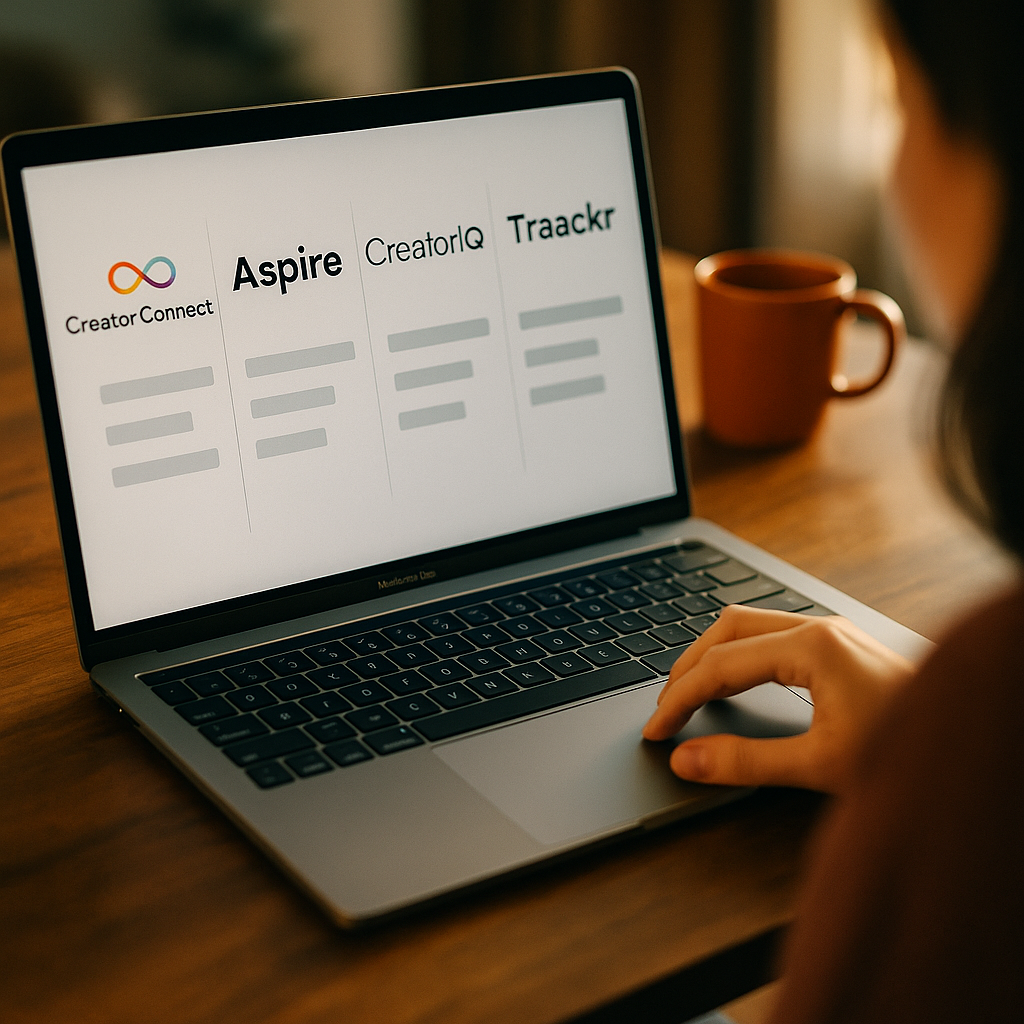
Brands now spend an average of 19% of their influencer marketing budget on platform software alone, yet most can’t definitively say which tool drove a conversion. Enter Creator Connect, X’s AI-powered brand-creator matching tool, arriving into a market already occupied by enterprise-grade platforms like Aspire, CreatorIQ, and Traackr. This analysis cuts through the feature marketing to compare all four on the dimensions that actually matter to brand teams: discovery precision, distribution automation, and performance dashboard granularity.
Discovery Precision: Matching Signals vs. Matching Noise
Creator discovery sounds solved. It isn’t. Most platforms still over-index on follower count and engagement rate, two metrics that have been gamed so thoroughly they’re nearly decorative at this point.
Creator Connect takes a different angle. Built natively into X’s data infrastructure, it uses real-time conversation graphs, topic clustering, and behavioral signals from X’s own firehose to match brands with creators whose audiences are demonstrably engaged with relevant content categories. The core advantage is recency: because the matching model runs on live platform data, it can surface a creator who’s trending in your product category this week, not someone who was relevant six months ago when a competitor’s database last updated.
Aspire has historically been strong on e-commerce discovery, particularly for DTC brands, with filters that drill into audience demographics, past brand affiliations, and performance benchmarks by vertical. Its lookalike modeling is genuinely useful if you have a roster of proven creators and want to scale horizontally.
CreatorIQ plays in the enterprise tier. Its discovery engine pulls from a verified network of over 20 million creator profiles and leans heavily on proprietary “Creator Intelligence” scores that factor in audience quality, fraud signals, and historical brand safety. For a Fortune 500 team running campaigns across 12 markets simultaneously, that depth matters. The tradeoff is that the model is somewhat static: it rewards proven track records over emerging momentum.
Traackr differentiates on audience overlap analysis and influencer vetting depth. If your primary concern is avoiding creator overlap across a multi-agency program — a very real operational headache — Traackr’s discovery layer handles that better than the others. It also integrates FTC disclosure compliance flags directly into the discovery workflow, which reduces legal review cycles downstream.
Discovery precision is only as good as the underlying data freshness. Platforms that rely on crawled public data updated monthly will always lag behind tools with direct API access to platform signals — and that gap compounds during trend cycles where relevance windows can be under 72 hours.
Distribution Automation: Who Actually Saves Your Team Time?
This is where the gaps become operational. Discovery gets the attention, but distribution automation is where hours get lost or recovered every week.
Creator Connect’s automation is tightly scoped to the X ecosystem. Campaign briefs, content approvals, and payment flows are streamlined within the platform, but cross-channel distribution requires additional tooling. If your program lives primarily on X, that’s acceptable. If you’re running a multi-platform strategy across Instagram, TikTok, and YouTube, you’ll need to bridge Creator Connect with a separate workflow layer. That’s a real integration cost — and one worth pressure-testing before committing to it as your primary tool. Teams evaluating MarTech interoperability risks should treat single-platform automation as a yellow flag, not a dealbreaker, but definitely something to scope carefully.
Aspire built its reputation on campaign workflow automation. Its end-to-end model covers creator outreach, contract generation, content review, affiliate link generation, and payment — all inside one interface. For lean brand teams running high-volume micro-influencer programs, this is the most operationally complete option. The weakness is that advanced attribution requires additional configuration, and its native reporting doesn’t connect deeply enough to revenue data without external integrations.
CreatorIQ offers robust automation at scale but with a steeper implementation curve. Its Salesforce and Sprinklr integrations are genuinely powerful for enterprise teams that have already invested in those stacks. Automated performance alerts, campaign pacing notifications, and creator compliance tracking are baked in. Smaller teams or those without dedicated MarTech ops resources will find the setup overhead significant.
Traackr focuses automation energy on reporting workflows and influencer relationship management rather than campaign execution mechanics. It’s stronger as a system of record than a system of execution. Teams that have a separate paid media layer for distribution will find this complementary. Teams expecting full campaign management from one tool will find gaps.
Performance Dashboard Granularity: What You Can Actually See
Here’s a blunt take: most influencer platforms show you impressions and engagement, then call it analytics. The real differentiator in dashboard granularity is whether the tool can connect creator activity to business outcomes — conversions, pipeline, revenue attribution.
Creator Connect is the newest entrant, and its dashboard reflects that. Real-time post-level metrics, engagement breakdowns, and audience reach data are solid for an X-native program. Revenue attribution, however, is underdeveloped compared to the incumbents. X’s ad infrastructure doesn’t yet support the deep conversion tracking that a tool like CreatorIQ can deliver through third-party pixel integrations and data clean room partnerships. For brand teams that need to justify influencer spend to a CFO, this gap is material.
Aspire’s dashboard is strong on content performance and affiliate-linked revenue tracking. If your influencer program is heavily commerce-oriented, its sales attribution reporting through affiliate and promo code tracking is among the best available. Where it underperforms is on upper-funnel brand lift metrics and cross-channel view-through attribution. Teams doing UGC sales lift analysis will likely need supplemental tooling.
CreatorIQ wins on dashboard depth for enterprise programs. Its benchmarking engine allows brands to compare campaign performance against industry and category norms, not just internal historical data. Its integration with CRM attribution pipelines means performance data can flow directly into revenue reporting structures that CMOs and CFOs actually use. The caveat: you need a competent analytics team to configure it properly, and out-of-the-box reporting requires significant customization before it’s CMO-ready.
Traackr introduced its “Program Health” reporting framework, which is genuinely useful for multi-market brand safety monitoring and share-of-voice tracking across competitor creator programs. For brands running always-on influencer strategies rather than campaign-burst models, this longitudinal view is a competitive advantage. It also connects well with real-time ROI dashboard setups when live campaign visibility is critical.
Stack Compatibility and Total Cost of Ownership
No tool evaluation is complete without the TCO conversation. License fees are the visible cost. Integration labor, data reconciliation, and parallel tooling for capability gaps are the invisible ones that routinely 2x the real expense.
Creator Connect’s pricing model is still maturing, and X has shown a pattern of rapid feature and pricing changes, which introduces budget planning risk. Aspire operates on tiered SaaS pricing that scales with creator roster size and is generally accessible for mid-market programs. CreatorIQ is enterprise-priced and typically requires a multi-year commitment to justify the implementation investment. Traackr sits in a similar enterprise bracket but with more modular packaging options.
Teams evaluating vendor consolidation strategy should pressure-test whether adding Creator Connect as a fifth tool creates more redundancy than value, or whether it can genuinely replace something already in the stack. X’s native data advantage is real. Its ecosystem maturity is not yet at parity with the incumbents.
The honest answer for most enterprise brands right now: CreatorIQ or Traackr for program-wide infrastructure, Aspire for high-volume execution, and Creator Connect as a channel-specific supplement for X-native campaigns — not as a primary platform replacement.
The Compliance and Brand Safety Layer
Worth a direct mention because it’s frequently underweighted in platform comparisons. FTC disclosure requirements and brand safety filtering are not optional considerations; they’re operational necessities that differ meaningfully across these tools.
Traackr has the most mature compliance workflow, with built-in disclosure tracking and audit logging that satisfies legal review requirements at scale. CreatorIQ’s brand safety filtering is deep, with third-party integrations for content moderation scoring. Aspire added disclosure flagging in recent releases but it’s less automated than Traackr. Creator Connect’s compliance layer is the least developed of the four, which matters more as data privacy regulators increase scrutiny of platform-level data usage in AI matching tools.
The Decision Framework
If your influencer program is primarily X-native, creator connect offers real-time discovery advantages that none of the legacy platforms can replicate on that platform. If you’re managing a multi-platform, multi-region program with CFO-level attribution requirements, CreatorIQ remains the most complete enterprise solution despite its setup complexity. Aspire is the right call for DTC-oriented, commerce-driven programs that need end-to-end execution automation without a large ops team. Traackr wins for brands running always-on programs where compliance, relationship management, and competitive benchmarking drive the measurement agenda.
Before you renew, expand, or consolidate, run a structured MarTech readiness audit to validate which capability gaps in your current stack are tool problems versus process problems. Many brands overpay for platform capabilities they never deploy.
The platform that best matches your needs depends entirely on where your creators live, how your team is structured, and what your CFO needs to see at the end of the quarter. Pick the tool that answers all three questions — not just the first one.
Frequently Asked Questions
How does X’s Creator Connect differ from CreatorIQ in discovery capabilities?
Creator Connect uses live X platform data — conversation graphs, real-time topic clustering, and behavioral engagement signals — to match brands with creators. This gives it a recency advantage for X-native campaigns. CreatorIQ, by contrast, draws from a verified database of over 20 million creator profiles with deep historical performance data and audience quality scoring, making it stronger for multi-platform discovery and enterprise-scale vetting where track record matters more than trending momentum.
Is Creator Connect suitable for multi-platform influencer programs?
Creator Connect’s automation and reporting are optimized for the X ecosystem. For multi-platform programs spanning Instagram, TikTok, and YouTube, you will need supplemental tooling to cover distribution, performance tracking, and workflow management across other channels. Treating it as a channel-specific module within a broader stack is more practical than deploying it as a standalone platform for multi-channel programs.
Which influencer marketing platform offers the best ROI attribution for CMO reporting?
CreatorIQ currently offers the deepest attribution capabilities for CMO-level reporting, particularly through its CRM integrations and third-party pixel support. Aspire is strong for commerce-driven attribution through affiliate links and promo codes. Traackr provides robust longitudinal benchmarking for always-on programs. Creator Connect’s attribution layer is the least mature of the four as of its current development stage.
How do these platforms handle FTC disclosure compliance?
Traackr has the most mature compliance workflow among the four, with built-in disclosure tracking and audit logging suitable for legal review at scale. CreatorIQ integrates third-party content moderation for brand safety. Aspire has added disclosure flagging functionality but with less automation depth than Traackr. Creator Connect’s compliance infrastructure is the least developed, which is worth factoring in for brands with significant regulatory exposure.
What is the total cost of ownership difference between Aspire and CreatorIQ?
Aspire operates on tiered SaaS pricing that scales with roster size, making it accessible for mid-market programs without large implementation investments. CreatorIQ is enterprise-priced and typically requires multi-year contracts along with significant internal or agency resources to configure properly. The real TCO gap widens when you factor in integration labor, custom reporting setup, and the internal analyst time required to operate CreatorIQ at its full capability versus Aspire’s more out-of-the-box workflow model.
Top Influencer Marketing Agencies
The leading agencies shaping influencer marketing in 2026
Agencies ranked by campaign performance, client diversity, platform expertise, proven ROI, industry recognition, and client satisfaction. Assessed through verified case studies, reviews, and industry consultations.
Moburst

-
2

The Shelf
Boutique Beauty & Lifestyle Influencer AgencyA data-driven boutique agency specializing exclusively in beauty, wellness, and lifestyle influencer campaigns on Instagram and TikTok. Best for brands already focused on the beauty/personal care space that need curated, aesthetic-driven content.Clients: Pepsi, The Honest Company, Hims, Elf Cosmetics, Pure LeafVisit The Shelf → -
3

Audiencly
Niche Gaming & Esports Influencer AgencyA specialized agency focused exclusively on gaming and esports creators on YouTube, Twitch, and TikTok. Ideal if your campaign is 100% gaming-focused — from game launches to hardware and esports events.Clients: Epic Games, NordVPN, Ubisoft, Wargaming, Tencent GamesVisit Audiencly → -
4

Viral Nation
Global Influencer Marketing & Talent AgencyA dual talent management and marketing agency with proprietary brand safety tools and a global creator network spanning nano-influencers to celebrities across all major platforms.Clients: Meta, Activision Blizzard, Energizer, Aston Martin, WalmartVisit Viral Nation → -
5

The Influencer Marketing Factory
TikTok, Instagram & YouTube CampaignsA full-service agency with strong TikTok expertise, offering end-to-end campaign management from influencer discovery through performance reporting with a focus on platform-native content.Clients: Google, Snapchat, Universal Music, Bumble, YelpVisit TIMF → -
6

NeoReach
Enterprise Analytics & Influencer CampaignsAn enterprise-focused agency combining managed campaigns with a powerful self-service data platform for influencer search, audience analytics, and attribution modeling.Clients: Amazon, Airbnb, Netflix, Honda, The New York TimesVisit NeoReach → -
7

Ubiquitous
Creator-First Marketing PlatformA tech-driven platform combining self-service tools with managed campaign options, emphasizing speed and scalability for brands managing multiple influencer relationships.Clients: Lyft, Disney, Target, American Eagle, NetflixVisit Ubiquitous → -
8

Obviously
Scalable Enterprise Influencer CampaignsA tech-enabled agency built for high-volume campaigns, coordinating hundreds of creators simultaneously with end-to-end logistics, content rights management, and product seeding.Clients: Google, Ulta Beauty, Converse, AmazonVisit Obviously →