


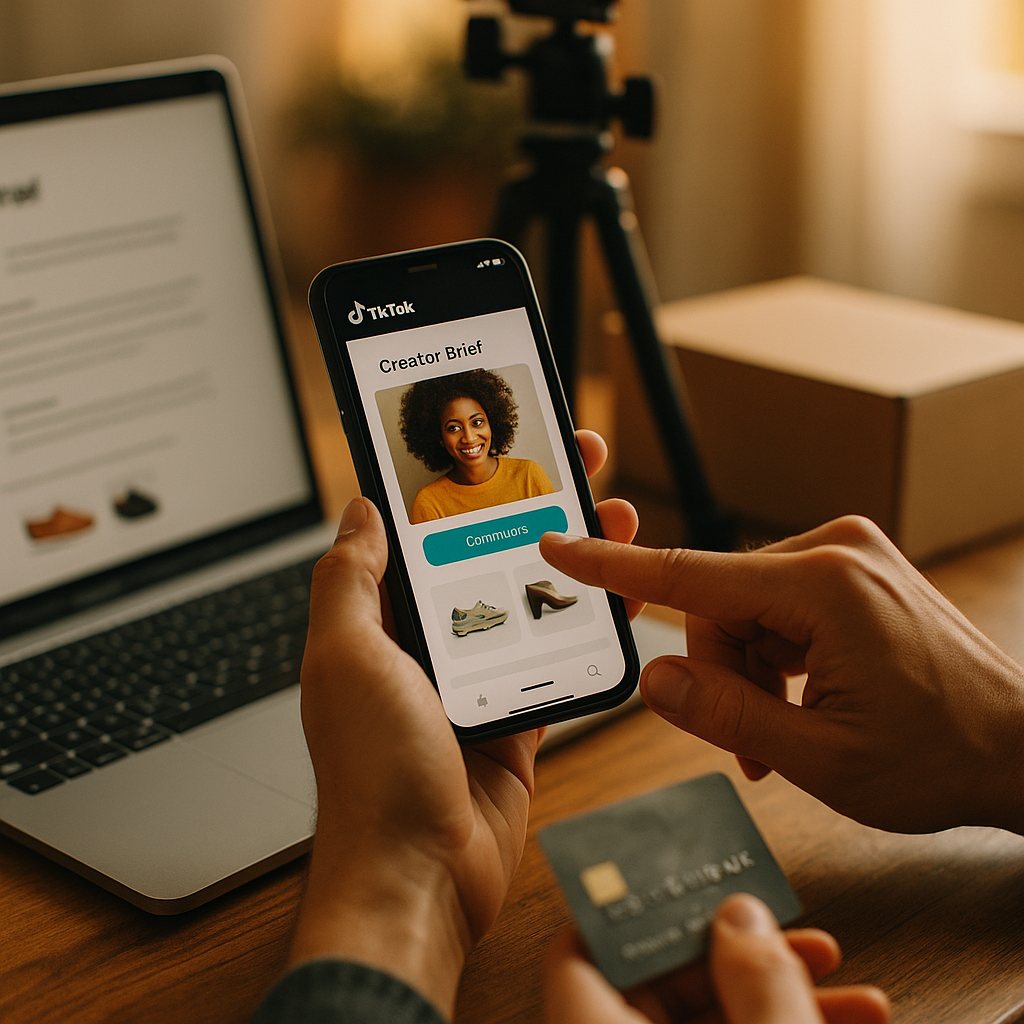
Awareness doesn’t pay for shelf space. Yet most social commerce briefs still optimize for views, not conversions. Research from eMarketer shows TikTok Shop conversion rates outperform every other social platform when content triggers specific emotional states before the checkout prompt — but most brand teams are still writing briefs that ask creators to “be authentic” and hope for the best.
Why Emotional State Engineering Is the Real Brief
The gap between a creator video that generates saves and one that generates same-session purchases isn’t production quality. It isn’t follower count. It’s emotional sequencing. The viewer has to feel something specific before the “Shop Now” overlay becomes irresistible rather than ignorable.
In CPG and fashion, two emotional states drive immediate purchase completion above all others: acute desire (the “I need this now” response triggered by visual scarcity, social proof density, and sensory language) and identity resolution (the moment a viewer sees a product as a symbol of who they are trying to become). Your brief needs to direct the creator toward one of these states deliberately, not accidentally.
The difference between a TikTok video that generates saves and one that drives same-session checkouts is rarely the product — it’s the emotional sequence the creator builds in the first 90 seconds of the viewer’s attention.
Most brand teams treat the creator brief as a compliance document. List the claims. Include the hashtags. Flag the FTC disclosures. That’s necessary, but it’s table stakes. The brief that actually moves product goes further: it specifies the emotional arc, the moment of tension, and the resolution the product provides.
The Four-Phase Emotional Arc for TikTok Social Commerce
Here’s a framework built around how TikTok’s algorithm surfaces content and how purchase psychology works in fast-scroll environments. Think of it as four distinct phases your brief needs to choreograph.
Phase 1: Pattern Interrupt (0-3 seconds). The hook must disrupt the scroll by triggering mild cognitive dissonance. Not shock. Not a jump cut. Dissonance. A question the viewer’s brain can’t ignore. “Why does this moisturizer smell like a bakery and actually work?” is better than “My skincare routine.” For short-form video hooks that reliably stop the scroll, brief the creator on a specific dissonance trigger relevant to your product category — don’t leave this to their interpretation.
Phase 2: Desire Amplification (3-15 seconds). This is where you direct the creator to build acute desire. In CPG, this means sensory language: texture, scent, taste, sound. The ASMR-adjacent moment of cutting into that chocolate bar or pressing the lid of a luxury serum closed. In fashion, it’s the transformation reveal combined with social context (“I wore this to three events in one week and strangers kept stopping me”). Brief the specific sensory or social proof beat you want here. Do not leave it vague.
Phase 3: Identity Mirroring (15-40 seconds). The creator becomes a proxy for the viewer’s aspirational self. This is where “authentic creator voice” actually matters — but it needs to be calibrated to your target identity, not the creator’s personal brand. Your brief should describe the specific life situation your target customer is in right now and ask the creator to speak directly into that situation. “If you’re the person in the office who everyone assumes has their life together but you’re running on four hours of sleep” is a brief. “Speak to busy women” is not.
Phase 4: Resolution and Removal of Friction (40-60 seconds). The product resolves the tension established in Phase 2 and 3. The creator then removes the final purchase barrier — and this is where most briefs completely fail. The CTA needs to be emotionally congruent with the state the viewer is in, not a generic “link in bio.” Brief the creator to use language like “I grabbed it during lunch and it showed up the next day” (removing shipping anxiety) or “It’s literally less than my coffee this week” (removing price friction). For deeper conversion architecture, the approach used in TikTok emotional trigger strategy is worth mapping to your category.
CPG vs. Fashion: The Emotional Triggers Are Not Interchangeable
A brief that works for a snack brand will sabotage a fashion campaign. The emotional mechanics are different.
In CPG, the primary conversion triggers are sensory immediacy and social normalization. The viewer needs to feel the product in their hands before they’ve bought it, and they need to see that people like them are already using it. The brief should specify sensory demonstration requirements and the type of social proof the creator deploys (peer testimonial vs. expert authority vs. volume proof like “sold out twice already”).
In fashion, the triggers are identity aspiration and FOMO compression. The viewer needs to see themselves wearing the item in a life they want. Scarcity signals (“this colorway is almost gone”) and social desirability cues (“I’ve gotten more compliments in this than anything I own”) close the loop. The fashion retail brief framework for TikTok Shop offers a useful structural reference for how to sequence these signals correctly.
The critical mistake brand teams make is writing one brief template and applying it across categories. CPG briefs should specify the sensory beat in writing. Fashion briefs should specify the social context scene the creator needs to establish. These are different documents requiring different emotional intelligence from the creator.
What to Actually Write in the Brief
Stop writing briefs that describe the product. Write briefs that describe the viewer’s emotional state at the moment they tap “Buy.”
Practically, this means including a section your brief template probably doesn’t have: Emotional Journey Specification. This section tells the creator:
- What emotional state the viewer is in when they encounter this video (scrolling during a lunch break, browsing in bed at 11pm, watching between meetings)
- What emotional tension the video should introduce by second 10
- What emotional resolution the product provides by second 45
- What the viewer should be feeling in the two seconds before the CTA appears
This isn’t abstract. A viewer watching at 11pm is already in a low-impulse-control, high-emotional-receptivity state. A viewer on a lunch break is time-compressed and responds to efficiency framing. Brief for the context, not just the content.
For teams running multiple creator activations simultaneously, modular brief frameworks for A/B testing let you isolate which emotional trigger is driving conversion lift without rebuilding your entire creative approach.
Brief the emotional state the viewer should be in two seconds before your CTA — not the product features you want the creator to mention. Features inform; emotional states convert.
Compliance, Disclosure, and Emotional Authenticity
Emotional engineering doesn’t mean manipulative content. The FTC’s disclosure guidelines apply regardless of how sophisticated your brief is, and TikTok’s own TikTok for Business policies require clear paid partnership labeling in TikTok Shop content. These requirements are non-negotiable.
What’s negotiable is how you sequence disclosure without killing the emotional arc. The most effective approach: disclosure in the first frame as a text overlay, then the creator proceeds into the emotional journey without referencing the partnership again. The authenticity of the emotional journey is not diminished by disclosure. What kills conversion is when the creator is visibly performing enthusiasm they don’t have — and no amount of emotional brief engineering fixes a creator who doesn’t actually believe in the product.
Vetting creator affinity before briefing matters more than most teams admit. The Sprout Social creator discovery tools and platforms like Statista’s commerce research both point to genuine product affinity as the single strongest predictor of conversion rate on creator content. Assign fashion briefs to creators who genuinely follow your aesthetic. Assign CPG briefs to creators who would actually buy the product category.
Measuring Emotional Engagement Beyond Vanity Metrics
If you’re still using view count or even engagement rate as your primary brief success metric, your optimization loop is broken. For social commerce briefs, the metrics that matter are: add-to-cart rate from creator-specific UTMs, checkout completion rate (not just initiation), and repeat purchase correlation from first-touch creator attribution.
TikTok Shop’s native analytics now surfaces product page visits segmented by creator video. Use this. Cross-reference with your own first-party data to identify which emotional arc produced not just a first purchase but a repeat buyer. The brief that builds a customer beats the brief that builds a clip every time. For integrating creator content into your broader conversion architecture, the approach to UGC on product pages extends the emotional journey from TikTok into owned commerce environments.
Audit your last five creator activations. For each one, can you identify the specific emotional state the video was designed to create? If you can’t, your brief didn’t specify one. Start there.
Frequently Asked Questions
What is a social commerce emotional engagement brief?
A social commerce emotional engagement brief is a creator direction document that goes beyond product messaging to specify the emotional arc a video should create in the viewer. It defines the emotional state the audience should be in at each stage of the content, from the hook through to the purchase CTA, with the goal of triggering immediate purchase completion rather than passive awareness or saves.
How do emotional triggers differ between CPG and fashion on TikTok?
In CPG categories, the primary conversion triggers are sensory immediacy (recreating the feel, smell, taste, or texture of the product through video) and social normalization (showing that people like the viewer already use it). In fashion, the dominant triggers are identity aspiration (the viewer seeing themselves in the product) and FOMO compression using scarcity and social desirability signals. Applying the same emotional brief template across both categories is a common and costly mistake.
How should a brief specify emotional sequencing without being prescriptive?
The most effective approach is to brief the emotional outcome at each phase rather than dictating exact scripts. Specify what emotional tension should exist by second 10, what the viewer should feel during the product moment, and what emotional state should exist in the two seconds before the CTA. This gives creators latitude for authentic delivery while ensuring the emotional architecture serves conversion goals.
Does emotional engineering in creator briefs raise compliance concerns?
No more than any other form of directed creative. FTC disclosure requirements apply to all paid creator content regardless of brief sophistication, and TikTok for Business policies require paid partnership labeling in TikTok Shop videos. Emotional engagement strategy does not conflict with these requirements. The key is sequencing disclosure (typically as a first-frame text overlay) in a way that doesn’t interrupt the emotional arc the rest of the video builds.
What metrics should brands track to evaluate emotional brief effectiveness?
The most meaningful metrics for social commerce briefs are add-to-cart rate from creator-specific UTMs, checkout completion rate (not just initiation), and repeat purchase correlation from first-touch creator attribution. TikTok Shop’s native analytics now surfaces product page visits segmented by creator video, which allows direct comparison of which emotional brief approach produces the highest conversion, not just the highest engagement.
How many creators should be briefed with different emotional arc variants to test performance?
For meaningful A/B data, brief a minimum of two creators per emotional variant and run each for at least two weeks before drawing conclusions. Testing acute desire framing against identity resolution framing in the same product category with comparable creator audiences will reveal which trigger drives higher checkout completion for your specific buyer. Modular brief frameworks designed for variant testing make this process significantly more operationally efficient.
Top Influencer Marketing Agencies
The leading agencies shaping influencer marketing in 2026
Agencies ranked by campaign performance, client diversity, platform expertise, proven ROI, industry recognition, and client satisfaction. Assessed through verified case studies, reviews, and industry consultations.
Moburst

-
2

The Shelf
Boutique Beauty & Lifestyle Influencer AgencyA data-driven boutique agency specializing exclusively in beauty, wellness, and lifestyle influencer campaigns on Instagram and TikTok. Best for brands already focused on the beauty/personal care space that need curated, aesthetic-driven content.Clients: Pepsi, The Honest Company, Hims, Elf Cosmetics, Pure LeafVisit The Shelf → -
3

Audiencly
Niche Gaming & Esports Influencer AgencyA specialized agency focused exclusively on gaming and esports creators on YouTube, Twitch, and TikTok. Ideal if your campaign is 100% gaming-focused — from game launches to hardware and esports events.Clients: Epic Games, NordVPN, Ubisoft, Wargaming, Tencent GamesVisit Audiencly → -
4

Viral Nation
Global Influencer Marketing & Talent AgencyA dual talent management and marketing agency with proprietary brand safety tools and a global creator network spanning nano-influencers to celebrities across all major platforms.Clients: Meta, Activision Blizzard, Energizer, Aston Martin, WalmartVisit Viral Nation → -
5

The Influencer Marketing Factory
TikTok, Instagram & YouTube CampaignsA full-service agency with strong TikTok expertise, offering end-to-end campaign management from influencer discovery through performance reporting with a focus on platform-native content.Clients: Google, Snapchat, Universal Music, Bumble, YelpVisit TIMF → -
6

NeoReach
Enterprise Analytics & Influencer CampaignsAn enterprise-focused agency combining managed campaigns with a powerful self-service data platform for influencer search, audience analytics, and attribution modeling.Clients: Amazon, Airbnb, Netflix, Honda, The New York TimesVisit NeoReach → -
7

Ubiquitous
Creator-First Marketing PlatformA tech-driven platform combining self-service tools with managed campaign options, emphasizing speed and scalability for brands managing multiple influencer relationships.Clients: Lyft, Disney, Target, American Eagle, NetflixVisit Ubiquitous → -
8

Obviously
Scalable Enterprise Influencer CampaignsA tech-enabled agency built for high-volume campaigns, coordinating hundreds of creators simultaneously with end-to-end logistics, content rights management, and product seeding.Clients: Google, Ulta Beauty, Converse, AmazonVisit Obviously →