


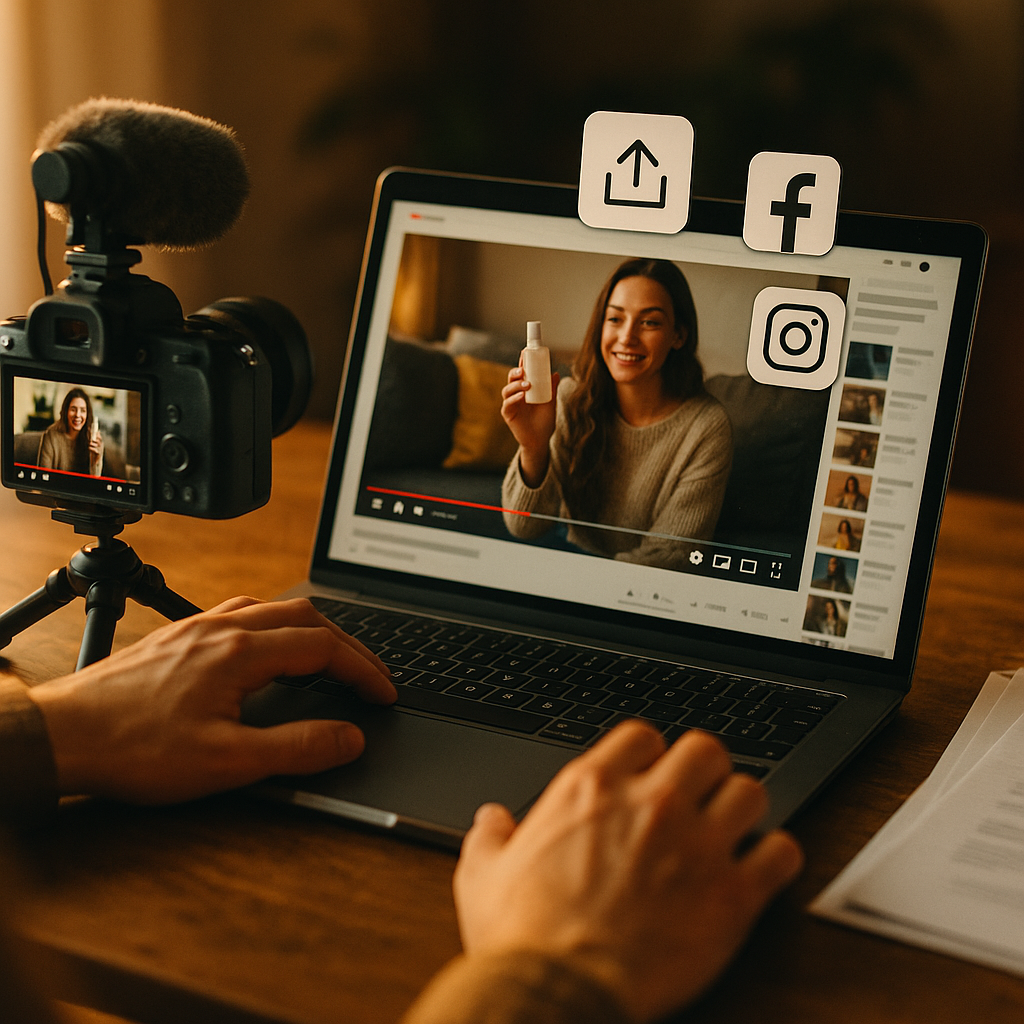
Most Brands Are Leaving 80% of Their UGC on the Table
Seventy-nine percent of consumers say UGC highly impacts their purchasing decisions, yet the average brand repurposes less than 20% of the content their customers actually create. That gap is not a content problem. It is an operational problem. The UGC distribution engine model exists to close it, permanently.
Why the “Collect and Post” Era Is Over
For most of the past decade, brands treated UGC as a nice supplementary layer. Someone tags your product in a good photo, your social team reposts it, maybe drops it into an email campaign. Done. The content sits in a folder somewhere and slowly becomes irrelevant.
That approach made sense when organic reach was predictable and paid media was cheap. Neither condition applies anymore. Sprout Social data consistently shows organic reach declining across major platforms while cost-per-click on paid social climbs. Brands are being squeezed from both sides, and UGC, which costs a fraction of produced creative, has become a critical pressure valve. But only if you stop treating it as a peripheral asset.
The operational shift required is significant. You are not tweaking a workflow. You are redesigning a function.
What a UGC Distribution Engine Actually Looks Like
Think of it as a four-layer system running simultaneously, not sequentially.
Layer 1: Continuous ingestion. This means capturing UGC at scale across platforms, including TikTok, Instagram, Reddit threads, YouTube community posts, and even product review sections. Tools like TINT, Bazaarvoice, and Stackla automate collection and rights clearance at the volume modern programs require. Manual curation cannot scale. If your team is still screenshotting mentions, you are already behind.
Layer 2: Cultural signal filtering. Not every piece of UGC is equal. The filtering layer identifies content that is gaining traction organically, aligns with a current cultural conversation, or reflects a sentiment shift you need to respond to fast. This is where AI-assisted tagging pays off. You are looking for velocity signals, not just quality signals. A slightly grainy video with 200,000 organic views is worth more than a polished post with 800.
Layer 3: Rights-cleared amplification routing. Once content clears the signal filter, it routes immediately to the appropriate amplification channel: paid social, organic social, CRM, retail media, or owned web. The routing logic is predefined. Your team is not making that call manually every time. Speed matters here because cultural relevance has a half-life measured in hours, not weeks.
Layer 4: Performance feedback loop. Every piece of amplified UGC feeds data back into the ingestion criteria. What converted? What drove brand search lift? What killed time-on-site? That data refines what you chase next. For teams already using paid amplification flywheel thinking, this layer should feel familiar. It is the same logic applied to a wider content pool.
The brands winning with UGC in this environment are not the ones collecting the most content. They are the ones moving the right content to the right channel in under 48 hours.
Viral Response as a Scheduled Capability
Here is where most brand teams get tangled. They want to “respond to viral moments” but have no infrastructure to do it faster than three days. By the time legal reviews the rights clearance request, the meme cycle has moved on.
The fix is not moving faster within a broken process. It is pre-clearing content categories in advance. Work with your legal and compliance teams to establish pre-approved rights language for common UGC scenarios. Then, when a moment hits, the only decision is whether to activate, not whether you can. Teams using this approach alongside meme cycle playbooks consistently outpace competitors who treat every approval as a one-off.
Platforms like TikTok for Business now offer Spark Ads natively, which let brands boost organic creator posts directly without pulling content off-platform. That removes one major friction point. The remaining friction is almost always internal.
Feeding Cultural Relevance, Not Chasing It
There is a meaningful difference between a brand that reacts to culture and one that consistently shows up inside it. The former is always a step behind. The latter has built a content velocity that makes them feel present without manufactured effort.
The UGC distribution engine creates that presence by ensuring your brand has a constant stream of real human voices across every channel. Product pages showing fresh customer video reviews. Paid ads featuring recent community content rather than six-month-old studio shoots. Email flows that surface authentic use-case content at exactly the right decision point.
This multi-channel simultaneity is the core operational advantage. You are not choosing between cultural relevance and direct response. You are feeding both from the same content pipeline. A sharp creator and paid media budget framework helps teams allocate correctly once the pipeline is live, making sure amplification spend follows performance signals rather than guesswork.
Paid Amplification: The Multiplier Layer
UGC performs differently in paid environments than branded creative, and the data is now substantial enough to take seriously. Meta for Business has published multiple case studies showing UGC-based creative outperforming studio content on click-through rate, with some verticals showing 4x lower cost-per-acquisition.
The strategic implication: your paid media team and your UGC team need to be looking at the same performance dashboard, not operating in separate lanes. UGC that surfaces organically in the morning should be eligible for paid amplification by afternoon. That requires unified tooling, shared KPIs, and a common definition of what “ready to boost” means.
Teams building this infrastructure should also think carefully about rights management at scale. The FTC’s endorsement guidelines apply to boosted UGC just as they apply to influencer content. Disclosure obligations do not disappear because the original creator was an unpaid customer. Build that compliance layer into your routing system, not as an afterthought.
For brands evaluating how UGC amplification fits against other creator investment, the EGC ROI vs. paid sponsorships comparison is worth running before finalizing budget allocation. The math often surprises teams that have historically over-indexed on produced influencer content.
Paid amplification of UGC is not a social media tactic. It is a cost-of-creative problem that your brand is uniquely positioned to solve, because your customers are already making the content for you.
Building the Team Structure That Actually Supports This
The engine fails without the right operational structure behind it. A few non-negotiables:
- A dedicated UGC program owner. Not a social media manager with UGC added to their plate. Someone whose sole accountability is the health and output of the pipeline.
- Cross-functional access. This person needs direct lines to paid media, legal, brand, and CRM. Not weekly update meetings. Actual decision authority or fast-track escalation paths.
- Defined SLAs. Rights clearance under 4 hours for trending content. Paid routing decision under 24 hours. Organic publishing under 48 hours. Without written SLAs, speed defaults to whatever feels comfortable.
- Technology stack audit. If you are still using a generic DAM to manage UGC, you are creating bottlenecks. Purpose-built UGC platforms handle rights, metadata, and channel routing in ways generic tools simply cannot.
For teams scaling from early-stage programs, the path from pilot to enterprise infrastructure is well-documented. The principles around scaling EGC programs apply directly, since the structural challenges are nearly identical regardless of whether the content originates from employees or customers.
Tracking what actually works requires investment in measurement. HubSpot’s research on content attribution models points to multi-touch frameworks as the minimum standard for any program spending at meaningful scale. Attribution for UGC-driven paid creative should be no different.
Start Here, Not Everywhere
Do not try to build all four layers simultaneously. Start with Layer 2: the cultural signal filter. Audit the UGC you are already collecting and identify which pieces would have performed in paid environments had you moved faster. That retrospective exercise will tell you exactly where your current process is losing value, and it will make the business case for the infrastructure investment that follows.
Frequently Asked Questions
What is the UGC distribution engine model?
The UGC distribution engine model is an operational framework that transforms user-generated content from a passively collected asset into a structured, always-on distribution system. It involves continuous content ingestion, cultural signal filtering, rights-cleared routing to paid and organic channels, and a performance feedback loop that continuously refines the system.
How is this different from standard UGC programs?
Standard UGC programs are reactive and manual: a social team reposts content occasionally and maybe uses it in a campaign. The distribution engine model is proactive and systematic. It treats UGC as primary creative inventory that feeds paid media, email, retail, and organic simultaneously, with predefined routing logic and SLAs that remove human bottlenecks from the process.
What tools are typically used to build a UGC distribution engine?
Common platforms include TINT, Bazaarvoice, and Stackla for ingestion and rights management. On the amplification side, TikTok’s Spark Ads, Meta’s native boosting tools, and paid social platforms are standard. Teams also need a shared performance dashboard connecting UGC output to paid media KPIs, which often means integrating with existing analytics or attribution platforms.
How do FTC guidelines apply to boosted UGC?
When a brand pays to amplify UGC as an advertisement, the FTC’s endorsement and disclosure rules apply, even if the original creator was an unpaid customer. Brands must ensure proper disclosure is present on boosted content. Rights clearance processes should include compliance checkpoints for this, not just permission to use the content.
What KPIs should brands track for a UGC distribution engine?
Core KPIs include UGC volume ingested, percentage of content rights-cleared and routed, time-to-amplification for trending content, cost-per-acquisition from UGC-based paid creative versus branded creative, brand search lift, and engagement rate differentials between UGC and studio content across channels. Attribution should use a multi-touch model to capture UGC’s full-funnel contribution.
How much budget should be allocated to UGC amplification?
There is no universal answer, but a practical starting point is to reallocate a portion of your existing paid creative production budget. If UGC-based creative consistently outperforms studio creative on CPA, the budget case is straightforward. Many brands start with 10-20% of their paid social creative budget dedicated to UGC amplification and scale based on performance signals.
Top Influencer Marketing Agencies
The leading agencies shaping influencer marketing in 2026
Agencies ranked by campaign performance, client diversity, platform expertise, proven ROI, industry recognition, and client satisfaction. Assessed through verified case studies, reviews, and industry consultations.
Moburst

-
2

The Shelf
Boutique Beauty & Lifestyle Influencer AgencyA data-driven boutique agency specializing exclusively in beauty, wellness, and lifestyle influencer campaigns on Instagram and TikTok. Best for brands already focused on the beauty/personal care space that need curated, aesthetic-driven content.Clients: Pepsi, The Honest Company, Hims, Elf Cosmetics, Pure LeafVisit The Shelf → -
3

Audiencly
Niche Gaming & Esports Influencer AgencyA specialized agency focused exclusively on gaming and esports creators on YouTube, Twitch, and TikTok. Ideal if your campaign is 100% gaming-focused — from game launches to hardware and esports events.Clients: Epic Games, NordVPN, Ubisoft, Wargaming, Tencent GamesVisit Audiencly → -
4

Viral Nation
Global Influencer Marketing & Talent AgencyA dual talent management and marketing agency with proprietary brand safety tools and a global creator network spanning nano-influencers to celebrities across all major platforms.Clients: Meta, Activision Blizzard, Energizer, Aston Martin, WalmartVisit Viral Nation → -
5

The Influencer Marketing Factory
TikTok, Instagram & YouTube CampaignsA full-service agency with strong TikTok expertise, offering end-to-end campaign management from influencer discovery through performance reporting with a focus on platform-native content.Clients: Google, Snapchat, Universal Music, Bumble, YelpVisit TIMF → -
6

NeoReach
Enterprise Analytics & Influencer CampaignsAn enterprise-focused agency combining managed campaigns with a powerful self-service data platform for influencer search, audience analytics, and attribution modeling.Clients: Amazon, Airbnb, Netflix, Honda, The New York TimesVisit NeoReach → -
7

Ubiquitous
Creator-First Marketing PlatformA tech-driven platform combining self-service tools with managed campaign options, emphasizing speed and scalability for brands managing multiple influencer relationships.Clients: Lyft, Disney, Target, American Eagle, NetflixVisit Ubiquitous → -
8

Obviously
Scalable Enterprise Influencer CampaignsA tech-enabled agency built for high-volume campaigns, coordinating hundreds of creators simultaneously with end-to-end logistics, content rights management, and product seeding.Clients: Google, Ulta Beauty, Converse, AmazonVisit Obviously →