


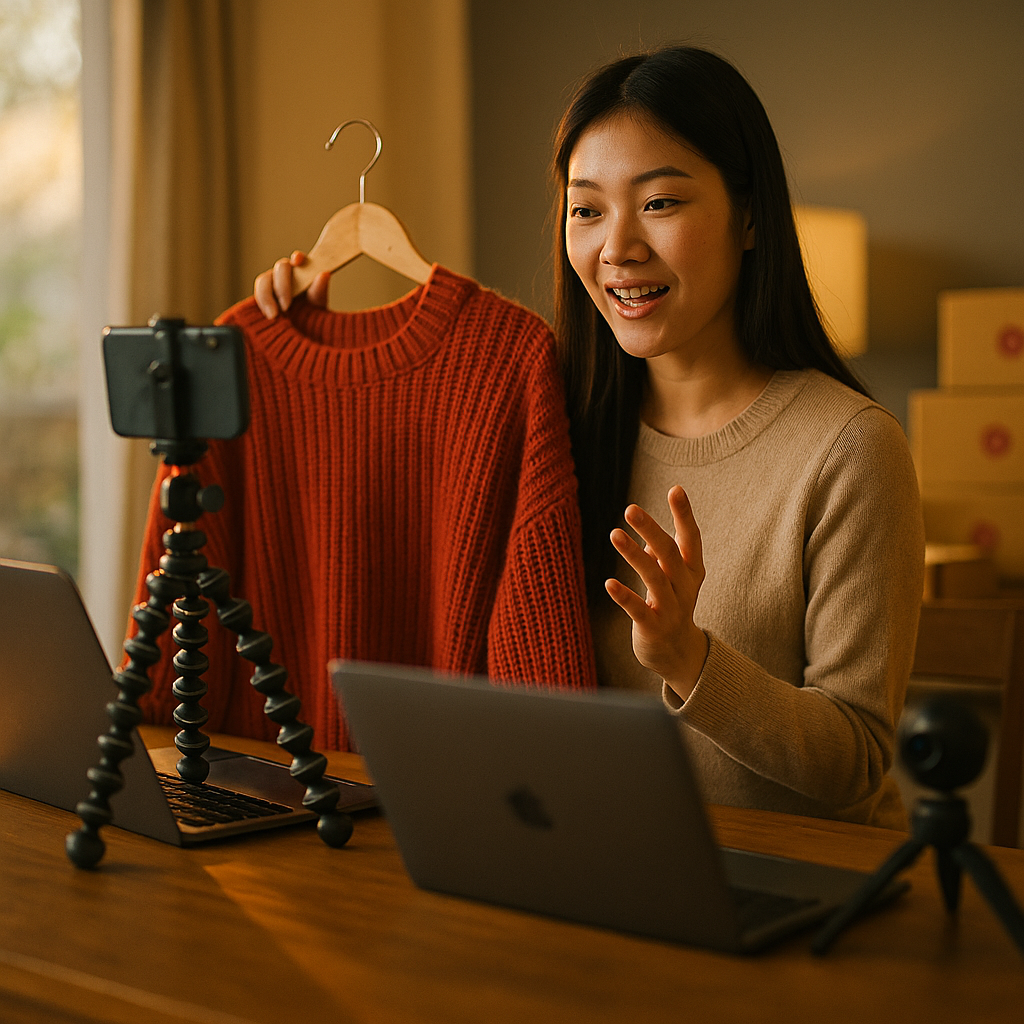
Most Livestream Commerce Briefs Are Built for One Platform. That’s the Problem.
Livestream commerce is projected to account for over $60 billion in U.S. sales by 2026, according to eMarketer. Yet most creator briefs for shopping events are still written as if TikTok Shop is the only destination. If your production direction doesn’t account for simultaneous streaming to YouTube Live, Instagram Live, and TikTok at the same time, you’re leaving conversion on the table and handing your creator a recipe for on-air chaos.
What a Livestream Commerce Creator Brief Actually Needs to Do
A standard influencer brief communicates brand tone, talking points, and disclosure requirements. A livestream commerce brief does all of that, plus it functions as a production runsheet, a platform-by-platform interaction protocol, and a real-time sales direction document, simultaneously.
The creator is running a live show. Your brief is the show bible. If it’s vague, the show falls apart on air, and so does your conversion rate.
The brief must answer five questions before the creator goes live:
- What are we selling, in what order, and with what proof points?
- How does the creator interact with each platform’s audience separately?
- Where does checkout happen, and how does the creator direct the audience there?
- What are the fallback protocols if a platform drops or lag spikes occur?
- What compliance language must appear on-screen or in spoken disclosure?
Get these five elements locked before you write a single talking point. Everything else flows from them.
Structuring the Production Runsheet Inside the Brief
Think in segments, not minutes. A 60-minute shopping event should have no more than five to seven product segments, each with a defined arc: hook, demonstration, social proof, objection handling, and checkout call-to-action. That arc should be written into the brief explicitly, not left to the creator’s improvisation.
Here’s what a single product segment block looks like in a well-built brief:
- Segment name and product SKU
- Opening hook line (suggested, not scripted — give the creator language that fits their voice)
- Key demo beats: what to show, in what order, what feature to emphasize
- Audience interaction prompt: the specific question to ask the chat
- Platform-specific checkout cue: “Hit the TikTok Shop cart” vs. “Tap the link in my Instagram bio” vs. “Click the pinned comment on YouTube”
- Transition line into the next segment
This structure protects your brand and the creator. It keeps the pacing tight, which matters because average viewer drop-off in the first four minutes of a livestream is brutal. Shoppers stay when the content moves.
The creator brief for a multi-platform shopping event isn’t a creative document. It’s an operations document with creative constraints built in. Treat it like a live TV production schedule, because that’s exactly what it is.
For teams already building real-time commerce livestream briefs, the product segment framework transfers directly. The difference in a multi-platform context is layering platform-specific audience management on top.
Multi-Destination Streaming: The Technical Layer Your Brief Must Address
Simultaneous streaming to TikTok, Instagram, and YouTube requires a multistreaming tool. Restream and Streamyard are the most common at the brand partnership level. Your brief needs to name the tool being used and clarify who is operating it: the creator, a dedicated stream tech, or a brand-side producer.
This matters because platform moderation policies differ. TikTok’s in-app purchase flow is native and requires the creator to verbally call it out differently than a YouTube checkout, which typically routes to an external site. Instagram’s live shopping tools have their own product tag interface. If the creator doesn’t know which platform’s audience needs which checkout instruction, they’ll default to one, and you’ll lose conversions on the others.
The brief should include a simple routing table. Three columns: platform, checkout mechanism, and the exact verbal cue the creator uses. That’s it. Keep it scannable. A creator shouldn’t have to search a paragraph to find out how to direct a TikTok viewer to purchase.
Also address the comment moderation split. On a multi-platform stream, the creator physically cannot monitor three chat windows. The brief should specify whether a moderator is assigned to each platform, and what the escalation protocol is for a brand safety incident in chat. This is a risk management issue, not just a production nicety. Review how simulcast campaign briefs handle platform-specific audience management for additional structure.
Expert Demonstration Direction: How to Write It Without Killing Authenticity
The word “scripted” kills livestream commerce. Viewers can smell it. But “unscripted” is not the answer either, because an unscripted creator will skip your key claim, miss the hero feature, and forget to mention the discount code.
The solution is demonstration staging. Write the brief with numbered demo beats, not line-by-line script. For a skincare product, that might look like: (1) apply to clean skin on camera, (2) describe texture before absorption, (3) show the before/after photo on-screen graphic, (4) invite the chat to share their skin concern, (5) pivot to the limited-time offer. The creator knows what to do and in what order. The words are theirs.
Where expert credibility is part of the brief, be specific about what claims can and cannot be made. If a dermatologist is co-hosting a segment, write their talking points separately with tighter scripting, since they are providing professional guidance and your FTC compliance obligations shift accordingly. The FTC’s endorsement guidelines apply to every claim, whether it comes from a creator or a credentialed co-host.
See how social commerce brief formats handle the balance between demonstration structure and creator voice, particularly for high-consideration product categories.
Audience Interaction That Converts, Not Just Engages
Interaction prompts in a livestream commerce brief serve a commercial function. They are not there to boost engagement metrics. They are there to surface buying intent, address objections in real time, and create the social proof loop that drives fence-sitters to checkout.
Write specific prompts, not generic ones. “Ask the chat a question” is useless. “Ask the chat: Drop a 1 if you’ve tried this before, or a 2 if you’re new to the brand” is actionable. It segments the audience live, gives the creator natural material to respond to, and creates the community energy that livestream commerce runs on.
Time your interaction prompts strategically. Place them at the start of each product segment (to capture attention), after the demonstration (to gauge reaction), and immediately before the checkout cue (to create momentum). The checkout cue should feel like it emerges from the conversation, not interrupt it.
Interaction prompts that ask a binary question outperform open-ended questions in chat engagement by a significant margin. Give viewers a simple action, and they take it. Give them an essay question, and they scroll past.
For brands running commerce integrations inside gaming environments, the interaction architecture in Twitch gaming livestream briefs offers a useful comparison point, particularly around poll and chat command mechanics.
In-App Checkout Integration: What the Brief Must Specify
The checkout experience is where most multi-platform briefs collapse. Each platform has a different native purchase flow, and assuming the creator will figure it out mid-stream is a conversion-killing mistake.
TikTok Shop’s in-app checkout is native and fast, which is why TikTok for Business reports significantly higher conversion rates for Shop-enabled livestreams compared to link-out flows. Instagram’s live shopping requires product tagging in advance. YouTube’s checkout typically routes externally. Each of these flows must be tested before the event goes live, and the brief should include a pre-production checklist confirming that product tags, SKU links, and discount codes are active on each platform.
Include the exact discount codes in the brief, broken out by platform if you’re running platform-specific offers. If you’re running a universal code, say so explicitly. Ambiguity around promo codes on a live show is a brand embarrassment you don’t need.
Compliance, Disclosure, and Risk Protocols
A livestream shopping event is a live advertising broadcast. That framing should inform every compliance decision you make. The FTC requires clear and conspicuous disclosure of material connections at the start of the stream and at regular intervals, not just once in the description field.
Write the disclosure language into the brief. Give the creator the exact phrase: “I’m partnering with [Brand] today, and some of the links in this stream are affiliate links.” Don’t assume they’ll improvise an FTC-compliant statement under pressure. They won’t. Make it easy.
Also address what happens when something goes wrong. A product claim gets overstated. A chat comment includes a competitor mention. A platform drops mid-segment. The brief should have a one-paragraph incident protocol that tells the creator and any on-site producer exactly what to do. This is standard in broadcast production and should be standard in your creator briefs.
Teams managing high-volume brief production can pull from the reactive UGC approval framework to build a fast-track review process for last-minute brief updates before a live event.
Start your next brief by writing the routing table first: platform, checkout mechanism, verbal cue. Once that’s locked, every other element of the production direction will organize itself around it, and your creator will walk into the stream with the clarity that actually drives sales.
Frequently Asked Questions
What should a livestream commerce creator brief include?
A livestream commerce creator brief should include a product segment runsheet with demonstration beats, platform-specific checkout cues, audience interaction prompts, pre-approved discount codes, FTC disclosure language, a technical streaming setup reference (including which multistreaming tool is being used), and a brief incident protocol for common on-air issues. It functions as both a creative direction document and a live production schedule.
How do you manage multi-platform audiences during a simultaneous livestream?
Multi-platform audience management requires dedicated comment moderators for each platform, platform-specific interaction prompts written into the brief, and a clear verbal routing system so the creator directs each audience to the correct checkout mechanism. The brief should include a simple table: platform, checkout flow, and the exact phrase the creator uses to direct viewers to purchase.
Which platforms support native in-app checkout for livestream commerce?
TikTok Shop currently offers the most seamless native in-app checkout for livestream commerce. Instagram Live Shopping supports product tagging with in-app purchase capability. YouTube Live typically routes to external checkout pages. Each platform’s checkout flow should be tested and confirmed before the live event, and the brief should document which flow is active on each destination.
How often should a creator disclose the brand partnership during a livestream shopping event?
Per FTC guidelines, disclosure must be clear and conspicuous at the beginning of the stream and repeated at regular intervals throughout, particularly when new viewers join. A best practice is to include disclosure at the start of each new product segment. The exact disclosure language should be written into the creator brief so the creator doesn’t have to improvise it on air.
What multistreaming tools are commonly used for multi-platform shopping events?
Restream and Streamyard are the most widely used multistreaming platforms at the brand partnership level. Both allow simultaneous distribution to TikTok, Instagram, YouTube, and other destinations from a single broadcast. The creator brief should specify which tool is being used, who is operating it (creator, tech producer, or brand-side), and how platform-specific issues should be flagged during the stream.
Top Influencer Marketing Agencies
The leading agencies shaping influencer marketing in 2026
Agencies ranked by campaign performance, client diversity, platform expertise, proven ROI, industry recognition, and client satisfaction. Assessed through verified case studies, reviews, and industry consultations.
Moburst

-
2

The Shelf
Boutique Beauty & Lifestyle Influencer AgencyA data-driven boutique agency specializing exclusively in beauty, wellness, and lifestyle influencer campaigns on Instagram and TikTok. Best for brands already focused on the beauty/personal care space that need curated, aesthetic-driven content.Clients: Pepsi, The Honest Company, Hims, Elf Cosmetics, Pure LeafVisit The Shelf → -
3

Audiencly
Niche Gaming & Esports Influencer AgencyA specialized agency focused exclusively on gaming and esports creators on YouTube, Twitch, and TikTok. Ideal if your campaign is 100% gaming-focused — from game launches to hardware and esports events.Clients: Epic Games, NordVPN, Ubisoft, Wargaming, Tencent GamesVisit Audiencly → -
4

Viral Nation
Global Influencer Marketing & Talent AgencyA dual talent management and marketing agency with proprietary brand safety tools and a global creator network spanning nano-influencers to celebrities across all major platforms.Clients: Meta, Activision Blizzard, Energizer, Aston Martin, WalmartVisit Viral Nation → -
5

The Influencer Marketing Factory
TikTok, Instagram & YouTube CampaignsA full-service agency with strong TikTok expertise, offering end-to-end campaign management from influencer discovery through performance reporting with a focus on platform-native content.Clients: Google, Snapchat, Universal Music, Bumble, YelpVisit TIMF → -
6

NeoReach
Enterprise Analytics & Influencer CampaignsAn enterprise-focused agency combining managed campaigns with a powerful self-service data platform for influencer search, audience analytics, and attribution modeling.Clients: Amazon, Airbnb, Netflix, Honda, The New York TimesVisit NeoReach → -
7

Ubiquitous
Creator-First Marketing PlatformA tech-driven platform combining self-service tools with managed campaign options, emphasizing speed and scalability for brands managing multiple influencer relationships.Clients: Lyft, Disney, Target, American Eagle, NetflixVisit Ubiquitous → -
8

Obviously
Scalable Enterprise Influencer CampaignsA tech-enabled agency built for high-volume campaigns, coordinating hundreds of creators simultaneously with end-to-end logistics, content rights management, and product seeding.Clients: Google, Ulta Beauty, Converse, AmazonVisit Obviously →