


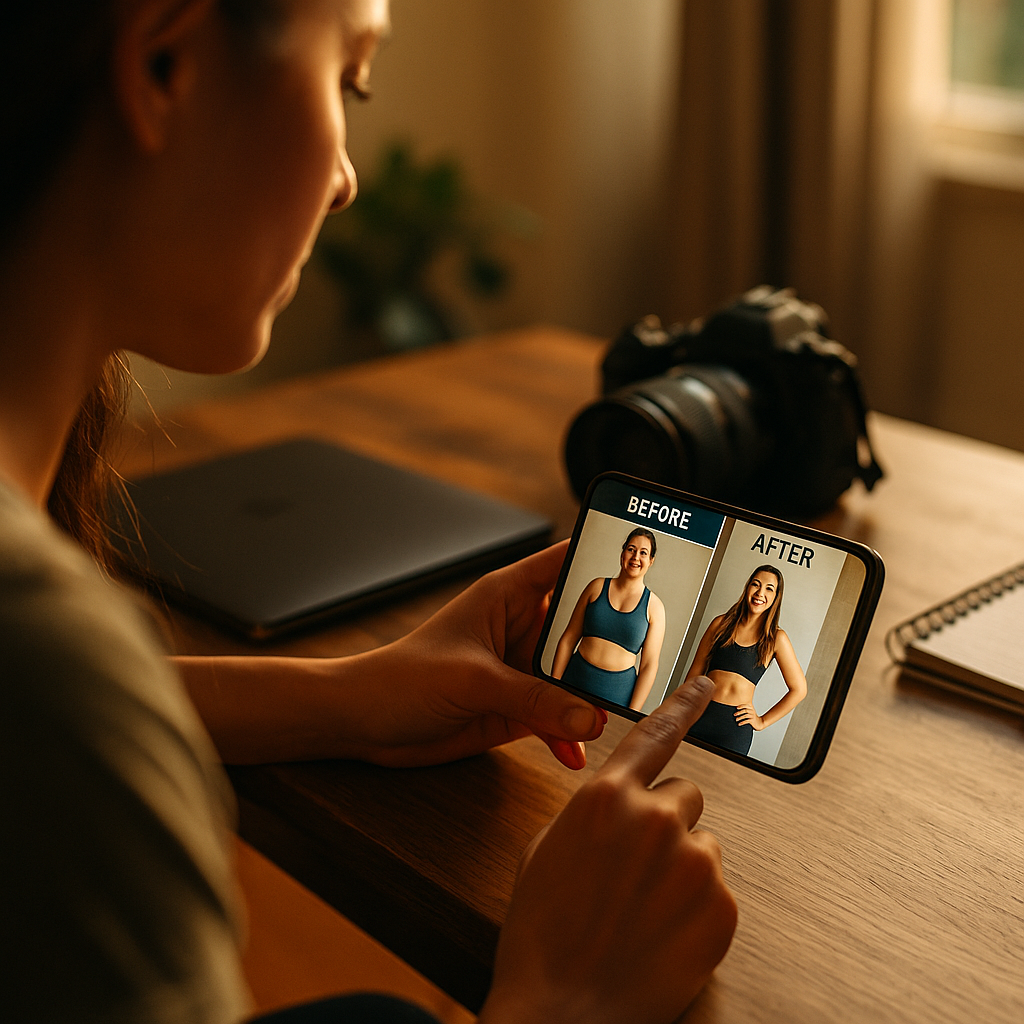
Before-and-after content drives save rates up to 3x higher than standard promotional posts, yet most brand briefs still leave creators guessing on structure, pacing, and reveal timing. That guessing costs you algorithmic reach. Here is exactly how to fix it.
Why the Transformation Format Outperforms Almost Every Other Creator Structure
The before-and-after format works because it exploits a fundamental psychological loop: the brain hates incompleteness. When a viewer sees a “before” state, dopamine-driven curiosity pulls them toward resolution. Platforms like TikTok and Instagram Reels measure that pull as watch time, and watch time is the single most weighted signal in both algorithms right now.
This is not a hunch. TikTok’s own creative guidance consistently identifies completion rate and replays as top-tier ranking signals. Content that structurally compels viewers to stay creates a compounding advantage: longer watch time feeds the algorithm, which pushes the content to non-followers, which generates new saves from people who want to revisit the transformation later.
Saves are the metric most brand teams underweight. A save is a declared intent. It says the viewer found the content useful enough to return to it, which is a stronger purchase-intent signal than a like and arguably stronger than a comment.
A high save rate tells the algorithm that your content has durable value, not just momentary entertainment — and durable value is what earns distribution beyond the creator’s existing audience.
The Four-Part Structure You Should Specify in Every Brief
Vague briefs produce vague content. If your brief says “show a before and after,” you will get 10 different interpretations, most of them underperforming. Instead, specify the four-part scaffold directly.
1. The Stakes Hook (0–3 seconds). The video must open on the “before” state with a visible problem, not a product introduction. The creator’s face, the messy room, the dull skin, the disorganized workflow, whatever the category demands. No logo. No intro. The problem is the hook.
2. The Tension Middle (3–20 seconds). This is where most brands make a catastrophic brief error: they instruct creators to show the product being used. That is the right instinct in the wrong position. The tension middle should dramatize the problem, deepen the stakes, or show the creator’s skepticism before the product enters the story. Skepticism is credibility. It also holds attention.
3. The Reveal (20–35 seconds). The transformation moment. This should be a genuine visual contrast, not a voiceover claim. Lighting, framing, and timing matter here. Brief creators explicitly on the visual contrast you need: split-screen comparisons on TikTok, swipe-left formats on Reels, or a hard-cut reveal on Shorts. The platform matters because the reveal mechanism differs.
4. The Save Trigger (final 5 seconds). This is the most underused element in brand-briefed content. The save trigger is a line, a caption overlay, or a CTA that gives the viewer a reason to save rather than just scroll away. Examples: “Save this before your next project,” “Screenshot the full routine below,” or a step-by-step list overlay that rewards a second viewing. briefs for watch time address this exact mechanic in more depth.
Platform-Specific Briefing Adjustments
The four-part scaffold is universal. The execution details are not.
On TikTok, the algorithm currently rewards rewatch loops. Brief creators to structure the reveal so that the final frame pairs visually with the opening frame. When the video loops, the contrast is immediate and jarring. That jarring effect triggers replays, which are counted as additional watch time.
On Instagram Reels, the share signal carries more weight than on TikTok. Brief creators to include a moment that is screenshot-worthy or share-worthy: a stat overlay, a surprising result, or a headline-style result claim in text. The cross-platform briefing approach covered here explores how to adapt single briefs across formats without producing completely separate content.
On YouTube Shorts, retention past the 30-second mark is the key algorithmic threshold. Place the reveal at or just past 30 seconds if the video runs longer. This manufactured suspense keeps viewers past the measurement point that matters.
What the Brief Should Actually Say
Here is the practical difference between a brief that produces algorithm-ready content and one that produces adequate content.
Adequate brief language: “Show how our product improves X. Include a before and after. Mention the key features.”
Algorithm-ready brief language: “Open on the problem state with no product visible. Spend 15–20 seconds on the pain point using your own words and experience. Introduce the product as your discovered solution, not as a sponsored item. Execute a hard-cut visual reveal at or after the 20-second mark. Close with a specific, saveable instruction or tip.”
The difference is structural specificity. You are not directing the creative. You are giving the creator a container that the algorithm rewards, and letting their voice fill it. This is a meaningful distinction and it matters for performance. For a deeper look at brief construction, the creative planning and brief templates framework is worth bookmarking.
Casting and Category Fit
The before-and-after format earns its highest returns in specific verticals: beauty, fitness, home organization, personal finance, skincare, food, and software productivity. These categories share a common trait: the transformation is visually or quantifiably demonstrable.
Where brands go wrong is applying this format to categories where the transformation is abstract. If your product’s benefit is “peace of mind” or “better brand perception,” the before-and-after format will feel forced and audiences will sense inauthenticity immediately. In those cases, a narrative or social proof format outperforms.
Casting matters equally. Brief this format to creators who have an existing transformation narrative in their content history. A creator who regularly documents personal improvement, renovation, or skill-building has a built-in audience primed for this structure. A creator who primarily posts trend-reaction or commentary content will find it harder to execute convincingly, regardless of how good the brief is.
The best transformation content feels like a continuation of the creator’s existing story, not a brand insertion into it. Cast accordingly.
Measuring What Actually Matters
Most brand teams track reach and engagement rate. For the before-and-after format, those are lagging indicators. The leading metrics that predict whether this format is doing its algorithmic job are:
- Average percentage watched: Should exceed 60% on TikTok for this format. Anything below 50% signals a failed hook or tension middle.
- Save rate (saves divided by views): A high-performing transformation post benchmarks between 3–8% save rate depending on category. Sprout Social’s benchmarks can provide category-level context for comparison.
- Non-follower reach percentage: This is the direct measure of algorithmic amplification. Pull it from the creator’s analytics. A well-structured transformation post on a mid-tier account should push 40–70% of views to non-followers within the first 48 hours.
- Rewatch rate on TikTok: Available in Creator Analytics. A rewatch rate above 15% is a strong signal the reveal moment is working.
Build these four metrics into your post-campaign reporting template, not just follower count and EMV. The data from two or three well-structured transformation campaigns will give you enough to refine briefing language and creator selection criteria for future activations. For benchmarks across social commerce formats, ROI benchmarks by format offers a useful comparison baseline.
One additional note on compliance: ensure the transformation claim is truthful, documented, and within FTC endorsement guidelines. FTC disclosure rules apply regardless of how organic the content feels. “Honest transformation” is both the ethical requirement and, frankly, the performance requirement. Audiences who suspect exaggeration will not save, share, or convert.
Brief your creators to document the real result, not the ideal result. Imperfect transformations often outperform polished ones because they are believable, and believable content earns the algorithmic behaviors that matter: saves, replays, and shares to new audiences.
Your next step: pull your last three transformation-format posts, check non-follower reach percentage and save rate against the benchmarks above, and identify which structural element (hook, tension, reveal, or save trigger) underperformed. That one fix is your next brief iteration.
Frequently Asked Questions
What makes the before-and-after format especially effective for algorithmic reach?
The format exploits psychological incompleteness: viewers feel compelled to watch through to the resolution. This drives extended watch time, which is the primary ranking signal on TikTok and Instagram Reels. High watch time pushes content to non-followers, generating reach beyond the creator’s existing audience.
How long should a before-and-after creator video be?
For TikTok and Reels, 30–60 seconds is the optimal range. This is long enough to build tension and deliver a credible reveal, but short enough to maintain completion rates. On YouTube Shorts, structuring the reveal just past the 30-second mark can improve algorithmic retention metrics.
Which product categories perform best with transformation content?
Beauty, skincare, fitness, home organization, food, and software productivity consistently outperform because the transformation is visually demonstrable. Categories with abstract or emotional benefits (like insurance or B2B SaaS) tend to underperform with this format and are better served by narrative or social proof structures.
What is a good save rate benchmark for transformation content?
A well-executed transformation post typically achieves a save rate of 3–8% (saves divided by total views), depending on category. Beauty and home organization tend toward the higher end. Anything below 1% suggests the save trigger at the end of the video is either missing or not compelling enough.
How should brands handle FTC disclosure requirements for transformation content?
Paid transformation content must include clear and conspicuous disclosure, such as #ad or #sponsored, at the start of the caption or in an on-screen label, per FTC guidelines. The transformation result must also be truthful and representative of a typical user experience, not an outlier or exaggerated outcome.
Should brands brief the same creator format across TikTok and Instagram Reels?
The four-part scaffold (hook, tension, reveal, save trigger) applies across both platforms, but the execution mechanics differ. TikTok rewards rewatch loops, so the final frame should visually connect to the opening frame. Reels rewards shareability, so brief creators to include a shareable moment like a stat overlay or a surprising result visual. Adjust the brief by platform, not the structure.
Top Influencer Marketing Agencies
The leading agencies shaping influencer marketing in 2026
Agencies ranked by campaign performance, client diversity, platform expertise, proven ROI, industry recognition, and client satisfaction. Assessed through verified case studies, reviews, and industry consultations.
Moburst

-
2

The Shelf
Boutique Beauty & Lifestyle Influencer AgencyA data-driven boutique agency specializing exclusively in beauty, wellness, and lifestyle influencer campaigns on Instagram and TikTok. Best for brands already focused on the beauty/personal care space that need curated, aesthetic-driven content.Clients: Pepsi, The Honest Company, Hims, Elf Cosmetics, Pure LeafVisit The Shelf → -
3

Audiencly
Niche Gaming & Esports Influencer AgencyA specialized agency focused exclusively on gaming and esports creators on YouTube, Twitch, and TikTok. Ideal if your campaign is 100% gaming-focused — from game launches to hardware and esports events.Clients: Epic Games, NordVPN, Ubisoft, Wargaming, Tencent GamesVisit Audiencly → -
4

Viral Nation
Global Influencer Marketing & Talent AgencyA dual talent management and marketing agency with proprietary brand safety tools and a global creator network spanning nano-influencers to celebrities across all major platforms.Clients: Meta, Activision Blizzard, Energizer, Aston Martin, WalmartVisit Viral Nation → -
5

The Influencer Marketing Factory
TikTok, Instagram & YouTube CampaignsA full-service agency with strong TikTok expertise, offering end-to-end campaign management from influencer discovery through performance reporting with a focus on platform-native content.Clients: Google, Snapchat, Universal Music, Bumble, YelpVisit TIMF → -
6

NeoReach
Enterprise Analytics & Influencer CampaignsAn enterprise-focused agency combining managed campaigns with a powerful self-service data platform for influencer search, audience analytics, and attribution modeling.Clients: Amazon, Airbnb, Netflix, Honda, The New York TimesVisit NeoReach → -
7

Ubiquitous
Creator-First Marketing PlatformA tech-driven platform combining self-service tools with managed campaign options, emphasizing speed and scalability for brands managing multiple influencer relationships.Clients: Lyft, Disney, Target, American Eagle, NetflixVisit Ubiquitous → -
8

Obviously
Scalable Enterprise Influencer CampaignsA tech-enabled agency built for high-volume campaigns, coordinating hundreds of creators simultaneously with end-to-end logistics, content rights management, and product seeding.Clients: Google, Ulta Beauty, Converse, AmazonVisit Obviously →