


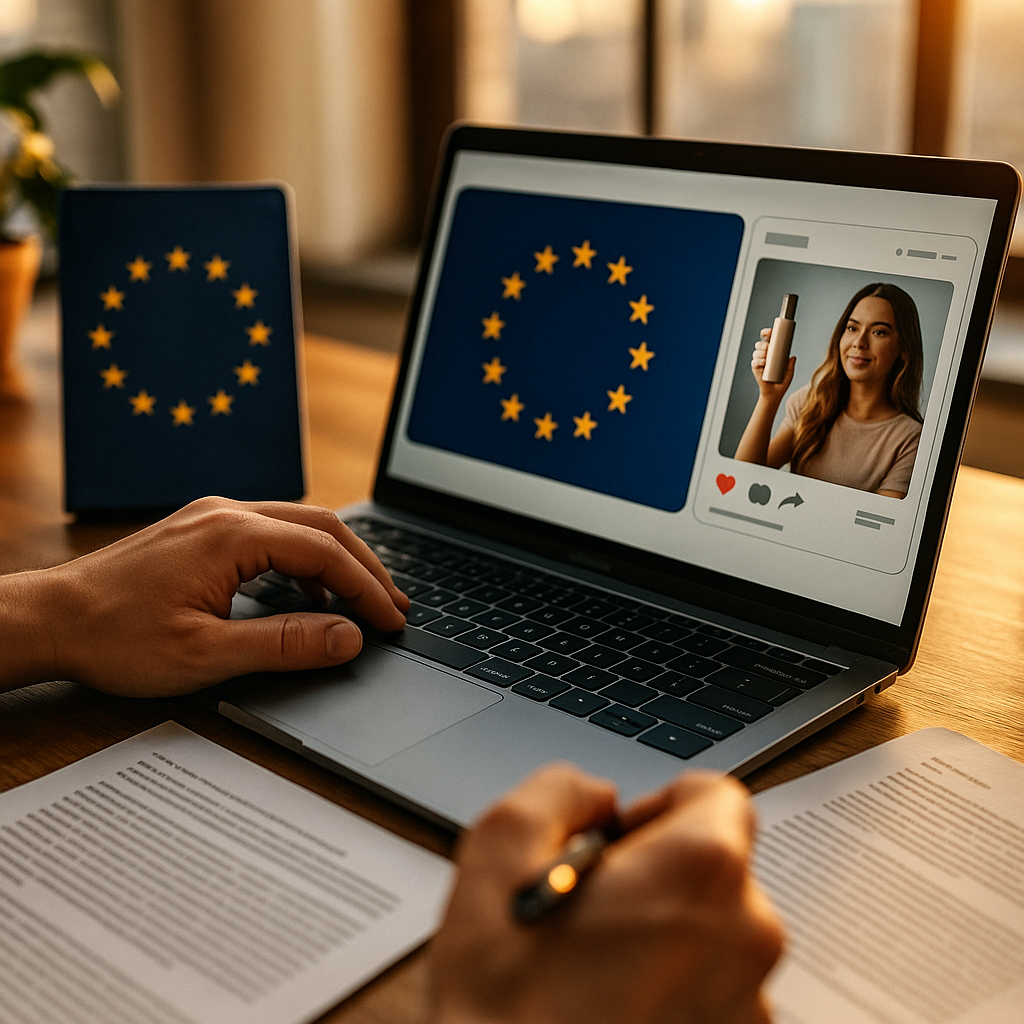
Platforms distributing your paid creator content to European audiences now face fines up to 6% of global annual turnover under the EU Digital Services Act enforcement regime. That liability doesn’t stop at the platform. Brand amplification strategies are directly implicated, and most US marketing teams haven’t caught up.
What the DSA Actually Regulates (and Why It Touches Your Campaigns)
The Digital Services Act targets “very large online platforms” (VLOPs) — those with more than 45 million monthly active users in the EU. That list includes TikTok, Meta, YouTube, Snapchat, and Pinterest. For each of these platforms, the DSA imposes specific obligations around algorithmic recommendation systems, including requirements to offer users non-personalized feed options and to conduct annual systemic risk assessments covering addictive design patterns.
Here’s where brand campaigns get caught in the crossfire. When you run paid amplification on a VLOP targeting European audiences, your content enters a recommendation system that regulators are actively scrutinizing for addictive design. If a platform’s algorithm is found to amplify content in ways that contribute to psychological harm — particularly for minors or vulnerable users — regulators can require structural changes to how that algorithm operates. Mid-campaign. Without notice to advertisers.
That’s not a hypothetical. The European Commission’s formal proceedings against TikTok under the DSA specifically cited recommendation mechanics and addictive design as primary concerns. See the DSA algorithm reach risk analysis for how organic distribution is already being constrained as platforms self-correct ahead of enforcement rulings.
When a regulatory ruling forces a platform to restructure its recommendation algorithm mid-quarter, your paid amplification budget doesn’t get refunded. Your reach guarantees become unenforceable, and your campaign KPIs collapse — with no contractual recourse unless you’ve built it in.
The Three Campaign Risk Categories Brands Are Underestimating
DSA enforcement creates distinct risk categories that map directly to influencer campaign operations. Understanding them separately helps you assign ownership and build appropriate contract language.
1. Algorithm disruption risk. Platforms found in violation of DSA algorithmic transparency rules may be required to modify recommendation systems on compressed timelines. For brands running always-on creator content with paid distribution, this means reach and frequency assumptions built into media plans can become invalid mid-flight. Unlike standard media buys where inventory is guaranteed, creator content distributed via recommendation algorithms carries no delivery guarantee once the underlying system changes. The reach guarantee language in your creator contracts almost certainly doesn’t account for regulatory-forced algorithm changes as a force majeure event.
2. Content association risk. The DSA requires VLOPs to produce systemic risk assessments covering how their platforms contribute to “negative effects on fundamental rights, civic discourse, public security, and mental health.” If a platform’s risk assessment flags specific content categories as contributing to harm, and your paid amplification involves that content category, you face potential association with a regulatory finding. This is particularly acute for categories like beauty, diet, gaming, and financial products, all of which have attracted regulatory attention in DSA context.
3. Data and targeting compliance risk. The DSA prohibits targeting advertising based on sensitive personal data, and specifically bans behavioral advertising directed at minors. For US brands accustomed to broad-funnel targeting across EU audiences, this creates gaps between what your campaign brief requests and what is legally permissible on the platform. If your agency or creator partner hasn’t updated targeting parameters to reflect DSA constraints, you carry downstream liability. This intersects directly with the Meta minor safety compliance requirements that have been tightening in parallel.
How Paid Amplification Mechanics Create Specific Exposure
Organic creator posts and paid amplification face different regulatory pressure under the DSA. Paid content distributed via platform advertising tools is subject to the DSA’s advertising transparency registry requirements — VLOPs must maintain searchable repositories of all ads shown to EU users, including targeting parameters and the identity of the advertiser. That registry is publicly accessible.
What this means operationally: any paid creator post you boost on a VLOP targeting EU users is now part of a permanent, searchable public record. The targeting parameters you used, the demographics reached, and the duration of the campaign are all archived. Regulators, journalists, NGOs, and competitors can search that registry. If your targeting approach is found to include impermissible parameters (behavioral data, sensitive categories, or minor-adjacent targeting), the evidence is already filed.
US brands that rely on agencies to manage EU distribution often assume the agency absorbs this risk. That assumption is incorrect. The DSA places obligations on platforms, but advertiser liability under local consumer protection laws in Germany, France, and the Netherlands can flow from the same underlying conduct. Your agency contract needs explicit DSA compliance warranties. Most don’t have them yet. For parallel thinking on how data compliance language in creator contracts is evolving, the frameworks there apply directly here.
What Responsible Governance Looks Like Right Now
The brands getting ahead of this aren’t waiting for enforcement actions to define the rules. They’re treating DSA compliance as a campaign-level operational checkpoint, not a legal department concern that surfaces only when something goes wrong.
Practically, that means four things:
- Campaign brief audits for EU targeting parameters. Before any paid amplification goes live on a VLOP targeting EU users, someone on your team or your agency needs to confirm that targeting parameters exclude sensitive personal data categories and minor-adjacent cohorts as defined under DSA and the supplementary European Commission guidance.
- Creator contract addenda covering algorithm force majeure. If a regulatory action forces a platform to restructure its recommendation system and your paid reach drops materially, your contract should define what recourse exists — reshoots, extended campaign windows, or financial remedies. Standard contracts don’t include this.
- Platform advertising registry monitoring. Assign someone to periodically audit your entries in the DSA-mandated ad registries on Meta and TikTok. Errors in filed targeting data create compliance exposure that’s avoidable.
- Agency DSA warranty language. Any agency managing EU distribution on your behalf should warrant in writing that their targeting practices comply with DSA advertising rules. Add cure periods and termination rights if they can’t confirm compliance within a defined window.
The responsible AI governance framework that leading brand teams are building also serves as the scaffolding for DSA compliance — the documentation practices, approval workflows, and audit trails that governance requires map directly onto what DSA enforcement expects to see.
The DSA’s advertising transparency registry means your EU campaign targeting parameters are now public record. For brands that have been operating with loose targeting practices in European markets, that exposure is retroactive — it covers everything already filed.
Sector-Specific Pressure Points
Not every brand faces equal exposure. The DSA’s systemic risk framework puts pressure on specific sectors where recommendation algorithms intersecting with addictive design have drawn the most regulatory attention.
Beauty and wellness brands distributing creator content tied to appearance, diet, or body image face the highest content association risk. Several EU member state regulators have filed formal input into VLOP risk assessments citing beauty algorithm content as a mental health concern. Financial services brands running influencer campaigns on TikTok face particular scrutiny given TikTok’s ongoing DSA proceedings and the platform’s known audience concentration among younger demographics. Gaming brands need to audit any creator campaign that features engagement mechanics (streaks, rewards, virtual currency) that could be characterized as addictive design adjacent. The FTC and EU DSA enforcement are increasingly coordinating on these categories, so US-side FTC disclosure requirements and EU-side DSA obligations are now creating a compound compliance burden for any brand operating across both markets.
The UK’s ICO has maintained its own parallel framework post-Brexit, so brands with UK influencer campaigns face a third regulatory layer that doesn’t perfectly align with DSA rules despite significant overlap in intent.
The Contract Gap Nobody Is Talking About
Standard influencer contracts written before DSA enforcement became active contain no language addressing algorithmic disruption as a campaign delivery risk. They contain no warranties around platform targeting compliance with EU law. They don’t allocate liability for regulatory-forced content removal or reach suppression. And they almost never include EU jurisdiction clauses even when campaigns explicitly target European audiences.
That’s a structural problem, not a nuance. Campaign contracts are the mechanism through which brands can push compliance obligations down to creators and agencies, build audit rights into partnerships, and define remedies when regulatory events disrupt delivery. Without DSA-specific language, brands absorb risk by default. The work being done on AI-related contract clauses provides a useful template for how to approach regulatory-specific addenda — the same drafting logic applies to DSA provisions.
Start your next contract cycle by adding a DSA compliance addendum. Define what constitutes a regulatory disruption event, which party bears responsibility for targeting parameter compliance, and what audit rights the brand retains over how paid amplification is executed. That’s not overcautious. That’s basic risk management for any brand spending materially in European markets.
Frequently Asked Questions
Does the EU Digital Services Act directly apply to US brands?
The DSA imposes primary obligations on platforms, not advertisers. However, US brands advertising on very large online platforms (VLOPs) that reach EU users are subject to downstream compliance obligations in several ways: DSA-mandated advertising transparency registries archive targeting parameters set by advertisers; targeting practices that violate DSA rules (such as behavioral targeting of minors) expose brands to liability under local EU member state consumer protection laws; and agency or creator partners acting on behalf of the brand can create indirect exposure if their practices aren’t DSA-compliant. US brands should treat DSA compliance as an operational concern, not just a platform-side issue.
What is the advertising transparency registry under the DSA, and how does it affect influencer campaigns?
The DSA requires VLOPs to maintain publicly searchable repositories of all advertisements displayed to EU users. These registries include the identity of the advertiser, the targeting parameters used, and the duration of the campaign. For influencer campaigns involving paid amplification on platforms like Meta, TikTok, or YouTube targeting EU audiences, the brand’s targeting configuration is filed and permanently accessible to regulators, journalists, and competitors. Errors or non-compliant targeting parameters in those filings create audit exposure even after the campaign ends.
How does DSA enforcement affect reach guarantees in creator contracts?
Most creator contracts don’t account for regulatory-forced algorithm changes as a force majeure event. If a VLOP is required by DSA enforcement to restructure its recommendation system mid-campaign, paid amplification reach can drop materially with no automatic contractual remedy for the brand. Brands should add language to creator and agency contracts that defines regulatory disruption events, specifies what happens to campaign KPIs when those events occur, and provides remedies such as extended campaign windows, reshoots, or financial adjustments.
Which sectors face the highest DSA compliance risk in influencer campaigns?
Beauty, wellness, financial services, and gaming brands face the highest exposure. DSA systemic risk assessments filed by VLOPs have cited algorithmic amplification of appearance-related content, financial product promotions targeting younger demographics, and engagement mechanics resembling addictive design as primary concerns. Campaigns in these categories that include paid amplification on TikTok, Meta, or YouTube targeting EU users should be reviewed against DSA risk criteria before launch.
What contract language should brands add to address DSA compliance?
Brands should add DSA-specific addenda to creator and agency contracts that cover: warranties that targeting parameters exclude sensitive personal data and minor-adjacent cohorts as defined under the DSA; audit rights over how paid amplification is configured and executed; definitions of regulatory disruption events and associated remedies; and EU jurisdiction clauses for any campaign explicitly targeting European audiences. Agency contracts should include explicit DSA compliance warranties with cure periods and termination rights if compliance cannot be confirmed.
Top Influencer Marketing Agencies
The leading agencies shaping influencer marketing in 2026
Agencies ranked by campaign performance, client diversity, platform expertise, proven ROI, industry recognition, and client satisfaction. Assessed through verified case studies, reviews, and industry consultations.
Moburst

-
2

The Shelf
Boutique Beauty & Lifestyle Influencer AgencyA data-driven boutique agency specializing exclusively in beauty, wellness, and lifestyle influencer campaigns on Instagram and TikTok. Best for brands already focused on the beauty/personal care space that need curated, aesthetic-driven content.Clients: Pepsi, The Honest Company, Hims, Elf Cosmetics, Pure LeafVisit The Shelf → -
3

Audiencly
Niche Gaming & Esports Influencer AgencyA specialized agency focused exclusively on gaming and esports creators on YouTube, Twitch, and TikTok. Ideal if your campaign is 100% gaming-focused — from game launches to hardware and esports events.Clients: Epic Games, NordVPN, Ubisoft, Wargaming, Tencent GamesVisit Audiencly → -
4

Viral Nation
Global Influencer Marketing & Talent AgencyA dual talent management and marketing agency with proprietary brand safety tools and a global creator network spanning nano-influencers to celebrities across all major platforms.Clients: Meta, Activision Blizzard, Energizer, Aston Martin, WalmartVisit Viral Nation → -
5

The Influencer Marketing Factory
TikTok, Instagram & YouTube CampaignsA full-service agency with strong TikTok expertise, offering end-to-end campaign management from influencer discovery through performance reporting with a focus on platform-native content.Clients: Google, Snapchat, Universal Music, Bumble, YelpVisit TIMF → -
6

NeoReach
Enterprise Analytics & Influencer CampaignsAn enterprise-focused agency combining managed campaigns with a powerful self-service data platform for influencer search, audience analytics, and attribution modeling.Clients: Amazon, Airbnb, Netflix, Honda, The New York TimesVisit NeoReach → -
7

Ubiquitous
Creator-First Marketing PlatformA tech-driven platform combining self-service tools with managed campaign options, emphasizing speed and scalability for brands managing multiple influencer relationships.Clients: Lyft, Disney, Target, American Eagle, NetflixVisit Ubiquitous → -
8

Obviously
Scalable Enterprise Influencer CampaignsA tech-enabled agency built for high-volume campaigns, coordinating hundreds of creators simultaneously with end-to-end logistics, content rights management, and product seeding.Clients: Google, Ulta Beauty, Converse, AmazonVisit Obviously →