


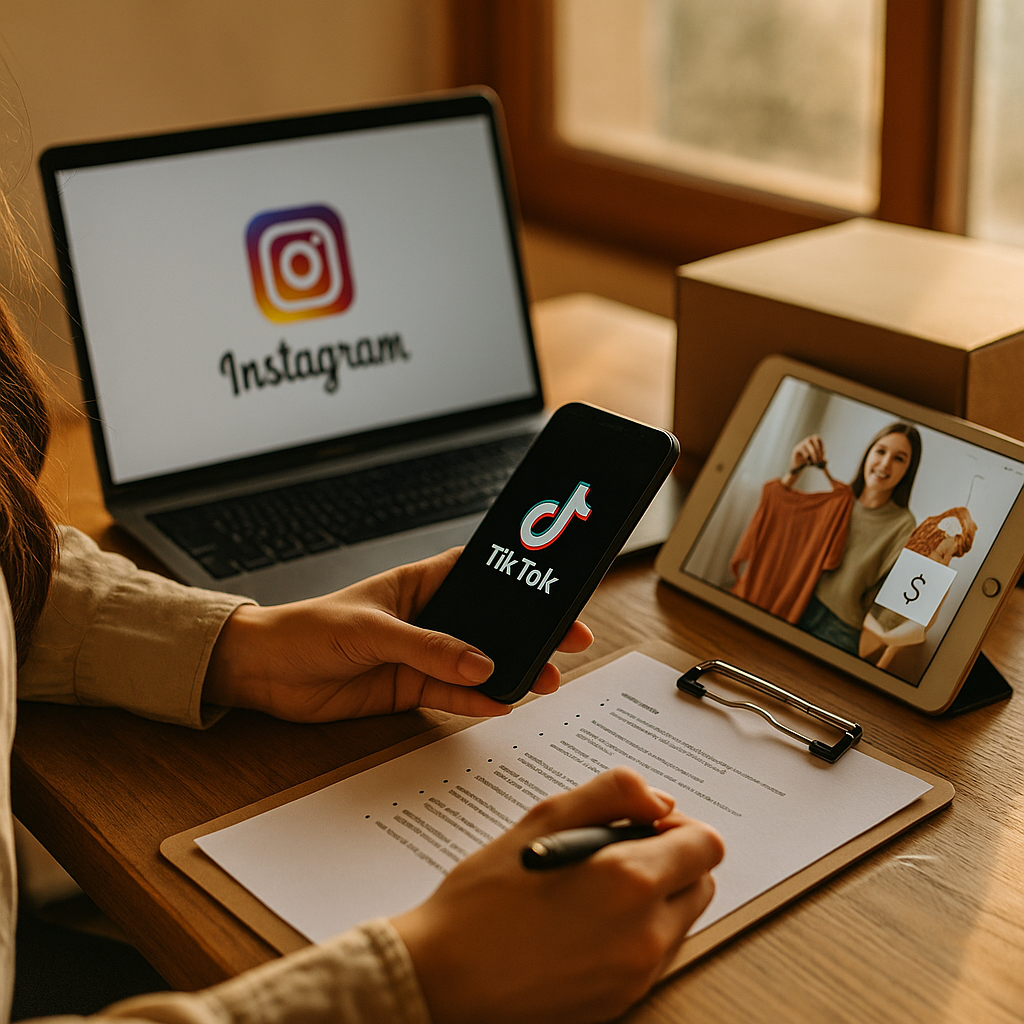
Brands running dual-platform influencer campaigns waste an estimated 40% of production budget on reshoots because the original brief only served one platform. The social commerce creator brief for TikTok and Instagram simultaneously is not a formatting problem. It is a strategic brief-writing problem that most brand teams have not solved yet.
Why One Platform Always Gets the Worse Cut
The default workflow goes like this: a creator shoots for TikTok, the brand repurposes the footage for Instagram, and the Instagram Reels or shoppable feed post underperforms. Or the reverse. The brief was written with one platform’s logic in mind, so the footage, pacing, and product framing were optimized for one destination only.
This is not a post-production problem. By the time the editor is cropping and reformatting, the damage is done. The hook was designed for TikTok’s three-second scroll, not Instagram’s browse-and-buy mindset. The product reveal happens at second 45, which is fine for a TikTok watch-time play, but kills conversion on a shoppable Instagram post where the purchase trigger needs to appear within the first 10 seconds.
Fixing this requires rethinking the brief before the shoot, not after the upload.
Understanding the Underlying Algorithmic Conflict
TikTok’s discovery engine rewards watch time, completion rate, and rewatch behavior. The algorithm wants content that holds attention throughout, which means creators are incentivized to build tension, delay payoffs, and layer in storytelling beats. A skincare creator who reveals the transformation at second 50 of a 60-second video is playing TikTok’s game correctly.
Instagram’s shoppable feed operates on a different logic entirely. Meta’s commerce infrastructure is built around purchase intent signals. The feed, especially the Shop tab, surfaces content to users who are already in a buying mindset. That means the product, its benefit, and the purchase pathway need to be legible much earlier. Hiding the product behind a narrative arc hurts Instagram conversion even if the same approach crushes it on TikTok.
These are not minor stylistic differences. They represent fundamentally different viewer contracts.
A brief that asks a creator to “be authentic and show the product naturally” without specifying platform-level pacing requirements will produce footage that is optimized for neither platform.
The Architecture of a Dual-Platform Brief
The solution is not two separate briefs. That defeats the purpose of a single shoot. The solution is a layered brief structure that separates core creative direction from platform-specific execution requirements, and gives the creator clear instruction on how to shoot for both simultaneously.
Here is how that structure works in practice.
Layer 1: Shared Creative Foundation. This section covers everything that does not change between platforms: brand voice, product claims, compliance language, mandatory disclosures per FTC guidelines, key visual assets (packaging, colorways, hero product shots), and the emotional territory the content should occupy. This is the creative spine.
Layer 2: TikTok-Specific Production Direction. Here you get explicit about watch-time architecture. Specify the hook format (a provocative question, a visual surprise, or a bold statement in the first two seconds). Define where narrative tension peaks. Tell the creator which moment should drive rewatch. If the product is the payoff, confirm that the payoff lands in the final quarter of the video, not the first quarter. Link this to TikTok’s creative best practices if useful.
Layer 3: Instagram-Specific Production Direction. Specify a “commerce window” within the first eight to ten seconds where the product is clearly visible, named, and contextually linked to a purchase trigger. This does not mean a hard sell. It means a shoppable moment: the creator holds up the product, references the link in bio or product tag, and creates enough visual clarity that a tap feels natural. For Reels, the hook still matters, but the product legibility requirement is non-negotiable for shoppable performance.
Layer 4: Shoot Direction for Dual-Platform Capture. This is the operational bridge. It tells the creator how to shoot footage that satisfies both layers without doing two full shoots. Common techniques include: shoot a “product-forward open” that can be edited into the Instagram version as the lead; shoot the TikTok-native hook as a separate clip that can be dropped in front of the same product footage; flag two or three “usable frames” mid-shoot that work as static carousel images for Instagram’s shoppable feed.
For deeper guidance on adapting a single shoot across multiple formats, the brief-once, adapt-everywhere framework is worth reviewing before writing your production direction.
What the Brief Actually Says to the Creator
Abstract framework aside, the creator brief needs to communicate in plain operational language. Creators are not algorithms. They need to know what to physically do on shoot day.
A dual-platform brief for a beauty brand might include language like this:
- TikTok version: Open with the hook (“I’ve been getting DMs asking what I put on my skin before events”) and let the product reveal land at 0:45 to 0:55. Build tension around the transformation. Do not show the product packaging until the reveal.
- Instagram version: Open with the product in frame within two seconds. Name the product by second five. Reference the shop link or tag by second eight. Then continue into the story arc. Same footage, different edit order.
- Shared shoot instruction: Film a clean five-second product-in-hand clip with good lighting and no voiceover. This will be used as the Instagram lead and as a standalone shoppable static pull.
This is the difference between a brief that produces flexible raw footage and one that locks the editor into a single edit. For brands managing AI-driven UGC variant testing, having this structured raw footage also enables faster automated iteration across hook styles and CTAs.
Compliance and Disclosure Timing Across Both Platforms
One area brands consistently underspecify in dual-platform briefs is disclosure placement. FTC requirements do not vary by platform: #ad or #sponsored must appear prominently and early. But the specific implementation differs because platform interfaces render text and overlays differently.
On TikTok, the text overlay and caption are both visible, but the caption is truncated. On Instagram, the paid partnership label auto-populates at the top of the post, but for Reels, the creator still needs to verbally acknowledge the partnership within the first few seconds if the content is structured as a recommendation. Your brief should specify the exact disclosure language, its placement in the caption, and whether a verbal disclosure is required in the video itself. Do not leave this to the creator’s interpretation.
Platform-Native Commerce Features Require Brief-Level Specification
TikTok Shop and Instagram Shopping have different mechanics, and your brief needs to address both explicitly. For TikTok Shop integrations, the creator may need to pin a product link during live or tag a product in the video. For Instagram, the shoppable tag is added post-upload, but the creator needs to film with the product’s visual identity prominent enough that the tag makes sense contextually.
If the campaign involves Instagram Stories with swipe-up product links alongside a Reels post, the brief should specify that the creator shoots a two to three second “swipe-up cue” clip separately. Small production details like this prevent a scramble in post and ensure the commerce architecture actually functions on both platforms.
Social commerce conversion does not happen in the edit suite. It happens in the brief. Every product tag, shop link, and swipe-up cue should be mapped before the creator picks up the camera.
For brands running episodic campaign structures across TikTok and Meta simultaneously, the cross-platform episodic brief framework addresses how to sequence commerce moments across episodes without burning out your audience on the same CTA.
Measuring Whether the Brief Worked
The brief is only as good as its measurable outcomes. For TikTok, track average watch time, completion rate, and the percentage of viewers who visit your profile or tap a product link. According to eMarketer, social commerce GMV on TikTok is growing faster than any other platform in the category, which means the cost of a poorly optimized brief compounds with scale.
For Instagram, track shoppable tag taps, saves (a strong purchase-intent proxy), and Reels profile visits that convert to website clicks. If your TikTok watch-time metrics are strong but your Instagram shoppable conversion is flat from the same shoot, the brief worked for one platform and failed the other. That diagnostic tells you exactly where to adjust Layer 2 or Layer 3 in your next brief cycle.
For campaigns that extend into livestream commerce, the same brief-layering logic applies: core creative is shared, platform execution is specified, and commerce moments are mapped before production starts.
The actionable next step: audit your last three dual-platform briefs and identify where the commerce window was specified (or not) for each platform. That single diagnostic will surface the exact gap between your current brief format and a brief that actually produces usable, platform-optimized footage from one shoot. Fix the brief before the next shoot. The footage will follow.
Frequently Asked Questions
What is a social commerce creator brief for TikTok and Instagram simultaneously?
It is a structured production document that gives a creator clear direction to shoot footage suitable for both TikTok’s watch-time algorithm and Instagram’s shoppable feed requirements in a single session. It uses a layered format: a shared creative foundation, platform-specific execution requirements for each channel, and shoot-day instructions that enable flexible editing after the session.
Why can’t brands just repurpose TikTok footage for Instagram Shopping posts?
Because TikTok content is structured to delay product payoffs and build narrative tension, which maximizes watch time and completion rate. Instagram’s shoppable feed rewards early product visibility and purchase-intent clarity. Repurposing TikTok footage without a brief designed for dual capture usually results in shoppable posts where the product appears too late for meaningful conversion.
How should disclosure language be handled in a dual-platform brief?
The brief should specify exact disclosure language (such as #ad or #sponsored), its placement in the caption, whether a verbal disclosure is required in the video, and how it appears as an overlay on TikTok versus the paid partnership label on Instagram. Do not leave disclosure formatting to the creator’s discretion, as platform interfaces render labels differently and FTC requirements apply regardless of platform.
What is the “commerce window” concept and when should it appear?
The commerce window is the specific moment in the video, ideally within the first eight to ten seconds for Instagram, where the product is clearly visible, named, and linked to a purchase trigger. It does not have to be a hard sell. It can be the creator holding the product, referencing a product tag, or mentioning the shop link. Its purpose is to serve viewers who are in a shopping mindset and need product legibility before they will engage further.
How do TikTok Shop and Instagram Shopping differ in terms of brief requirements?
TikTok Shop may require the creator to tag a product directly in the video or pin a product link during a live session, which means the brief must specify product tagging instructions and visual cues during filming. Instagram Shopping tags are added post-upload, but the creator needs to ensure the product is visually prominent enough to make the tag contextually clear. Both require specific shoot-day instructions, not just post-production notes.
Can a single creator brief work for more than two platforms?
Yes, using a modular brief architecture. The shared creative foundation remains constant, and each additional platform gets its own execution layer. However, complexity increases with each additional destination. Brands adding platforms like YouTube Shorts or Pinterest should evaluate whether the raw footage requirements for each platform are compatible with a single shoot, or whether a secondary session is more cost-effective.
Top Influencer Marketing Agencies
The leading agencies shaping influencer marketing in 2026
Agencies ranked by campaign performance, client diversity, platform expertise, proven ROI, industry recognition, and client satisfaction. Assessed through verified case studies, reviews, and industry consultations.
Moburst

-
2

The Shelf
Boutique Beauty & Lifestyle Influencer AgencyA data-driven boutique agency specializing exclusively in beauty, wellness, and lifestyle influencer campaigns on Instagram and TikTok. Best for brands already focused on the beauty/personal care space that need curated, aesthetic-driven content.Clients: Pepsi, The Honest Company, Hims, Elf Cosmetics, Pure LeafVisit The Shelf → -
3

Audiencly
Niche Gaming & Esports Influencer AgencyA specialized agency focused exclusively on gaming and esports creators on YouTube, Twitch, and TikTok. Ideal if your campaign is 100% gaming-focused — from game launches to hardware and esports events.Clients: Epic Games, NordVPN, Ubisoft, Wargaming, Tencent GamesVisit Audiencly → -
4

Viral Nation
Global Influencer Marketing & Talent AgencyA dual talent management and marketing agency with proprietary brand safety tools and a global creator network spanning nano-influencers to celebrities across all major platforms.Clients: Meta, Activision Blizzard, Energizer, Aston Martin, WalmartVisit Viral Nation → -
5

The Influencer Marketing Factory
TikTok, Instagram & YouTube CampaignsA full-service agency with strong TikTok expertise, offering end-to-end campaign management from influencer discovery through performance reporting with a focus on platform-native content.Clients: Google, Snapchat, Universal Music, Bumble, YelpVisit TIMF → -
6

NeoReach
Enterprise Analytics & Influencer CampaignsAn enterprise-focused agency combining managed campaigns with a powerful self-service data platform for influencer search, audience analytics, and attribution modeling.Clients: Amazon, Airbnb, Netflix, Honda, The New York TimesVisit NeoReach → -
7

Ubiquitous
Creator-First Marketing PlatformA tech-driven platform combining self-service tools with managed campaign options, emphasizing speed and scalability for brands managing multiple influencer relationships.Clients: Lyft, Disney, Target, American Eagle, NetflixVisit Ubiquitous → -
8

Obviously
Scalable Enterprise Influencer CampaignsA tech-enabled agency built for high-volume campaigns, coordinating hundreds of creators simultaneously with end-to-end logistics, content rights management, and product seeding.Clients: Google, Ulta Beauty, Converse, AmazonVisit Obviously →