


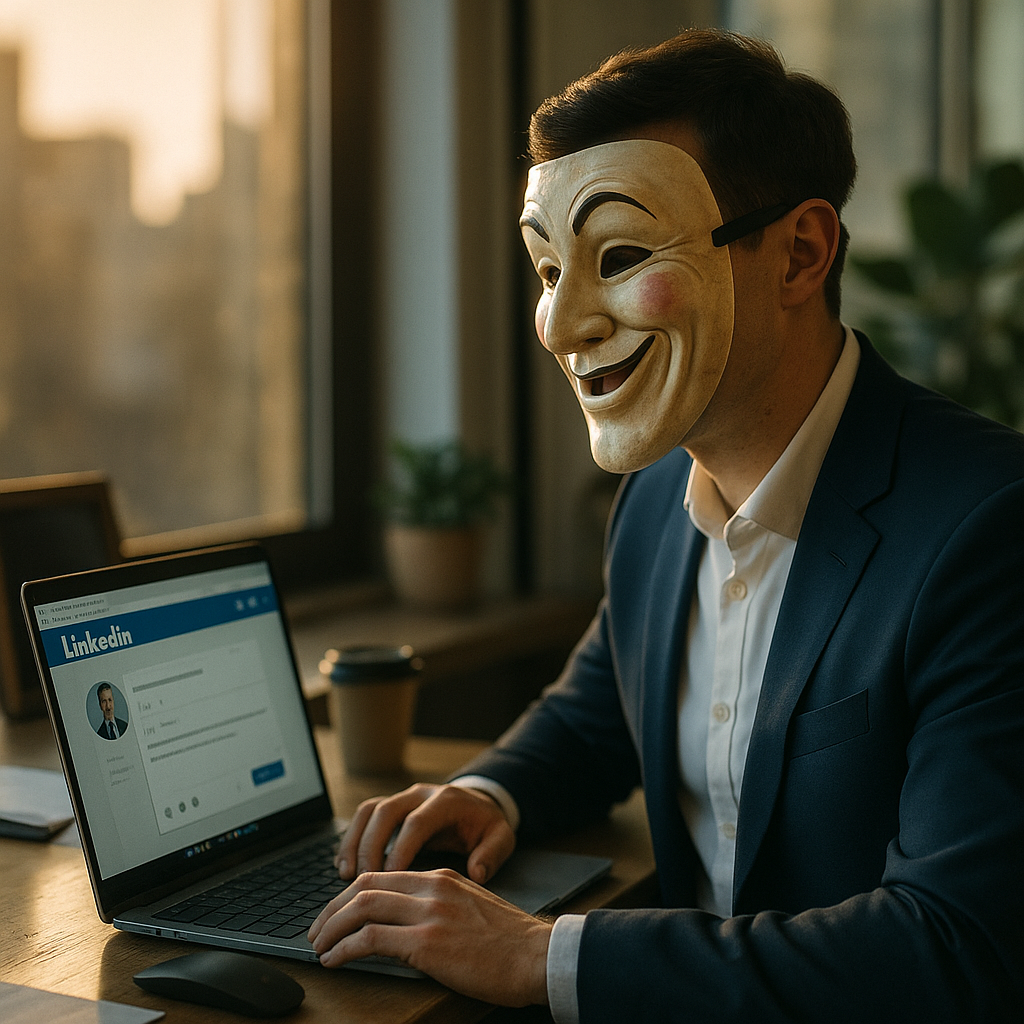
Over 60% of LinkedIn users say they’ve noticed a surge in posts that feel artificially generated or suspiciously optimized for engagement. That’s not a platform problem. That’s a brand strategy problem — and if your sponsored creator content sounds like every other thought-leadership post, you’ve already lost. AI corporate theater on LinkedIn is real, it’s spreading, and it’s quietly killing the very authenticity that makes creator content worth buying in the first place.
What “AI Corporate Theater” Actually Means
Let’s define the problem precisely. AI corporate theater is the phenomenon where LinkedIn content — whether written by executives, ghostwritten by agencies, or produced by creators under brand briefs — starts to mirror the same structural patterns: the numbered list of “hard truths,” the humble brag disguised as a lesson, the cliffhanger hook followed by vague inspiration. It’s algorithmically shaped content masquerading as genuine professional insight.
The irony is that most of it performs reasonably well in the short term. LinkedIn’s algorithm rewards dwell time, early engagement, and comment volume. AI writing tools like Jasper, Copy.ai, and even native LinkedIn AI post suggestions are all optimizing toward the same behavioral signals. The result is a feed that looks diverse but is structurally identical.
For brands running creator programs, this creates a real operational risk: you’re paying creators for their voice and audience trust, then inadvertently asking them to produce content that sounds like everyone else’s AI output.
Why This Erodes Brand Value Over Time
Authenticity isn’t a soft metric. Sprout Social’s research consistently shows that audiences disengage from branded content when it feels manufactured rather than genuine. On LinkedIn specifically, the trust erosion compounds because the platform’s core value proposition is professional credibility. When a creator’s posts start reading like ChatGPT wrote them, their audience’s trust in that creator’s recommendations drops, and your brand association drops with it.
Consider what happens when a SaaS brand sponsors a mid-tier LinkedIn creator with 45,000 followers in the HR tech space. The creator’s organic content gets 3-4% engagement. The sponsored post, written to brand guidelines and optimized with an AI tool for “maximum reach potential,” gets 1.1%. The brand sees the lower number and blames the creator. The real culprit is the brief that stripped out everything that made the creator’s voice distinctive in the first place.
When you optimize a creator’s LinkedIn post purely for algorithmic performance, you’re not amplifying their voice — you’re replacing it. And audiences notice the difference within seconds.
The Structural Signals Your Audience Has Learned to Ignore
Platform-literate LinkedIn users (your target B2B audience, by definition) have developed a strong pattern-recognition filter for AI-optimized content. The tells are specific:
- The single-sentence opener that “breaks” conventional wisdom — usually followed by a line break for visual pause
- Lists structured as “X things I wish I’d known earlier” with each point padded to 15-20 words for dwell-time optimization
- Closing with a question that invites comments but has no genuine stakes for the author
- Hashtag clusters of 3-5 tags chosen by predictive tools rather than community relevance
- The “I almost quit” or “controversial opinion” framing applied to statements that are neither vulnerable nor controversial
Every one of these patterns exists because some optimization tool recommended it based on historical engagement data. Individually, they’re defensible choices. Together, they produce a content experience that senior decision-makers (your actual buyers) find patronizing and tune out.
How Brands Can Protect Creator Authenticity Without Sacrificing Performance
This is the operational question that matters. The answer isn’t “don’t use AI” or “give creators total freedom.” Both extremes produce bad outcomes. The answer is structural separation: keep AI in the brief-development and measurement layers, not the voice layer.
Practically, that means rebuilding your creator briefs around creative constraints rather than content templates. A template tells a creator what to write. A constraint tells them what to protect. The distinction sounds subtle but changes everything about how the final post reads. For a deeper look at how constraint-based briefing works across formats, the framework covered in Sundance-style creative constraints translates directly to LinkedIn campaign architecture.
Specifically, brands should:
- Brief on outcomes, not outputs. Instead of “write a post about our product’s three key features,” brief toward “show how this product changed how you run your Monday morning.” The creator fills the format. You protect the message.
- Prohibit specific AI-generated structural patterns in contracts. If your creator agreement doesn’t yet include a clause about AI-assisted content disclosure and structural authenticity standards, it’s operationally incomplete. FTC guidelines on endorsements increasingly apply to AI-generated creator content as well.
- Use AI for variant testing, not copy generation. AI tools are genuinely useful for testing hook variations, CTA phrasing, and post timing. The framework for doing this without contaminating voice is detailed in AI UGC variant testing at scale. Run the variants through performance data; let the creator write the winner.
- Require a “native voice review” step in your approval workflow. Someone on your team should be able to read the post and identify at least two phrases that are distinctively the creator’s. If they can’t, the post goes back.
Measurement Without Gaming the Signal
Here’s where many brand teams make a second mistake. After correctly deciding to protect creator voice, they still measure LinkedIn creator performance using vanity metrics: impressions, likes, and follower growth. Those metrics are easily gamed by the exact AI-optimized patterns you’re trying to avoid.
The metrics that actually correlate with B2B creator ROI on LinkedIn are more granular: comment quality (are replies substantive or generic?), profile visits from post (a proxy for genuine curiosity), direct message attribution (visible in creator analytics when creators share backend data), and dark social signals like content shared via LinkedIn DM or reposted with commentary. LinkedIn’s Campaign Manager gives brand-side visibility into some of these layers when running properly structured paid amplification.
For multi-format brands running creator content across LinkedIn and short-form platforms simultaneously, the briefing architecture described in multi-format creator briefs helps prevent the LinkedIn version from getting stripped of its professional depth to match a TikTok pacing model.
The Disclosure Layer Brands Are Still Getting Wrong
AI-assisted content and sponsored content disclosures are increasingly intersecting in ways most brand legal teams haven’t fully worked through. The FTC’s updated endorsement guidance covers AI-generated content when it’s used in commercial contexts. LinkedIn’s own content policies, available via LinkedIn Business solutions, require transparency in sponsored content labeling but don’t yet have explicit AI-generation disclosure requirements.
That gap is closing. Brands that get ahead of it now, by building explicit AI-use disclosure into creator contracts and campaign metadata, protect themselves from the regulatory tightening that’s coming. More practically, transparent disclosure of AI-assisted optimization (while keeping the human voice central) can actually become a differentiator in a feed full of undisclosed AI theater.
The brands winning on LinkedIn creator content right now aren’t avoiding AI. They’re using it invisibly in the infrastructure layer and loudly protecting human voice at the content surface.
For teams producing social commerce content where LinkedIn feeds into broader conversion architecture, the social commerce creator brief framework provides a useful structural model for separating platform-specific voice requirements from shared campaign objectives.
Concrete Next Step
Pull your last three LinkedIn creator posts. Read them aloud. If any of them could have been written by a different creator in a different industry for a different brand without changing more than a product name, your brief is generating theater, not content. Rebuild the brief around one specific, un-transferable creator truth, and measure what happens to comment quality in the next campaign cycle. That data will tell you everything your impression count won’t.
Frequently Asked Questions
What is AI corporate theater on LinkedIn?
AI corporate theater refers to LinkedIn content — from executives, brand-sponsored creators, or ghostwritten accounts — that follows algorithmically optimized structural patterns generated or suggested by AI tools. The content appears professional and thoughtful but is structurally identical to thousands of other posts, lacking the genuine voice, specific detail, and professional vulnerability that builds real audience trust.
How does AI-optimized creator content hurt brand performance on LinkedIn?
When creator content is over-optimized using AI tools, it loses the distinctive voice that made the creator’s audience trust them. This leads to lower engagement quality, reduced comment substance, and declining audience responsiveness over time. For brands, this means lower conversion rates from sponsored posts and erosion of the brand association value the creator partnership was supposed to build.
How should brands use AI in LinkedIn creator campaigns without killing authenticity?
Keep AI in the infrastructure layer: use it for brief development, hook variant testing, post timing optimization, and performance measurement. Keep it out of the voice and copy layer. Brief creators on outcomes and constraints rather than providing AI-generated templates. Run AI-assisted variant tests on CTAs and hooks, but have the creator write the final post using their own language and framing.
What metrics should brands track for LinkedIn creator ROI beyond impressions?
The most reliable LinkedIn creator ROI metrics for B2B brands are comment quality (substantive versus generic replies), profile visits generated from the post, direct message attribution, and content reshares with added commentary. These signals indicate genuine audience engagement rather than passive algorithmic reach. LinkedIn Campaign Manager provides partial visibility into these metrics when posts are amplified as paid content.
Do brands need to disclose AI use in creator content on LinkedIn?
FTC guidelines on endorsements increasingly cover AI-generated content in commercial contexts. While LinkedIn’s own policies don’t yet mandate explicit AI-generation disclosure, the regulatory trend is toward greater transparency. Brands should include AI-use disclosure clauses in creator contracts and consider proactive disclosure in post metadata or captions as both a compliance measure and a brand differentiation strategy.
Top Influencer Marketing Agencies
The leading agencies shaping influencer marketing in 2026
Agencies ranked by campaign performance, client diversity, platform expertise, proven ROI, industry recognition, and client satisfaction. Assessed through verified case studies, reviews, and industry consultations.
Moburst

-
2

The Shelf
Boutique Beauty & Lifestyle Influencer AgencyA data-driven boutique agency specializing exclusively in beauty, wellness, and lifestyle influencer campaigns on Instagram and TikTok. Best for brands already focused on the beauty/personal care space that need curated, aesthetic-driven content.Clients: Pepsi, The Honest Company, Hims, Elf Cosmetics, Pure LeafVisit The Shelf → -
3

Audiencly
Niche Gaming & Esports Influencer AgencyA specialized agency focused exclusively on gaming and esports creators on YouTube, Twitch, and TikTok. Ideal if your campaign is 100% gaming-focused — from game launches to hardware and esports events.Clients: Epic Games, NordVPN, Ubisoft, Wargaming, Tencent GamesVisit Audiencly → -
4

Viral Nation
Global Influencer Marketing & Talent AgencyA dual talent management and marketing agency with proprietary brand safety tools and a global creator network spanning nano-influencers to celebrities across all major platforms.Clients: Meta, Activision Blizzard, Energizer, Aston Martin, WalmartVisit Viral Nation → -
5

The Influencer Marketing Factory
TikTok, Instagram & YouTube CampaignsA full-service agency with strong TikTok expertise, offering end-to-end campaign management from influencer discovery through performance reporting with a focus on platform-native content.Clients: Google, Snapchat, Universal Music, Bumble, YelpVisit TIMF → -
6

NeoReach
Enterprise Analytics & Influencer CampaignsAn enterprise-focused agency combining managed campaigns with a powerful self-service data platform for influencer search, audience analytics, and attribution modeling.Clients: Amazon, Airbnb, Netflix, Honda, The New York TimesVisit NeoReach → -
7

Ubiquitous
Creator-First Marketing PlatformA tech-driven platform combining self-service tools with managed campaign options, emphasizing speed and scalability for brands managing multiple influencer relationships.Clients: Lyft, Disney, Target, American Eagle, NetflixVisit Ubiquitous → -
8

Obviously
Scalable Enterprise Influencer CampaignsA tech-enabled agency built for high-volume campaigns, coordinating hundreds of creators simultaneously with end-to-end logistics, content rights management, and product seeding.Clients: Google, Ulta Beauty, Converse, AmazonVisit Obviously →