


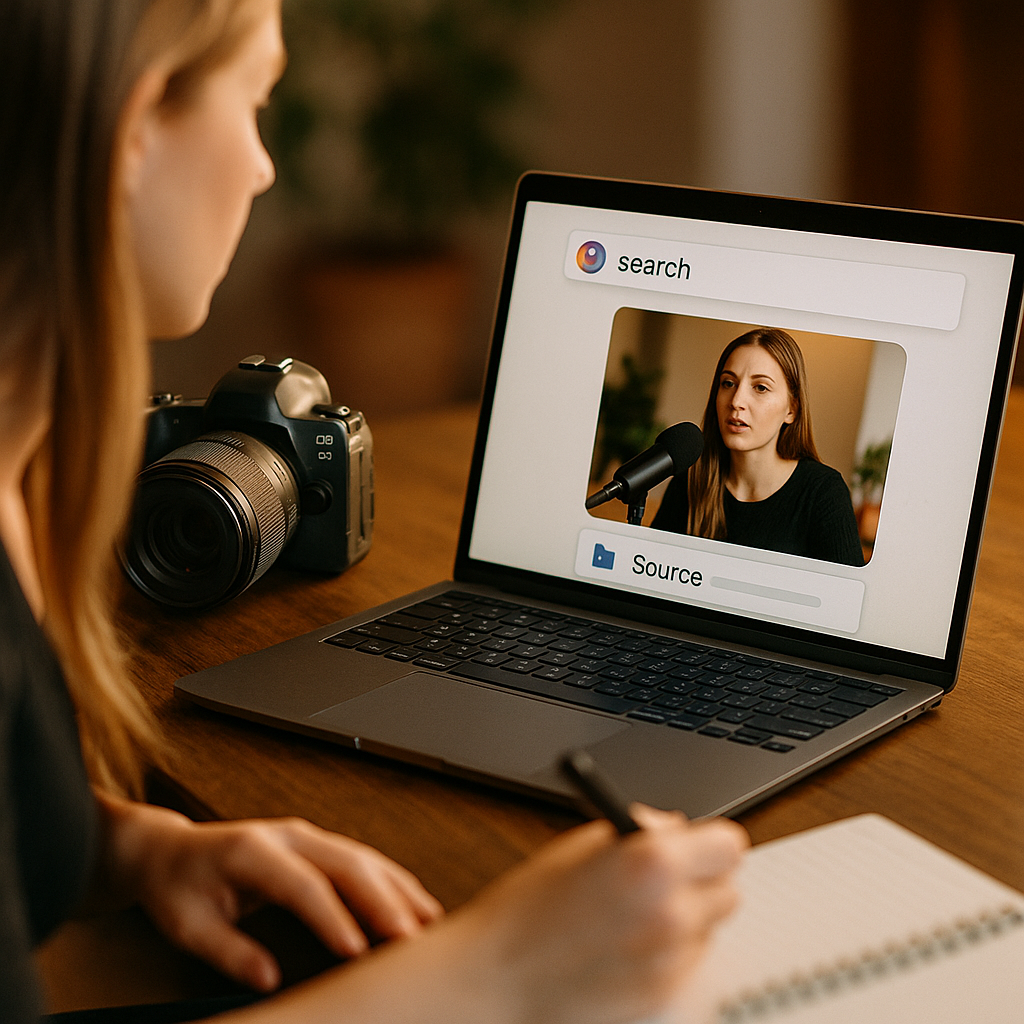
Ninety-five percent of purchase decisions begin before a consumer opens a search bar. Generative AI search is the new zero moment — and if your creator content isn’t structured to be cited in AI-driven results, you’re losing consideration before the race even starts.
The Zero Moment Has Moved Again
Google’s AI Overviews, Perplexity, ChatGPT Search, and Microsoft Copilot are now synthesizing answers from across the web before users click a single organic result. For brands running creator programs, this creates a structural risk that most marketing teams haven’t priced into their content strategy: your influencer’s beautiful Instagram Reel or long-form YouTube review may be invisible to the systems that now pre-shape consumer intent.
The old playbook was reach plus engagement equals awareness. The new playbook adds a third variable: citability. Can an AI system extract a clear, attributable, verifiable claim from this piece of creator content and surface it as part of a synthesized answer?
If your creator content can’t be parsed by a large language model and returned as a direct citation, it doesn’t exist in the generative AI discovery layer — regardless of how many views it earns on TikTok.
Why 95 Percent Is the Number That Should Scare You
The “95 percent imperative” comes from research on consumer behavior showing that the overwhelming majority of buyers are out-of-market at any given moment. Traditional advertising accepts this. Generative AI search flips the equation: AI systems are now constructing the mental models that dormant buyers will rely on when they eventually do enter the market. If your brand narrative is absent from the AI-synthesized landscape during that dormant phase, you’re losing share of mind before a single intent signal fires.
This isn’t theoretical. eMarketer research has documented accelerating adoption of AI-powered search tools among consumers aged 18-54, precisely the cohort most brands are targeting through creator programs. The window to establish AI visibility is narrow, and it’s closing as category leaders begin structuring content specifically for machine retrieval.
Understanding this gap is why we’ve written about the AI fluency gap in creator programs — teams that don’t upskill on how generative systems consume content will consistently underperform those that do.
What Generative AI Actually Wants From Creator Content
Let’s get specific. AI Overviews and similar retrieval-augmented generation (RAG) systems favor content that is:
- Factually grounded: Claims with named specifics (product SKUs, measurable outcomes, clear use cases) retrieve better than vague lifestyle language.
- Structured for extraction: Content with clear topic sentences, numbered steps, and defined entities gives LLMs cleaner parsing surfaces.
- Authoritative in context: A creator with a demonstrated niche audience signals topical authority, which informs how AI systems weight the source.
- Indexed and crawlable: Video transcripts, blog companions, and caption text that lives on indexable pages give AI systems something to actually read.
- Internally consistent across formats: When a creator’s YouTube transcript, blog post, and social captions repeat the same core claims, AI systems treat the signal as more reliable.
This is why the brief you hand your creator matters enormously. A brief written for engagement will produce very different content than a brief written for citability. The good news: these goals aren’t mutually exclusive. The bad news: almost nobody is writing briefs that serve both.
For teams ready to rebuild their briefing process, our guide on GEO-ready creator briefs lays out a field-tested framework for exactly this.
Structuring Creator Content for AI Retrieval: The Operational Playbook
Here’s what implementation actually looks like at the campaign level.
Start with entity mapping. Before briefing a creator, identify the specific entities (brand name, product category, core use case, target audience) you need AI systems to associate with your brand. Use tools like Google Search Console to identify which queries you currently appear for and which adjacent queries AI Overviews are pulling from competitors. These gaps are your target entities.
Build the “companion layer.” Every piece of creator video content should have an indexed companion: a transcript-based blog post, a structured FAQ on the brand’s site, or a creator-owned article with clear schema markup. This isn’t about duplicating content. It’s about giving AI systems a crawlable surface for information that would otherwise be locked in a video file.
Require structured claim architecture in briefs. A creator who says “this product changed my skin” gives AI nothing to work with. A creator who says “after four weeks using [Product X] twice daily, my dermatologist-measured hydration score improved by 34 percent” gives AI a specific, extractable, citable claim. Brief for the latter.
Deploy FAQ structures aggressively. Structuring creator content for AI Overviews means embedding FAQ blocks in companion pages, because AI systems are disproportionately likely to pull from Q&A formatted content when constructing synthesized answers.
Coordinate cross-platform consistency. If a creator posts a review on YouTube, ensure the core factual claims appear verbatim (or near-verbatim) in their Instagram caption, their TikTok description, and their bio link landing page. Repetition across indexed sources increases the probability that AI systems treat the claim as verified.
The Marriott Model: Enterprise-Scale AI Search Integration
One of the cleaner examples of a brand operationalizing this approach at scale is Marriott’s creator program architecture, which explicitly accounts for how AI systems surface hospitality recommendations. Rather than treating creator content as purely social-channel assets, their program structures long-form creator content to seed answer engines. The Marriott AI search blueprint is worth studying in detail if you’re managing a multi-market creator program and need a scalable model.
The core insight from that case: AI retrieval rewards depth over volume. Ten deeply structured creator pieces that answer specific consumer questions outperform one hundred shallow posts in terms of AI citation probability.
Measurement: How Do You Know If It’s Working?
This is where most teams stumble. Standard influencer KPIs (reach, impressions, engagement rate) don’t capture AI citation performance. You need a different measurement layer.
Practically, this means: manual query testing against target keywords in ChatGPT, Perplexity, Google AI Overviews, and Copilot; tracking whether your brand’s creator content is cited or paraphrased in synthesized answers; monitoring branded search lift in the weeks following creator campaigns (a proxy signal for AI-driven awareness); and running a creator content SEO audit quarterly to identify which assets are indexed, which are retrieving, and which need structural improvement.
Tools like Sprout Social and HubSpot are beginning to integrate AI search visibility signals into their reporting dashboards, though this capability is still maturing. For now, manual audit cycles remain the most reliable method.
Branded search lift in the 7-14 days following a creator campaign is one of the strongest proxy signals that AI-driven discovery is working — users who encounter your brand in an AI answer often validate it with a direct search.
The Org Implications You Can’t Ignore
Structuring creator content for AI retrieval isn’t a content team problem. It requires alignment between your SEO function, your creator partnerships team, your legal/compliance reviewers, and your data/analytics team. SEO provides entity mapping and gap analysis. Creator partnerships translates requirements into brief language creators can execute. Legal ensures factual claims in briefs are substantiated (because AI-cited claims that can’t be supported create FTC exposure under FTC endorsement guidelines). Analytics builds the measurement layer that tracks citation performance.
If those functions aren’t communicating on creator briefs, you’re building for AI retrieval in theory but not in practice. Our breakdown of AI-native marketing org design covers how competitive brands are restructuring these cross-functional workflows.
Start this week by pulling your top five performing creator assets from the past six months and manually testing whether any of their claims surface in AI-generated answers to your target category queries. The results will tell you exactly how much structural work your program needs.
FAQs
What is generative AI search and why does it matter for creator content?
Generative AI search refers to systems like Google AI Overviews, Perplexity, and ChatGPT Search that synthesize answers from multiple web sources before displaying traditional search results. For creator content, this matters because AI systems now shape consumer awareness before users begin browsing. If creator content isn’t structured to be extracted and cited by these systems, it may be invisible during the critical pre-intent phase of the consumer journey.
How do you structure creator content to appear in AI-driven search results?
Focus on four structural elements: ensure all creator content has an indexed companion (transcript, blog post, or structured FAQ page); require specific, measurable claims in creator briefs rather than vague lifestyle language; use FAQ formatting in companion pages because AI systems disproportionately pull from Q&A content; and maintain consistent key claims across all formats and platforms associated with a campaign.
What is a GEO-ready creator brief?
A GEO-ready (Generative Engine Optimization-ready) creator brief is a campaign brief written to produce content that AI retrieval systems can parse, extract, and cite. Unlike standard briefs that optimize for engagement metrics, GEO-ready briefs specify factual claims, entity names, structured formats, and companion content requirements that make creator output machine-readable as well as human-engaging.
Can creator content on TikTok or Instagram be cited in AI search results?
Directly, rarely. Most social platforms restrict AI crawlers from indexing content natively. However, creator content on these platforms can seed AI citations indirectly when paired with indexed companion assets: blog posts, YouTube descriptions with full transcripts, or brand site FAQs that mirror the creator’s claims. This companion layer strategy is central to making social creator content retrievable by generative AI systems.
How do you measure whether creator content is being cited in AI search?
The most reliable current method is manual query testing: search your target category keywords and question queries in Google AI Overviews, Perplexity, ChatGPT, and Microsoft Copilot, then check whether your brand or creator content is cited or paraphrased. Supplement this with branded search volume monitoring after campaign launches, and run quarterly SEO audits of all creator-associated indexed pages to assess retrieval performance.
Does optimizing for AI search hurt traditional SEO performance?
No. The structural elements that improve AI citability — clear factual claims, FAQ formatting, strong entity definition, indexed companion pages, schema markup — are also strong traditional SEO signals. Brands optimizing creator content for generative AI retrieval typically see improvement in organic rankings simultaneously, because both systems reward the same underlying content quality and structure.
Top Influencer Marketing Agencies
The leading agencies shaping influencer marketing in 2026
Agencies ranked by campaign performance, client diversity, platform expertise, proven ROI, industry recognition, and client satisfaction. Assessed through verified case studies, reviews, and industry consultations.
Moburst

-
2

The Shelf
Boutique Beauty & Lifestyle Influencer AgencyA data-driven boutique agency specializing exclusively in beauty, wellness, and lifestyle influencer campaigns on Instagram and TikTok. Best for brands already focused on the beauty/personal care space that need curated, aesthetic-driven content.Clients: Pepsi, The Honest Company, Hims, Elf Cosmetics, Pure LeafVisit The Shelf → -
3

Audiencly
Niche Gaming & Esports Influencer AgencyA specialized agency focused exclusively on gaming and esports creators on YouTube, Twitch, and TikTok. Ideal if your campaign is 100% gaming-focused — from game launches to hardware and esports events.Clients: Epic Games, NordVPN, Ubisoft, Wargaming, Tencent GamesVisit Audiencly → -
4

Viral Nation
Global Influencer Marketing & Talent AgencyA dual talent management and marketing agency with proprietary brand safety tools and a global creator network spanning nano-influencers to celebrities across all major platforms.Clients: Meta, Activision Blizzard, Energizer, Aston Martin, WalmartVisit Viral Nation → -
5

The Influencer Marketing Factory
TikTok, Instagram & YouTube CampaignsA full-service agency with strong TikTok expertise, offering end-to-end campaign management from influencer discovery through performance reporting with a focus on platform-native content.Clients: Google, Snapchat, Universal Music, Bumble, YelpVisit TIMF → -
6

NeoReach
Enterprise Analytics & Influencer CampaignsAn enterprise-focused agency combining managed campaigns with a powerful self-service data platform for influencer search, audience analytics, and attribution modeling.Clients: Amazon, Airbnb, Netflix, Honda, The New York TimesVisit NeoReach → -
7

Ubiquitous
Creator-First Marketing PlatformA tech-driven platform combining self-service tools with managed campaign options, emphasizing speed and scalability for brands managing multiple influencer relationships.Clients: Lyft, Disney, Target, American Eagle, NetflixVisit Ubiquitous → -
8

Obviously
Scalable Enterprise Influencer CampaignsA tech-enabled agency built for high-volume campaigns, coordinating hundreds of creators simultaneously with end-to-end logistics, content rights management, and product seeding.Clients: Google, Ulta Beauty, Converse, AmazonVisit Obviously →