


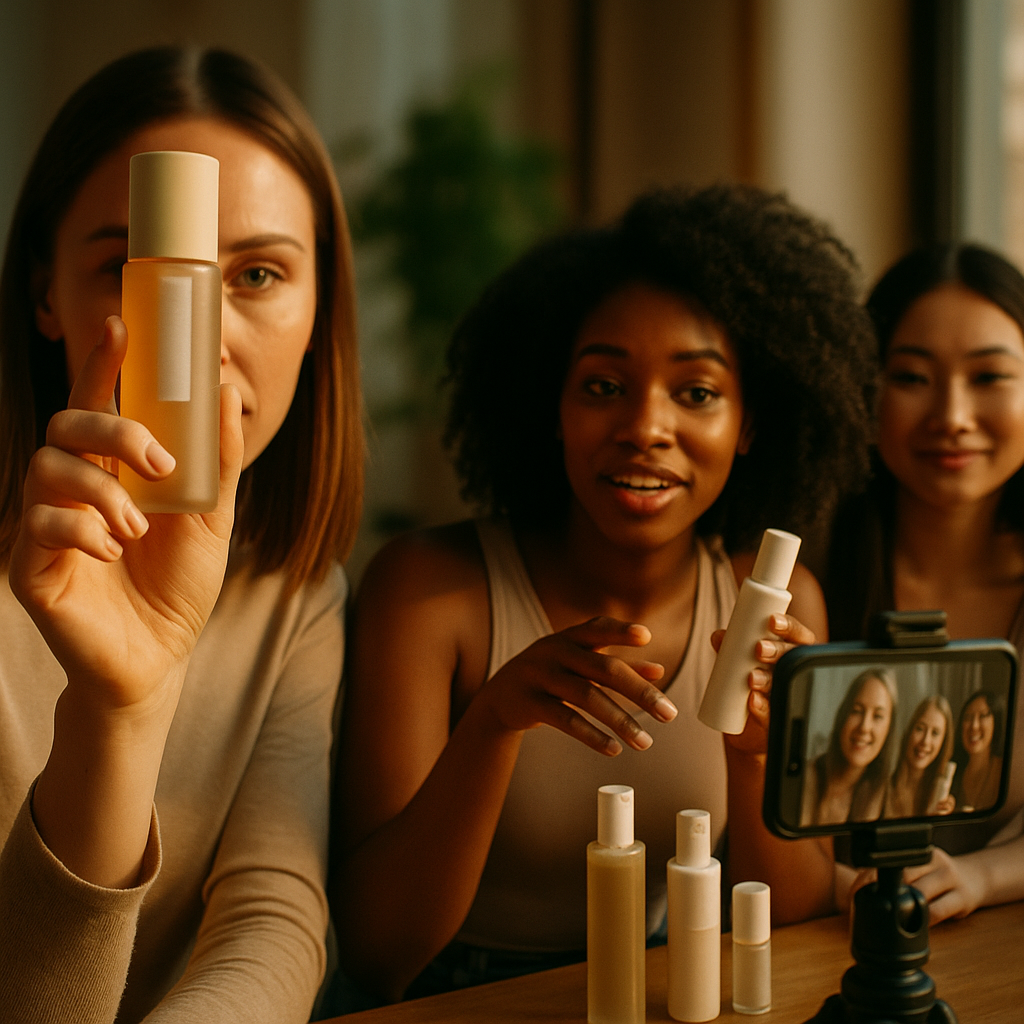
What happens when a beauty brand bets the entire campaign on one creator? Naturium did exactly that, and the results forced the industry to rethink creator-centered campaign architecture. Single-creator concentration versus roster diversification is no longer a philosophical debate — it’s a budget decision with measurable consequences.
The Naturium Blueprint: One Creator, Total Campaign Control
Naturium built its breakout growth by organizing full campaign cycles around Susan Yara, a dermatology-adjacent creator with a highly engaged, ingredient-literate audience. This wasn’t a simple brand ambassador deal. Yara was a co-founder. The campaign architecture reflected that: product development narrative, educational content, launch sequencing, and community Q&A all ran through a single authoritative voice.
The operational logic is straightforward. When one creator anchors the entire message, brand vocabulary stays consistent, the educational arc builds across posts rather than restarting with each new face, and the audience forms a parasocial relationship not just with the brand but with the brand’s point of view. For a science-backed skincare line competing against legacy players with eight-figure media budgets, that coherence is a competitive advantage.
The risk is equally obvious: talent concentration. If the creator faces a reputation crisis, takes a hiatus, or renegotiates terms aggressively, the brand’s entire content engine stalls. This is the structural vulnerability that roster-diversified programs are specifically designed to avoid.
Single-creator campaigns often outperform diversified rosters on brand recall by 20-30% in category recall studies — but that same concentration makes them disproportionately fragile when creator relationships break down.
How Roster-Diversified Programs Actually Work in Beauty
The alternative isn’t simply “hire more creators.” A genuinely diversified roster program for a beauty brand typically segments creators by function: hero creators (100K+ engaged followers) drive awareness and brand lift; mid-tier creators (10K-100K) generate search-discoverable content and review volume; nano creators handle community trust and peer recommendation signals. Brands like e.l.f. Beauty and Rare Beauty have operationalized this tiered model with dedicated creator management infrastructure.
What diversification buys you:
- Audience coverage: Multiple creators reach overlapping but distinct segments, reducing the risk that a single demographic miss tanks the full campaign.
- Content volume: Algorithm-friendly platforms like TikTok and Instagram reward posting frequency. A roster generates content velocity that one creator physically cannot match.
- Attribution clarity: When you can compare performance across 15 creators using the same brief and UTM structure, you get real data on what creative angles actually convert.
- Risk distribution: A controversy affecting one creator affects a fraction of your output, not all of it.
The cost is coherence. Fifteen creators interpreting the same brief will produce fifteen different tonal registers, visual aesthetics, and claim emphases. That’s harder to manage and harder for audiences to aggregate into a single brand impression.
Brand Lift: Where the Data Gets Complicated
Meta’s brand lift studies and TikTok’s measurement tools consistently show that creator-centered campaigns with a dominant single voice produce stronger unaided brand recall in the short term. The mechanism is repetition: audiences encounter the same creator voice across multiple touchpoints, and that repetition encodes brand associations more deeply than scattered exposure across many faces.
But roster programs tend to outperform on consideration lift, particularly at the mid-funnel. When a consumer encounters a product from three different creators with three different use cases, each speaking to a different pain point, the brand’s utility becomes multidimensional. That’s especially valuable in beauty, where a single SKU (a vitamin C serum, say) can serve different audiences for completely different reasons: brightening, hyperpigmentation, anti-aging, preventive care.
The honest answer is that neither model dominates across all brand lift metrics. The more useful question is: what stage of brand development are you in? Naturium needed to establish authority in a crowded category. A single expert voice accomplished that faster than a diffuse roster could have. A brand that’s already established authority needs to expand consideration, and that’s where roster width earns its budget allocation.
Sales Attribution: The Measurement Challenge Neither Model Fully Solves
Here’s where most brand teams get into trouble. Single-creator campaigns make attribution feel cleaner — one affiliate link, one promo code, one creator to credit when ROAS looks good. But that simplicity is partly illusory. Naturium’s Susan Yara content drove search behavior, YouTube watch time, and DTC traffic that a promo code never captured. Revenue attribution beyond reach requires connecting owned analytics, third-party measurement, and brand search volume trends simultaneously.
Roster programs face the opposite problem: attribution gets fragmented across dozens of codes and links, making it hard to understand the cumulative effect versus the individual creator contribution. Platforms like Sprout Social and dedicated influencer analytics tools (Grin, Traackr, CreatorIQ) have improved multi-touch attribution modeling, but the data pipelines still require significant ops investment to maintain accurately.
For beauty brands specifically, the purchase journey often includes a retail touchpoint — Ulta, Target, Sephora — that sits entirely outside digital attribution windows. A consumer who watches a Naturium explainer on YouTube, searches for the product, finds it at Target, and buys it there generates zero attributable revenue in most influencer measurement dashboards. This is a category-wide problem, but it hits single-creator programs hardest because the creator often gets under-credited for the halo effect they’re generating on retail velocity.
Structuring your creator workflow for attribution before the campaign launches, not after, is the operational discipline that separates brands that learn from campaigns from brands that just report on them.
Audience Trust: The Metric That Actually Differentiates the Models
Trust is where the single-creator model has its most durable advantage — and its most catastrophic failure mode. When audiences follow Susan Yara for skincare guidance and she’s also a Naturium co-founder, the authenticity read is high precisely because the commercial relationship is disclosed and explicable. The audience understands why she’s recommending the brand: she built it. That’s different from a celebrity posting a sponsored code for a brand she’s never mentioned before.
According to Edelman’s trust research, consumers rate “people like me” and “technical experts” as significantly more credible than celebrities or brand executives. A single creator who embodies both characteristics simultaneously (relatable format, expert content) compounds trust in a way that’s very hard for a roster to replicate at the individual creator level.
Roster programs compensate with volume and peer density. When 20 creators are all independently vouching for the same serum, the social proof effect kicks in. No single voice is as authoritative as Yara-at-Naturium, but the collective signal is persuasive in its own way, particularly for consumers who haven’t been reached by the hero creator’s content.
Trust architecture in influencer programs isn’t binary. The real question is whether you’re trying to build authority (single-creator advantage) or social proof at scale (roster advantage). Most beauty brands eventually need both.
When to Choose Which Model (And When to Hybrid)
The Naturium model works when: the creator brings genuine category expertise, the brand is in an early authority-building phase, and you can structure the commercial relationship to reduce dependency risk (equity, long-term contracts, content IP ownership). Understanding the organizational design around creator roles matters here — who owns the relationship, who manages content approvals, and what happens if the creator exits.
A roster-diversified program makes more sense when: the brand has existing awareness and needs to expand consideration across segments, the category is content-volume-driven (daily skincare routines, makeup tutorials), or the brand’s compliance requirements (FTC disclosure, ingredient claim review) make it operationally easier to standardize across a managed creator pool. FTC guidelines on material disclosures apply equally to both models, but roster programs often require more systematic disclosure auditing.
Most mature beauty brands end up running a hybrid: one to three anchor creators who carry the brand’s educational authority, supported by a tiered roster that generates volume, variation, and retail conversion. The budget split matters. Allocating 60% of creator spend to a single anchor creator is a fundamentally different risk profile than a 25% anchor / 75% roster split. Getting that allocation right requires knowing your brand’s actual funnel gaps, not just copying what a competitor appears to be doing.
For teams still building the infrastructure to manage either model at scale, thinking through always-on versus episodic budget splits is a useful starting point — creator-centered campaigns tend to be episodic by nature, while roster programs benefit from always-on structure. The creator economy data increasingly favors brands that can operate both modes simultaneously.
Audit your current campaign architecture against three questions: Does your single anchor creator have contractual protections that survive a brand acquisition or creator controversy? Does your roster program have standardized briefs that produce content comparable enough to generate real attribution learnings? And are you measuring brand lift, sales attribution, and audience trust as separate KPIs, or collapsing them into a single “performance” number that tells you very little?
Frequently Asked Questions
What is creator-centered campaign architecture in beauty marketing?
Creator-centered campaign architecture is a strategic approach where a brand organizes its entire campaign, including product storytelling, launch sequencing, educational content, and community engagement, around a single high-profile creator rather than distributing that work across a diverse creator roster. Naturium’s co-founder model with Susan Yara is the most cited example in the beauty category.
How does a single-creator campaign affect brand lift compared to a roster program?
Single-creator campaigns tend to produce stronger unaided brand recall because audiences encounter the same voice repeatedly, which deepens brand encoding. Roster-diversified programs typically perform better on consideration lift because multiple creators demonstrate different use cases for the same product, expanding the brand’s perceived utility across audience segments.
What are the biggest risks of the Naturium-style single-creator model?
The primary risks are talent concentration and relationship dependency. If the anchor creator faces a public controversy, takes an extended hiatus, or exits the partnership, the brand’s entire content engine and audience trust signal are disrupted simultaneously. Contractual protections, content IP ownership clauses, and a documented transition plan are essential risk mitigations for any brand running this model.
How should beauty brands approach sales attribution in influencer campaigns?
Attribution should be structured before the campaign launches, not retrofitted afterward. This means setting up unique UTM parameters, affiliate links, and promo codes for each creator, but also tracking brand search volume, retail velocity, and DTC session quality simultaneously. Neither single-creator nor roster models fully solve the retail attribution gap, where influencer-driven consumers purchase in-store rather than through tracked digital links.
When does a roster-diversified creator program make more strategic sense than a single-creator approach?
Roster programs are better suited for brands that already have category awareness and need to expand consideration across multiple consumer segments, brands with high content-volume requirements driven by platform algorithms, and brands where compliance requirements (FTC disclosures, ingredient claim reviews) benefit from a standardized, auditable process across a managed creator pool.
Can beauty brands run both models simultaneously?
Yes, and most mature beauty brands do. A common configuration uses one to three anchor creators to carry educational authority and brand positioning, supported by a tiered roster of mid-tier and nano creators that generate content volume, social proof, and retail conversion signals. The budget allocation between anchor and roster spend should reflect the brand’s actual funnel gaps rather than a default percentage split.
Top Influencer Marketing Agencies
The leading agencies shaping influencer marketing in 2026
Agencies ranked by campaign performance, client diversity, platform expertise, proven ROI, industry recognition, and client satisfaction. Assessed through verified case studies, reviews, and industry consultations.
Moburst

-
2

The Shelf
Boutique Beauty & Lifestyle Influencer AgencyA data-driven boutique agency specializing exclusively in beauty, wellness, and lifestyle influencer campaigns on Instagram and TikTok. Best for brands already focused on the beauty/personal care space that need curated, aesthetic-driven content.Clients: Pepsi, The Honest Company, Hims, Elf Cosmetics, Pure LeafVisit The Shelf → -
3

Audiencly
Niche Gaming & Esports Influencer AgencyA specialized agency focused exclusively on gaming and esports creators on YouTube, Twitch, and TikTok. Ideal if your campaign is 100% gaming-focused — from game launches to hardware and esports events.Clients: Epic Games, NordVPN, Ubisoft, Wargaming, Tencent GamesVisit Audiencly → -
4

Viral Nation
Global Influencer Marketing & Talent AgencyA dual talent management and marketing agency with proprietary brand safety tools and a global creator network spanning nano-influencers to celebrities across all major platforms.Clients: Meta, Activision Blizzard, Energizer, Aston Martin, WalmartVisit Viral Nation → -
5

The Influencer Marketing Factory
TikTok, Instagram & YouTube CampaignsA full-service agency with strong TikTok expertise, offering end-to-end campaign management from influencer discovery through performance reporting with a focus on platform-native content.Clients: Google, Snapchat, Universal Music, Bumble, YelpVisit TIMF → -
6

NeoReach
Enterprise Analytics & Influencer CampaignsAn enterprise-focused agency combining managed campaigns with a powerful self-service data platform for influencer search, audience analytics, and attribution modeling.Clients: Amazon, Airbnb, Netflix, Honda, The New York TimesVisit NeoReach → -
7

Ubiquitous
Creator-First Marketing PlatformA tech-driven platform combining self-service tools with managed campaign options, emphasizing speed and scalability for brands managing multiple influencer relationships.Clients: Lyft, Disney, Target, American Eagle, NetflixVisit Ubiquitous → -
8

Obviously
Scalable Enterprise Influencer CampaignsA tech-enabled agency built for high-volume campaigns, coordinating hundreds of creators simultaneously with end-to-end logistics, content rights management, and product seeding.Clients: Google, Ulta Beauty, Converse, AmazonVisit Obviously →