


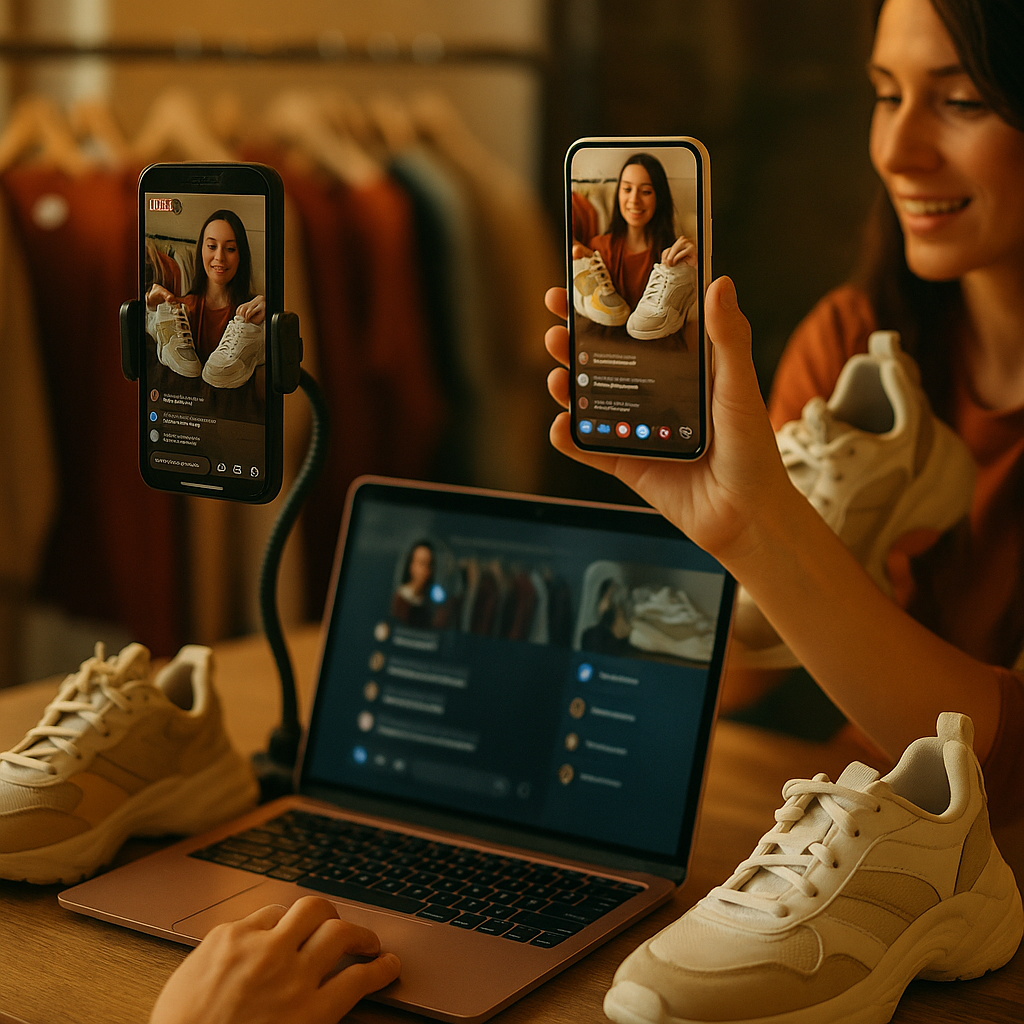
Live commerce on Meta generates conversion rates up to 10x higher than standard video ads, yet most brands are still picking livestream platforms based on demo decks rather than operational fit. That gap is expensive. Here is how to evaluate Meta live commerce platform integrations properly.
Why Platform Selection Is the Highest-Leverage Decision in Your Livestream Stack
The platform you choose does not just host the stream. It determines how products sync to Meta’s catalog, how creator compensation gets tracked, how checkout friction is managed, and whether your compliance team can sleep at night. Brands that treat this as a feature checklist exercise routinely end up locked into contracts that do not scale or, worse, create attribution blind spots that corrupt their entire creator commerce attribution stack.
The five platforms getting the most traction inside Meta’s live commerce ecosystem right now are CommentSold, Firework, LiveMeUp, Sprii, and TalkShopLive. Each has a different architecture, pricing model, and creator workflow. None is universally superior. The right answer depends entirely on your brand’s operational profile.
Breaking Down the Five Platforms
CommentSold built its reputation in direct-to-consumer boutique retail, and it shows. The platform’s core mechanic, selling via comment keywords, is frictionless for high-SKU, high-velocity categories like apparel and beauty. Comment triggers map directly to Meta’s checkout infrastructure, reducing the number of steps between intent and transaction. For brands running frequent, creator-hosted drops, the inventory sync speed is a genuine operational advantage. The risk: CommentSold’s analytics layer is shallow compared to enterprise MarTech stacks, so brands running sophisticated creator attribution audits will need middleware to fill the gap.
Firework takes a fundamentally different approach. It is built for persistent shoppable video, meaning content lives beyond the live event and continues converting in your owned channels. For brands with a content-first strategy, this is a material differentiator. Firework’s Meta integration supports both live and on-demand formats with consistent catalog connectivity. The platform also has enterprise-grade analytics that can feed into a CDP. If your team is evaluating broader data infrastructure questions, the considerations parallel those in CDP vendor selection work: does the platform own your data, or does it pass it through cleanly?
LiveMeUp is the scrappiest of the five. Its proposition is speed and simplicity: get a creator live on Meta in under 15 minutes, with product tagging and checkout enabled out of the box. For brands piloting live commerce without a dedicated production team, that low activation threshold matters. The tradeoff is customization. LiveMeUp does not offer the deep white-labeling or API flexibility that Firework or CommentSold provide. Think of it as a proof-of-concept vehicle before you commit to heavier infrastructure.
Sprii is the platform most optimized for comment-selling at scale across Meta’s surface area, specifically Facebook Live and Instagram Live simultaneously. Multi-stream management is where Sprii genuinely outperforms the others. If your creator program involves running concurrent events across multiple pages or handles regional market variations (different SKUs, different pricing, different compliance requirements), Sprii’s architecture handles that operational complexity cleanly. Meta’s commerce policies add compliance overhead that compounds across markets, and Sprii was built with that in mind.
TalkShopLive has the most developed creator marketplace of the five. It functions as both a hosting platform and a creator discovery layer, which is unusual. For brands that do not have established creator relationships for live commerce specifically, TalkShopLive’s network effect is a real shortcut. The platform has run notable events for major consumer brands and has a track record in live-to-commerce attribution that the others cannot match on sheer volume. The cost structure reflects that maturity: it is the most expensive to enter and the most negotiation-intensive on revenue share terms.
Brands that separate creator discovery from livestream hosting are adding unnecessary operational friction. Platforms like TalkShopLive that bundle both reduce time-to-activation and improve first-event conversion rates significantly.
The Evaluation Criteria That Actually Matter
Forget feature matrices. Here are the five questions your team should be answering before signing anything.
- Meta catalog sync latency: How quickly does inventory update during a live event? A 30-second lag on a high-demand SKU creates oversell exposure. Ask each vendor for documented sync interval SLAs, not marketing language.
- Creator payout architecture: Does the platform handle creator compensation natively, or does it pass that burden to your team? Operational efficiency here connects directly to your broader influencer automation ROI. Manual payout workflows at scale are a budget leak.
- Data portability: Who owns the event data, the viewer data, and the purchase data? This is non-negotiable. Platforms that aggregate your data and limit export are a long-term liability.
- Compliance tooling: Does the platform support FTC disclosure requirements natively? Can it surface required disclosures in the stream interface? Check FTC guidance on endorsement disclosures before assuming your creator handles this independently.
- Replay and reuse: Can recorded livestream content be repurposed as shoppable on-demand video on Meta and your owned channels? This determines the long-tail ROI of every event you produce.
Pricing Models Are Not Comparable on Face Value
CommentSold and Sprii typically charge per comment-sell transaction, which aligns cost to revenue but can erode margins fast on high-volume events. Firework and TalkShopLive lean on platform licensing plus revenue share, which creates predictable fixed costs but requires volume to justify. LiveMeUp uses a SaaS subscription model, which is the cleanest for budget forecasting but offers no incentive alignment with your outcomes.
The total cost of ownership calculation is not just licensing. Factor in integration development costs if your commerce stack is Shopify-adjacent versus custom-built, the internal headcount required to manage creator workflows on each platform, and the cost of any analytics middleware you will need. For a rigorous TCO framing, the methodology used in creator tool procurement evaluation applies directly here.
What the Data Says About Live Commerce on Meta
Live commerce globally is projected to exceed $500 billion in gross merchandise value by 2026, with Meta’s surfaces accounting for a disproportionate share in Western markets, according to eMarketer. Creator-hosted events consistently outperform brand-hosted events on watch time and add-to-cart rates, which is why the platform’s creator network depth matters as much as its technical architecture.
The average conversion rate for comment-selling events on Meta sits between 6 and 12 percent for beauty and apparel, compared to sub-2 percent for standard feed ads in the same categories. That delta justifies serious infrastructure investment. But it also means that a poorly integrated platform, one with catalog sync failures, checkout errors, or creator attribution gaps, does proportionally more damage than a bad ad creative would.
A catalog sync failure during a peak livestream event is not a technical hiccup. It is a revenue event with audience trust consequences that outlast the stream itself.
Integration Risk Most Teams Underestimate
Every one of these platforms connects to Meta’s Commerce Manager and Graph API. What varies is how they handle API rate limits, error recovery, and catalog versioning. During a live event, API failures cascade faster than your engineering team can respond. Ask each vendor directly: what is the failure mode if the Meta API rate limit is hit mid-stream? What is the documented recovery process? Vendors who cannot answer that specifically are telling you something important about their operational maturity.
Also verify whether each platform has achieved verified Meta Partner status or equivalent certification. Partner-tier access means better API support SLAs and earlier access to new Meta commerce features, both of which matter for brands running recurring programs rather than one-off activations.
For teams also thinking about how AI layers into this workflow, the broader AI MarTech evaluation framework is useful: define the problem you are actually solving before letting a vendor define it for you.
Making the Call
Run a structured pilot before signing a multi-event contract. Define success as catalog sync accuracy, checkout completion rate, and creator attribution fidelity, not view count. Those three metrics will tell you more about platform fit in a single event than any vendor RFP process will.
Frequently Asked Questions
Which Meta live commerce platform is best for brands new to creator-hosted livestreams?
LiveMeUp offers the lowest activation barrier for brands without a dedicated live commerce production team, getting creators live on Meta with product tagging in under 15 minutes. TalkShopLive is a better option if you also need access to a built-in creator network and are willing to pay a premium for that shortcut. For most first-time programs, start with one of these two before committing to the deeper infrastructure of CommentSold, Firework, or Sprii.
How do these platforms handle FTC disclosure requirements during a live stream?
Disclosure compliance is inconsistent across the five platforms. Some, like TalkShopLive, have on-screen disclosure prompts built into the creator interface. Others rely entirely on the creator to manage verbal or text disclosures independently. Before signing any contract, confirm in writing how the platform surfaces required paid partnership disclosures during the stream, and align that with current FTC endorsement guidance to avoid liability.
Can these platforms support simultaneous streams on Facebook Live and Instagram Live?
Sprii is the most purpose-built for simultaneous multi-surface streaming across Meta’s properties, including Facebook Live and Instagram Live, with unified inventory management across both. Other platforms like CommentSold and TalkShopLive support Meta surfaces but typically optimize for one at a time. If concurrent multi-surface streaming is a core operational requirement, Sprii is the clearest fit.
What data does my brand actually own after a live commerce event?
Data ownership terms vary significantly by platform and contract. Generally, you own purchase transaction data that flows through Meta’s checkout, but viewer engagement data, comment data, and behavioral event data may be retained by the platform. Require explicit data export rights, API access to event data, and data deletion terms in your contract. Treat any platform that restricts data portability as a long-term operational risk.
How should brands calculate the true cost of a live commerce platform integration?
Beyond licensing or transaction fees, factor in integration development costs against your existing commerce stack (Shopify, Salesforce Commerce Cloud, custom), ongoing API maintenance, internal headcount for creator workflow management, analytics middleware if the platform has a thin reporting layer, and any revenue share paid to the platform on sales generated. The total cost of ownership often runs 40 to 60 percent higher than the base platform fee alone.
Top Influencer Marketing Agencies
The leading agencies shaping influencer marketing in 2026
Agencies ranked by campaign performance, client diversity, platform expertise, proven ROI, industry recognition, and client satisfaction. Assessed through verified case studies, reviews, and industry consultations.
Moburst

-
2

The Shelf
Boutique Beauty & Lifestyle Influencer AgencyA data-driven boutique agency specializing exclusively in beauty, wellness, and lifestyle influencer campaigns on Instagram and TikTok. Best for brands already focused on the beauty/personal care space that need curated, aesthetic-driven content.Clients: Pepsi, The Honest Company, Hims, Elf Cosmetics, Pure LeafVisit The Shelf → -
3

Audiencly
Niche Gaming & Esports Influencer AgencyA specialized agency focused exclusively on gaming and esports creators on YouTube, Twitch, and TikTok. Ideal if your campaign is 100% gaming-focused — from game launches to hardware and esports events.Clients: Epic Games, NordVPN, Ubisoft, Wargaming, Tencent GamesVisit Audiencly → -
4

Viral Nation
Global Influencer Marketing & Talent AgencyA dual talent management and marketing agency with proprietary brand safety tools and a global creator network spanning nano-influencers to celebrities across all major platforms.Clients: Meta, Activision Blizzard, Energizer, Aston Martin, WalmartVisit Viral Nation → -
5

The Influencer Marketing Factory
TikTok, Instagram & YouTube CampaignsA full-service agency with strong TikTok expertise, offering end-to-end campaign management from influencer discovery through performance reporting with a focus on platform-native content.Clients: Google, Snapchat, Universal Music, Bumble, YelpVisit TIMF → -
6

NeoReach
Enterprise Analytics & Influencer CampaignsAn enterprise-focused agency combining managed campaigns with a powerful self-service data platform for influencer search, audience analytics, and attribution modeling.Clients: Amazon, Airbnb, Netflix, Honda, The New York TimesVisit NeoReach → -
7

Ubiquitous
Creator-First Marketing PlatformA tech-driven platform combining self-service tools with managed campaign options, emphasizing speed and scalability for brands managing multiple influencer relationships.Clients: Lyft, Disney, Target, American Eagle, NetflixVisit Ubiquitous → -
8

Obviously
Scalable Enterprise Influencer CampaignsA tech-enabled agency built for high-volume campaigns, coordinating hundreds of creators simultaneously with end-to-end logistics, content rights management, and product seeding.Clients: Google, Ulta Beauty, Converse, AmazonVisit Obviously →