


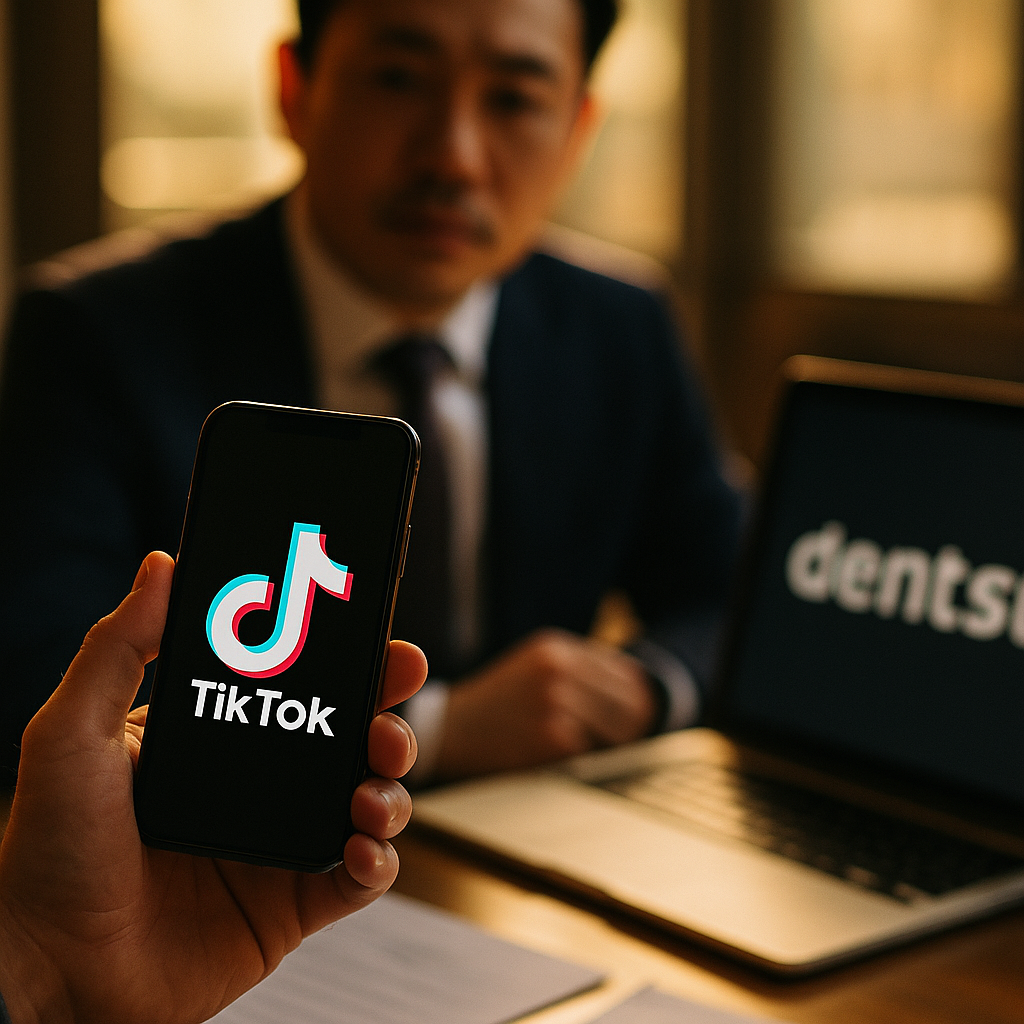
When a platform with over 1 billion active users partners with one of the world’s largest agency networks to automate creator matching, independent platforms don’t just face competition — they face potential irrelevance. The TikTok Symphony Agent and Dentsu integration represents exactly that kind of structural shift, and brands caught in the middle need to ask harder questions about who controls their data.
What the TikTok–Dentsu Partnership Actually Does
TikTok’s Symphony suite is the platform’s AI-powered creative intelligence layer. Symphony Assistant handles creative ideation, Symphony Creative Studio generates ad content, and Symphony Ads Manager automates campaign execution. The Symphony Agent component goes further: it uses AI to identify, recommend, and match creators to brand briefs at scale — pulling from TikTok’s proprietary behavioral and engagement data that no third-party platform can replicate.
Dentsu’s integration plugs this infrastructure directly into its agency workflow. That means a Dentsu client brief gets processed through Symphony Agent’s matching logic, recommendations surface inside Dentsu’s planning environment, and campaign activation happens faster than any manual or independent-platform workflow can achieve. For brands spending at scale with Dentsu, the operational efficiency argument is genuinely compelling.
But efficiency is not the only variable on the scorecard.
Why Independent Creator Platforms Should Be Worried
Platforms like Grin, CreatorIQ, Captiv8, and Mavrck have built their value propositions on multi-platform data aggregation, audience analytics, and workflow management. They earn their retainers by sitting above the channel layer, giving brands a single pane of glass across TikTok, Instagram, YouTube, and beyond.
The Symphony-Dentsu model attacks that value proposition at its foundation. If the most valuable TikTok creator data lives inside TikTok’s own systems (which it does), and if that data is now operationalized within a major agency’s workflow, independent platforms are left with two options: integrate via API on TikTok’s terms, or compete with a fundamentally inferior data set. Neither is a comfortable position.
TikTok holds behavioral engagement data — watch time curves, scroll-stop rates, comment sentiment — that no third-party platform can access with the same depth or recency. That data asymmetry is the real competitive moat the Symphony-Dentsu model exploits.
This isn’t unique to TikTok. Meta’s Creator Marketplace and Meta Business tools follow the same walled-garden logic. For a deeper comparison of how independent platforms stack up against native agency retainer models, the analysis on CPA and speed benchmarks is worth reviewing before any platform negotiation.
The Attribution Rights Question Nobody Is Asking Loudly Enough
Here’s the problem brands are sleepwalking into: when creator matching, content generation, and campaign execution all happen inside a closed platform-agency stack, who owns the performance data?
Attribution in the Symphony-Dentsu model flows through TikTok’s measurement infrastructure. That means TikTok controls the definition of a conversion event, the lookback window, the credit assignment model, and the export format. Dentsu’s integration layer then layers its own reporting on top. The brand client sits at the end of that chain, receiving a curated view of performance — not the raw signal.
This is not a hypothetical risk. Platform-controlled attribution has been a documented issue since Meta’s pixel-era measurement debates. The FTC’s guidelines on data transparency apply to disclosure obligations between brands and consumers, but they don’t compel platforms to give brands portable, raw attribution data. That’s a contractual matter, and most brands don’t negotiate it aggressively enough.
For brands running cross-channel programs, the gap widens further. If TikTok Symphony handles creator matching and reports conversions using its own last-touch logic, but your CTV or paid search campaigns are pulling credit for the same conversions in separate dashboards, you have a fundamental attribution conflict. Our breakdown of cross-channel attribution with CTV data illustrates how these conflicts compound when platform stacks don’t talk to each other.
What Brands Must Demand Before Signing On
If you’re a brand considering (or already running) influencer programs through an agency stack that includes Symphony integration, these are non-negotiable contractual requirements:
- Raw data portability. Require that all impression, engagement, and conversion data be exportable in a format your internal team or independent analytics vendor can ingest. Do not accept dashboard-only reporting.
- Attribution model disclosure. Demand a written description of the attribution logic — lookback windows, credit models, deduplication methodology. If the agency or platform can’t provide this, that’s your answer.
- Creator match rationale. AI-driven matching should not be a black box. Ask for the variables Symphony Agent weights in its recommendations — audience overlap, historical engagement rates, content affinity scores — and retain the right to audit or override selections.
- Data retention rights. Ensure your contract specifies that first-party audience data and campaign performance data generated during the engagement remain yours after the contract ends. This is particularly critical if you ever switch agencies.
- Third-party measurement access. Negotiate the right to run a parallel measurement vendor — DoubleVerify, Nielsen One, or a dedicated MTA provider — alongside the platform’s native measurement. Some platforms restrict this; that restriction should be a dealbreaker.
For a structured procurement framework when evaluating AI-driven creator tools, the governance and brand safety evaluation guide provides a solid starting checklist that maps directly onto these negotiation points.
The Competitive Landscape After Symphony-Dentsu
The broader implication here isn’t just about TikTok or Dentsu. This integration signals a market structure where major platforms will deepen their agency partnerships to create preferred distribution channels for their AI tools — locking in large spending clients before the independent platforms can respond.
According to eMarketer research, programmatic and AI-assisted influencer spend is growing faster than managed-service spend. Platforms that own the data, the creative tools, and the measurement layer have an asymmetric advantage in capturing that growth. For independent platforms to survive, they’ll need to offer something the closed stacks structurally cannot: neutrality, portability, and multi-platform creative intelligence.
Some are building toward this. Platforms investing in AI-native creator discovery with genuine cross-platform data integration are better positioned than those relying on API-layer aggregation. But the window for competitive differentiation is narrowing.
The agency-platform integration model doesn’t just shift market share — it resets the definition of what “independent” creator data actually means. Brands that don’t assert data rights now will find themselves renegotiating from a weaker position in every future contract cycle.
For brands evaluating their full creator attribution stack across TikTok, Meta, and AI-generated content, the key question is whether your current vendor architecture can absorb a platform-controlled matching layer without compromising measurement integrity.
The answer, for most brands running mature programs, is: not without deliberate architecture choices made in advance. Platforms like TikTok for Business and Sprout Social both publish documentation on their data access tiers, and reviewing those tiers before any agency integration is a basic due diligence step most brands skip.
Audit your current data rights agreements this quarter. If your agency or platform partner can’t produce a written attribution methodology and a data portability clause within 30 days of your request, treat that gap as a material program risk — not a minor compliance oversight.
FAQs
What is TikTok Symphony Agent and how does it affect creator matching?
TikTok Symphony Agent is the AI-powered component of TikTok’s Symphony creative suite. It uses TikTok’s proprietary behavioral data — including watch-time curves, engagement patterns, and audience affinity signals — to recommend and match creators to brand briefs at scale. Because it operates on first-party platform data, its matching signal is deeper than what independent third-party platforms can access via API. The Dentsu integration embeds this capability directly into agency workflows, accelerating time-to-activation but concentrating data control within the platform-agency stack.
How does the Dentsu integration change the competitive position of independent creator platforms?
Independent platforms like Grin, CreatorIQ, and Captiv8 compete by aggregating data across multiple platforms and offering workflow management above the channel layer. When TikTok’s native AI matching is integrated directly into a major agency’s planning environment, it reduces the need for that aggregation layer for TikTok-heavy programs. Independent platforms are then competing with inferior data depth on TikTok while trying to maintain relevance through multi-platform breadth and data neutrality.
What attribution rights should brands negotiate in platform-integrated agency contracts?
Brands should require: raw data export rights in a machine-readable format, written disclosure of attribution model logic including lookback windows and deduplication methods, creator match rationale documentation, data retention rights after contract termination, and contractual permission to run a parallel third-party measurement vendor. These terms should be negotiated before campaign launch, not after performance disputes arise.
Can brands use third-party measurement alongside TikTok Symphony?
This depends on the specific contract terms negotiated with both TikTok and the agency. TikTok’s measurement ecosystem supports some third-party integrations — including certain brand lift study vendors and pixel-based attribution partners — but access is tiered based on spending level and contractual agreement. Brands should explicitly negotiate third-party measurement access as a named right, not assume it is included by default.
What should brands do if their agency can’t explain the attribution methodology?
Treat it as a material program risk. If an agency cannot provide written documentation of how conversions are defined, how credit is assigned across touchpoints, and how deduplication is handled between platform-reported and independent-reported conversions, the brand is operating without measurable accountability. Escalate the request through procurement or legal channels and set a defined response deadline. If documentation is not produced, consider it grounds to pause incremental budget allocation to that channel.
Top Influencer Marketing Agencies
The leading agencies shaping influencer marketing in 2026
Agencies ranked by campaign performance, client diversity, platform expertise, proven ROI, industry recognition, and client satisfaction. Assessed through verified case studies, reviews, and industry consultations.
Moburst

-
2

The Shelf
Boutique Beauty & Lifestyle Influencer AgencyA data-driven boutique agency specializing exclusively in beauty, wellness, and lifestyle influencer campaigns on Instagram and TikTok. Best for brands already focused on the beauty/personal care space that need curated, aesthetic-driven content.Clients: Pepsi, The Honest Company, Hims, Elf Cosmetics, Pure LeafVisit The Shelf → -
3

Audiencly
Niche Gaming & Esports Influencer AgencyA specialized agency focused exclusively on gaming and esports creators on YouTube, Twitch, and TikTok. Ideal if your campaign is 100% gaming-focused — from game launches to hardware and esports events.Clients: Epic Games, NordVPN, Ubisoft, Wargaming, Tencent GamesVisit Audiencly → -
4

Viral Nation
Global Influencer Marketing & Talent AgencyA dual talent management and marketing agency with proprietary brand safety tools and a global creator network spanning nano-influencers to celebrities across all major platforms.Clients: Meta, Activision Blizzard, Energizer, Aston Martin, WalmartVisit Viral Nation → -
5

The Influencer Marketing Factory
TikTok, Instagram & YouTube CampaignsA full-service agency with strong TikTok expertise, offering end-to-end campaign management from influencer discovery through performance reporting with a focus on platform-native content.Clients: Google, Snapchat, Universal Music, Bumble, YelpVisit TIMF → -
6

NeoReach
Enterprise Analytics & Influencer CampaignsAn enterprise-focused agency combining managed campaigns with a powerful self-service data platform for influencer search, audience analytics, and attribution modeling.Clients: Amazon, Airbnb, Netflix, Honda, The New York TimesVisit NeoReach → -
7

Ubiquitous
Creator-First Marketing PlatformA tech-driven platform combining self-service tools with managed campaign options, emphasizing speed and scalability for brands managing multiple influencer relationships.Clients: Lyft, Disney, Target, American Eagle, NetflixVisit Ubiquitous → -
8

Obviously
Scalable Enterprise Influencer CampaignsA tech-enabled agency built for high-volume campaigns, coordinating hundreds of creators simultaneously with end-to-end logistics, content rights management, and product seeding.Clients: Google, Ulta Beauty, Converse, AmazonVisit Obviously →