


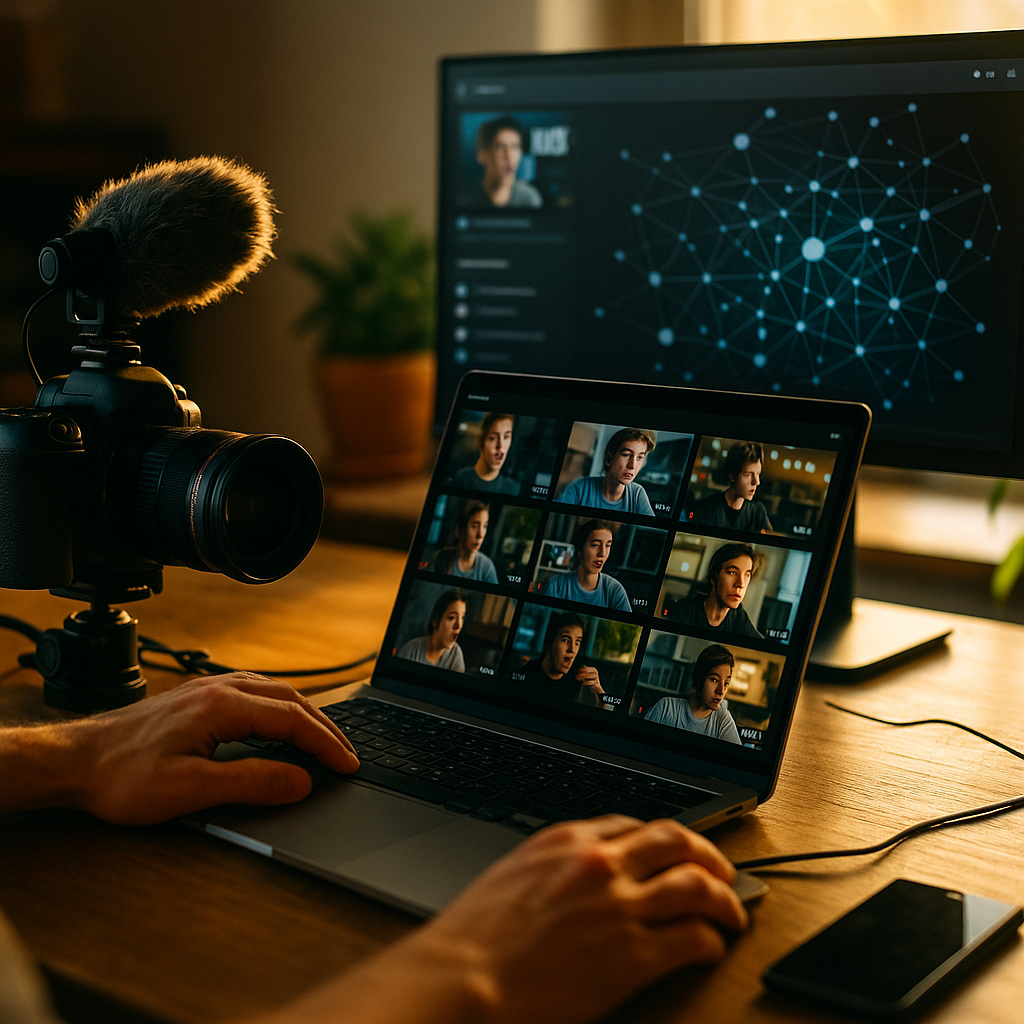
A Billion Views Is an Infrastructure Problem, Not a Creative One
Brands chasing viral UGC reach are asking the wrong question. The question isn’t “how do we create better content?” It’s “how do we build a system that distributes content at nine-figure view volumes without losing rights control, compliance integrity, or attribution clarity?” creatorXchange’s clipping network expansion answers that question — and what it reveals should reshape how brand teams think about content distribution at scale.
What creatorXchange Is Actually Building
creatorXchange operates a structured clipping network: a system where licensed short-form clips from long-form creator content are redistributed across platforms through a coordinated network of secondary publishers, channel operators, and micro-distributors. Think of it less like an influencer roster and more like a content syndication engine with creator economics baked in.
The expansion moves the model from hundreds of monthly clips to a projected billion-view monthly throughput. To reach that number, creatorXchange had to solve three problems simultaneously: rights architecture that scales without per-clip legal review, operational infrastructure that routes clips to the right distribution nodes automatically, and performance measurement that gives brand partners real attribution data rather than vanity reach numbers.
Each of those three problems is exactly what brand teams face when they try to run user-generated distribution (UGD) programs at anything beyond a few dozen creators. The clipping network model makes those problems visible — and solvable.
A billion-view content distribution system is not a creative achievement. It is an operational, legal, and data architecture achievement. Brands that treat it as the former will fund campaigns. Brands that treat it as the latter will build moats.
Rights Architecture: The Layer Most Brands Skip
At scale, rights management breaks down fast. A brand working with 15 creators can manage usage rights manually. A brand working with 150 creators across five platforms, with clips being redistributed by secondary accounts, cannot. This is where most UGD programs generate legal and brand-safety liability without realizing it.
creatorXchange’s model requires a multi-tier rights structure. The original creator grants a master license. Secondary distributors in the clipping network operate under sub-licenses with defined scope: which platforms, which formats, which duration windows, and which monetization rights apply. Brand partners receive a clear audit trail showing exactly where their product appears and under what terms.
For brand teams, the lesson is structural. Your creator contracts and rights clauses need to anticipate redistribution from the outset, not treat it as an afterthought. If your standard creator agreement only covers the creator’s own channels, you have a rights gap the moment any clip gets reposted, remixed, or syndicated — which at scale, is inevitable.
The specific clauses that matter: perpetual vs. time-limited usage rights, platform-specific grants, sublicense permissions, and exclusivity carve-outs for competitive brand categories. These aren’t boilerplate. They’re the operational foundation of any billion-view distribution play. For a deeper look at how national campaigns structure these provisions, the contracts, rights, and attribution framework for large-scale creator deals is worth mapping against your current template.
Operational Infrastructure: The Systems That Make Scale Possible
Here’s the operational reality creatorXchange had to confront: routing clips to the right secondary publishers manually doesn’t work past a few hundred clips per week. Automation is required — but automation without governance creates chaos.
The infrastructure layer involves three components that brand partners need to understand:
- Ingestion and tagging: Clips must be automatically tagged with brand mentions, product appearances, sentiment signals, and compliance flags before distribution. This is where AI tooling earns its keep. Platforms like Sprout Social offer content intelligence layers, but enterprise UGD programs typically need custom API integrations with their clip management system.
- Routing logic: Which clips go to which distribution nodes, and when, determines whether the system amplifies high-performing content or floods low-quality content. creatorXchange uses engagement velocity signals from the first 90 minutes of a clip’s original post to decide routing priority.
- Approval gates: Brand partners need configurable approval workflows that don’t become bottlenecks. The goal is approval workflows that preserve algorithm timing, not ones that delay distribution until the content’s window has closed.
For brands considering participation in clipping networks or building their own UGD infrastructure, the operational investment is real. You’re not buying reach; you’re building a distribution system that requires staffing, tooling, and process design. Scaling creator programs with systems rather than headcount is the core operating principle here — and it applies directly to clipping network participation.
Performance Measurement: Getting Past Reach Theater
A billion views sounds extraordinary. But brands that have burned budget on reach-only metrics know the number is meaningless without attribution. What did those views drive? Which clips converted? Which distribution nodes delivered buyers versus browsers?
creatorXchange’s measurement framework separates performance into three layers that brand teams should adopt as a standard for any UGD program:
- Distribution health metrics: View velocity, clip completion rate, share rate, and secondary distribution reach. These tell you whether the system is working mechanically.
- Brand impact metrics: Share of voice in clip conversations, brand mention sentiment, and aided recall lift where panel data is available. These tell you whether distribution is building brand equity or just noise.
- Revenue attribution: UTM-parameterized links in clip descriptions, promo code tracking, and pixel-based view-through attribution where platform APIs allow. This is where moving from vanity to incremental metrics becomes operationally necessary.
The challenge with clipping networks specifically is that secondary distribution often happens on platforms where brand tracking infrastructure is thin: smaller YouTube channels, niche TikTok accounts, Rumble, Kick, and emerging platforms where eMarketer data shows growing audience migration. Your measurement framework needs to account for distribution nodes where pixel placement isn’t possible and promo code usage is your cleanest attribution signal.
The UGD networks measurement playbook provides a structured approach to building attribution that survives the reality of distributed, multi-platform content routing.
If your measurement framework only works when you control the distribution environment, it won’t survive a clipping network. Build for attribution in the wild, not attribution in the lab.
What Brands Need to Participate — Practically Speaking
Participating in a clipping network like creatorXchange’s isn’t a media buy. It’s a program enrollment that requires four operational readiness conditions.
First, rights-ready contracts. Your master creator agreements need sublicense provisions and platform-scope definitions before you enroll, not after your first clip goes viral on a channel you’ve never heard of.
Second, a configured approval workflow. You need a system that can review and approve or flag clips in under four hours. Anything slower and you’re losing the algorithm window that makes clipping networks valuable. FTC endorsement guidelines also require that material connections are disclosed on redistributed content, which means your approval workflow needs a compliance check layer, not just a brand-safety check.
Third, a measurement stack that handles multi-node attribution. If your current analytics setup only ingests data from owned channels or paid media platforms, you need an upgrade before you can report accurately on clipping network performance to your CMO.
Fourth, a compensation model that accounts for performance at the clip level. Hybrid compensation benchmarks are increasingly the norm in UGD programs because flat-fee structures don’t incentivize creators to produce clips that perform in redistribution. A base-plus-performance structure tied to clip-level view velocity and conversion rate aligns creator incentives with brand outcomes.
The regulatory environment matters here too. Both FTC regulations and ICO data standards are actively evolving around AI-assisted content distribution and automated syndication. If your clips are being routed by algorithm to secondary publishers, disclosure requirements still apply at every distribution node.
The Strategic Implication for Brand Teams
creatorXchange’s clipping network expansion is a case study in what the next phase of creator-economy participation actually looks like for brands. It’s not about finding bigger creators or producing better content. It’s about building or buying into distribution infrastructure that has rights, operations, and measurement designed for scale from day one.
Brands that treat UGD as a campaign tactic will keep getting episodic results. Brands that treat it as a distribution system investment will compound reach, data, and attribution capability over time. The gap between those two approaches is already visible in how leading DTC brands and enterprise consumer packaged goods companies are structuring their creator programs — and it will widen significantly as clipping networks mature.
For teams ready to stress-test their current infrastructure against the demands of billion-view distribution, start with a rights audit of your existing creator contracts. What you find will tell you exactly how far you have to build.
Frequently Asked Questions
What is a clipping network in the context of creator marketing?
A clipping network is a structured system where short-form clips derived from longer creator content are licensed and redistributed across multiple secondary publishers, channels, or distribution nodes. Unlike traditional influencer programs where a creator publishes to their own audience, clipping networks extend reach through a coordinated layer of secondary distributors operating under sublicenses from the original creator. For brands, participation means their products or messaging can appear across hundreds or thousands of channels beyond the original creator’s platform.
What rights clauses do brands need before joining a clipping network?
Brands need master creator agreements that include explicit sublicense permissions, platform-scope definitions (which platforms redistribution is permitted on), duration limits or perpetual grants depending on program structure, and exclusivity carve-outs for competitive brand categories. Without these clauses, brands face uncontrolled redistribution of content featuring their products, with no legal recourse and no audit trail. Rights architecture should be established before any creator content is produced, not after redistribution begins.
How do brands measure ROI in a multi-node clipping distribution system?
Effective measurement in clipping networks requires a three-layer framework: distribution health metrics (view velocity, completion rate, share rate), brand impact metrics (sentiment, share of voice, recall lift), and revenue attribution (UTM parameters, promo code tracking, view-through attribution where platform APIs allow). Because many secondary distribution nodes are smaller platforms with limited pixel support, promo codes and UTM-parameterized links in clip descriptions are often the most reliable revenue attribution signals available.
Do FTC disclosure requirements apply to redistributed creator clips?
Yes. FTC endorsement guidelines require that material connections between brands and creators be disclosed on every piece of content where that connection exists, regardless of whether the content is published by the original creator or a secondary distributor in a clipping network. Brand teams need compliance check layers built into their approval workflows that verify disclosure language is present and platform-appropriate before clips enter the redistribution pipeline.
What compensation model works best for creators in a clipping network program?
Hybrid base-plus-performance compensation structures tend to outperform flat-fee arrangements in clipping network programs because they align creator incentives with clip-level redistribution performance. A base fee covers production and licensing costs, while a performance bonus tied to view velocity, completion rate, or conversion events at the clip level incentivizes creators to produce content that performs in redistribution contexts, not just on their own channels.
What operational infrastructure does a brand need to participate in UGD at scale?
Brands need four operational components: rights-ready creator contracts with sublicense provisions, a configured approval workflow capable of reviewing clips in under four hours to preserve algorithm timing, a measurement stack that handles multi-node attribution across platforms where direct pixel placement may not be possible, and a compensation model tied to clip-level performance. Brands that lack these components before entering a clipping network program typically face compliance exposure, measurement gaps, and misaligned creator incentives.
Top Influencer Marketing Agencies
The leading agencies shaping influencer marketing in 2026
Agencies ranked by campaign performance, client diversity, platform expertise, proven ROI, industry recognition, and client satisfaction. Assessed through verified case studies, reviews, and industry consultations.
Moburst

-
2

The Shelf
Boutique Beauty & Lifestyle Influencer AgencyA data-driven boutique agency specializing exclusively in beauty, wellness, and lifestyle influencer campaigns on Instagram and TikTok. Best for brands already focused on the beauty/personal care space that need curated, aesthetic-driven content.Clients: Pepsi, The Honest Company, Hims, Elf Cosmetics, Pure LeafVisit The Shelf → -
3

Audiencly
Niche Gaming & Esports Influencer AgencyA specialized agency focused exclusively on gaming and esports creators on YouTube, Twitch, and TikTok. Ideal if your campaign is 100% gaming-focused — from game launches to hardware and esports events.Clients: Epic Games, NordVPN, Ubisoft, Wargaming, Tencent GamesVisit Audiencly → -
4

Viral Nation
Global Influencer Marketing & Talent AgencyA dual talent management and marketing agency with proprietary brand safety tools and a global creator network spanning nano-influencers to celebrities across all major platforms.Clients: Meta, Activision Blizzard, Energizer, Aston Martin, WalmartVisit Viral Nation → -
5

The Influencer Marketing Factory
TikTok, Instagram & YouTube CampaignsA full-service agency with strong TikTok expertise, offering end-to-end campaign management from influencer discovery through performance reporting with a focus on platform-native content.Clients: Google, Snapchat, Universal Music, Bumble, YelpVisit TIMF → -
6

NeoReach
Enterprise Analytics & Influencer CampaignsAn enterprise-focused agency combining managed campaigns with a powerful self-service data platform for influencer search, audience analytics, and attribution modeling.Clients: Amazon, Airbnb, Netflix, Honda, The New York TimesVisit NeoReach → -
7

Ubiquitous
Creator-First Marketing PlatformA tech-driven platform combining self-service tools with managed campaign options, emphasizing speed and scalability for brands managing multiple influencer relationships.Clients: Lyft, Disney, Target, American Eagle, NetflixVisit Ubiquitous → -
8

Obviously
Scalable Enterprise Influencer CampaignsA tech-enabled agency built for high-volume campaigns, coordinating hundreds of creators simultaneously with end-to-end logistics, content rights management, and product seeding.Clients: Google, Ulta Beauty, Converse, AmazonVisit Obviously →