


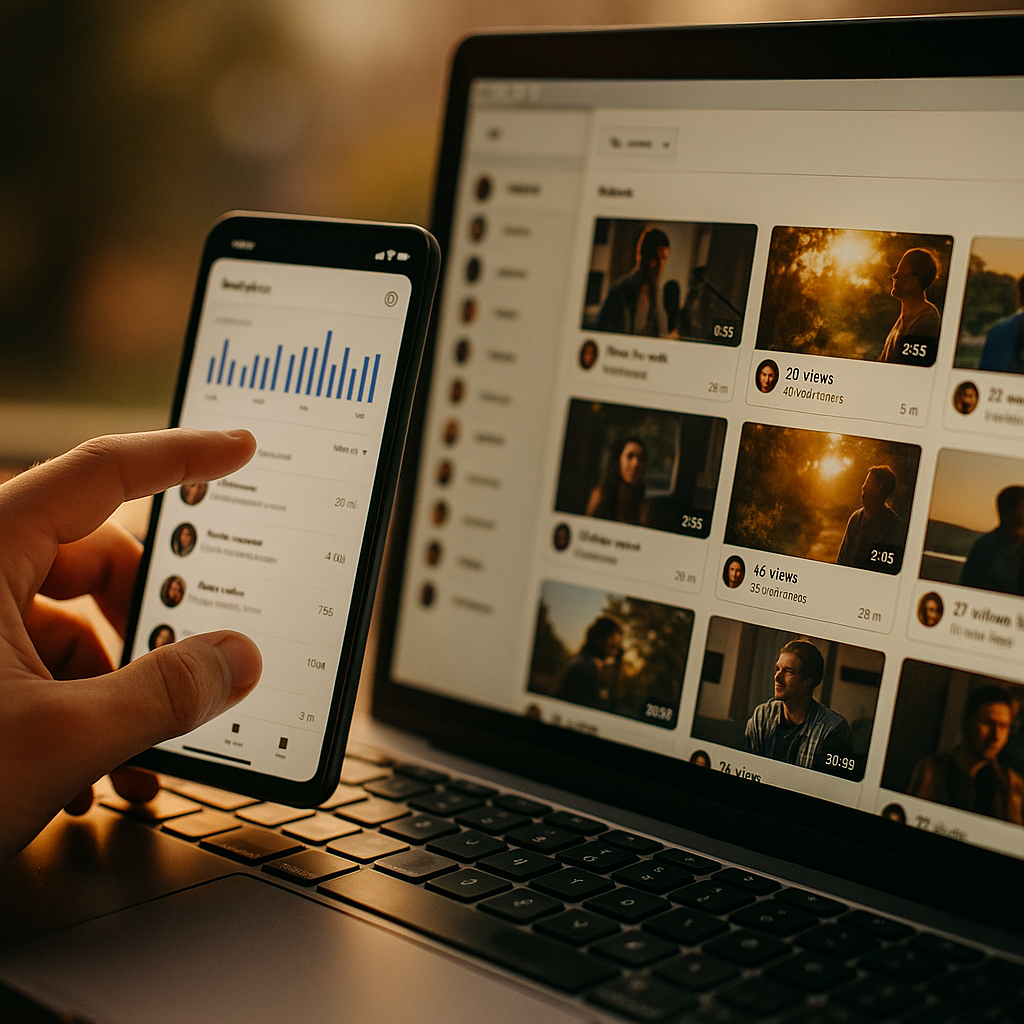
Production Is Cheap. Distribution Is the Problem.
Brands published more creator content last year than in the previous five years combined, and most of it went nowhere. The distribution bottleneck in the creator economy is real, structural, and getting worse as AI tools flood every feed with algorithmically plausible content. If your influencer program is still optimizing for output volume, you are solving the wrong problem.
Why Algorithmic Amplification Has Replaced Reach as the Core KPI
Platform algorithms across TikTok, Instagram Reels, and YouTube Shorts no longer reward consistency alone. They reward signal velocity: the speed and density of engagement signals in the first 30 to 90 minutes after posting. A creator with 200,000 followers who generates a 12% save rate in the first hour will consistently out-distribute a creator with 2 million followers posting flat content. Brands that still negotiate deals based on follower count are buying the wrong asset.
The mechanics matter here. TikTok’s For You Page algorithm, for instance, is documented to use a cascading audience test model: small initial pools, expansion based on completion rates, then broader distribution based on shares and stitches. TikTok’s ads platform has made parts of this logic visible through its Promote tools, but the organic version is far less forgiving. You cannot buy your way past poor signal velocity on organic posts once the first 90-minute window closes.
In an AI-flooded content market, the question is no longer “Can we produce enough?” It’s “Can we produce content that the algorithm treats as worth showing?” Those are fundamentally different briefs.
The AI Content Flood Is Compressing Signal-to-Noise Ratios
Generative AI tools have made content production almost frictionless. The downstream consequence for brands: platform feeds are saturated with competent, well-structured, utterly undifferentiated content. Statista tracks social media content volume data showing exponential upload growth across short-form video platforms, and brand practitioners are reporting that organic reach per post is declining even as production costs fall.
This is not a coincidence. Algorithms are adapting. Meta has publicly acknowledged updates to its content distribution logic that prioritize “original” content over reshared or derivative posts. YouTube’s Creator Liaison has communicated similar shifts toward rewarding content that generates comments and discussion rather than passive views. The implication: AI-assisted content that reads as generic gets penalized in distribution, regardless of how polished it looks.
For brand partnerships, this creates a direct operational risk. If a creator is using AI production workflows that strip out authentic voice or community-specific hooks, the resulting content may look campaign-ready while being algorithmically dead on arrival. Vetting creative process matters as much as vetting audience demographics.
What “Designed for Distribution” Actually Means
It means rethinking the brief. Not the creative brief — the distribution architecture that informs it.
Most brand briefs still front-load the brand message: logo placement, key claims, CTA timing. The result is content that satisfies compliance review but loses the algorithm’s attention before the brand moment lands. Platform retention data consistently shows the steepest drop-off happens in the first three seconds. If those three seconds are spent on an intro that serves the brand rather than the viewer, you have already lost the distribution window.
Brands that are getting this right are restructuring their creator brief frameworks around viewer psychology first. That means opening with tension, curiosity, or a specific community reference that triggers “this is for me” recognition in the target viewer. The brand integration comes mid-content, after retention is established, not before. This is a fundamentally different document than the traditional influencer brief.
Specific elements that correlate with stronger algorithmic distribution:
- Pattern interrupts in the first two seconds: An unexpected visual, a counterintuitive statement, or a direct address to a niche community behavior.
- Save-worthy utility: Content that viewers bookmark for later use (tutorials, checklists, comparisons) generates save signals that carry significant weight in TikTok and Instagram Reels ranking.
- Comment hooks: Deliberately open-ended questions or mild controversy that invites response. YouTube’s algorithm heavily weights comment velocity.
- Stitch and duet bait on TikTok: Framing content as the first half of a conversation, explicitly or implicitly, drives derivative content that extends distribution without additional spend.
- Clipping architecture: Long-form content designed with natural clip points extends shelf life across secondary distribution. This is why clipping networks are reshaping how brands think about distribution ops at scale.
Paid Amplification as a Distribution Insurance Policy
Organic algorithmic amplification is not reliable enough to be the sole distribution strategy for any campaign with material budget behind it. The professional standard has shifted. Paid amplification is now the creator campaign baseline, not a supplemental tactic reserved for hero content.
The operational model that works: use organic posting as the signal-testing phase (48 to 72 hours), then deploy paid amplification behind content that has already demonstrated positive engagement signals. This approach, sometimes called “dark posting against winners,” avoids the efficiency loss of amplifying content before the algorithm has validated it. Meta’s business tools support this through Boosting and Partnership Ads, which allow brands to amplify creator content with targeting layered on top of existing organic signals.
TikTok’s Spark Ads operate on the same logic. The practical advantage: you are not bidding against a cold audience. You are accelerating content that has already demonstrated it resonates, which typically produces better CPMs and engagement rates than paid-first content.
Organic and paid distribution are not sequential stages. They are a single integrated system where organic signals should inform paid allocation decisions in near-real time.
AI Search Is a Second Distribution Layer Brands Are Ignoring
Search-driven discovery is not just a Google SEO conversation anymore. AI search is reshaping creator content strategy in ways that most brand programs have not yet operationalized. ChatGPT, Perplexity, and Google’s AI Overviews are now active discovery surfaces for product and brand research, and they pull from creator content, reviews, and social commentary as source material.
A creator video that is well-structured, clearly attributed, and contains specific product language is more likely to surface in AI-generated answers than an equivalent piece of content that is vague or brand-jargon-heavy. This means transcript quality, on-screen text, and caption completeness are no longer just accessibility features. They are distribution signals that extend a piece of content’s reach into AI-mediated search environments.
According to eMarketer, AI-assisted search adoption is accelerating among 18-44 year olds, precisely the demographic most brands are targeting through creator partnerships. Ignoring AI search as a distribution layer is leaving compounding reach on the table.
The Measurement Gap Is Creating False Efficiency Signals
Most campaign dashboards are still measuring impressions and engagement rate at the post level. That is a 2019 measurement architecture applied to a 2026 distribution problem. It does not capture:
- Algorithmic reach (how many non-follower accounts the content reached through recommendation)
- Derivative content volume (stitches, duets, response videos that extend the original’s distribution)
- AI search surfacing frequency (how often the content appears in AI-generated answers)
- Save-to-purchase correlation (the pathway from saved content to conversion, which is longer but higher-intent)
Brands that are upgrading their measurement frameworks are working with social listening tools to capture derivative content signals, and integrating UTM structures that account for the delayed conversion window of save-driven discovery. This is not a small operational lift, but it is the difference between knowing your distribution is working and assuming it is.
The creator economy’s structural shift toward UGD networks beating paid CPMs at scale makes this measurement upgrade urgent. If organic and derivative distribution is outperforming paid on a cost-per-reach basis, your budget allocation should reflect that. But you cannot reallocate toward what you are not measuring.
Where Brands Should Audit First
If you are running creator programs at meaningful scale, the audit should start with your brief template and your measurement dashboard. If your brief leads with brand messaging requirements and your dashboard stops at post-level engagement, you have two structural problems that no amount of creator selection or budget increase will fix.
Redesign the brief to lead with viewer psychology and distribution architecture. Rebuild the dashboard to capture algorithmic reach, derivative content, and time-delayed conversion signals. Then, and only then, does creator selection and production quality become the leverage point it should be.
The scarce resource in influencer marketing is no longer content. It is distribution. Build your program around that reality.
Frequently Asked Questions
Why is discoverability more important than production volume in creator marketing?
Because platform algorithms determine which content gets distributed beyond a creator’s existing audience, and they reward engagement signal velocity (saves, comments, shares in the first 90 minutes) rather than posting frequency. A high-volume output strategy produces diminishing returns when most content fails to trigger algorithmic amplification. Brands that optimize for distribution signals rather than content quantity consistently achieve better reach efficiency and lower cost-per-view.
How does AI-generated content affect brand discoverability on social platforms?
AI tools have dramatically increased content volume across all major platforms, compressing signal-to-noise ratios. Platforms like Meta and YouTube have updated their distribution algorithms to deprioritize content that lacks originality or fails to generate meaningful engagement. AI-assisted content that strips out a creator’s authentic voice or community-specific hooks often performs poorly algorithmically, even if it meets brand compliance standards visually. Brands should vet creator AI production workflows to ensure output retains the differentiation signals algorithms favor.
What content elements most reliably trigger algorithmic amplification?
The elements with the strongest documented correlation to algorithmic distribution include: pattern interrupts in the first two seconds, save-worthy utility (tutorials, comparisons, or reference content), deliberate comment hooks that invite response, stitch or duet framing on TikTok, and long-form content architected with natural clip points for secondary distribution. These elements should be built into the creator brief, not left to creator discretion.
How should brands integrate paid amplification with organic creator content?
The most efficient model is to let organic content run for 48 to 72 hours to accumulate engagement signals, then deploy paid amplification behind content that has demonstrated positive organic performance. Meta’s Partnership Ads and TikTok’s Spark Ads both support this approach, allowing brands to boost creator content with targeting layered on existing organic signals. This “amplify the winners” model typically produces better CPMs than paid-first distribution of cold content.
How does AI search affect creator content discoverability?
AI-powered search tools including ChatGPT, Perplexity, and Google’s AI Overviews increasingly surface creator content as source material for product and brand queries. Content with clear transcripts, specific product language, complete captions, and on-screen text is more likely to appear in AI-generated answers. Brands should treat transcript quality and caption completeness as distribution signals, not just accessibility features, to capture reach through AI-mediated search environments.
What measurement metrics should brands prioritize for distribution-focused campaigns?
Post-level impressions and engagement rate are insufficient for measuring distribution performance. Brands should additionally track algorithmic reach (non-follower accounts reached through recommendation), derivative content volume (stitches, duets, response videos), AI search surfacing frequency, and save-to-purchase conversion pathways. These metrics require integration across social listening platforms and UTM frameworks designed for delayed conversion windows.
Top Influencer Marketing Agencies
The leading agencies shaping influencer marketing in 2026
Agencies ranked by campaign performance, client diversity, platform expertise, proven ROI, industry recognition, and client satisfaction. Assessed through verified case studies, reviews, and industry consultations.
Moburst

-
2

The Shelf
Boutique Beauty & Lifestyle Influencer AgencyA data-driven boutique agency specializing exclusively in beauty, wellness, and lifestyle influencer campaigns on Instagram and TikTok. Best for brands already focused on the beauty/personal care space that need curated, aesthetic-driven content.Clients: Pepsi, The Honest Company, Hims, Elf Cosmetics, Pure LeafVisit The Shelf → -
3

Audiencly
Niche Gaming & Esports Influencer AgencyA specialized agency focused exclusively on gaming and esports creators on YouTube, Twitch, and TikTok. Ideal if your campaign is 100% gaming-focused — from game launches to hardware and esports events.Clients: Epic Games, NordVPN, Ubisoft, Wargaming, Tencent GamesVisit Audiencly → -
4

Viral Nation
Global Influencer Marketing & Talent AgencyA dual talent management and marketing agency with proprietary brand safety tools and a global creator network spanning nano-influencers to celebrities across all major platforms.Clients: Meta, Activision Blizzard, Energizer, Aston Martin, WalmartVisit Viral Nation → -
5

The Influencer Marketing Factory
TikTok, Instagram & YouTube CampaignsA full-service agency with strong TikTok expertise, offering end-to-end campaign management from influencer discovery through performance reporting with a focus on platform-native content.Clients: Google, Snapchat, Universal Music, Bumble, YelpVisit TIMF → -
6

NeoReach
Enterprise Analytics & Influencer CampaignsAn enterprise-focused agency combining managed campaigns with a powerful self-service data platform for influencer search, audience analytics, and attribution modeling.Clients: Amazon, Airbnb, Netflix, Honda, The New York TimesVisit NeoReach → -
7

Ubiquitous
Creator-First Marketing PlatformA tech-driven platform combining self-service tools with managed campaign options, emphasizing speed and scalability for brands managing multiple influencer relationships.Clients: Lyft, Disney, Target, American Eagle, NetflixVisit Ubiquitous → -
8

Obviously
Scalable Enterprise Influencer CampaignsA tech-enabled agency built for high-volume campaigns, coordinating hundreds of creators simultaneously with end-to-end logistics, content rights management, and product seeding.Clients: Google, Ulta Beauty, Converse, AmazonVisit Obviously →