


A Billion Views for Less Than Your Last Paid Campaign
Clipping networks are quietly delivering nine-figure view counts for brands that most CMOs have never heard of. The creator economy’s coordinated distribution infrastructure, where dozens or hundreds of authentic accounts clip, repost, and amplify content in synchronized waves, is generating cost-per-view economics that make traditional paid social look like renting a billboard in a ghost town. Before your brand commits budget or brand safety to this model, you need to understand exactly how it works and what you’re actually buying.
What a Clipping Network Actually Is
Strip away the jargon and a clipping network is simple: a managed ecosystem of real creator accounts, typically ranging from nano (1K-10K followers) to mid-tier (100K-500K followers), coordinated to consume, clip, and redistribute a piece of hero content across multiple platforms simultaneously. The accounts aren’t bots. They’re operated by real people, often compensated per clip or per view milestone reached, and the content they post reads as organic discovery rather than paid promotion.
The infrastructure originated in gaming and sports streaming communities on Twitch and YouTube, where clipping culture was already native behavior. Savvy operators realized they could systematize what fans were doing naturally. By 2026, this has matured into a full vendor category. Companies like Clip Commerce, Kapwing-integrated clip houses, and boutique “UGD infrastructure” agencies are pitching Fortune 500 brands on managed clipping programs with guaranteed distribution floors.
The “coordinated authentic account ecosystem” framing matters for brand strategists. Each individual account posting a clip looks organic to platform algorithms and to viewers. The coordination happens at the operator layer, invisible to casual observation. That opacity is both the model’s strength and its primary compliance risk.
Coordinated clipping networks generate organic-appearing distribution at scale, but the coordination itself sits in a legal gray zone that the FTC’s endorsement guidelines are increasingly designed to address. Brands that don’t structure participation carefully are carrying undisclosed material connection liability.
The CPV Math: Where Clipping Networks Win
Let’s run the actual numbers, because this is where the conversation gets interesting for media buyers.
A standard TikTok paid campaign in a competitive consumer category (beauty, CPG, DTC apparel) currently runs between $0.02 and $0.06 CPV for in-feed video. Meta Reels paid placement lands in a similar range. YouTube pre-roll for skippable ads averages $0.01 to $0.03 CPV but with significantly lower attention quality on that lower end. According to data tracked by Sprout Social and third-party benchmarking studies, paid amplification on creator content through whitelisting and boosting adds another $0.015 to $0.04 per view on top of organic performance.
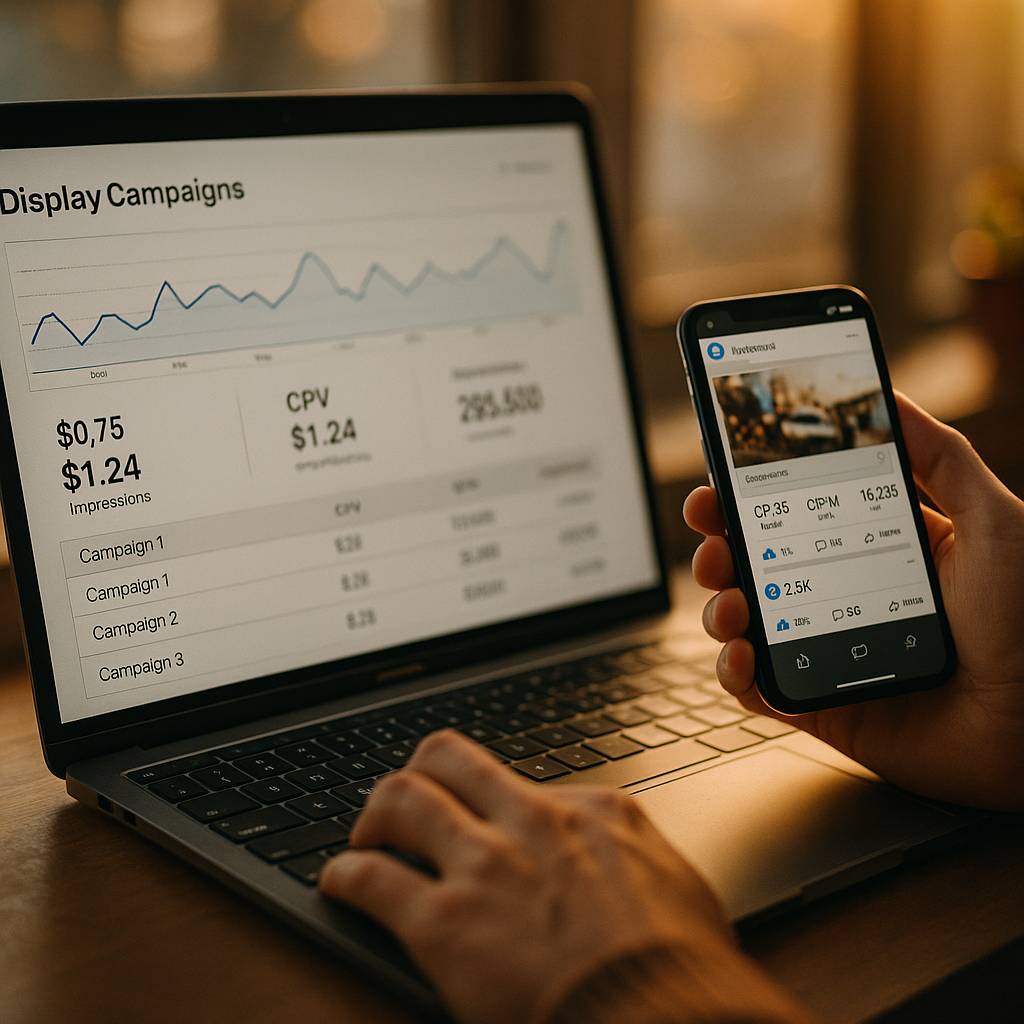
Clipping networks, when operating at scale, are delivering CPVs in the $0.003 to $0.008 range for verified views across the ecosystem. That’s a 4x to 8x efficiency advantage on raw CPV. For a brand spending $500K on a single campaign, that gap represents the difference between 10 million and 80 million views.
But raw CPV is an incomplete metric here. The more relevant questions: What’s the view quality? What’s the audience targeting precision? And what’s the compliance overhead baked into your actual cost structure?
View quality in clipping networks skews toward highly engaged, platform-native audiences because the content appears in organic feeds. Retention rates on clipped content often exceed paid placements because the viewer chose to watch. The targeting trade-off is real though: you’re distributing broadly within a creator’s natural audience, not precision-targeting by purchase intent signal. For upper-funnel awareness campaigns, that’s often acceptable. For driving ROAS on a product launch with a tight ICP, it’s a mismatch.
Evaluating a Clipping Network Vendor: The Non-Negotiables
If a vendor can’t answer these questions clearly, walk away.
- Account authentication: How are the participating accounts verified as real, active, non-incentivized-in-ways-that-violate-platform-TOS humans? Ask for third-party audit methodology, not self-reported data.
- Disclosure architecture: How does the network handle FTC-compliant disclosure across hundreds of individual accounts? Each account posting sponsored-adjacent content with a material connection to your brand requires disclosure. “We tell them to add #ad” is not a compliance program. See FTC endorsement guidelines for the actual standard.
- Platform TOS alignment: TikTok, Instagram, and YouTube all have explicit policies against coordinated inauthentic behavior. A clipping network operating at scale is structurally similar to what platforms define as CIB. How does the vendor demonstrate they’re operating within platform rules?
- View verification: Are views audited by a third party? Platforms like Integral Ad Science or DoubleVerify can verify paid placement views. Organic views in a clipping network require a different verification methodology. Get specifics.
- Attribution capability: Can the vendor connect clipping network activity to downstream brand search lift, site traffic, or conversion events? Without this, you’re flying blind on actual ROI.
For brands managing creator vetting at volume, the governance frameworks you already use for micro-creator programs are directly applicable here. The key difference is that in a clipping network, you’re vetting the operator’s process rather than individual creators directly, which requires a different audit structure.
Brand Safety and the Coordination Risk
Here’s what keeps brand safety leads up at night with this model: you cannot fully control what gets clipped or how.
Even with a managed operator, the moment content enters a clipping ecosystem, adjacent clips from other brands, commentary, remixed audio, and platform-native stitching behavior can attach themselves to the distribution wave. Your product appearing in a clip that gets stitched with off-brand commentary is a real scenario, not a hypothetical.
Platform enforcement is the other variable. If a platform’s trust and safety team flags a coordinated clipping campaign as inauthentic behavior, accounts can be suspended en masse. That’s not just a waste of your media spend. It can result in the brand being publicly associated with a platform policy violation. The AI governance frameworks emerging for high-volume creator programs offer useful scaffolding for building oversight protocols into clipping network contracts.
Contract language matters enormously. Ensure your agreement with a clipping network operator includes specific indemnification clauses for platform policy violations, content adjacency incidents, and FTC compliance failures by participating accounts. Don’t let this sit in a general marketing services agreement.
Where the Model Fits in a Balanced Channel Mix
Clipping networks are not a replacement for paid social. They’re a specific tool for specific objectives, and the brands using them most effectively understand that distinction.
The strongest use cases: cultural moment amplification (product launches, brand activations, tentpole events where you want a distributed buzz effect), long-form content repurposing (turning a 20-minute product video into dozens of distributed clips), and international market entry where organic reach is more cost-effective than paid infrastructure build-out. For content supply chain automation, clipping networks can also serve as a distribution layer downstream of your primary content production pipeline.
Where they don’t fit: highly regulated categories (pharma, finance, alcohol) where every piece of distributed content needs individual compliance review, direct response campaigns requiring precise attribution, and brand safety-sensitive contexts where adjacency risk is unacceptable.
The smartest brand use of clipping networks treats them as an amplification layer on top of owned hero content, not as a primary content strategy. The economics work when you’re multiplying something already proven, not when you’re hoping the distribution machine will create value from scratch.
For attribution, pair your clipping network activity with brand lift studies and search volume monitoring. Platforms like EMARKETER have documented that organic distribution waves consistently drive measurable branded search increases 48-72 hours post-launch. Use that signal as your primary ROI indicator alongside real-time CPC and CTR tracking from any concurrent paid activity to model the full funnel impact.
One operational note: clipping network budgets should sit in your influencer/creator line, not your paid media line. The economics, compliance requirements, and optimization levers are fundamentally different from programmatic. Mixing them creates reporting confusion and obscures the true cost comparison.
Before you sign with a clipping network operator, apply the same due diligence framework you’d use when evaluating any content distribution partner. The agency evaluation criteria that apply to GEO content partners translate directly here, particularly around transparency of methodology, ownership of account data, and exit provisions if the model fails to deliver. For tracking the downstream performance of creator-distributed content, Statista and TikTok’s analytics suite both provide organic reach benchmarks useful for validating vendor claims.
The concrete next step: Run a 90-day pilot with a single clipping network operator against one hero content asset, with a pre-agreed measurement framework that includes brand search lift, organic traffic attribution, and a compliance audit at the 45-day mark. That’s the only way to generate comparable data against your existing paid social benchmarks before you scale budget.
Frequently Asked Questions
What is a clipping network in the creator economy?
A clipping network is a coordinated ecosystem of real creator accounts that systematically clip, repurpose, and redistribute hero content across multiple platforms to generate organic-appearing distribution at scale. Operators compensate participating accounts per clip or per view milestone, creating a managed amplification layer that platforms and viewers typically perceive as organic discovery.
How does clipping network CPV compare to paid social advertising?
Clipping networks typically deliver CPVs between $0.003 and $0.008, compared to $0.02 to $0.06 for paid TikTok or Meta Reels placements. This represents a 4x to 8x efficiency advantage on raw cost-per-view, though brands must factor in compliance overhead, view quality differences, and attribution complexity when making direct comparisons.
Are clipping networks compliant with FTC guidelines?
Compliance depends entirely on how the network is structured and disclosed. Each participating account that has a material connection to a brand sponsorship is required under FTC endorsement guidelines to disclose that relationship. Networks that don’t build disclosure requirements into their account agreements create significant liability for participating brands. Brands should require explicit disclosure architecture documentation before signing any clipping network agreement.
What brand safety risks come with clipping network participation?
Key risks include content adjacency (your product appearing alongside off-brand commentary via platform stitching), platform TOS violations if the network is flagged for coordinated inauthentic behavior, and loss of control over how clips are framed once distributed. Brands in regulated categories face additional compliance exposure. Contractual indemnification for platform violations and adjacency incidents is essential.
How should brands measure ROI from a clipping network campaign?
The most reliable indicators are branded search lift (typically measurable 48-72 hours post-launch), organic traffic attribution from referral sources, and direct brand lift studies if budget allows. Raw view counts from clipping network operators should be third-party verified. Pairing clipping network activity with concurrent paid social tracking allows for full-funnel modeling and accurate channel comparison.
Which campaign objectives are best suited to clipping networks?
Clipping networks perform best for upper-funnel awareness objectives: product launches, brand activations, cultural moment amplification, and international market entry. They are poorly suited to direct response campaigns requiring precise attribution, highly regulated category advertising, or brand safety-sensitive contexts where content adjacency risk is unacceptable.
Top Influencer Marketing Agencies
The leading agencies shaping influencer marketing in 2026
Agencies ranked by campaign performance, client diversity, platform expertise, proven ROI, industry recognition, and client satisfaction. Assessed through verified case studies, reviews, and industry consultations.
Moburst

-
2

The Shelf
Boutique Beauty & Lifestyle Influencer AgencyA data-driven boutique agency specializing exclusively in beauty, wellness, and lifestyle influencer campaigns on Instagram and TikTok. Best for brands already focused on the beauty/personal care space that need curated, aesthetic-driven content.Clients: Pepsi, The Honest Company, Hims, Elf Cosmetics, Pure LeafVisit The Shelf → -
3

Audiencly
Niche Gaming & Esports Influencer AgencyA specialized agency focused exclusively on gaming and esports creators on YouTube, Twitch, and TikTok. Ideal if your campaign is 100% gaming-focused — from game launches to hardware and esports events.Clients: Epic Games, NordVPN, Ubisoft, Wargaming, Tencent GamesVisit Audiencly → -
4

Viral Nation
Global Influencer Marketing & Talent AgencyA dual talent management and marketing agency with proprietary brand safety tools and a global creator network spanning nano-influencers to celebrities across all major platforms.Clients: Meta, Activision Blizzard, Energizer, Aston Martin, WalmartVisit Viral Nation → -
5

The Influencer Marketing Factory
TikTok, Instagram & YouTube CampaignsA full-service agency with strong TikTok expertise, offering end-to-end campaign management from influencer discovery through performance reporting with a focus on platform-native content.Clients: Google, Snapchat, Universal Music, Bumble, YelpVisit TIMF → -
6

NeoReach
Enterprise Analytics & Influencer CampaignsAn enterprise-focused agency combining managed campaigns with a powerful self-service data platform for influencer search, audience analytics, and attribution modeling.Clients: Amazon, Airbnb, Netflix, Honda, The New York TimesVisit NeoReach → -
7

Ubiquitous
Creator-First Marketing PlatformA tech-driven platform combining self-service tools with managed campaign options, emphasizing speed and scalability for brands managing multiple influencer relationships.Clients: Lyft, Disney, Target, American Eagle, NetflixVisit Ubiquitous → -
8

Obviously
Scalable Enterprise Influencer CampaignsA tech-enabled agency built for high-volume campaigns, coordinating hundreds of creators simultaneously with end-to-end logistics, content rights management, and product seeding.Clients: Google, Ulta Beauty, Converse, AmazonVisit Obviously →