


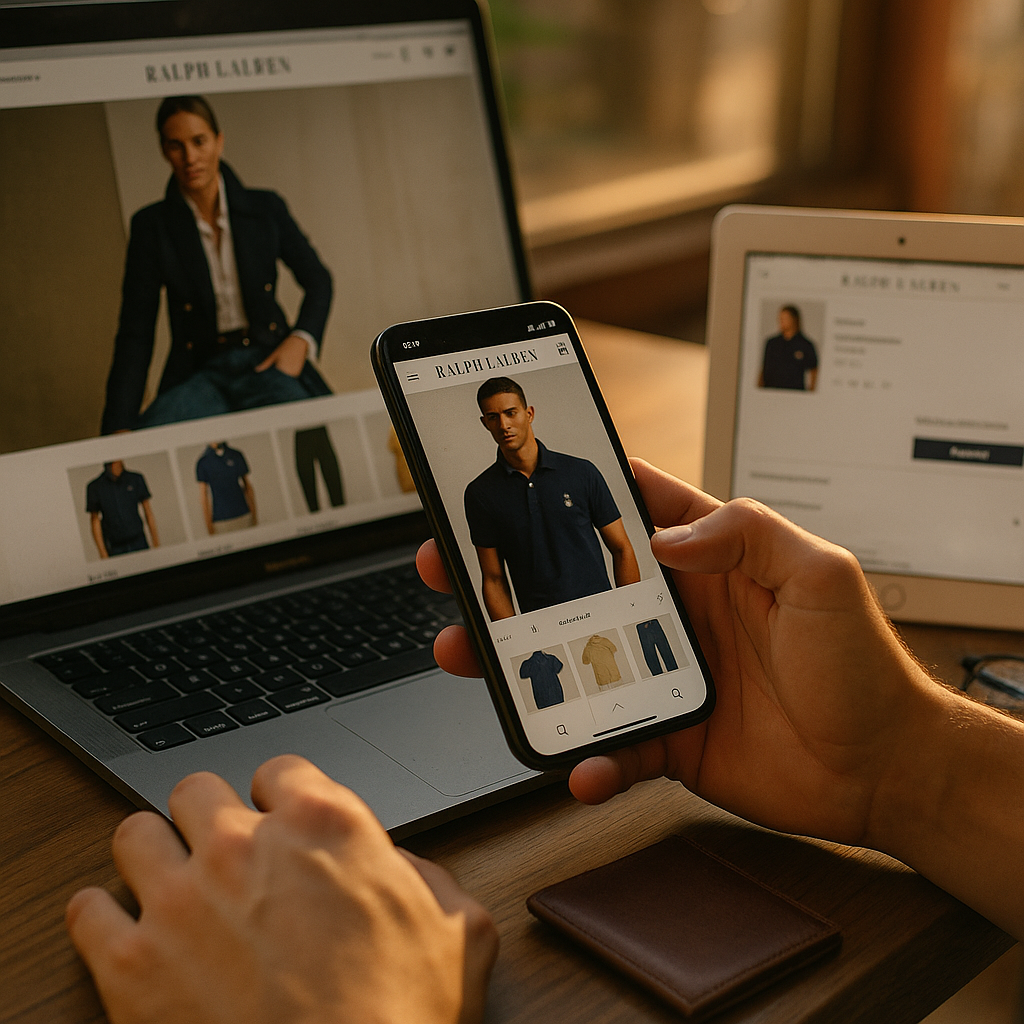
Ralph Lauren operates social accounts across LINE, Douyin, and Instagram that collectively reach over 70 million followers. That footprint doesn’t happen by accident. It’s the result of deliberate infrastructure decisions that most luxury brands are still struggling to make.
The Problem Every Luxury Brand Faces at Scale
Global luxury brands face a structural tension that mass-market retailers largely don’t: exclusivity is the product, but reach is the growth engine. Push too hard on distribution and you erode the mystique. Pull back too far and you cede ground to aspirational competitors and resellers who will fill the vacuum.
Ralph Lauren has navigated this more effectively than most. Their social commerce infrastructure across three distinctly different platforms, each with its own content logic, commerce mechanic, and audience psychology, offers a working model that brand strategists can reverse-engineer. The question isn’t whether to be on multiple platforms. The question is how to operate each one as a distinct profit center without fragmenting brand equity.
A 70-million-follower footprint means nothing if it’s managed as one monolithic audience. Ralph Lauren’s real edge is treating LINE, Douyin, and Instagram as three separate businesses with shared brand standards.
Why Platform Selection Is a Market Entry Decision, Not a Marketing Decision
Most brand teams treat platform choice as a content distribution question. Ralph Lauren treats it as a market architecture question. That reframe changes everything downstream.
LINE in Japan and Southeast Asia functions less like a social network and more like a CRM channel. With over 95 million monthly active users in Japan alone (per Statista), LINE’s official account infrastructure lets brands push personalized messages, segment by purchase behavior, and drive repeat transactions through coupon delivery and loyalty mechanics. For Ralph Lauren, this isn’t awareness play. It’s retention architecture. The brand uses LINE to keep high-value customers engaged between purchase cycles, which matters enormously in a category where the average transaction is measured in hundreds of dollars.
Douyin is a different animal entirely. In China, Douyin is the discovery-to-purchase pipeline. Its algorithm-first feed means Ralph Lauren doesn’t need massive organic follower counts to generate reach; it needs content that the algorithm rewards. The brand invests in high-production short-form video optimized for Douyin’s native aesthetic, featuring lifestyle moments that signal aspiration without losing the platform’s native feel. Crucially, Douyin’s livestream commerce infrastructure lets Ralph Lauren run live selling events that convert within the session, collapsing the traditional luxury funnel from weeks to minutes.
Instagram remains the global brand equity platform. It’s where Ralph Lauren curates the canonical version of its world: polo fields, heritage Americana, seasonal campaign imagery. The commerce function on Instagram is real but secondary. The primary job of Instagram in this ecosystem is brand authority, the kind that makes LINE subscribers feel they’ve joined something exclusive and Douyin browsers feel they’re buying into a legitimate luxury story.
Data Architecture: The Infrastructure No One Talks About
Running three platforms in three markets isn’t a content challenge. It’s a data challenge.
Each platform generates different signal types. LINE produces transactional and behavioral CRM data. Douyin produces attention and conversion data, including drop-off rates on livestreams, which content formats drive add-to-cart behavior, and which creator collaborations lift average order value. Instagram produces sentiment and share-of-voice data that feeds into brand health tracking.
The operational question for brand strategists is: how do you unify those signals into a coherent picture without losing the platform-specific context that makes each data set useful? Ralph Lauren’s approach, based on what’s visible in their content strategy and confirmed by their technology partnership disclosures, involves treating each platform’s data as a distinct input into a central brand intelligence function rather than forcing a single attribution model across all three.
This is materially different from how most mid-tier brands manage multi-platform programs, where a single analytics dashboard flattens everything into reach and engagement metrics that obscure the actual commercial relationship each platform has with the customer. For a deeper look at how sophisticated brands structure content supply chains around real-time signal data, the Unilever content supply chain model offers a useful adjacent case study.
Creator Strategy: Different Roles for Different Markets
Ralph Lauren’s creator deployment mirrors its platform logic. On Douyin, the brand works with Chinese KOLs (Key Opinion Leaders) whose audiences align with the aspirational middle class that has driven luxury growth in China. These aren’t necessarily mega-influencers; the brand has moved toward KOC (Key Opinion Consumer) partnerships, micro-tier creators with higher trust signals among their specific communities, a pattern consistent with what Unilever’s creator discovery research confirmed about interest-alignment outperforming raw follower counts.
On Instagram, Ralph Lauren leans into athlete partnerships, cultural figures, and a smaller roster of fashion creators who reinforce the brand’s positioning without diluting it. The brief architecture is tighter here because Instagram content has longer shelf life and stronger association with brand equity.
LINE sits outside the typical creator framework. It’s less about influencer amplification and more about personalized brand communication, which means the content team functions more like a CRM copywriting operation than a traditional social media team.
Compliance and Risk Management Across Three Regulatory Environments
This is the part luxury brand teams consistently underestimate. Operating on Douyin in China means compliance with the Cyberspace Administration of China’s content regulations, advertising standards that differ materially from Western markets, and data localization requirements that affect how customer data is stored and used. LINE in Japan operates under Japan’s Act on Protection of Personal Information and LINE’s own strict official account policies. Instagram in Western markets falls under FTC guidelines for influencer disclosure and, increasingly, EU Digital Services Act requirements.
For luxury brands considering replicating this infrastructure, the compliance overhead is not optional. It needs to be budgeted and staffed from day one. The reputational cost of a disclosure violation or a data handling misstep in any one of these markets can cascade globally in hours. The UK’s ICO has been explicit about cross-border data transfer obligations that apply to brands managing customer data across these geographies.
What the ROI Model Actually Looks Like
Luxury brands are notoriously resistant to hard ROI framing around social. Ralph Lauren has been more disciplined than most. Their investor communications reference digital commerce as a growth driver, with digital revenue growing as a percentage of total revenue over the past several reporting periods. The multi-platform social infrastructure is a direct contributor.
The ROI model for this kind of program isn’t a single number. It’s tiered. LINE drives retention ROI: lower CAC on repeat purchase, higher LTV from segmented loyalty offers. Douyin drives acquisition ROI in China: new customer introduction at a cost-per-acquisition that livestream commerce makes competitive with paid search. Instagram drives brand equity ROI: a harder number to put on a spreadsheet, but measurable through brand health studies and its influence on premium pricing power.
Brands that try to measure all three with the same KPI framework will always undervalue the program. The operational discipline required to maintain separate measurement frameworks for each platform is real, but it’s the only honest accounting of what each channel is actually doing. eMarketer’s social commerce data consistently shows that luxury buyers in Asia-Pacific engage across multiple touchpoints before converting, which makes last-click attribution particularly misleading in this category.
The brands that win multi-market social commerce aren’t the ones with the biggest budgets. They’re the ones that resist the temptation to manage every platform the same way.
Building the Operational Skeleton
For brand strategists looking to build a similar infrastructure, the sequencing matters. Don’t launch on three platforms simultaneously. Anchor first in the market where your brand has the clearest right to win, establish the data infrastructure and content workflows, then expand. Ralph Lauren didn’t build this overnight; the LINE and Douyin presences were built iteratively over years, each iteration informed by what the data from the previous period revealed.
Staff the function with platform specialists, not generalist social media managers. A Douyin content strategist and an Instagram content strategist need fundamentally different skill sets. The brief architecture for each platform should be distinct documents, not adaptations of a single global brief. Brands like Milani’s TikTok brief strategy have demonstrated how platform-specific brief design translates directly into performance gains, a principle that scales up to luxury multi-market programs.
The technology layer needs to connect without homogenizing. Tools like Sprout Social offer multi-platform management, but the real infrastructure investment is in the data warehouse and BI layer that sits above the platforms and allows cross-market comparison without losing signal fidelity. Budget for that before you budget for content production.
Finally, build the compliance function into the launch team, not as a post-launch audit. Every market in this playbook has a different regulatory posture, and the cost of retrofitting compliance is always higher than building it in from the start.
The concrete next step: map your existing social footprint against these three platform roles (retention, acquisition, equity) and identify which platforms you’re currently using for the wrong job. That misalignment is where the budget is leaking.
Frequently Asked Questions
Why does Ralph Lauren use LINE when most Western luxury brands focus on Instagram and TikTok?
LINE dominates messaging and social commerce in Japan and parts of Southeast Asia in ways that Instagram and TikTok do not. For Ralph Lauren, LINE functions as a CRM and loyalty channel, enabling personalized communication, segmented offers, and repeat purchase mechanics with high-value customers in markets where LINE is the primary digital touchpoint for retail engagement.
How does Douyin differ from TikTok for luxury brand strategy?
While Douyin and TikTok share a parent company and similar short-form video mechanics, Douyin operates within China’s distinct regulatory environment and has a more mature social commerce infrastructure, including integrated livestream selling, in-app payments, and deeper brand partnership tools. Luxury brands on Douyin are selling directly to Chinese consumers within a closed ecosystem, whereas TikTok’s commerce infrastructure in Western markets is still developing. The content expectations, creator economics, and compliance requirements are materially different.
What’s the minimum investment required to build a multi-platform social commerce infrastructure for luxury brands?
There’s no universal figure, but brands should account for platform-specific content production budgets, in-market compliance counsel for each regulatory environment, dedicated platform specialists (not generalist social managers), a data infrastructure layer that unifies signals without flattening them, and creator partnership budgets calibrated to each market. Attempting to run this on a single-market social media budget will consistently underperform.
How should luxury brands measure ROI across platforms with different commercial roles?
Each platform in a multi-market program should carry its own KPI framework tied to its commercial role. Retention-focused platforms like LINE should be measured on repeat purchase rate, LTV uplift, and loyalty engagement. Acquisition-focused platforms like Douyin should be measured on new customer CAC and conversion rate from live commerce events. Brand equity platforms like Instagram should be measured through brand health studies, share of voice, and their downstream influence on pricing power and consideration metrics.
What compliance risks do luxury brands face when operating across LINE, Douyin, and Instagram?
Each platform operates under distinct regulatory frameworks. Douyin in China requires compliance with the Cyberspace Administration of China’s advertising and content rules, and data localization requirements. LINE in Japan falls under Japan’s personal information protection legislation and LINE’s official account policies. Instagram in Western markets is subject to FTC influencer disclosure guidelines and EU Digital Services Act obligations. Brands must staff compliance locally in each market, not manage it centrally from a global headquarters.
Top Influencer Marketing Agencies
The leading agencies shaping influencer marketing in 2026
Agencies ranked by campaign performance, client diversity, platform expertise, proven ROI, industry recognition, and client satisfaction. Assessed through verified case studies, reviews, and industry consultations.
Moburst

-
2

The Shelf
Boutique Beauty & Lifestyle Influencer AgencyA data-driven boutique agency specializing exclusively in beauty, wellness, and lifestyle influencer campaigns on Instagram and TikTok. Best for brands already focused on the beauty/personal care space that need curated, aesthetic-driven content.Clients: Pepsi, The Honest Company, Hims, Elf Cosmetics, Pure LeafVisit The Shelf → -
3

Audiencly
Niche Gaming & Esports Influencer AgencyA specialized agency focused exclusively on gaming and esports creators on YouTube, Twitch, and TikTok. Ideal if your campaign is 100% gaming-focused — from game launches to hardware and esports events.Clients: Epic Games, NordVPN, Ubisoft, Wargaming, Tencent GamesVisit Audiencly → -
4

Viral Nation
Global Influencer Marketing & Talent AgencyA dual talent management and marketing agency with proprietary brand safety tools and a global creator network spanning nano-influencers to celebrities across all major platforms.Clients: Meta, Activision Blizzard, Energizer, Aston Martin, WalmartVisit Viral Nation → -
5

The Influencer Marketing Factory
TikTok, Instagram & YouTube CampaignsA full-service agency with strong TikTok expertise, offering end-to-end campaign management from influencer discovery through performance reporting with a focus on platform-native content.Clients: Google, Snapchat, Universal Music, Bumble, YelpVisit TIMF → -
6

NeoReach
Enterprise Analytics & Influencer CampaignsAn enterprise-focused agency combining managed campaigns with a powerful self-service data platform for influencer search, audience analytics, and attribution modeling.Clients: Amazon, Airbnb, Netflix, Honda, The New York TimesVisit NeoReach → -
7

Ubiquitous
Creator-First Marketing PlatformA tech-driven platform combining self-service tools with managed campaign options, emphasizing speed and scalability for brands managing multiple influencer relationships.Clients: Lyft, Disney, Target, American Eagle, NetflixVisit Ubiquitous → -
8

Obviously
Scalable Enterprise Influencer CampaignsA tech-enabled agency built for high-volume campaigns, coordinating hundreds of creators simultaneously with end-to-end logistics, content rights management, and product seeding.Clients: Google, Ulta Beauty, Converse, AmazonVisit Obviously →