


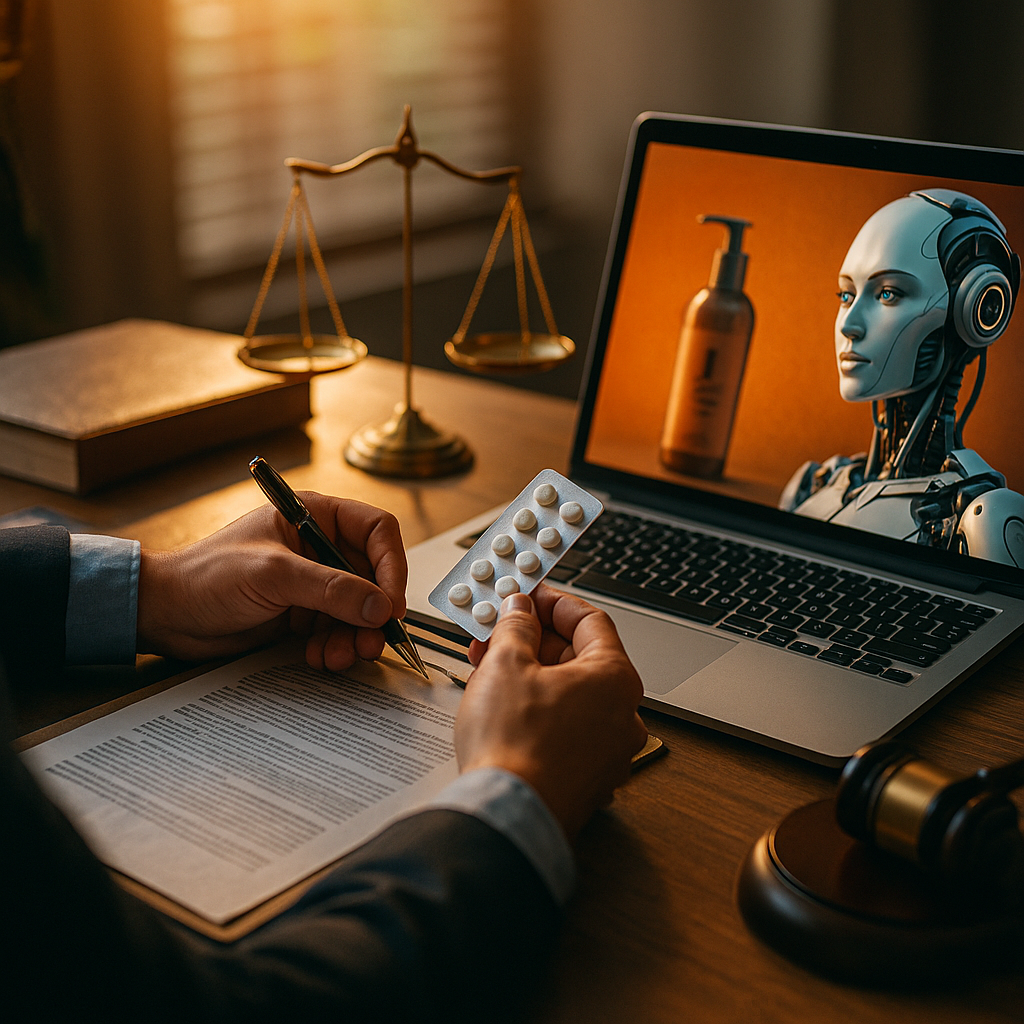
Nearly 60% of digital ad creatives are now modified by platform AI before delivery. If your legal team isn’t auditing those outputs against FTC Section 5 deception standards, you’re already behind the compliance curve.
Why the FTC’s Section 5 Warning Changes Everything for AI Ad Creative
The FTC has made its position clear: Section 5 of the FTC Act, which prohibits unfair or deceptive acts or practices, applies fully to AI-generated and AI-modified advertising content. This isn’t a hypothetical future risk. The Commission’s recent guidance explicitly signals that brands cannot outsource deception liability to an algorithm. If a platform’s AI reshapes your ad creative in ways that mislead consumers, the brand is accountable, not the platform.
Simultaneously, a patchwork of state AI laws, ranging from Colorado’s AI Act to Texas’s Responsible AI Governance Act, is imposing disclosure and transparency requirements on automated decision-making. The collision of these two legal frameworks creates a dual compliance burden that most brand legal teams are not currently equipped to handle. For a deeper orientation on where these two frameworks diverge and overlap, the state AI law vs. FTC Section 5 framework is a useful structural reference.
Platform AI modifications to ad creative are not a technical footnote. They are a material advertising event with legal consequences under federal deception standards.
What “Platform-Required Output Changes” Actually Mean in Practice
This is where legal teams often lose the thread. When a brand submits a video ad to Meta, TikTok, or Google, the platform’s AI may alter it before it reaches a consumer. These alterations include automatic cropping and reformatting, audio normalization, brightness and contrast adjustments, dynamic text overlays, and in some cases generative AI enhancements that modify backgrounds or faces.
Some of these changes are cosmetic. Others are not. The legally significant category is any modification that changes the meaning, emphasis, or factual impression of the creative. Consider a skincare brand whose original ad shows a subtle “results not typical” disclaimer in the lower third. If a platform’s AI reformats the video for a vertical feed and crops out that disclaimer, the resulting output may be materially deceptive under Section 5 standards, even though the brand’s original creative was compliant.
TikTok’s AI ad tools, Meta’s Advantage+ Creative, and Google’s asset optimization features all have this capability. Brands using these tools need to understand that FTC enforcement does not distinguish between intentional and automated deception.
Building the Audit Framework Your Legal Team Actually Needs
A credible audit process operates at three stages: pre-submission, post-delivery sampling, and quarterly legal review.
Pre-submission compliance locks. Before any creative enters a platform’s AI optimization pipeline, legal and creative teams should establish non-negotiable elements, the components that cannot be cropped, obscured, modified, or removed by automated systems. These include material disclosures, pricing claims, efficacy statements, and any language required by state law. Where platforms allow it, mark these elements as locked assets in campaign settings. Document that decision. If the platform’s AI cannot respect those locks, the tool should not be used for that creative format.
Post-delivery sampling. Pull rendered ad previews across a representative sample of placements and formats after campaign launch. Compare them against the approved master creative. This is not a one-time exercise. AI optimization systems update their models continuously, which means an ad that rendered correctly in week one may render differently in week three. Build this sampling into your campaign management workflow, not into a quarterly legal review that happens too late to catch live issues.
Quarterly legal review with documented remediation. Every quarter, your legal team should review a structured log of AI-generated creative variations, note any that raised compliance questions, and document how those questions were resolved. This paper trail matters enormously if the FTC ever investigates. Demonstrating a good-faith compliance program is not a guaranteed defense, but it is a meaningful one. For brands running complex disclosure scenarios, the FTC disclosure rules for revenue share content provides additional context on how the Commission evaluates disclosure adequacy.
The State Law Dimension: Where Disclosure Gets Complicated
Several state AI laws require that consumers be informed when AI has materially altered content they are viewing. California, Illinois, and Colorado are the most active jurisdictions here. The compliance challenge for brands is that platform-required output changes often happen after brand approval, meaning the brand may not know the exact form in which the ad was delivered.
This creates a disclosure gap. If Colorado law requires disclosure of AI modification and the platform’s system modified the creative without notifying the brand, who bears the disclosure obligation? The current legal consensus leans toward the advertiser, not the platform. Brands should be proactive about contractually requiring platforms to log and report any AI modifications to submitted creatives, and those contract provisions should be reviewed now. The agentic AI marketing policy considerations discussed elsewhere on this site translate directly to this scenario.
For brands running cross-jurisdictional campaigns, this complexity multiplies. A single campaign running across 15 states may be subject to overlapping disclosure standards, some of which conflict with platform capabilities. The cross-border compliance checklist approach, while developed for creator programs, applies structurally to AI ad creative as well.
If your platform contract does not include a clause requiring the platform to log and report AI modifications to your creative assets, you have a compliance gap that no internal audit process can fully close.
What Deception Looks Like Under Section 5 in an AI Context
Section 5 deception analysis asks three questions: Was there a representation? Would a reasonable consumer interpret it a specific way? Was that interpretation material to a purchase decision? AI-modified creative can fail this test in ways that human reviewers would never anticipate, because the modification may only occur in specific delivery environments, at certain times, or for certain audience segments.
A drug brand’s AI-optimized video that accelerates playback speed in a low-bandwidth environment, causing a mandated safety disclosure to flash by too quickly to be read, is a deception risk. A financial services ad where dynamic text insertion replaces a rate disclosure with a promotional message is a deception risk. These are not edge cases. They are the kinds of outputs that AI creative optimization systems produce when configured primarily for performance rather than compliance.
Brands in regulated industries, pharma, financial services, alcohol, supplements, should apply a stricter pre-approval standard and consider whether AI creative optimization tools are appropriate for those categories at all. For those running influencer-adjacent campaigns, the ad labeling compliance checklist for TikTok and Instagram provides a useful parallel framework for disclosure integrity across platform environments.
Practical Steps for the Next 30 Days
Legal teams that want to get ahead of this should prioritize three actions immediately.
- Map your AI touchpoints. Identify every platform and tool in your current stack that applies AI modification to ad creative after brand approval. This includes native platform optimization features and third-party AI creative tools. For each, document what modifications are possible and whether you have visibility into the outputs.
- Review your platform agreements. Look specifically for indemnification clauses related to creative modifications and any provisions addressing AI-generated outputs. Most standard platform terms do not protect brands from deception liability arising from platform-side AI changes. Knowing where your contracts are silent is the first step to addressing those gaps.
- Consult FTC guidance directly. The Commission has published materials on AI and deception that are more operationally specific than most legal teams realize. The FTC’s guidance on endorsements and its AI-related policy statements are both relevant here and should be part of your internal training materials.
External resources from eMarketer on AI ad spend trends and from the IAPP on state AI law compliance provide useful context for scoping the business risk alongside the legal risk.
Start with a written log of every AI modification capability active in your current campaigns. That document is both your compliance baseline and your first line of defense.
Frequently Asked Questions
Does FTC Section 5 apply to AI modifications made by platforms, not the brand?
Yes. The FTC’s position is that the advertiser bears responsibility for the final consumer-facing output, regardless of which party made the modification. If a platform’s AI changes your creative in a way that creates a false impression, the brand can be held liable under Section 5. Brands cannot delegate deception compliance to platform algorithms.
What types of AI modifications to ad creative create the highest Section 5 risk?
The highest-risk modifications are those that alter, obscure, or remove material disclosures; change the emphasis of a factual claim; or insert new claims not present in the original creative. This includes cropping that removes disclaimers, dynamic text substitution, accelerated playback that makes disclosures unreadable, and generative AI enhancements that alter the depiction of a product or its results.
How do state AI laws interact with FTC Section 5 for ad creative compliance?
State AI laws primarily add disclosure and transparency requirements on top of the federal deception standard. Where a state law requires brands to disclose that AI was used to modify content, that obligation exists independently of whether the content is also deceptive under Section 5. Brands must satisfy both. Because state laws vary significantly, brands running national campaigns need a jurisdiction-by-jurisdiction compliance map.
Should brands disable AI creative optimization features to avoid compliance risk?
Not necessarily. Disabling these tools entirely would forfeit real performance benefits. The more practical approach is to configure them carefully, lock material disclosure elements where possible, and implement a post-delivery sampling audit to catch non-compliant outputs before they run at scale. In regulated categories like pharma or financial services, a more restrictive policy may be warranted.
What contract provisions should brands require from platforms to manage AI modification risk?
Brands should seek contractual commitments that require platforms to log and report any AI modifications to submitted creative assets, notify brands of material changes before delivery where technically feasible, and provide modification logs on request for compliance auditing purposes. Most standard platform agreements do not include these provisions, so they typically require negotiation at the enterprise account level.
Top Influencer Marketing Agencies
The leading agencies shaping influencer marketing in 2026
Agencies ranked by campaign performance, client diversity, platform expertise, proven ROI, industry recognition, and client satisfaction. Assessed through verified case studies, reviews, and industry consultations.
Moburst

-
2

The Shelf
Boutique Beauty & Lifestyle Influencer AgencyA data-driven boutique agency specializing exclusively in beauty, wellness, and lifestyle influencer campaigns on Instagram and TikTok. Best for brands already focused on the beauty/personal care space that need curated, aesthetic-driven content.Clients: Pepsi, The Honest Company, Hims, Elf Cosmetics, Pure LeafVisit The Shelf → -
3

Audiencly
Niche Gaming & Esports Influencer AgencyA specialized agency focused exclusively on gaming and esports creators on YouTube, Twitch, and TikTok. Ideal if your campaign is 100% gaming-focused — from game launches to hardware and esports events.Clients: Epic Games, NordVPN, Ubisoft, Wargaming, Tencent GamesVisit Audiencly → -
4

Viral Nation
Global Influencer Marketing & Talent AgencyA dual talent management and marketing agency with proprietary brand safety tools and a global creator network spanning nano-influencers to celebrities across all major platforms.Clients: Meta, Activision Blizzard, Energizer, Aston Martin, WalmartVisit Viral Nation → -
5

The Influencer Marketing Factory
TikTok, Instagram & YouTube CampaignsA full-service agency with strong TikTok expertise, offering end-to-end campaign management from influencer discovery through performance reporting with a focus on platform-native content.Clients: Google, Snapchat, Universal Music, Bumble, YelpVisit TIMF → -
6

NeoReach
Enterprise Analytics & Influencer CampaignsAn enterprise-focused agency combining managed campaigns with a powerful self-service data platform for influencer search, audience analytics, and attribution modeling.Clients: Amazon, Airbnb, Netflix, Honda, The New York TimesVisit NeoReach → -
7

Ubiquitous
Creator-First Marketing PlatformA tech-driven platform combining self-service tools with managed campaign options, emphasizing speed and scalability for brands managing multiple influencer relationships.Clients: Lyft, Disney, Target, American Eagle, NetflixVisit Ubiquitous → -
8

Obviously
Scalable Enterprise Influencer CampaignsA tech-enabled agency built for high-volume campaigns, coordinating hundreds of creators simultaneously with end-to-end logistics, content rights management, and product seeding.Clients: Google, Ulta Beauty, Converse, AmazonVisit Obviously →