


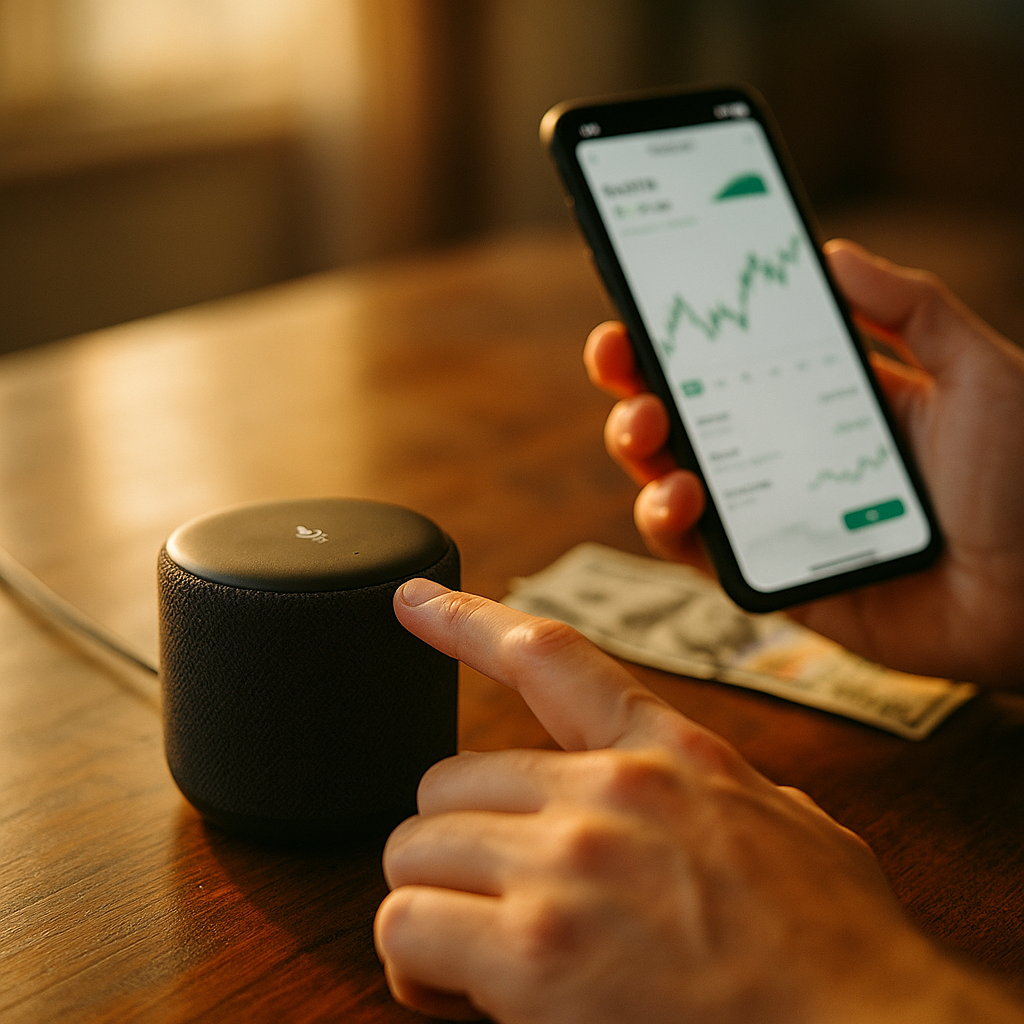
Voice-activated content discovery just crossed a threshold most media planners haven’t clocked yet: smart speaker and voice assistant users are now discovering podcasts, playlists, and branded audio content through voice search at rates that outpace typed queries in several categories. If your media plan still treats audio as an afterthought bolted onto video budgets, you’re already behind. This isn’t a trend piece. It’s a signal, and signals have a shelf life.
The Signal Nobody’s Pricing In Yet
Here’s the uncomfortable part: most brand media plans still treat audio as a discount inventory line, something you buy after video and social are funded. That worked when audio was passive, background, low-intent. It doesn’t work anymore. Voice-activated discovery — someone saying “play that new true crime show” or “find me a workout playlist” instead of typing a search — is changing how content gets found, and by extension, how ad inventory around that content gets valued.
Smart speaker penetration in U.S. households has plateaued somewhat, but usage depth hasn’t. According to Statista, voice assistant users are spending more time per session and issuing more content-discovery commands than pure utility commands (weather, timers, reminders). That shift matters. It means voice is graduating from convenience tool to discovery engine, and discovery engines are where ad dollars eventually follow.
When a discovery channel shifts from utility to intent-driven browsing, ad inventory around it typically re-prices within 18 to 24 months. Brands that wait for the re-pricing to show up in CPMs are already paying the premium.
Why This Isn’t Just “Podcasts Are Big Again”
Let’s be clear about what’s actually happening, because it’s easy to conflate this with the general podcast advertising boom. Podcast ad spend has been climbing for years and platforms like Spotify and Amazon have built real programmatic audio infrastructure. That’s old news.
What’s new is the discovery layer. Voice-activated discovery means listeners are bypassing app browsing entirely. They’re not scrolling a podcast app’s homepage, they’re asking a device to surface something for them. That has three direct implications for brands:
- Search and SEO logic now applies to audio. If your branded podcast or audio content isn’t optimized for voice query patterns, it’s invisible to a growing share of discovery traffic.
- Attribution gets murkier before it gets clearer. Voice-discovered content doesn’t leave the same click trail as web or app discovery, which means your existing measurement stack may be undercounting audio’s actual influence.
- First-mover ad formats will define category norms. Whoever builds credible audio-native ad formats now — host-read integrations, voice-triggered promo codes, conversational ad units — sets the benchmark other brands get compared against.
This mirrors a pattern we’ve seen before with CTV inventory growth outpacing social. A channel matures quietly, then suddenly the CPMs catch up to the attention. Brands that moved early on CTV are now sitting on efficiency advantages latecomers can’t easily buy back.
What “Audio-Native” Actually Means (And What It Doesn’t)
Audio-native doesn’t mean “we turned our banner ad copy into a voiceover.” That’s the mistake most brands make first, and it’s why so much audio advertising still sounds bolted-on rather than built-in.
An audio-native ad format is designed for the constraints and strengths of voice-first consumption: no visual reinforcement, shorter attention windows for skip decisions, and increasingly, the possibility of two-way interaction (a listener can respond to a voice prompt). Think dynamic host-read ads that adjust based on the podcast’s live download data, or Alexa Skills that let a listener request a sample or discount without ever opening an app.
Compare that to a standard :30 pre-roll audio spot, which is just a TV ad script read aloud. One is built for how people actually discover and consume audio today. The other is a hand-me-down from a different medium.
What the Data Actually Shows
You don’t need to take this on faith. A few data points worth anchoring your budget conversation around:
- Voice commerce and voice-initiated content requests have grown steadily year over year, per tracking from eMarketer, with content discovery commands (not just search or shopping) representing a growing share of total voice interactions.
- Smart speaker owners increasingly use voice to find new content rather than replay known favorites, a behavior shift that signals discovery intent rather than habit-based usage.
- Brands running host-read audio ads with clear voice-triggered calls-to-action report stronger recall than static pre-roll, based on aggregated podcast advertising studies cited by industry publishers.
None of this means voice is about to overtake social or CTV in budget share. It won’t, not this year and probably not next. But early signal interpretation isn’t about predicting dominance. It’s about not being three budget cycles late when the format matures, the same mistake plenty of brands made with reallocating ad spend too slowly during previous channel shifts.
How Brands Should Actually Respond
Reading a signal correctly means resisting two opposite temptations: ignoring it entirely, or overcorrecting with a huge audio-first pivot before the format infrastructure is mature. Here’s a more disciplined approach.
Start With a Discovery Audit, Not a Media Buy
Before you shift a single dollar, map how your category’s content is actually being discovered right now. Pull data from your podcast partners, ask your agency for voice-query trend reports if they have access to them, and check whether your branded audio content (if you have any) shows up when relevant voice queries are made. Most brands skip this step and go straight to buying inventory. That’s backwards. You can’t invest intelligently in a channel you haven’t measured.
Pilot Small, Instrument Everything
Run a contained pilot: one podcast partnership, one voice-triggered ad unit, one Alexa Skill or Google Action if your category supports it. The goal isn’t scale, it’s learning. Track completion rates, voice-response rates if applicable, and any lift in branded search afterward. This is the same operational discipline that’s driving always-on budget models — small continuous tests beat big quarterly bets when a channel is still forming.
Build Compliance In From Day One
Voice ad formats raise genuine questions around disclosure and consent that regulators haven’t fully settled. If a voice assistant reads a sponsored recommendation aloud, how clearly does that need to be disclosed as an ad? The FTC has already signaled interest in AI-mediated and voice-mediated advertising disclosures, and UK marketers should keep an eye on ICO guidance on voice data collection and consent. Brands operating across regions need to treat this the way they’d treat any emerging regional ad regulation divergence — get ahead of it contractually with your audio partners now, rather than retrofitting compliance later.
Voice ad disclosure standards are still being written in real time. Brands that document their disclosure practices now will have a defensible position when regulators formalize rules. Brands that wait will be rewriting contracts under deadline pressure.
Don’t Let Attribution Gaps Stall the Whole Program
This is where a lot of promising audio pilots die internally: someone in finance asks for attribution data that voice discovery simply can’t provide cleanly yet, and the program gets shelved. Don’t let perfect measurement kill a directionally sound bet. Use proxy metrics: branded search lift, promo code redemption, direct traffic spikes correlated with campaign flight dates. This is the same measurement flexibility that’s reshaping last-click attribution models across the board, not just in audio.
Where the Talent and Tooling Gaps Show Up
One reason brands under-invest here isn’t strategic hesitation, it’s capability gaps. Writing for voice is a different skill than writing for display or even video. Few agencies have dedicated audio-native creative teams, and fewer still understand voice UX design well enough to build interactive ad experiences. This tracks with the broader analytics talent shortage reshaping marketing org charts generally: the tools are arriving faster than the people who know how to use them well.
If you’re building an audio-native program, budget for training or hiring specifically around conversational design and voice UX, not just media buying. A great media buyer without the right creative partner will still produce a mediocre ad read.
The Bottom Line for Budget Owners
Rising voice-activated content discovery rates aren’t a guarantee that audio ad budgets need to triple next quarter. They’re a signal that the discovery layer underneath audio content is shifting, and ad formats built for the old discovery model (static pre-roll, generic host reads) will underperform as that shift compounds. Treat this the way you’d treat any early-stage channel signal: pilot deliberately, measure with proxies where perfect attribution isn’t available yet, and build compliance guardrails before you scale, not after.
The brands that get burned here won’t be the ones who moved too early. They’ll be the ones who moved late, paid category-defining premiums for inventory that early movers locked in cheaply, and spent a full budget cycle catching up on creative capability they should have built a year earlier.
FAQs
What exactly counts as “voice-activated content discovery”?
It refers to users finding podcasts, playlists, audio shows, or branded audio content through spoken commands to a voice assistant (Alexa, Google Assistant, Siri) rather than typing a search query or browsing an app manually. It’s a discovery method, not a device category.
Should brands cut display or social budget to fund audio-native ad pilots?
No. Fund early audio pilots from test-and-learn or innovation budgets, not by cannibalizing proven channels. Voice discovery is an early signal worth watching closely, not yet a channel with the scale or measurement maturity to justify major reallocation.
How do you measure ROI on voice-triggered ad formats without clean attribution?
Use proxy metrics: branded search lift during campaign flights, promo code or unique URL redemption tied to the audio placement, and direct traffic spikes correlated with airtime. Treat it similarly to how brands measure upper-funnel podcast or CTV impact.
Are there compliance risks specific to voice-activated ad formats?
Yes. Disclosure standards for AI-read or voice-assistant-delivered sponsored content are still forming. Regulators including the FTC have signaled interest in this area. Brands should document disclosure practices now and build compliance language into audio partner contracts.
Which brand categories should prioritize audio-native investment first?
Categories with strong habitual audio consumption and voice-friendly purchase paths — CPG, food and beverage, fitness, entertainment, and home goods — tend to see the clearest early signal, since voice discovery commands in these categories are already outpacing typed search.
Top Influencer Marketing Agencies
The leading agencies shaping influencer marketing in 2026
Agencies ranked by campaign performance, client diversity, platform expertise, proven ROI, industry recognition, and client satisfaction. Assessed through verified case studies, reviews, and industry consultations.
Moburst

-
2

The Shelf
Boutique Beauty & Lifestyle Influencer AgencyA data-driven boutique agency specializing exclusively in beauty, wellness, and lifestyle influencer campaigns on Instagram and TikTok. Best for brands already focused on the beauty/personal care space that need curated, aesthetic-driven content.Clients: Pepsi, The Honest Company, Hims, Elf Cosmetics, Pure LeafVisit The Shelf → -
3

Audiencly
Niche Gaming & Esports Influencer AgencyA specialized agency focused exclusively on gaming and esports creators on YouTube, Twitch, and TikTok. Ideal if your campaign is 100% gaming-focused — from game launches to hardware and esports events.Clients: Epic Games, NordVPN, Ubisoft, Wargaming, Tencent GamesVisit Audiencly → -
4

Viral Nation
Global Influencer Marketing & Talent AgencyA dual talent management and marketing agency with proprietary brand safety tools and a global creator network spanning nano-influencers to celebrities across all major platforms.Clients: Meta, Activision Blizzard, Energizer, Aston Martin, WalmartVisit Viral Nation → -
5

The Influencer Marketing Factory
TikTok, Instagram & YouTube CampaignsA full-service agency with strong TikTok expertise, offering end-to-end campaign management from influencer discovery through performance reporting with a focus on platform-native content.Clients: Google, Snapchat, Universal Music, Bumble, YelpVisit TIMF → -
6

NeoReach
Enterprise Analytics & Influencer CampaignsAn enterprise-focused agency combining managed campaigns with a powerful self-service data platform for influencer search, audience analytics, and attribution modeling.Clients: Amazon, Airbnb, Netflix, Honda, The New York TimesVisit NeoReach → -
7

Ubiquitous
Creator-First Marketing PlatformA tech-driven platform combining self-service tools with managed campaign options, emphasizing speed and scalability for brands managing multiple influencer relationships.Clients: Lyft, Disney, Target, American Eagle, NetflixVisit Ubiquitous → -
8

Obviously
Scalable Enterprise Influencer CampaignsA tech-enabled agency built for high-volume campaigns, coordinating hundreds of creators simultaneously with end-to-end logistics, content rights management, and product seeding.Clients: Google, Ulta Beauty, Converse, AmazonVisit Obviously →