


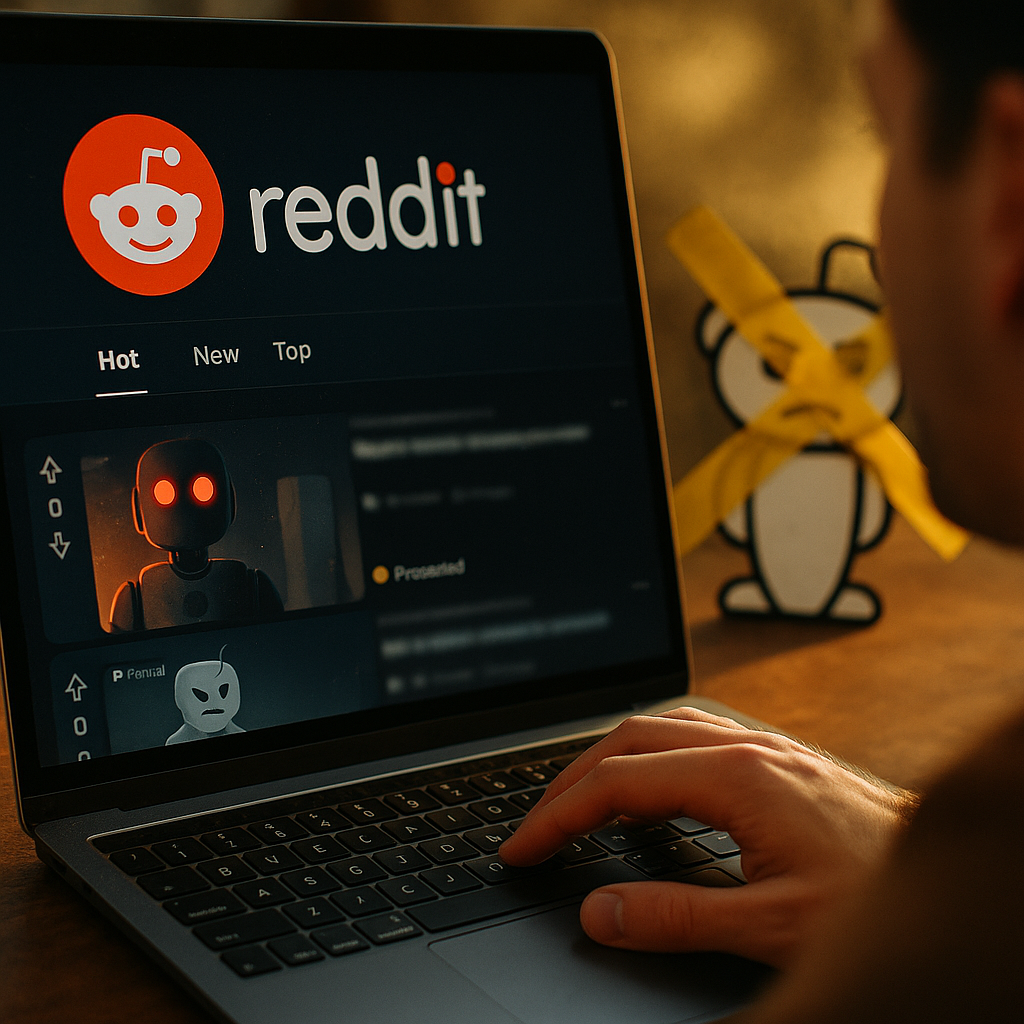
Twenty percent. That’s how much fake engagement Reddit’s new AI moderation system scrubbed off the platform in its first extended test window. If your brand seeding strategy still leans on vote manipulation, karma farms, or “authentic-looking” bot accounts, you’re about to lose a lot of inventory. Reddit’s AI anti-spam push isn’t a minor housekeeping update — it’s a structural shift in what counts as real influence on the platform.
For brands that have quietly built seeding programs around Reddit’s murky gray zones, this is the wake-up call. For everyone else, it’s a preview of where every major platform is headed next.
What Actually Changed
Reddit rolled out an expanded machine-learning detection layer designed to catch coordinated inauthentic behavior: vote manipulation rings, sockpuppet networks, and low-effort comment spam generated to inflate visibility on seeded posts. According to Reddit’s own transparency reporting, the system flags behavioral patterns rather than just content — timing clusters, account age correlations, cross-subreddit voting synchronicity. That’s a meaningfully different approach than keyword-based spam filters most platforms have relied on for years.
The result, per Reddit’s disclosed internal metrics, was a roughly 20% reduction in fake engagement signals across monitored communities within months of full deployment. That’s not a rounding error. It’s a signal that a fifth of what brands and agencies were reading as “engagement” on Reddit may have never been real in the first place.
If one-fifth of Reddit’s engagement signal was inflated by inauthentic activity, every seeding campaign built on top-line upvote counts has been measuring noise, not resonance.
We covered the mechanics of this rollout in detail when it first landed — see Reddit’s AI moderation win — but the more urgent question for brand marketers is operational: what do you do with your seeding budget now?
Why Brand Seeding on Reddit Was Broken to Begin With
Let’s be honest about how Reddit seeding actually worked for most brands. Agencies would identify high-traffic subreddits, recruit or pay accounts with established karma to post product mentions framed as organic recommendations, and then supplement early traction with upvote pods to beat the algorithm’s visibility threshold. It’s an open secret in the industry. Reddit’s own moderators have complained about it publicly for years.
The problem was never just ethical. It was measurement integrity. If a post’s early velocity is juiced by bots or paid upvote networks, every downstream metric — impressions, click-through, even sentiment — gets contaminated. Brands were reporting “success” on campaigns that never touched a real human decision-maker.
This is the same pattern we’ve flagged in our ongoing coverage of vanity metrics losing credibility across the industry. Reddit just automated the audit that marketers should have been running themselves.
The Karma Economy Is Getting Squeezed
Reddit’s karma system — the points users accumulate through upvotes — has functioned as an unofficial currency for seeding credibility. Accounts with high karma and long histories look trustworthy to both the algorithm and human readers. Naturally, a market emerged for aged, high-karma accounts sold specifically for marketing use.
AI detection targets exactly this pattern. Behavioral fingerprinting can spot an account that suddenly pivots from years of gaming-subreddit activity to posting suspiciously polished product recommendations in r/BuyItForLife. That mismatch is now a flag, not a bonus.
The Brand Safety Angle Nobody’s Pricing In
There’s a compliance dimension here that goes beyond campaign performance. Regulators have been circling undisclosed paid seeding for years. The FTC’s endorsement guidelines already require clear disclosure when compensation influences a recommendation, and platforms cracking down on inauthentic accounts makes it harder to hide seeded content behind a veneer of organic enthusiasm.
If Reddit’s AI system flags an account for coordinated behavior, and that account happens to be part of your seeding network, you’re not just losing a placement. You’re generating a data trail that ties your brand to activity a regulator or investigative journalist could later characterize as manipulation. That’s a reputational risk most CMOs haven’t stress-tested.
Our compliance team has been tracking this convergence between platform enforcement and regulatory exposure — it maps closely to what we outlined in the AI marketing compliance playbook. Reddit’s rollout is effectively private-sector enforcement doing regulators’ work for them, and brands should treat it that way.
What This Means for Seeding Budgets Right Now
So where does the 20% drop actually leave your Reddit line item? A few practical shifts are already visible among agencies adjusting mid-quarter:
- Real creator partnerships replace anonymous seeding. Brands are shifting spend toward identified Reddit power users and moderators willing to disclose sponsorship, rather than anonymous “organic-style” posts.
- Community-specific vetting becomes standard. Agencies now check account history and community standing before recruiting seeders, treating it like influencer due diligence rather than media buying.
- Engagement benchmarks are being recalibrated downward. If 20% of historical engagement was fake, last year’s benchmarks are inflated. Comparing this quarter’s “real” numbers against last year’s contaminated baseline will make every campaign look like it’s underperforming, even if it’s healthier than before.
- Smaller, higher-trust subreddits are gaining budget share. Niche communities with active human moderation are proving more resistant to both bot activity and AI false positives, making them safer territory for seeding-adjacent content.
This last point matters more than it sounds. Reddit’s AI system isn’t just catching bad actors — it’s also making legitimate seeding in low-moderation subreddits riskier, because those communities are exactly where fake account behavior concentrated. Brand strategy has to follow the moderation quality, not just the traffic numbers.
Rebuilding Measurement Around Real Signal
The bigger strategic lesson here isn’t Reddit-specific. It’s about how brands measure influence everywhere. Platforms across the board — Reddit, TikTok, Meta — are investing in AI-driven authenticity detection because inflated engagement has become an existential credibility problem for ad-supported platforms. eMarketer’s analysts have flagged declining trust in engagement metrics as a recurring theme across social platforms, and Reddit’s move puts it ahead of some peers on enforcement.
For brand strategists, that means seeding programs need the same rigor as paid media: source verification, disclosure compliance, and post-campaign attribution that doesn’t rely solely on platform-reported engagement.
Treat every seeding placement like a media buy you’d have to defend in an audit — because increasingly, that’s exactly what it is.
Tools that separate authentic community signal from manufactured buzz are becoming as important as the creative itself. This echoes what we’ve written about the shift toward narrative-driven platforms over content volume — Reddit’s crackdown rewards brands that build genuine narrative traction over those chasing raw post counts.
Analytics teams should also expect a talent gap here. Reading behavioral authenticity signals requires different skills than traditional social listening, a challenge we detailed in our piece on the marketing analytics skills gap.
How to Audit Your Current Seeding Vendors
If you’re running Reddit seeding through an agency or freelance network, ask these questions before your next renewal:
- Can they show account histories for every seeder used in past campaigns?
- Do they disclose sponsorship in seeded posts, per platform and FTC rules?
- Have they adjusted targeting toward moderated, higher-trust subreddits since the AI rollout?
- Can they separate bot-driven engagement from human engagement in reporting, using tools like Sprout Social or comparable social analytics platforms?
If the answers are vague, that’s your signal to renegotiate scope or walk. Reddit’s enforcement just made vendor due diligence non-negotiable.
The Takeaway
Reddit’s AI anti-spam rollout didn’t just clean up the platform — it exposed how much of “engagement” was fiction, and it’s forcing brands to rebuild seeding strategy around verified human communities instead of manufactured buzz. Audit your current Reddit vendors this quarter, reset your engagement benchmarks against the new baseline, and shift budget toward moderated communities where authenticity is enforced rather than assumed.
FAQs
What is Reddit’s AI anti-spam system actually detecting?
It analyzes behavioral patterns — account age, voting synchronicity, timing clusters, and cross-subreddit activity — to identify coordinated inauthentic behavior like vote manipulation and sockpuppet networks, rather than relying only on keyword-based spam filters.
Does the 20% drop in fake engagement mean Reddit traffic is shrinking?
No. It means a portion of previously reported engagement was inauthentic. Real human traffic and discussion volume aren’t necessarily declining; the platform is simply filtering out inflated signals that never represented genuine users.
Is paid brand seeding on Reddit still viable?
Yes, but only with disclosed partnerships and vetted creators. Anonymous, undisclosed seeding through purchased or farmed accounts is increasingly likely to be flagged, removed, or tied back to the brand in ways that create compliance risk.
How should brands adjust performance benchmarks after this rollout?
Treat pre-rollout engagement data as inflated and avoid direct year-over-year comparisons without adjustment. Build new baselines using post-rollout data to get an accurate read on real campaign performance.
Are other platforms likely to follow Reddit’s approach?
Almost certainly. Platforms across the industry are investing in AI-driven authenticity detection as inflated engagement becomes a credibility and monetization problem, so brands should expect similar enforcement on other channels.
Top Influencer Marketing Agencies
The leading agencies shaping influencer marketing in 2026
Agencies ranked by campaign performance, client diversity, platform expertise, proven ROI, industry recognition, and client satisfaction. Assessed through verified case studies, reviews, and industry consultations.
Moburst

-
2

The Shelf
Boutique Beauty & Lifestyle Influencer AgencyA data-driven boutique agency specializing exclusively in beauty, wellness, and lifestyle influencer campaigns on Instagram and TikTok. Best for brands already focused on the beauty/personal care space that need curated, aesthetic-driven content.Clients: Pepsi, The Honest Company, Hims, Elf Cosmetics, Pure LeafVisit The Shelf → -
3

Audiencly
Niche Gaming & Esports Influencer AgencyA specialized agency focused exclusively on gaming and esports creators on YouTube, Twitch, and TikTok. Ideal if your campaign is 100% gaming-focused — from game launches to hardware and esports events.Clients: Epic Games, NordVPN, Ubisoft, Wargaming, Tencent GamesVisit Audiencly → -
4

Viral Nation
Global Influencer Marketing & Talent AgencyA dual talent management and marketing agency with proprietary brand safety tools and a global creator network spanning nano-influencers to celebrities across all major platforms.Clients: Meta, Activision Blizzard, Energizer, Aston Martin, WalmartVisit Viral Nation → -
5

The Influencer Marketing Factory
TikTok, Instagram & YouTube CampaignsA full-service agency with strong TikTok expertise, offering end-to-end campaign management from influencer discovery through performance reporting with a focus on platform-native content.Clients: Google, Snapchat, Universal Music, Bumble, YelpVisit TIMF → -
6

NeoReach
Enterprise Analytics & Influencer CampaignsAn enterprise-focused agency combining managed campaigns with a powerful self-service data platform for influencer search, audience analytics, and attribution modeling.Clients: Amazon, Airbnb, Netflix, Honda, The New York TimesVisit NeoReach → -
7

Ubiquitous
Creator-First Marketing PlatformA tech-driven platform combining self-service tools with managed campaign options, emphasizing speed and scalability for brands managing multiple influencer relationships.Clients: Lyft, Disney, Target, American Eagle, NetflixVisit Ubiquitous → -
8

Obviously
Scalable Enterprise Influencer CampaignsA tech-enabled agency built for high-volume campaigns, coordinating hundreds of creators simultaneously with end-to-end logistics, content rights management, and product seeding.Clients: Google, Ulta Beauty, Converse, AmazonVisit Obviously →