


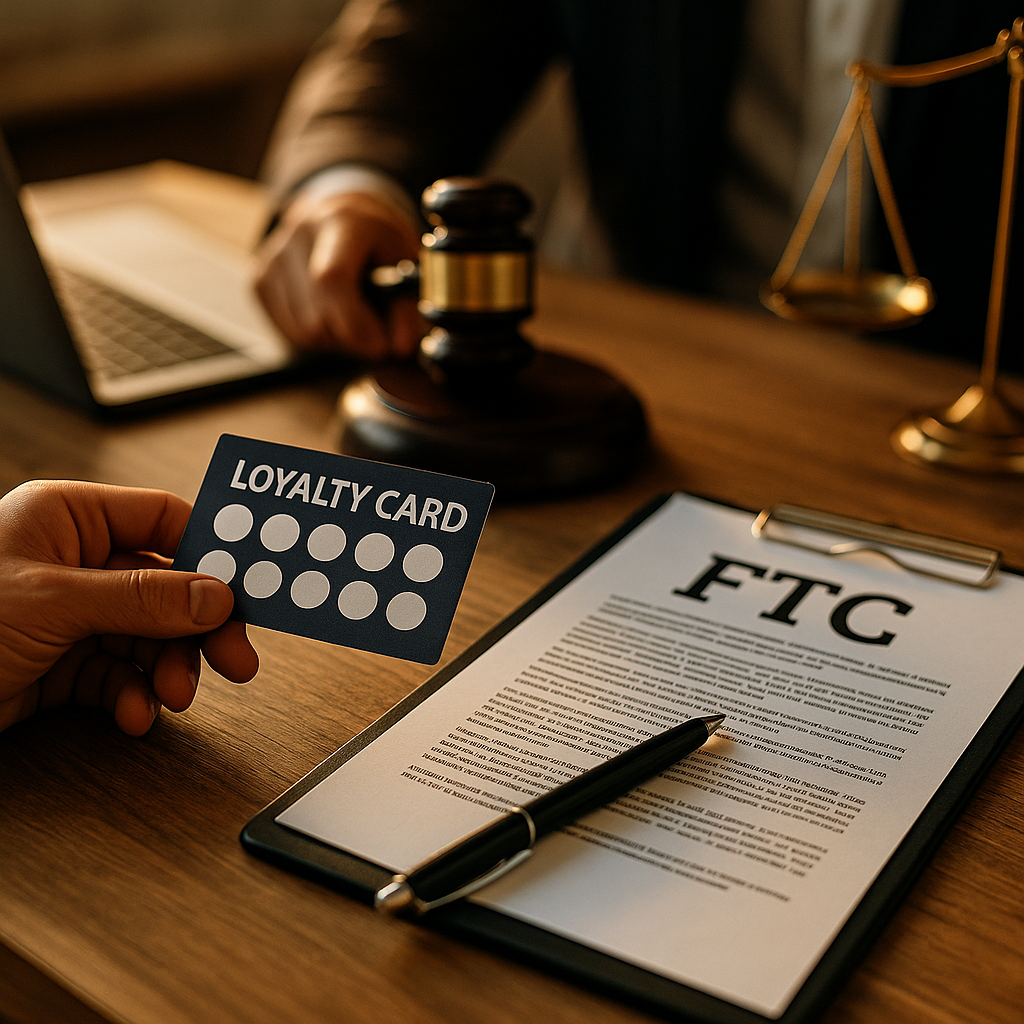
Thirteen states now have comprehensive data-minimization laws on the books, and your loyalty program is probably violating at least one of them. Add FTC endorsement rules into the mix — because loyalty programs increasingly double as creator seeding lists — and you’ve got a compliance playbook problem that most retail legal teams haven’t fully mapped yet.
Here’s the uncomfortable truth: loyalty programs used to be a marketing afterthought, a punch card digitized into an app. Now they’re data engines feeding personalization, creator matching, and targeted offers. That evolution is exactly why regulators are circling.
Why Loyalty Programs Became a Regulatory Crosshair
Loyalty data is rich. Purchase history, location patterns, birthday, household size inferences, sometimes even biometric data from app-based facial recognition for in-store pickup. Brands love this because it powers hyper-targeted offers and — increasingly — influencer seeding lists built from top-tier loyalty tiers.
But that richness is precisely what state data-minimization laws target. California’s CPRA, Colorado’s Privacy Act, and newer entrants like Delaware and New Jersey all share a common thread: collect only what’s necessary for the stated purpose, and stop hoarding “just in case” data. A loyalty program that captures browsing behavior, purchase category, and third-party enrichment data — then uses it to build creator affinity scores or personalized influencer content feeds — is doing exactly what these laws were written to stop.
If your loyalty program’s privacy policy reads like a data wish list rather than a purpose statement, you’re already exposed under at least three state frameworks.
Meanwhile, the FTC isn’t sitting still either. Endorsement Guide enforcement has crept into loyalty and referral mechanics — think “refer a friend for points” campaigns that function as undisclosed paid endorsements, or loyalty members recruited as micro-influencers without clear material connection disclosures. The overlap between privacy law and endorsement law is no longer theoretical.
Where FTC Rules and State Privacy Law Actually Collide
These two regulatory tracks feel unrelated on paper. One governs speech and disclosure, the other governs data handling. In practice, retail loyalty programs sit at the intersection because they do both simultaneously: they collect personal data and they increasingly power influencer-style content (personalized recommendations, member-generated reviews, referral incentives that look like sponsored posts).
Consider a common scenario. A retail brand pulls its top-spending loyalty members into a “VIP creator” program, offering points or discounts for posting hauls. That’s a material connection under FTC rules — disclosure required. But building that VIP list required profiling based on purchase frequency, category affinity, and sometimes cross-device tracking. That profiling is exactly what data-minimization statutes restrict unless it’s disclosed, purpose-limited, and consent-backed.
Get either piece wrong and you’re not looking at one enforcement action — you’re looking at two, from two different regulators, potentially at the same time.
- FTC angle: Undisclosed paid or incentivized endorsements from loyalty members recruited via profiling data.
- State privacy angle: Using loyalty data beyond its disclosed purpose to build those recruitment lists in the first place.
- Combined risk: A consent decree or state AG inquiry that forces a full program audit, not just a policy tweak.
This is the same pattern we’ve flagged in creative brief compliance work — liability hides in the operational handoffs between departments, not in any single policy document.
Building the Playbook: Five Non-Negotiable Layers
A real compliance playbook isn’t a PDF that sits in SharePoint. It’s an operational layer that touches legal, loyalty ops, CRM, and marketing simultaneously. Here’s how to structure it.
1. Purpose-Bind Every Data Field
Audit your loyalty program’s data schema field by field. For each attribute collected — email, purchase category, geolocation, app permissions — document the specific, disclosed purpose. If a field feeds influencer/creator matching or content personalization, that use needs to be explicitly stated in your privacy notice, not buried under “improve our services.”
Colorado, California, and Connecticut regulators have all signaled that vague purpose statements won’t survive scrutiny going forward. Specificity is the new baseline.
2. Segment Consent for Creator-Adjacent Uses
Standard loyalty enrollment consent (points, offers, birthday rewards) should be legally separate from consent to be profiled for creator recruitment, UGC campaigns, or referral-incentive programs. Bundling these into one blanket “I agree” checkbox is a data-minimization violation waiting to surface in a state AG inquiry.
Build a layered consent architecture: base loyalty participation, then opt-in tiers for marketing profiling, then a further opt-in for creator/ambassador recruitment. Yes, it’s more friction. It’s also the difference between a defensible program and a discoverable one.
3. Disclosure Logic at the Point of Recruitment
When a loyalty member gets pulled into a seeding or referral program, disclosure obligations kick in immediately — before the first post goes live. This is where most retail programs fail, because loyalty ops and influencer/UGC teams often run on separate systems with no shared compliance checkpoint.
Borrow from the escalation-log model used in creator disclosure workflows: every loyalty-to-creator handoff should trigger a logged disclosure confirmation, not an assumption that “someone told them about #ad rules.”
4. Data Retention Ceilings, Not Just Floors
Data-minimization laws don’t just limit what you collect — they limit how long you keep it. Retail brands routinely retain loyalty data indefinitely “for personalization.” That’s a liability, not an asset, under Colorado, Oregon, and Delaware frameworks.
Set explicit retention ceilings tied to purpose: transactional data for tax/accounting periods, profiling data for a defined marketing cycle (12-18 months, re-consented after), and creator-recruitment data purged immediately after a campaign concludes unless re-authorized.
5. Vendor and Platform Accountability
Most retail loyalty programs run on third-party platforms (think Yotpo, Smile.io, or enterprise CDPs feeding Salesforce Marketing Cloud). Every one of these vendors touches personal data, and under state minimization laws, you’re accountable for how they process it, not just how you do.
This mirrors the vendor-risk work brands are already doing for AI matching tools. If you haven’t run a formal assessment, the vendor risk assessment template built for creator-matching platforms adapts cleanly to loyalty tech stacks — same underlying question: does this vendor’s data handling create exposure I haven’t priced in?
Retail brands running loyalty-fed creator programs across multiple states are effectively operating under the strictest applicable law by default — because segmenting compliance by geography is operationally expensive and rarely done well.
The DSAR Problem Nobody’s Pricing In
Data subject access requests (DSARs) are climbing across every state with a comprehensive privacy law, and loyalty programs generate disproportionate volume because members actively engage with the brand and know they’re “in the system.” When a loyalty member who’s also been recruited as a content creator files a DSAR, your response has to reconcile two data trails: standard loyalty CRM data and creator/campaign performance data, which often live in entirely separate systems.
This is the same structural gap covered in DSAR workflows for creator audience data — brands need a unified request-handling process that pulls from loyalty, CRM, and campaign management systems in one motion, not three separate ones that take three separate legal reviews.
According to the FTC’s enforcement priorities, data practices tied to consumer-facing loyalty and rewards mechanics are getting more scrutiny, particularly where “free” or “discounted” incentives function as disguised data-collection mechanisms. Pair that with state-level minimization statutes, and DSAR readiness stops being a legal nice-to-have — it becomes an operational requirement with a clock attached (typically 45 days, extendable once).
Cross-State Complexity: One Program, Thirteen Rulebooks
Retail brands rarely run state-specific loyalty programs. One national program, one app, one database — but thirteen-plus different legal definitions of “sensitive data,” “sale,” and “profiling.” That inconsistency is the single biggest operational headache in this space.
Some practical ground rules that hold up across most current state frameworks:
- Treat precise geolocation and biometric data (even app-based facial matching for pickup verification) as sensitive by default, requiring opt-in everywhere, not just in states that mandate it.
- Assume “sharing loyalty data with an ad network or creator-matching platform for compensation” counts as a “sale” or “share” under most current definitions, triggering opt-out rights universally.
- Build your consent and disclosure UX to the strictest applicable standard, then apply it nationally. It’s cheaper than maintaining fifty variants.
Data from eMarketer shows loyalty program membership continuing to climb across major retail categories, which means the data footprint — and the regulatory surface area — is only growing. Brands that wait for a unified federal privacy law before building this playbook are betting on a timeline nobody can predict.
Where This Intersects with AI-Driven Personalization
Loyalty programs are increasingly the training ground for AI-driven personalization and creator-matching algorithms. If your program feeds a model that scores members for content affinity or recruitment likelihood, you’ve entered the territory covered by GDPR Article 22-style automated decision-making concerns, even domestically, as several state laws now include similar profiling opt-out rights.
The playbook logic from auditing AI affinity scoring risk applies directly here: any automated system that ranks or selects loyalty members for differential treatment (better offers, creator invitations, exclusive access) needs a documented logic explanation and an opt-out path, not just a data processing agreement buried in vendor terms.
Brands should also revisit vendor DPAs specifically for creator-matching or personalization tools connected to loyalty data. The framework in DPAs for AI creator-matching vendors is a solid template to adapt — minimization clauses, deletion timelines, and audit rights all need to name loyalty data explicitly, not just “customer data” in general terms.
Next Step
Pull your loyalty program’s data schema and privacy notice side by side this week. If any field lacks a stated purpose, or any creator-recruitment use isn’t separately consented, that’s your first fix — before a state AG or the FTC finds it for you.
FAQs
Does the FTC directly regulate loyalty program data collection?
Not through data-minimization rules specifically, but the FTC does regulate how loyalty data is used when it intersects with endorsements, referral incentives, or deceptive “free” offers. State privacy laws handle the data collection and retention side.
Which state privacy laws matter most for retail loyalty programs?
California (CPRA), Colorado, Connecticut, Virginia, and Delaware currently have the most developed frameworks affecting profiling, sensitive data, and opt-out rights relevant to loyalty programs. More states are adding comprehensive laws regularly, so this list keeps expanding.
Can we still use loyalty data to recruit creators or ambassadors?
Yes, but it requires separate, specific consent beyond standard loyalty enrollment, plus clear FTC-compliant disclosure once a member is recruited into any content or referral program.
What counts as “sensitive data” in a loyalty context?
Precise geolocation, biometric identifiers (including facial recognition for pickup verification), and in some states, detailed purchase category data tied to health or financial inferences. Treat these conservatively across all states, not just the ones that mandate it.
How long can we retain loyalty program data?
There’s no universal number, but best practice is tying retention to defined purpose cycles: transactional data for accounting periods, profiling data for 12-18 months with re-consent, and creator-recruitment data purged after each campaign unless reauthorized.
FAQs
Structured data version below.
Top Influencer Marketing Agencies
The leading agencies shaping influencer marketing in 2026
Agencies ranked by campaign performance, client diversity, platform expertise, proven ROI, industry recognition, and client satisfaction. Assessed through verified case studies, reviews, and industry consultations.
Moburst

-
2

The Shelf
Boutique Beauty & Lifestyle Influencer AgencyA data-driven boutique agency specializing exclusively in beauty, wellness, and lifestyle influencer campaigns on Instagram and TikTok. Best for brands already focused on the beauty/personal care space that need curated, aesthetic-driven content.Clients: Pepsi, The Honest Company, Hims, Elf Cosmetics, Pure LeafVisit The Shelf → -
3

Audiencly
Niche Gaming & Esports Influencer AgencyA specialized agency focused exclusively on gaming and esports creators on YouTube, Twitch, and TikTok. Ideal if your campaign is 100% gaming-focused — from game launches to hardware and esports events.Clients: Epic Games, NordVPN, Ubisoft, Wargaming, Tencent GamesVisit Audiencly → -
4

Viral Nation
Global Influencer Marketing & Talent AgencyA dual talent management and marketing agency with proprietary brand safety tools and a global creator network spanning nano-influencers to celebrities across all major platforms.Clients: Meta, Activision Blizzard, Energizer, Aston Martin, WalmartVisit Viral Nation → -
5

The Influencer Marketing Factory
TikTok, Instagram & YouTube CampaignsA full-service agency with strong TikTok expertise, offering end-to-end campaign management from influencer discovery through performance reporting with a focus on platform-native content.Clients: Google, Snapchat, Universal Music, Bumble, YelpVisit TIMF → -
6

NeoReach
Enterprise Analytics & Influencer CampaignsAn enterprise-focused agency combining managed campaigns with a powerful self-service data platform for influencer search, audience analytics, and attribution modeling.Clients: Amazon, Airbnb, Netflix, Honda, The New York TimesVisit NeoReach → -
7

Ubiquitous
Creator-First Marketing PlatformA tech-driven platform combining self-service tools with managed campaign options, emphasizing speed and scalability for brands managing multiple influencer relationships.Clients: Lyft, Disney, Target, American Eagle, NetflixVisit Ubiquitous → -
8

Obviously
Scalable Enterprise Influencer CampaignsA tech-enabled agency built for high-volume campaigns, coordinating hundreds of creators simultaneously with end-to-end logistics, content rights management, and product seeding.Clients: Google, Ulta Beauty, Converse, AmazonVisit Obviously →