


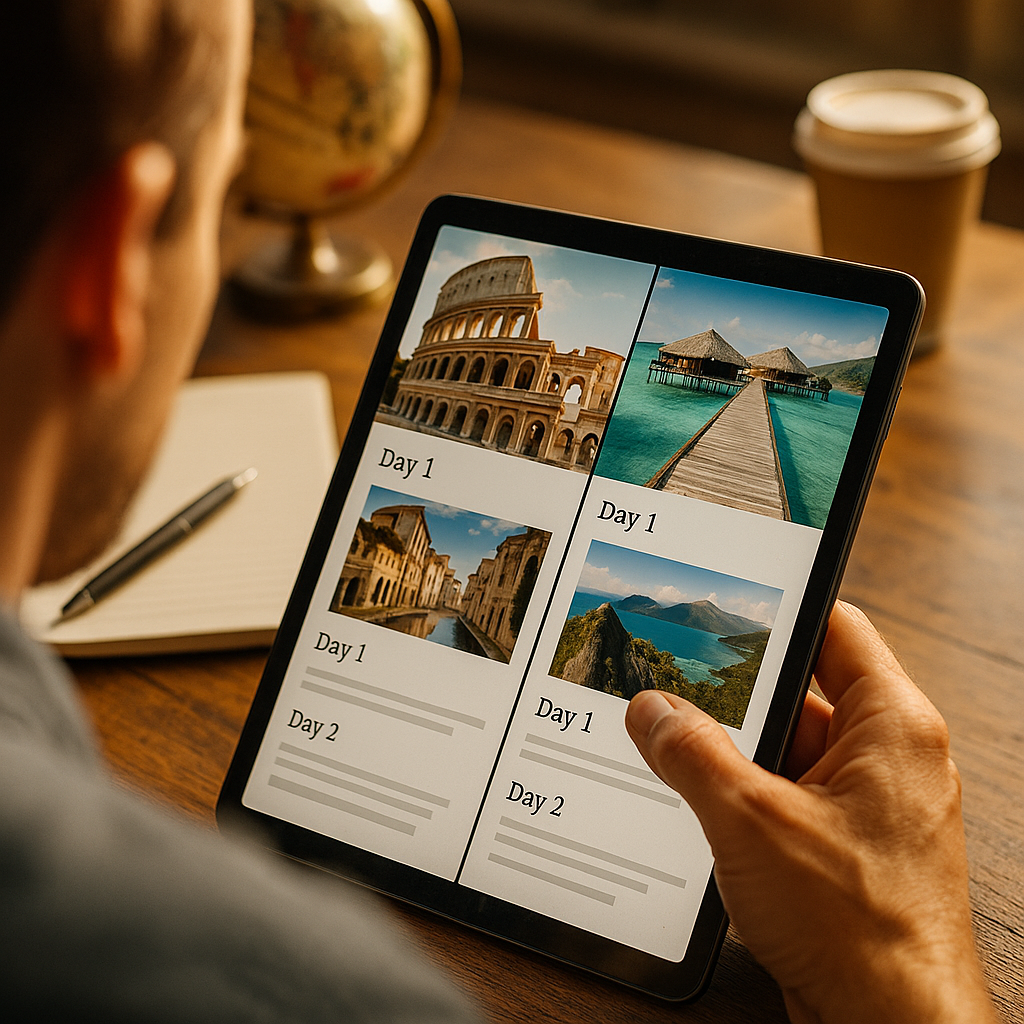
Travel creators posting single-destination content get watched. Travel creators posting “Bali vs. Bora Bora, which one actually wins” get bookings. The split-screen comparison format is quietly becoming the highest-converting structure in travel influencer marketing, and most brands still aren’t briefing for it. If your itinerary content isn’t forcing a choice, it isn’t forcing a decision.
Why Comparison Beats Aspiration
Aspirational travel content has a conversion problem nobody wants to say out loud. A creator standing on an infinity pool edge in Santorini generates saves, comments, and daydreaming. It rarely generates a booked flight. The content answers “wouldn’t this be nice?” instead of “which one should I actually pick?” And picking is the entire job of a travel marketer’s funnel.
Split-screen comparisons work because they mimic how travelers actually shop. Nobody books blind. They tab between two destinations, two hotels, two itineraries, weighing cost against experience. A creator who does that weighing on camera isn’t just entertaining — they’re doing the research the viewer was already going to do anyway, just faster and with better production value.
Comparison content doesn’t ask viewers to dream. It asks them to decide. That single shift in framing is why split-screen itinerary videos are outperforming standard destination reels on saves-to-click ratio across TikTok and Instagram Reels.
What the Format Actually Looks Like
The mechanics are simple, which is exactly why they scale. A creator (or two creators, split-duet style) presents Itinerary A and Itinerary B side by side, usually structured around a shared constraint: same budget, same length of trip, same season, same traveler type (solo, couples, family). The split-screen edit — literal side-by-side visuals, or a rapid-cut “this vs. this” pacing — forces a direct comparison the viewer can’t scroll past without picking a side.
- Same-budget showdown: $2,000 for a week in Lisbon vs. $2,000 for a week in Mexico City. Flights, hotels, food, activities, all itemized on screen.
- Same-destination, different pace: Slow-travel Kyoto vs. packed-itinerary Kyoto. Useful for destinations where booking hesitation comes from “how much can I actually see,” not “where should I go.”
- Resort vs. independent booking: All-inclusive Riviera Maya vs. self-planned Airbnb-and-rental-car version. This one converts hard for OTAs and booking platforms because it surfaces the value argument directly.
- Shoulder season vs. peak season: Same destination, split by timing, with price and crowd-level as the deciding variables.
Notice what’s absent: neither side is a strawman. Weak “vs.” content fails when one option is obviously worse, because viewers smell the setup and disengage. The format only works when both itineraries are genuinely defensible. That tension is what keeps people watching to the end card, and the end card is where the booking link lives.
Briefing for Conversion, Not Just Watch Time
This is where most brand briefs fall apart. Marketing teams hand creators a destination, a hashtag, and a vague ask for “authentic content,” then wonder why views don’t translate to bookings. A split-screen brief needs more scaffolding than that, precisely because the format’s power comes from structured tension, not improvisation.
A brief that actually converts should specify:
- The shared constraint. Budget, dates, traveler profile, or trip length has to be fixed so the comparison feels fair. Unfair comparisons read as ads. Fair ones read as research.
- The scoring criteria, on screen. Cost, flight time, weather risk, walkability, food scene, nightlife, family-friendliness, whatever matters to the target segment. Creators should tally a visible scorecard, not just vibe it out.
- A genuine winner, chosen by the creator. Brands that insist on a rigged outcome kill trust instantly. Let the creator’s honest pick stand, even if it’s not the brand’s preferred destination, as long as both sides are brand-relevant.
- A CTA tied to the losing side too. This is the conversion trick most brands miss. If Lisbon wins, don’t just link Lisbon packages. Link both, with framing like “still curious about Mexico City? Here’s that itinerary too.” You capture demand on both branches of the decision tree.
This structural rigor is the same discipline that makes split-decision videos work in other verticals — give the creator a real choice to adjudicate, and the audience leans in because the outcome isn’t predetermined.
The Booking Math Behind the Format
Travel intent is famously slow to convert, and marketers who’ve run performance campaigns against Skyscanner or Google Flights data know the research-to-book window can stretch two to six weeks for leisure travel. Comparison content compresses that window because it does the comparison-shopping work upfront, publicly, and with a recognizable creator’s judgment attached.
Per eMarketer, short-form video now influences a majority of travel purchase decisions among travelers under 40, and destination-comparison content specifically drives higher save rates than single-destination showcases. Saves matter here more than likes: a saved video is a video the viewer intends to revisit at the exact moment they’re ready to book, which is why the CTA and link-in-bio structure matters so much more for this format than for pure top-of-funnel awareness content.
A split-screen comparison doesn’t just capture attention once. It gets saved, reopened, and referenced during the actual booking session, days or weeks later. Design the CTA for that second viewing, not just the first.
That means link-in-bio hubs need both itineraries live, priced, and bookable, not just the “winning” one. Brands running affiliate or OTA partnerships should push for dual tracking links so performance data reveals which destination actually converts, regardless of which one the creator crowned the winner on camera. Sometimes the “losing” itinerary quietly outsells the winner because it matches more viewers’ actual budgets.
Where This Format Breaks (and How to Fix It)
Split-screen comparisons fail in a few predictable ways. Worth naming them before you brief your first one.
The comparison feels rigged. If sponsorship only covers Destination A, and Destination B is included purely as a punching bag, audiences catch on fast. Fix: either pay for balanced production on both sides, or be transparent that one side is sponsored and let the creator caveat it honestly. Disclosure isn’t optional here — the FTC’s endorsement guidance applies fully to comparison content, and vague “sponsored by” tags won’t cut it if the format implies neutral judgment.
The metrics are cherry-picked. If the creator claims Destination A is “cheaper” but only counts flights and ignores that its hotels run 40% higher, sharp-eyed viewers will call it out in comments — and comment-section credibility damage on travel content is brutal because travel audiences fact-check obsessively.
The format gets stale fast. Two straight “this vs. that” videos from the same creator feel formulaic. Rotate structure: sometimes a duet-style split screen, sometimes a single creator narrating both trips from footage shot on both, sometimes a live audience poll mid-video (Instagram’s poll sticker works well for this on Stories-native cuts).
For brands running multiple creators against the same comparison concept, treat it like the hybrid content briefs approach: give creators a consistent skeleton but let format details flex per platform and per creator’s natural style. A rigid template applied identically across ten creators reads as an ad campaign, not organic comparison content.
Measuring What Actually Matters
Standard influencer KPIs undersell this format. Views and engagement rate tell you the content was watchable. They don’t tell you whether it moved a booking decision. Track instead:
- Save-to-view ratio as an intent signal, since this format is built for revisit behavior.
- Split-link click distribution to see which itinerary actually pulled traffic, regardless of the on-camera “winner.”
- Time-lag to conversion via affiliate or promo code tracking, since travel bookings rarely happen same-session.
- Comment sentiment on the comparison logic itself — are viewers debating the creator’s scoring, adding their own data points, tagging travel partners? That’s the strongest qualitative signal the format built real consideration, not just watch time.
Platforms like Sprout Social and native analytics suites can surface save and share data reliably, but the affiliate-link split is where most brands need custom UTM setups rather than relying on platform-reported clicks alone. If your measurement stack can’t distinguish clicks to Itinerary A from clicks to Itinerary B, you’re flying blind on the exact insight the format was built to generate.
It’s also worth benchmarking this format against adjacent high-conversion structures your team may already be running. The split-personality video format builds trust through internal contrast; split-screen itinerary comparisons build trust through external contrast. Both rely on the same underlying principle: viewers trust conclusions they watch someone else reach, more than conclusions handed to them pre-packaged.
Start small: brief one creator on a same-budget, two-destination comparison with a visible scorecard and dual booking links, then measure which side actually converts before scaling the format across your roster. The data will tell you more about your audience’s real price sensitivity than six months of standard destination content ever could.
FAQs
What is the split-screen comparison format in travel influencer marketing?
It’s a content structure where a creator directly compares two travel itineraries, destinations, or booking options side by side, using a shared constraint like budget or trip length, to help viewers decide between them rather than simply admire one destination.
Why does comparison content convert better than standard destination videos?
It mirrors real traveler research behavior. Most people compare options before booking, so content that does that comparison publicly and credibly shortens the decision process and earns higher save-to-view ratios, which correlate with delayed but real booking intent.
How do you keep a split-screen comparison from looking like a rigged ad?
Both itineraries need to be genuinely defensible, the creator’s winning pick should be their honest call rather than the brand’s preference, and any sponsorship on one side needs clear disclosure per FTC endorsement guidelines.
Should the brand pick which itinerary wins?
No. Letting the creator reach their own conclusion, based on a visible scorecard of criteria like cost, weather, and walkability, is what makes the format credible. Brands should instead make sure both itineraries have live booking links, since the “losing” option often still converts.
What metrics should brands track for this format beyond views?
Save-to-view ratio, click distribution across both itinerary links, time-lag to conversion via affiliate tracking, and comment sentiment on the comparison logic itself are all stronger indicators of booking impact than raw engagement numbers.
Top Influencer Marketing Agencies
The leading agencies shaping influencer marketing in 2026
Agencies ranked by campaign performance, client diversity, platform expertise, proven ROI, industry recognition, and client satisfaction. Assessed through verified case studies, reviews, and industry consultations.
Moburst

-
2

The Shelf
Boutique Beauty & Lifestyle Influencer AgencyA data-driven boutique agency specializing exclusively in beauty, wellness, and lifestyle influencer campaigns on Instagram and TikTok. Best for brands already focused on the beauty/personal care space that need curated, aesthetic-driven content.Clients: Pepsi, The Honest Company, Hims, Elf Cosmetics, Pure LeafVisit The Shelf → -
3

Audiencly
Niche Gaming & Esports Influencer AgencyA specialized agency focused exclusively on gaming and esports creators on YouTube, Twitch, and TikTok. Ideal if your campaign is 100% gaming-focused — from game launches to hardware and esports events.Clients: Epic Games, NordVPN, Ubisoft, Wargaming, Tencent GamesVisit Audiencly → -
4

Viral Nation
Global Influencer Marketing & Talent AgencyA dual talent management and marketing agency with proprietary brand safety tools and a global creator network spanning nano-influencers to celebrities across all major platforms.Clients: Meta, Activision Blizzard, Energizer, Aston Martin, WalmartVisit Viral Nation → -
5

The Influencer Marketing Factory
TikTok, Instagram & YouTube CampaignsA full-service agency with strong TikTok expertise, offering end-to-end campaign management from influencer discovery through performance reporting with a focus on platform-native content.Clients: Google, Snapchat, Universal Music, Bumble, YelpVisit TIMF → -
6

NeoReach
Enterprise Analytics & Influencer CampaignsAn enterprise-focused agency combining managed campaigns with a powerful self-service data platform for influencer search, audience analytics, and attribution modeling.Clients: Amazon, Airbnb, Netflix, Honda, The New York TimesVisit NeoReach → -
7

Ubiquitous
Creator-First Marketing PlatformA tech-driven platform combining self-service tools with managed campaign options, emphasizing speed and scalability for brands managing multiple influencer relationships.Clients: Lyft, Disney, Target, American Eagle, NetflixVisit Ubiquitous → -
8

Obviously
Scalable Enterprise Influencer CampaignsA tech-enabled agency built for high-volume campaigns, coordinating hundreds of creators simultaneously with end-to-end logistics, content rights management, and product seeding.Clients: Google, Ulta Beauty, Converse, AmazonVisit Obviously →