


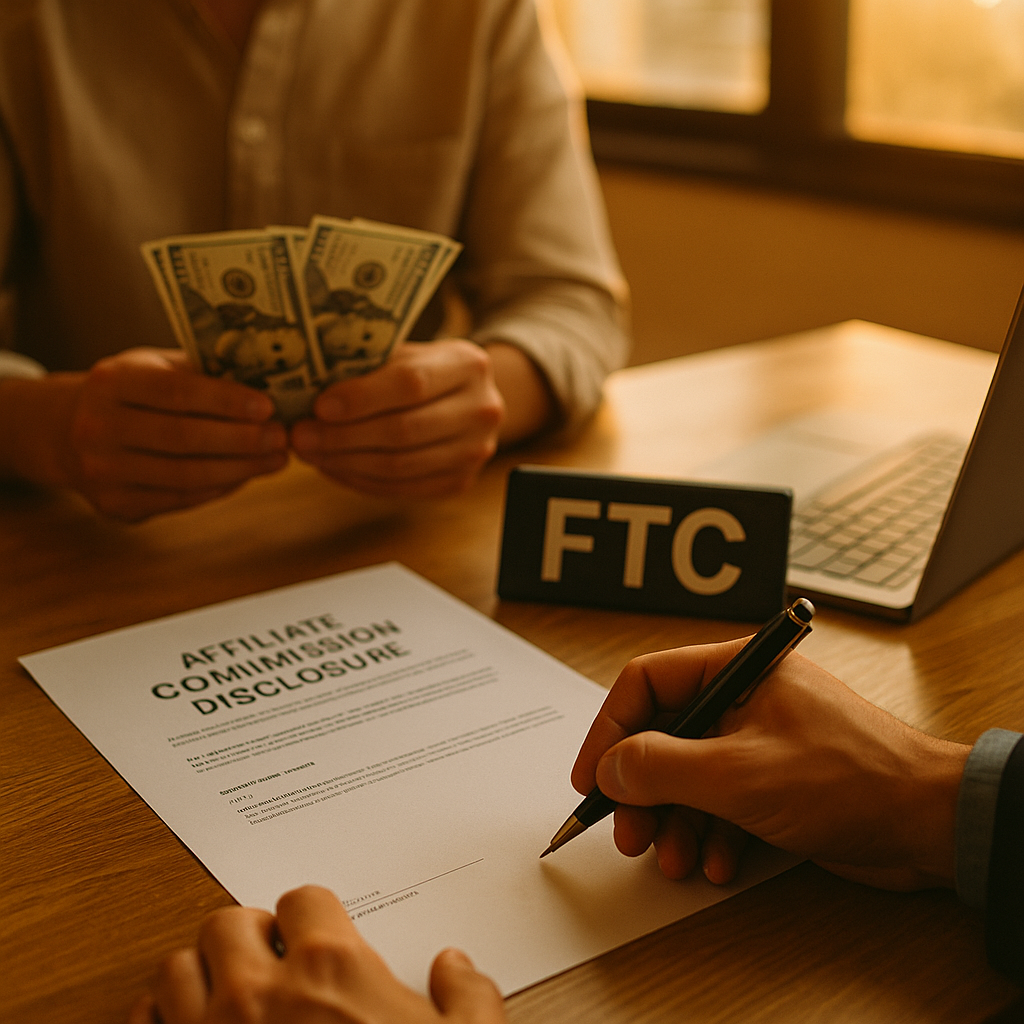
$3 million. That’s what Handy Technologies agreed to pay the FTC over deceptive fee practices that, on the surface, had nothing to do with influencer marketing. But look closer at the legal theory behind the settlement, and every brand running a creator affiliate program should be nervous. The FTC Handy Technologies deceptive-fee settlement isn’t really about a gig-work app. It’s a preview of how regulators will treat vague or buried compensation disclosures across the entire creator economy.
What the Handy Technologies Case Actually Said
Handy Technologies, a home services marketplace, got hit for charging workers and consumers fees that weren’t clearly disclosed at the point of transaction. The FTC’s complaint centered on a familiar pattern: technically-true statements that obscured the real cost structure, presented in ways designed to be skimmed past rather than read. Handy didn’t lie outright. It just made sure people wouldn’t notice the fine print until it was too late.
Sound familiar? It should. Substitute “worker fees” for “affiliate commission structure” and you’ve got the exact pattern the FTC has been circling in influencer marketing for years.
The Commission’s reasoning leaned heavily on its long-standing “clear and conspicuous” standard, the same standard that governs FTC endorsement guidance for sponsored content. Disclosures buried in a terms-of-service page, written in jargon, or displayed in tiny gray text against a white background don’t count as disclosed. The agency has said this about interest rates, subscription cancellations, and now gig-worker pay. Creator affiliate commissions are next in line.
If a disclosure requires a magnifying glass or a law degree to understand, the FTC will treat it as no disclosure at all.
Why Affiliate Commission Language Is the Next Target
Here’s the uncomfortable truth: most brands treat affiliate disclosure as a hashtag problem. Slap on #ad, maybe #affiliate, and move on. But the Handy precedent extends the analysis beyond whether a relationship was disclosed to whether the financial mechanics of that relationship were disclosed in a way consumers could actually parse.
Think about how creator affiliate commissions typically work. A creator promotes a supplement brand, drops a discount code, and earns a percentage of every sale. Standard stuff. But does the audience know the code triggers a 20% commission? Do they know the “discount” might be smaller than a code with no attached commission? Do they understand that the creator’s enthusiasm might be shaped by a tiered commission structure that pays more once they hit certain sales thresholds?
Almost never. And that’s precisely the gap the FTC exploited in Handy: consumers assumed one pricing reality while a hidden fee structure created a different one entirely.
Compare this to the ongoing scrutiny around creator discount codes and deceptive-pricing risk, where the concern is whether “discounts” are real or inflated before the markdown. The Handy case adds a second layer: even if the discount is real, is the compensation mechanism behind it disclosed clearly enough for a reasonable consumer to evaluate the creator’s incentive?
The Legal Gap Between “Disclosed” and “Clear and Conspicuous”
Most brand legal teams will tell you their affiliate program is compliant because creators disclose the relationship. Technically true. Practically insufficient.
The FTC’s clear-and-conspicuous standard has four components that matter here: proximity, prominence, comprehensibility, and consistency across platforms and formats. Handy failed on comprehensibility, its fee disclosures existed but required interpretation most users wouldn’t attempt. Translate that to affiliate marketing:
- Proximity: Is the commission disclosure near the affiliate link itself, or buried three scrolls down in a caption?
- Prominence: Is it visually distinguishable, or does it blend into a wall of hashtags?
- Comprehensibility: Would a teenager or a non-marketer understand what “affiliate link” or “I earn commission” actually means in dollar terms?
- Consistency: Is the same disclosure standard applied across TikTok, Instagram, YouTube, and livestream formats, or does it vary by platform convenience?
Most brand disclosure templates fail at least two of these four tests. That’s the exposure the Handy settlement puts into sharp relief.
What “Clear and Conspicuous” Should Mean for Commission Disclosures
So what does a defensible disclosure actually look like post-Handy? Legal teams should stop treating “affiliate link” as a magic phrase that satisfies FTC scrutiny on its own. It doesn’t, and the Commission has said as much repeatedly in guidance documents.
A stronger standard borrows directly from the Handy remedy structure, which required Handy to disclose fees in plain language, at the point of decision, without requiring users to click through additional screens. Applied to creator commissions, that means:
- Disclosure language appears in the caption or on-screen text, not just in a linked bio or hashtag.
- The nature of the compensation is named specifically: “I earn a commission on sales through this link” beats a bare “#affiliate” tag.
- Disclosure timing matches the moment of persuasion, not after it. If the creator is pitching in the first 15 seconds of a video, the disclosure needs to appear there too.
- Tiered or bonus-based commission structures that create escalating incentives get flagged internally, even if not always disclosed publicly, so brands can assess reputational and legal risk before a campaign scales.
This isn’t just about compliance theater. Sprout Social and other platforms have documented shifts in audience trust metrics tied to perceived transparency, meaning clearer disclosure can actually perform better, not worse, with modern audiences who are increasingly skeptical of undisclosed sponsorships anyway.
Where Brands Are Still Exposed
Three structural gaps keep showing up in brand affiliate programs, and each one maps directly onto the Handy fact pattern.
First: platform-default disclosure tools aren’t enough. TikTok’s and Instagram’s built-in “Paid Partnership” tags satisfy the relationship-disclosure requirement but say nothing about commission structure or discount code mechanics. Brands relying solely on platform tools are one regulatory update away from a compliance gap, similar to issues raised in the cross-platform ad disclosure matrix for creator content.
Second: tiered commission structures create undisclosed incentive escalation. If a creator’s payout jumps from 10% to 25% after hitting a sales threshold, that shift can change how aggressively they push a product, sometimes mid-campaign, without any corresponding update to disclosure language. Brands rarely build contract clauses that require re-disclosure when commission tiers change.
Third: auto-renewing codes and subscription-linked commissions compound the risk. When affiliate codes trigger recurring subscription enrollments, the FTC’s deceptive-pricing framework and its disclosure framework collide. This is already a documented pain point covered in FTC deceptive-pricing rules and auto-renewing discount codes, and Handy adds another enforcement precedent brands can expect regulators to cite together.
A commission structure that escalates without a corresponding disclosure update is functionally the same violation the FTC penalized Handy for: consumers making decisions based on incomplete financial information.
Building a Defensible Disclosure Framework Now
Waiting for an FTC inquiry letter is not a strategy. Here’s what forward-looking brand and legal teams are already doing:
- Audit existing affiliate contracts for commission tier structures and confirm disclosure language updates automatically when tiers change. This connects directly to broader contract review processes, similar to the audit rights outlined in right-to-audit clauses for whitelisting deals.
- Standardize disclosure copy across creators rather than letting each creator write their own version. Provide pre-approved language templates that name the commission relationship explicitly.
- Require in-content disclosure, not just caption or bio placement, for video-first platforms where viewers rarely read captions.
- Build an internal escalation path for flagged disclosure gaps before they become public complaints or regulatory referrals, mirroring the process laid out in the escalation protocol for undisclosed sponsorships.
- Train creators on commission transparency the same way brands train on FTC endorsement basics, treating fee disclosure as a distinct compliance category, not a subset of general sponsorship disclosure.
None of this requires reinventing the wheel. It requires treating commission disclosure as its own compliance category rather than an afterthought bundled into general sponsorship rules. Marketing teams that get ahead of this now will have a defensible paper trail if regulators come asking. Teams that wait will be explaining, after the fact, why their disclosure language looked a lot like Handy’s fee structure.
Visible FAQs
What did the FTC actually find in the Handy Technologies case?
The FTC found that Handy Technologies charged fees to workers and consumers that weren’t disclosed clearly enough to meet the “clear and conspicuous” standard, even though disclosures technically existed somewhere in the user flow.
How does this settlement apply to influencer marketing if Handy isn’t a marketing company?
The legal theory, not the industry, is what matters. The FTC’s reasoning about hidden fees and buried disclosures applies equally to any business model, including creator affiliate commissions, where compensation structures shape consumer decisions but aren’t clearly explained.
Is a simple #affiliate hashtag enough to disclose commission structures?
Generally, no. A hashtag discloses the existence of a relationship but doesn’t explain the commission mechanics, tiered incentives, or how that relationship might affect the creator’s recommendation. Regulators expect disclosure that a reasonable consumer can actually understand.
Do tiered commission structures need special disclosure treatment?
Yes. When a creator’s payout increases after hitting sales thresholds, that escalation can change their promotional behavior mid-campaign. Brands should build contract clauses requiring disclosure updates whenever commission tiers shift.
What’s the fastest way for a brand to reduce exposure right now?
Audit current affiliate contracts and disclosure templates against the four-part clear-and-conspicuous test: proximity, prominence, comprehensibility, and consistency across platforms. Fix gaps before scaling any campaign further.
FAQs
Don’t wait for an FTC letter to test your disclosure language. Pull your top five affiliate contracts this week, run them through the proximity-prominence-comprehensibility-consistency test, and fix what fails before your next campaign launches.
Top Influencer Marketing Agencies
The leading agencies shaping influencer marketing in 2026
Agencies ranked by campaign performance, client diversity, platform expertise, proven ROI, industry recognition, and client satisfaction. Assessed through verified case studies, reviews, and industry consultations.
Moburst

-
2

The Shelf
Boutique Beauty & Lifestyle Influencer AgencyA data-driven boutique agency specializing exclusively in beauty, wellness, and lifestyle influencer campaigns on Instagram and TikTok. Best for brands already focused on the beauty/personal care space that need curated, aesthetic-driven content.Clients: Pepsi, The Honest Company, Hims, Elf Cosmetics, Pure LeafVisit The Shelf → -
3

Audiencly
Niche Gaming & Esports Influencer AgencyA specialized agency focused exclusively on gaming and esports creators on YouTube, Twitch, and TikTok. Ideal if your campaign is 100% gaming-focused — from game launches to hardware and esports events.Clients: Epic Games, NordVPN, Ubisoft, Wargaming, Tencent GamesVisit Audiencly → -
4

Viral Nation
Global Influencer Marketing & Talent AgencyA dual talent management and marketing agency with proprietary brand safety tools and a global creator network spanning nano-influencers to celebrities across all major platforms.Clients: Meta, Activision Blizzard, Energizer, Aston Martin, WalmartVisit Viral Nation → -
5

The Influencer Marketing Factory
TikTok, Instagram & YouTube CampaignsA full-service agency with strong TikTok expertise, offering end-to-end campaign management from influencer discovery through performance reporting with a focus on platform-native content.Clients: Google, Snapchat, Universal Music, Bumble, YelpVisit TIMF → -
6

NeoReach
Enterprise Analytics & Influencer CampaignsAn enterprise-focused agency combining managed campaigns with a powerful self-service data platform for influencer search, audience analytics, and attribution modeling.Clients: Amazon, Airbnb, Netflix, Honda, The New York TimesVisit NeoReach → -
7

Ubiquitous
Creator-First Marketing PlatformA tech-driven platform combining self-service tools with managed campaign options, emphasizing speed and scalability for brands managing multiple influencer relationships.Clients: Lyft, Disney, Target, American Eagle, NetflixVisit Ubiquitous → -
8

Obviously
Scalable Enterprise Influencer CampaignsA tech-enabled agency built for high-volume campaigns, coordinating hundreds of creators simultaneously with end-to-end logistics, content rights management, and product seeding.Clients: Google, Ulta Beauty, Converse, AmazonVisit Obviously →