


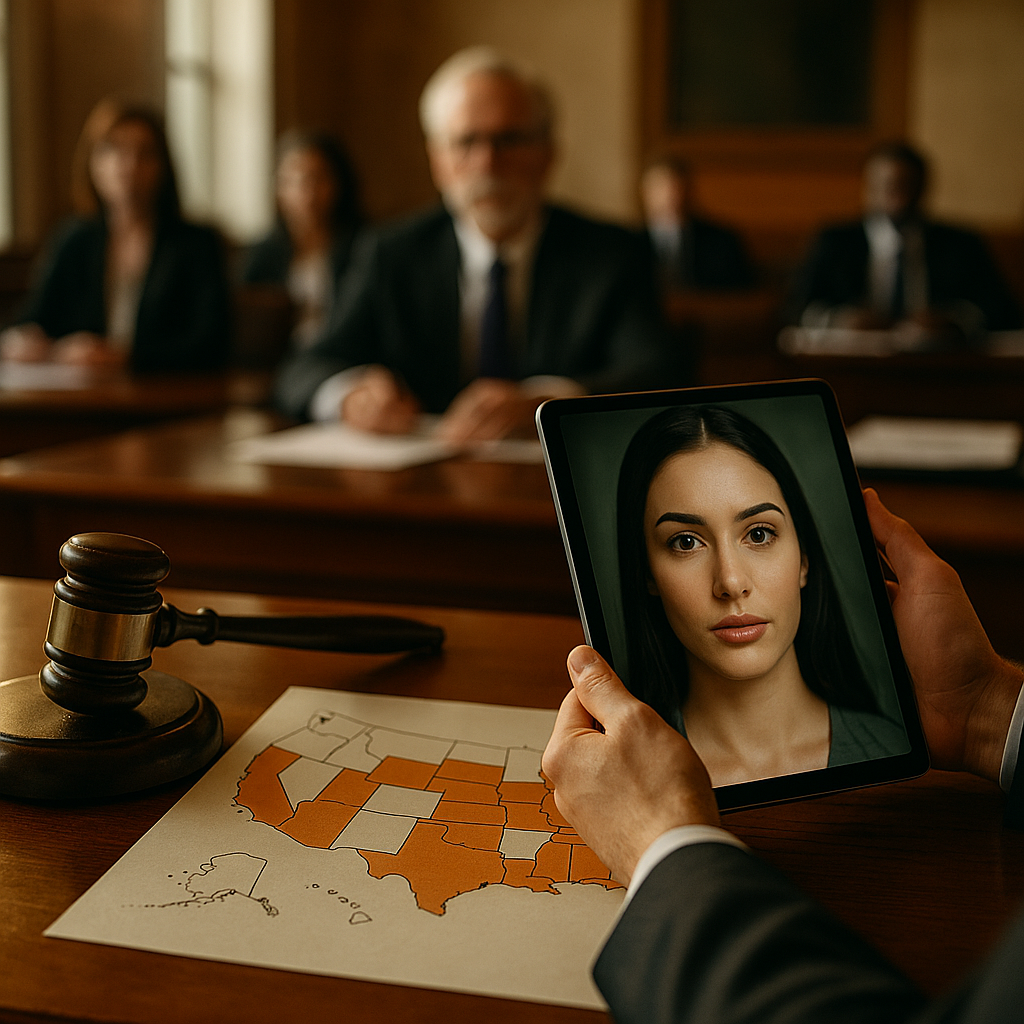
Twelve states now regulate synthetic performers in advertising. That number was three a year ago. If your legal team is still treating synthetic performer disclosure as a New York-only problem, you’re already behind — and the penalties in some copycat statutes exceed New York’s original framework by a wide margin.
This isn’t a niche compliance footnote anymore. AI-generated spokespeople, digital humans, and voice-cloned endorsers have moved from novelty to standard media buy. Brands running national campaigns now have to satisfy a patchwork of state rules that share a common ancestor but diverge in meaningful, expensive ways.
How We Got Here: New York’s Law as the Template
New York passed the first comprehensive synthetic performer disclosure statute, requiring clear and conspicuous labeling whenever an advertisement uses a digitally created or digitally altered performer that a reasonable consumer might mistake for a real human endorser. The law covers AI-generated avatars, deepfake-style face swaps onto real actors, and fully synthetic voice performances used in audio ads.
The statute’s core mechanics — a disclosure trigger based on “likelihood of consumer confusion,” a safe harbor for clearly stylized or cartoonish content, and civil penalties enforceable by the state attorney general — became the blueprint everyone else copied. That’s both good and bad news for brands. Good, because once you understand New York’s framework, you understand roughly 70% of every other state’s law. Bad, because the remaining 30% is where the real liability hides.
Compliance teams that assume “New York-compliant” means “nationally compliant” are making the same mistake brands made with FTC guidance before state attorneys general started issuing their own synthetic media rules.
The Copycat States: Same Spirit, Different Teeth
California, Illinois, Colorado, and Texas have all passed variations. A few more have bills moving through committee as of this year. The details matter more than the headlines suggest.
California’s version narrows the definition to “commercial advertisements” specifically, exempting political and editorial content, but it extends the disclosure requirement to influencer content where a brand has directed or approved the use of synthetic elements — even user-generated content. That’s a meaningfully broader net than New York’s law, which focuses on advertiser-originated content.
Illinois took a different tack. Its statute ties disclosure obligations to biometric data use, layering synthetic performer rules on top of the state’s already-aggressive Biometric Information Privacy Act. If your synthetic performer is trained on a real person’s likeness or voice without a separate consent record, you’re not just facing a disclosure violation — you’re facing a BIPA claim with statutory damages per violation, per person, per use.
Colorado’s law leans on its broader AI accountability framework, requiring not just disclosure but a documented risk assessment for any “high-impact” synthetic media use in consumer-facing advertising. Texas, characteristically, added narrower carve-outs for small businesses and a shorter compliance runway, but its penalty structure is steeper for repeat violations.
None of these laws are identical. All of them borrow language from New York. That combination is exactly what makes multi-state compliance so treacherous — familiar enough to breed overconfidence, different enough to create real exposure.
What Counts as a “Synthetic Performer,” Exactly?
This is where most brand teams get tripped up. The definitions aren’t uniform, and the gray zones are wide.
Most statutes cover: fully AI-generated avatars presented as endorsers, voice cloning of real or fictional people, digital de-aging or face-swapping of actors, and AI-composited performances that blend real footage with synthetic elements. Most statutes exclude: obvious animation or cartoon characters, clearly labeled virtual influencers with an established fictional persona (think Lil Miquela-style characters that have always been known as digital), and minor cosmetic touch-ups that don’t alter performance or likeness in a materially misleading way.
The murky middle is where brands live day to day. Is an AI-enhanced voiceover using a real actor’s cloned voice, with their consent, still a “synthetic performer” requiring disclosure? In New York, yes — consent affects your licensing exposure, not your disclosure obligation. In at least two copycat states, the answer depends on whether the audience could reasonably believe the performance was unaltered.
If your team is already managing AI-generated testimonials or endorsements, this overlaps directly with existing FTC obligations. Our guide on FTC AI testimonial rules covers the federal layer that sits underneath all of these state statutes — and it’s not going away just because states are legislating too.
Building One Compliance Framework, Not Twelve
Running separate legal reviews for each state doesn’t scale. Most brands buying national media can’t afford to fragment their creative approval process by jurisdiction. The smarter play is building a single internal standard calibrated to the strictest applicable rule, then documenting exceptions where looser state rules genuinely justify a different approach.
Here’s a practical framework we’re seeing legal and marketing ops teams adopt:
- Maintain a synthetic media registry. Every ad asset using AI-generated or AI-altered performers gets logged with production method, consent documentation, and the specific disclosure language applied.
- Default to the strictest disclosure standard. If Illinois requires biometric consent documentation and New York doesn’t, apply the Illinois standard everywhere. It’s cheaper than tracking which creative runs in which state.
- Build disclosure into the creative brief, not the legal review. Waiting until final approval to add a disclosure label creates rework. Bake the label placement and wording into the initial creative spec.
- Audit influencer and UGC content separately. California’s extension to influencer-directed content means your creator contracts need explicit synthetic media clauses, not just standard FTC disclosure language.
- Reassess quarterly. This is genuinely one of the fastest-moving areas of state legislation right now. A framework built for last quarter’s statute list will have gaps by the time your next campaign launches.
Teams already running structured audits for other disclosure categories can extend the same operational muscle here. If you’ve built a compliance audit framework for sponsorship disclosures, the synthetic performer registry is a natural extension — same logic, different trigger.
Contracts Are Where This Gets Real
Disclosure statutes don’t just create labeling obligations. They create contract risk. If a creator agency delivers an AI-voiced testimonial without flagging it as synthetic, and your brand runs it without disclosure, who’s liable? In most current statutes, the advertiser — meaning you — carries primary liability regardless of what the production vendor told you.
That makes vendor and creator contracts the actual front line of compliance, not the legal review that happens right before launch. Every production agreement involving AI tools, voice cloning, or digital performers should include affirmative disclosure warranties: a contractual promise that the vendor will flag synthetic elements and supply consent documentation for any cloned likeness or voice.
This is the same logic driving scrutiny of script control risk in influencer contracts more broadly. Whoever controls the creative process carries the compliance burden, and courts and state AGs are increasingly unsympathetic to “we didn’t know our vendor used AI” as a defense.
Recent industry data reinforces the urgency. eMarketer estimates AI-generated content in digital advertising is growing at a pace that outstrips most brands’ compliance infrastructure. Statista survey data on consumer trust shows a majority of respondents want clear labeling when ad content isn’t a real human — which suggests these statutes aren’t just legal risk, they’re a trust signal brands can turn into a competitive advantage if handled well.
The Federal Layer Isn’t Sitting This Out
State statutes get the attention, but the FTC has made clear it views synthetic endorsers through the same lens as any other misleading endorsement — deceptive if it misrepresents who or what is speaking. That means a synthetic performer ad can violate FTC guidance even in a state with no specific statute at all.
Brands running cross-border campaigns face an even more layered problem. The UK’s ICO and EU regulators are developing parallel frameworks for AI-generated advertising content, and the definitions don’t map cleanly onto U.S. state law. If your synthetic performer campaign runs in multiple countries, the state-by-state matrix is just one layer of a much bigger compliance stack — similar to the challenge outlined in our cross-border disclosure matrix for FTC, ASA, and DSA rules.
What This Means for Budget and Timeline
Legal review timelines are getting longer for any campaign involving AI-generated performers, and that’s not a temporary friction point — it’s the new baseline. Brands that build disclosure compliance into pre-production instead of post-production save real money. Reshoots to add missing disclosure labels, or worse, campaign pulls after an AG inquiry, cost far more than the incremental legal review time upfront.
Budget for a standing legal review cadence tied to your production calendar, not a one-time audit. Statutes are still being amended, and enforcement priorities shift as attorneys general staff up AI-specific units. Treat this the way you’d treat any live regulatory risk: continuously monitored, not periodically checked.
The bottom line: build your synthetic performer compliance program around the strictest state standard, document everything at the contract level, and revisit the framework every quarter — because the list of states modeling New York’s law isn’t finished growing.
Frequently Asked Questions
Which states currently have synthetic performer disclosure laws?
New York was first, followed by California, Illinois, Colorado, and Texas, with additional state bills moving through legislatures. Each law borrows core language from New York’s statute but differs in scope, penalties, and definitions.
Does synthetic performer disclosure apply to influencer and UGC content?
In most states, yes, if the brand directed or approved the synthetic elements. California’s statute explicitly extends coverage to influencer content, which is broader than New York’s advertiser-originated content standard.
Who is liable if a vendor fails to disclose AI-generated content?
The advertiser typically carries primary liability under these statutes, regardless of vendor representations. This makes contractual disclosure warranties with production vendors and creator agencies essential.
Are virtual influencers with established personas covered by these laws?
Generally no, if the character has always been presented as fictional or digital. The disclosure trigger in most statutes hinges on whether a reasonable consumer could mistake the performer for a real, unaltered human.
Does complying with New York’s law satisfy other states’ requirements?
Not automatically. New York’s framework covers a large share of common scenarios, but states like Illinois add biometric consent requirements and California extends coverage to influencer-directed content, creating gaps a New York-only compliance program won’t catch.
Frequently Asked Questions
Which states currently have synthetic performer disclosure laws?
New York was first, followed by California, Illinois, Colorado, and Texas, with additional state bills moving through legislatures. Each law borrows core language from New York’s statute but differs in scope, penalties, and definitions.
Does synthetic performer disclosure apply to influencer and UGC content?
In most states, yes, if the brand directed or approved the synthetic elements. California’s statute explicitly extends coverage to influencer content, which is broader than New York’s advertiser-originated content standard.
Who is liable if a vendor fails to disclose AI-generated content?
The advertiser typically carries primary liability under these statutes, regardless of vendor representations. This makes contractual disclosure warranties with production vendors and creator agencies essential.
Are virtual influencers with established personas covered by these laws?
Generally no, if the character has always been presented as fictional or digital. The disclosure trigger in most statutes hinges on whether a reasonable consumer could mistake the performer for a real, unaltered human.
Does complying with New York’s law satisfy other states’ requirements?
Not automatically. New York’s framework covers a large share of common scenarios, but states like Illinois add biometric consent requirements and California extends coverage to influencer-directed content, creating gaps a New York-only compliance program won’t catch.
Top Influencer Marketing Agencies
The leading agencies shaping influencer marketing in 2026
Agencies ranked by campaign performance, client diversity, platform expertise, proven ROI, industry recognition, and client satisfaction. Assessed through verified case studies, reviews, and industry consultations.
Moburst

-
2

The Shelf
Boutique Beauty & Lifestyle Influencer AgencyA data-driven boutique agency specializing exclusively in beauty, wellness, and lifestyle influencer campaigns on Instagram and TikTok. Best for brands already focused on the beauty/personal care space that need curated, aesthetic-driven content.Clients: Pepsi, The Honest Company, Hims, Elf Cosmetics, Pure LeafVisit The Shelf → -
3

Audiencly
Niche Gaming & Esports Influencer AgencyA specialized agency focused exclusively on gaming and esports creators on YouTube, Twitch, and TikTok. Ideal if your campaign is 100% gaming-focused — from game launches to hardware and esports events.Clients: Epic Games, NordVPN, Ubisoft, Wargaming, Tencent GamesVisit Audiencly → -
4

Viral Nation
Global Influencer Marketing & Talent AgencyA dual talent management and marketing agency with proprietary brand safety tools and a global creator network spanning nano-influencers to celebrities across all major platforms.Clients: Meta, Activision Blizzard, Energizer, Aston Martin, WalmartVisit Viral Nation → -
5

The Influencer Marketing Factory
TikTok, Instagram & YouTube CampaignsA full-service agency with strong TikTok expertise, offering end-to-end campaign management from influencer discovery through performance reporting with a focus on platform-native content.Clients: Google, Snapchat, Universal Music, Bumble, YelpVisit TIMF → -
6

NeoReach
Enterprise Analytics & Influencer CampaignsAn enterprise-focused agency combining managed campaigns with a powerful self-service data platform for influencer search, audience analytics, and attribution modeling.Clients: Amazon, Airbnb, Netflix, Honda, The New York TimesVisit NeoReach → -
7

Ubiquitous
Creator-First Marketing PlatformA tech-driven platform combining self-service tools with managed campaign options, emphasizing speed and scalability for brands managing multiple influencer relationships.Clients: Lyft, Disney, Target, American Eagle, NetflixVisit Ubiquitous → -
8

Obviously
Scalable Enterprise Influencer CampaignsA tech-enabled agency built for high-volume campaigns, coordinating hundreds of creators simultaneously with end-to-end logistics, content rights management, and product seeding.Clients: Google, Ulta Beauty, Converse, AmazonVisit Obviously →