


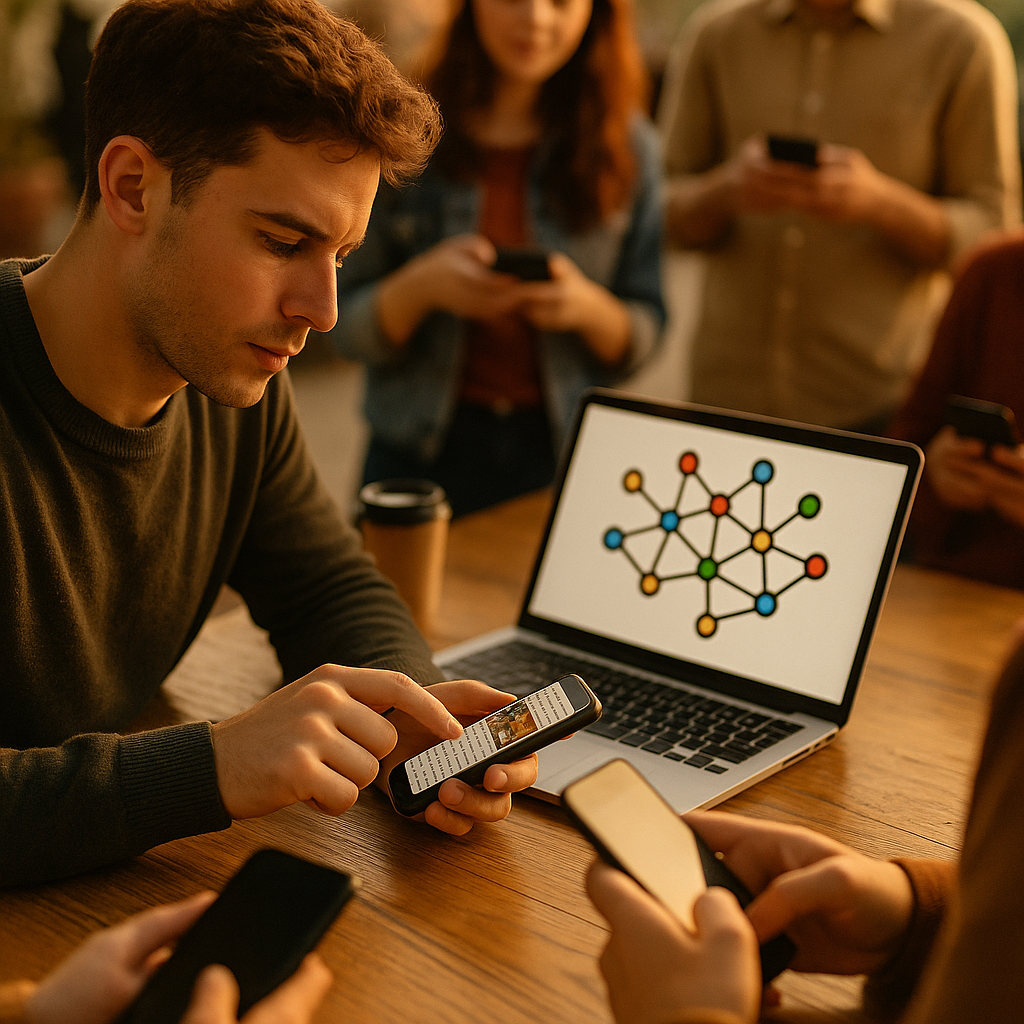
Paid boosting budgets are up. Organic reach is down. Something in that equation is broken, and brands finally noticed. A recent eMarketer analysis found that cost-per-engagement on boosted social content has climbed for eight straight quarters while conversion lift keeps shrinking. Enter the community-driven amplification network: a distribution model built on real advocates instead of ad spend, and it’s quietly rewriting how brands think about reach.
The Boosting Model Is Running Out of Road
Traditional paid boosting worked on a simple premise: pay a platform, buy visibility. It scaled beautifully for a decade. But algorithms got smarter, ad inventory got more expensive, and audiences got better at ignoring anything that smells like a promoted post. Meta’s own advertiser data shows CPMs climbing across nearly every vertical, and TikTok’s auction dynamics have followed the same trajectory as more brands compete for the same feed real estate.
Here’s the uncomfortable part for CMOs: boosting doesn’t build anything durable. Turn off the spend, and reach disappears with it. You’re renting attention, not owning it. That’s fine for short-term product launches. It’s a terrible foundation for long-term brand equity, and finance teams are starting to ask why distribution costs keep rising while ROAS flattens.
Boosted reach is rented. Community-driven amplification is owned — and unlike ad inventory, owned distribution compounds instead of resetting to zero every budget cycle.
What Community-Driven Amplification Networks Actually Are
Strip away the buzzword and the concept is straightforward. A community-driven amplification network is an organized layer of real customers, micro-creators, employees, and superfans who voluntarily share, remix, and distribute brand content because they’re invested in it, not because they’re paid per impression.
Think of it as the difference between hiring a billboard truck and having 500 people who genuinely like your product post about it unprompted, then getting a lightweight system to coordinate, track, and reward that behavior. That coordination layer is the “infrastructure” part. It usually includes:
- A creator or community CRM that segments advocates by tier, engagement history, and content quality
- Automated briefing and activation tools that push campaign assets to the right micro-cohorts
- Attribution tracking that connects organic shares back to conversions, not just impressions
- Incentive structures — often non-cash (early access, recognition, affiliate revenue) — that reward participation without turning it into a paid ad
This isn’t influencer marketing 2.0 with a rebrand. It’s closer to what referral marketing wanted to be before it got reduced to a discount code. The difference now is the tooling has caught up. Platforms increasingly bundle discovery, briefing, and payout into a single workflow, similar to what’s covered in automated workflow engines for discovery, briefing, and payment, which makes running a community network at scale operationally feasible instead of a manual spreadsheet nightmare.
Why Brands Are Shifting Budget This Way
Three forces are pushing marketing leaders toward amplification networks, and none of them are ideological.
First, trust economics. Sprout Social’s consumer trust research has repeatedly shown that people trust peer and creator recommendations far more than brand-produced ads. Community amplification leans directly into that gap. Second, algorithmic favoritism toward organic-feeling content — even TikTok and Instagram’s ranking systems now visibly deprioritize content that reads as an ad, regardless of whether it’s technically boosted. Third, and maybe most persuasive to a CFO: cost curves. A well-run amplification network has a fixed operational cost (platform fees, incentive budget) that doesn’t scale linearly with reach the way paid media does.
That last point matters more than marketers give it credit for. Paid boosting is a variable cost that scales with impressions. Amplification infrastructure is closer to a fixed cost that scales with community size, and community size, unlike an ad budget, compounds over time if you nurture it well.
The Compliance Angle Nobody Talks About Enough
Here’s where brand and legal teams need to pay closer attention. Community-driven distribution still counts as advertising in the eyes of regulators when there’s any form of compensation, product gifting, or brand relationship involved. The FTC’s endorsement guidelines apply just as much to a 5,000-follower community member as they do to a celebrity partnership. The UK’s ICO has similar expectations around data handling when brands collect participant information for these programs.
The risk with amplification networks is scale. When you’re coordinating hundreds or thousands of unpaid or lightly incentivized advocates, disclosure enforcement gets exponentially harder than managing a roster of 20 contracted influencers. Brands that skip building disclosure checkpoints into their activation workflow are setting themselves up for exactly the kind of FTC inquiry that’s become more common as regulators focus on affiliate and gifting relationships specifically.
Infrastructure, Not Inspiration, Is the Differentiator
Every brand wants a passionate community. Very few have built the systems to actually mobilize one at scale, and that’s the real gap between the brands winning here and the ones still throwing money at boosted posts.
The winning playbook looks less like a marketing campaign and more like a product build. Successful amplification programs typically combine:
- Segmented activation: Not every advocate gets the same brief. Top-tier community members might get early product access and co-creation input; casual advocates get simple share-and-tag prompts.
- Attribution that isn’t vanity-metric theater: UTM-tagged links, unique promo codes, or platform-native affiliate tracking so the brand can tie organic shares to actual revenue, not just likes.
- Fraud and authenticity checks: As amplification networks grow, so does the temptation for bad actors to game them with fake engagement. Bundled fraud detection tools, similar to what’s assessed in bundled fraud detection for influencer programs, are becoming standard due diligence rather than a nice-to-have.
- Payment and reward automation: Even non-cash incentive programs need clean reconciliation. Brands running hybrid cash/gifting models increasingly rely on the same reconciliation logic outlined in payment reconciliation frameworks built for larger creator rosters.
Vendors have noticed the demand. Platform consolidation across the influencer tech stack, tracked in detail in the vendor map before renewal, increasingly includes community management modules bolted onto what used to be pure influencer discovery tools. If you’re up for a platform renewal this year, ask your vendor directly whether they support community-tier segmentation. Many still don’t, and it’s becoming a dealbreaker in RFPs.
How This Plays Out at Scale
Once a brand’s advocate base crosses roughly 100 active contributors, the operational math changes entirely. Manual coordination — DMs, spreadsheets, individual outreach — collapses under its own weight. This is the same inflection point discussed in integrated commerce tools becoming essential past 100 creators, and it applies just as directly to community amplification as it does to formal creator rosters.
At that scale, brands need automated matching between content briefs and the right advocate segments, plus testing infrastructure to figure out which messaging actually resonates before it gets pushed community-wide. That’s where lightweight A/B testing on UGC assets, similar to the approach detailed in A/B testing platforms for UGC at scale, becomes less of an optimization tactic and more of a prerequisite. Guessing which version of a community brief performs best is not a strategy once you’re activating thousands of people simultaneously.
Is this harder to manage than writing a check to Meta Ads Manager? Yes, initially. But the brands that build this muscle now are the ones who won’t be at the mercy of rising CPMs and shrinking organic reach in eighteen months.
A community amplification program that works at 200 advocates will break at 2,000 without the infrastructure to segment, track, and pay at scale — plan the tooling before the community outgrows the spreadsheet.
Where This Is Headed
Expect community-driven amplification to formalize further, not fade. HubSpot’s ongoing research on marketing channel effectiveness has consistently flagged owned and earned channels as outperforming paid on long-term ROI, a trend that predates the current AI-driven marketing shift but is accelerating because of it. Vertical AI agents are already being tested to handle the more tedious parts of community management — segmenting advocates, drafting personalized briefs, flagging disclosure risks — similar to the tradeoffs weighed in vertical AI agents versus horizontal platforms.
The brands treating this as a real infrastructure investment, not a scrappy side project, will own a distribution channel their competitors can’t simply outbid them on. You can’t out-boost a genuine community. You can only try to build one faster.
Next step: Audit your current advocate or UGC contributor list this quarter. If it’s sitting in a spreadsheet rather than a segmented, trackable system, that’s your signal to start building the infrastructure before your next paid media renewal, not after.
Frequently Asked Questions
What is a community-driven amplification network?
It’s an organized system of real customers, micro-creators, and brand advocates who distribute content voluntarily or for light incentives, supported by tools for segmentation, briefing, attribution, and reward tracking — as opposed to paid ad boosting where reach is purchased directly from a platform.
How is this different from influencer marketing?
Influencer marketing typically involves contracted creators paid per deliverable. Community amplification networks are broader and often less formal, including everyday customers and employees, with incentives that may be non-cash and participation that’s more organic in tone.
Does the FTC require disclosure for community amplification programs?
Yes. Any material connection — payment, free product, discounts, or affiliate commissions — triggers FTC endorsement disclosure requirements regardless of the participant’s follower count or formal creator status.
What size does a community need to be before it requires dedicated tooling?
Most brands hit an operational breaking point around 100 active contributors, where manual coordination becomes unsustainable and automated workflow, matching, and payment tools become necessary.
Can community amplification fully replace paid boosting?
Not entirely. Paid boosting still has a role for time-sensitive launches or precise audience targeting. But for sustained brand reach and long-term cost efficiency, amplification networks increasingly outperform boosted content on both trust and ROI.
Top Influencer Marketing Agencies
The leading agencies shaping influencer marketing in 2026
Agencies ranked by campaign performance, client diversity, platform expertise, proven ROI, industry recognition, and client satisfaction. Assessed through verified case studies, reviews, and industry consultations.
Moburst

-
2

The Shelf
Boutique Beauty & Lifestyle Influencer AgencyA data-driven boutique agency specializing exclusively in beauty, wellness, and lifestyle influencer campaigns on Instagram and TikTok. Best for brands already focused on the beauty/personal care space that need curated, aesthetic-driven content.Clients: Pepsi, The Honest Company, Hims, Elf Cosmetics, Pure LeafVisit The Shelf → -
3

Audiencly
Niche Gaming & Esports Influencer AgencyA specialized agency focused exclusively on gaming and esports creators on YouTube, Twitch, and TikTok. Ideal if your campaign is 100% gaming-focused — from game launches to hardware and esports events.Clients: Epic Games, NordVPN, Ubisoft, Wargaming, Tencent GamesVisit Audiencly → -
4

Viral Nation
Global Influencer Marketing & Talent AgencyA dual talent management and marketing agency with proprietary brand safety tools and a global creator network spanning nano-influencers to celebrities across all major platforms.Clients: Meta, Activision Blizzard, Energizer, Aston Martin, WalmartVisit Viral Nation → -
5

The Influencer Marketing Factory
TikTok, Instagram & YouTube CampaignsA full-service agency with strong TikTok expertise, offering end-to-end campaign management from influencer discovery through performance reporting with a focus on platform-native content.Clients: Google, Snapchat, Universal Music, Bumble, YelpVisit TIMF → -
6

NeoReach
Enterprise Analytics & Influencer CampaignsAn enterprise-focused agency combining managed campaigns with a powerful self-service data platform for influencer search, audience analytics, and attribution modeling.Clients: Amazon, Airbnb, Netflix, Honda, The New York TimesVisit NeoReach → -
7

Ubiquitous
Creator-First Marketing PlatformA tech-driven platform combining self-service tools with managed campaign options, emphasizing speed and scalability for brands managing multiple influencer relationships.Clients: Lyft, Disney, Target, American Eagle, NetflixVisit Ubiquitous → -
8

Obviously
Scalable Enterprise Influencer CampaignsA tech-enabled agency built for high-volume campaigns, coordinating hundreds of creators simultaneously with end-to-end logistics, content rights management, and product seeding.Clients: Google, Ulta Beauty, Converse, AmazonVisit Obviously →