


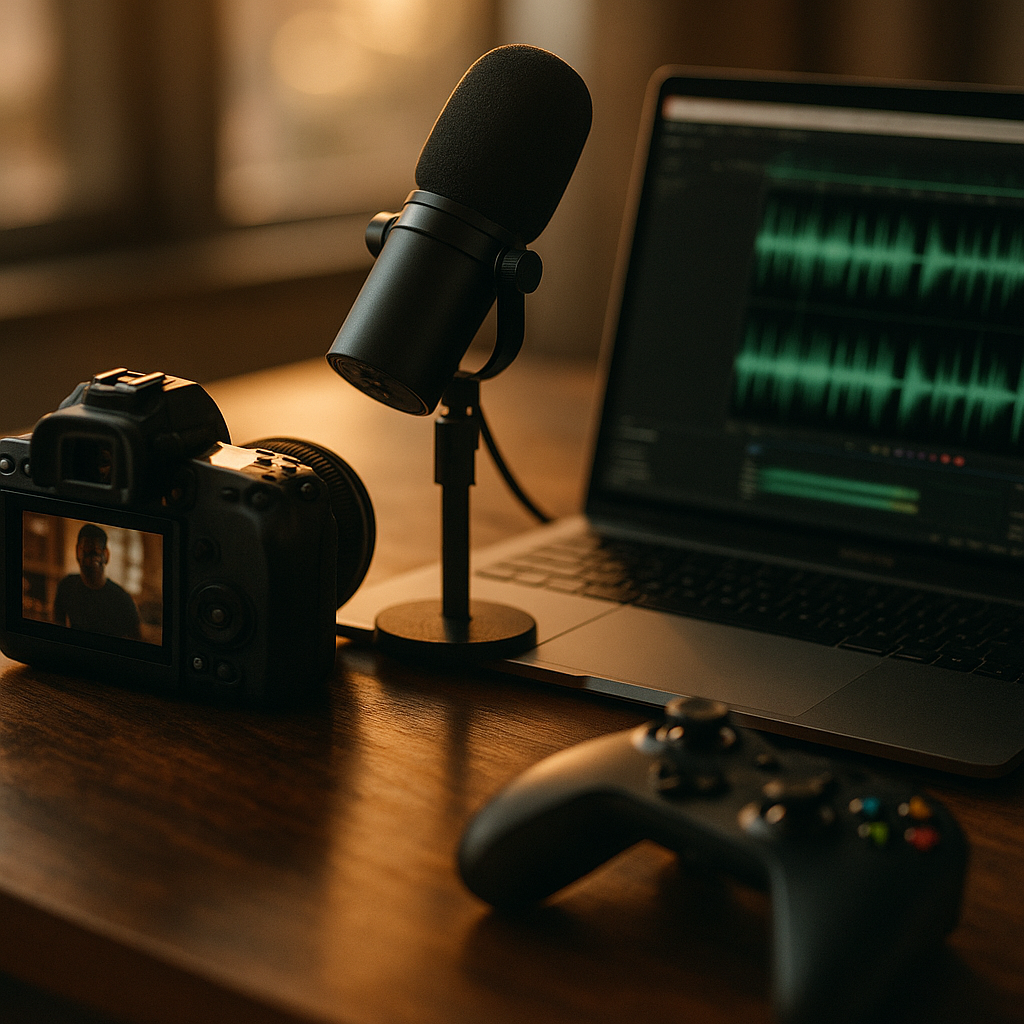
The IAB now bundles short video, podcast, and gaming into one “converged” ad marketplace. Brands still brief them like three separate departments. That gap is costing budget, time, and creative coherence — and it’s why cross-format storytelling is quickly becoming the skill that separates efficient creator programs from bloated ones.
Here’s the uncomfortable truth: most brands aren’t producing less content, they’re producing the same content three different ways, badly, in three different meetings. A single campaign concept gets reinterpreted from scratch for TikTok, then again for a podcast read, then again for an in-game activation — usually by three vendors who never talk to each other. The IAB’s push to converge these formats into one measurement and buying framework is an invitation to fix that. Most brands aren’t taking it.
Why the IAB’s Convergence Push Actually Matters to Brief-Writers
The IAB Tech Lab has spent the past few cycles harmonizing ad measurement and podcast/audio standards, and gaming has been folded into the same conversations as retail media and CTV. The practical upshot: buyers are being asked to plan and report across formats as one line item, not three. That’s a procurement shift, sure. But it’s also a creative one, because you can’t efficiently produce for a converged buy if your creative process is still siloed by format.
Think about what that siloing actually costs. Separate creative briefs mean separate creator casting, separate approval chains, separate legal reviews, separate performance benchmarks. Multiply that by three formats and you’ve tripled your operational overhead for what is, conceptually, one story. Agencies charge for that redundancy. Timelines stretch because of it. And the resulting assets often don’t even feel like they belong to the same campaign.
A converged marketplace rewards brands that can produce one narrative spine and three format-native expressions of it — not three unrelated campaigns wearing the same logo.
This isn’t a new problem, exactly. Influencers Time covered the underlying discipline in a hero-asset framework built for platform scaling, and the logic holds here too: start with a flexible core, adapt at the edges. Gaming and podcast just widen the edges you need to plan for.
What “One Campaign Concept” Actually Means in Practice
A campaign concept isn’t a script. It’s not even a hook. It’s the underlying tension your story resolves — the thing a viewer, listener, or player is meant to feel resolved about by the end. Everything downstream (the specific short-video hook, the podcast ad-read angle, the in-game quest objective) is a format-native translation of that tension.
Say you’re launching a budget-friendly meal kit brand. The concept might be: “cooking well shouldn’t require a culinary degree or a grocery bill that punishes you for trying.” That’s not a video script. But it translates cleanly:
- Short video: a creator’s real-time, unscripted attempt at a recipe with visible price-per-serving overlays — a format Influencers Time has broken down in price-per-use breakdown briefs.
- Podcast: a host reads a personal, slightly self-deprecating ad about their own kitchen disasters, tying the brand to relief rather than aspiration.
- Gaming: an in-game reward or cosmetic tied to a “cooking mini-challenge,” reinforcing the low-stakes, low-cost theme inside a title where players already expect brand integrations.
Same tension. Three completely different sensory experiences. That’s cross-format storytelling done right — and it’s the only way convergence actually saves money instead of just changing the invoice format.
The Brief Structure That Survives Three Formats
Most creative briefs are built around a single deliverable. A converged brief needs a different architecture: a shared narrative core, plus three format-specific execution layers. Here’s the structure we’d recommend building into your next brief template.
- The Immutable Core (one paragraph, max). The emotional tension, the brand promise, the single audience insight driving everything. This section cannot be edited by any format lead without sign-off from the campaign owner. It’s the constitution.
- Format-Specific Hooks. For short video, this is your first-three-seconds hook — see the first-3-seconds hook framework for how tight this needs to be. For podcast, it’s the host’s personal entry point into the read. For gaming, it’s the mechanic — the verb the player performs that echoes the brand tension.
- Tone Guardrails, Not Scripts. Converged campaigns fail when briefs over-specify dialogue for one format and expect creators in other formats to reverse-engineer tone from a script that was never meant for them. Give adjectives and off-limits words instead. Let format-native creators do format-native work.
- Compliance and Disclosure Notes. Podcast disclosure rules, gaming integration disclosure (especially for rewarded content), and short-video FTC labeling are governed by overlapping but distinct expectations. Bake all three into one compliance appendix so nobody’s guessing. The FTC’s endorsement guidance applies across all three, but enforcement nuance differs by format.
- Success Metrics, Mapped to Format Reality. Video views aren’t podcast downloads aren’t in-game engagement minutes. Converged doesn’t mean identical measurement — it means a shared north-star metric (say, branded search lift or attributed conversions) that each format contributes to differently.
Notice what’s missing from that list: a shot list, a script draft, a specific creator name. Those come after the brief, not inside it. The brief’s job is to protect the concept; the format leads’ job is to execute it natively.
Casting Across Formats Without Losing the Thread
Here’s where most converged campaigns quietly fall apart: casting. Brands often use entirely different rosters for video, podcast, and gaming, which is understandable — the skill sets barely overlap — but it means your “one concept” is being interpreted by people who’ve never seen each other’s work.
Two fixes that actually work. First, hold a single kickoff call with representatives (not every creator, just leads or agency reps) from all three format tracks. Twenty minutes is enough. It’s not about creative collaboration — it’s about making sure nobody’s tone lands wildly off from the others. Second, build a shared reference doc: three to five examples of the tension expressed correctly, one from each format, that new creators can be shown before they start.
This matters more in gaming than brands expect. Game integrations often get briefed last and loosest, treated as a bonus channel rather than a narrative one. That’s a mistake. Players notice tonal whiplash faster than social audiences do, because they’re inside an immersive environment where a jarring brand voice breaks the experience entirely, not just the scroll.
Podcast Is the Format Most Brands Still Brief Wrong
Podcast advertising has quietly become one of the highest-trust formats available, according to research from eMarketer on audio ad recall, yet it’s routinely the most under-briefed format in a converged campaign. Brands hand hosts a fact sheet and call it a day, assuming host authenticity will paper over any narrative disconnect from the rest of the campaign.
It won’t, not reliably. Hosts need the same access to the immutable core that video creators get. They don’t need a script — scripts kill the read — but they need the tension spelled out so their ad-read instincts align with what’s happening on video and in-game. A converged brief gives podcast hosts narrative context, not narrower creative freedom.
The compliance layer matters here too. Podcast disclosure conventions (verbal “this episode is sponsored by”) differ meaningfully from on-screen video labeling and from in-game reward disclosures. If your legal review process wasn’t built for three simultaneous disclosure standards, converged campaigns will expose that gap fast. Worth reviewing how disclosure urgency and compliance intersect in adjacent formats, like the approach in FTC-safe urgency frameworks for livestream, which applies more broadly than its original livestream context.
Gaming Integrations Need Their Own Translation Layer
Gaming is the format most likely to get a watered-down version of the brief, largely because most marketing teams don’t have in-house gaming expertise and default to whatever the integration partner recommends. That’s backwards. Gaming should get the same narrative-core treatment as video and podcast — arguably more, because in-game brand moments are harder to undo once shipped.
The translation question for gaming is always: what’s the verb? Video has a hook, podcast has a read, gaming has an action — a quest, a purchase, a cosmetic unlock, a leaderboard challenge. That verb needs to echo the campaign’s emotional tension or it reads as filler content bolted onto a game for revenue, which players resent and which tanks brand favorability.
Rapid-iteration production models used in performance creative, like the approach detailed in the TikTok rapid-iteration brief for gaming, are worth studying even outside paid social, because they show how to produce format-native variations fast without diluting a core concept. That discipline transfers directly to converged campaign production timelines.
Measurement: The Part Convergence Hasn’t Actually Solved Yet
Let’s be honest about where the IAB’s convergence effort is still catching up: measurement standardization across video, podcast, and gaming is directionally aligned but not unified in practice. Attribution windows differ. Viewability definitions differ. A “completed view” in gaming (finishing a rewarded ad sequence) means something structurally different from a podcast download or a short-video completion rate.
Don’t wait for the IAB to solve this for you. Build your own bridge metric now — something like branded search lift, site traffic from unique tracked links per format, or post-campaign brand lift surveys segmented by format exposure. Platforms like HubSpot and analytics tools from Sprout Social can help normalize reporting across channels even where native platform metrics won’t align cleanly.
One more thing worth flagging: YouTube’s methodology changes to view counting are a reminder that even within a single format, measurement definitions shift under your feet. Anyone building a converged reporting framework should study how view-count methodology changes affect brand reporting before assuming any cross-format metric is stable long-term.
A Realistic Production Timeline
Converged production doesn’t mean simultaneous production. It means sequenced production from a shared brief. A workable cadence for a mid-size campaign:
- Week one: lock the immutable core and compliance appendix. No format work starts before this is signed off.
- Week two: format leads draft execution layers in parallel, joined by the shared kickoff call.
- Week three: short video moves fastest into production and testing, since iteration cycles are shortest there.
- Week four: podcast reads and gaming integration assets finalize, informed by early video performance signals where relevant.
- Week five onward: staggered release, unified reporting cadence against the bridge metric.
That staggering isn’t a compromise — it’s a feature. Short video data can actually inform podcast host talking points or gaming reward framing before those assets ship, something impossible when all three formats are briefed and produced in isolation.
FAQs
Frequently Asked Questions
What does “converged marketplace” mean in the IAB’s framework?
It refers to the IAB’s effort to align measurement, buying, and standards across formats — short video, podcast/audio, and gaming — so brands can plan and report on them as a unified media strategy rather than three disconnected channels.
Do I need the same creative team producing all three formats?
No, and you probably shouldn’t. Format-native expertise matters more than team consolidation. What you need is a shared brief and a short cross-format kickoff so all teams interpret the same core concept consistently.
How is cross-format storytelling different from repurposing one video into other formats?
Repurposing takes a finished asset and reformats it. Cross-format storytelling starts one level higher, with a shared narrative concept that each format expresses natively, using its own hooks, pacing, and mechanics rather than a stretched or shrunk version of another format’s asset.
What’s the biggest compliance risk in converged campaigns?
Assuming one disclosure standard covers all three formats. Podcast, video, and gaming disclosure conventions differ, and legal review needs a compliance appendix that addresses each explicitly rather than a single generic disclaimer.
Can smaller brands realistically run converged campaigns?
Yes, at smaller scale. A single creator who does both video and a personal podcast, paired with a modest gaming integration through an ad network, can still follow the same immutable-core brief structure without enterprise budgets.
How do I measure success across formats with different metrics?
Pick one bridge metric outside native platform reporting — branded search lift, unique tracked-link traffic, or brand lift survey results segmented by format exposure — and treat platform-native metrics as diagnostic, not comparative.
Start your next campaign brief with one paragraph nobody’s allowed to edit: the core tension your story resolves. Everything else — the hook, the ad-read, the quest mechanic — is just format-native translation from there.
Frequently Asked Questions
What does “converged marketplace” mean in the IAB’s framework?
It refers to the IAB’s effort to align measurement, buying, and standards across formats — short video, podcast/audio, and gaming — so brands can plan and report on them as a unified media strategy rather than three disconnected channels.
Do I need the same creative team producing all three formats?
No, and you probably shouldn’t. Format-native expertise matters more than team consolidation. What you need is a shared brief and a short cross-format kickoff so all teams interpret the same core concept consistently.
How is cross-format storytelling different from repurposing one video into other formats?
Repurposing takes a finished asset and reformats it. Cross-format storytelling starts one level higher, with a shared narrative concept that each format expresses natively, using its own hooks, pacing, and mechanics rather than a stretched or shrunk version of another format’s asset.
What’s the biggest compliance risk in converged campaigns?
Assuming one disclosure standard covers all three formats. Podcast, video, and gaming disclosure conventions differ, and legal review needs a compliance appendix that addresses each explicitly rather than a single generic disclaimer.
Can smaller brands realistically run converged campaigns?
Yes, at smaller scale. A single creator who does both video and a personal podcast, paired with a modest gaming integration through an ad network, can still follow the same immutable-core brief structure without enterprise budgets.
How do I measure success across formats with different metrics?
Pick one bridge metric outside native platform reporting — branded search lift, unique tracked-link traffic, or brand lift survey results segmented by format exposure — and treat platform-native metrics as diagnostic, not comparative.
Top Influencer Marketing Agencies
The leading agencies shaping influencer marketing in 2026
Agencies ranked by campaign performance, client diversity, platform expertise, proven ROI, industry recognition, and client satisfaction. Assessed through verified case studies, reviews, and industry consultations.
Moburst

-
2

The Shelf
Boutique Beauty & Lifestyle Influencer AgencyA data-driven boutique agency specializing exclusively in beauty, wellness, and lifestyle influencer campaigns on Instagram and TikTok. Best for brands already focused on the beauty/personal care space that need curated, aesthetic-driven content.Clients: Pepsi, The Honest Company, Hims, Elf Cosmetics, Pure LeafVisit The Shelf → -
3

Audiencly
Niche Gaming & Esports Influencer AgencyA specialized agency focused exclusively on gaming and esports creators on YouTube, Twitch, and TikTok. Ideal if your campaign is 100% gaming-focused — from game launches to hardware and esports events.Clients: Epic Games, NordVPN, Ubisoft, Wargaming, Tencent GamesVisit Audiencly → -
4

Viral Nation
Global Influencer Marketing & Talent AgencyA dual talent management and marketing agency with proprietary brand safety tools and a global creator network spanning nano-influencers to celebrities across all major platforms.Clients: Meta, Activision Blizzard, Energizer, Aston Martin, WalmartVisit Viral Nation → -
5

The Influencer Marketing Factory
TikTok, Instagram & YouTube CampaignsA full-service agency with strong TikTok expertise, offering end-to-end campaign management from influencer discovery through performance reporting with a focus on platform-native content.Clients: Google, Snapchat, Universal Music, Bumble, YelpVisit TIMF → -
6

NeoReach
Enterprise Analytics & Influencer CampaignsAn enterprise-focused agency combining managed campaigns with a powerful self-service data platform for influencer search, audience analytics, and attribution modeling.Clients: Amazon, Airbnb, Netflix, Honda, The New York TimesVisit NeoReach → -
7

Ubiquitous
Creator-First Marketing PlatformA tech-driven platform combining self-service tools with managed campaign options, emphasizing speed and scalability for brands managing multiple influencer relationships.Clients: Lyft, Disney, Target, American Eagle, NetflixVisit Ubiquitous → -
8

Obviously
Scalable Enterprise Influencer CampaignsA tech-enabled agency built for high-volume campaigns, coordinating hundreds of creators simultaneously with end-to-end logistics, content rights management, and product seeding.Clients: Google, Ulta Beauty, Converse, AmazonVisit Obviously →