


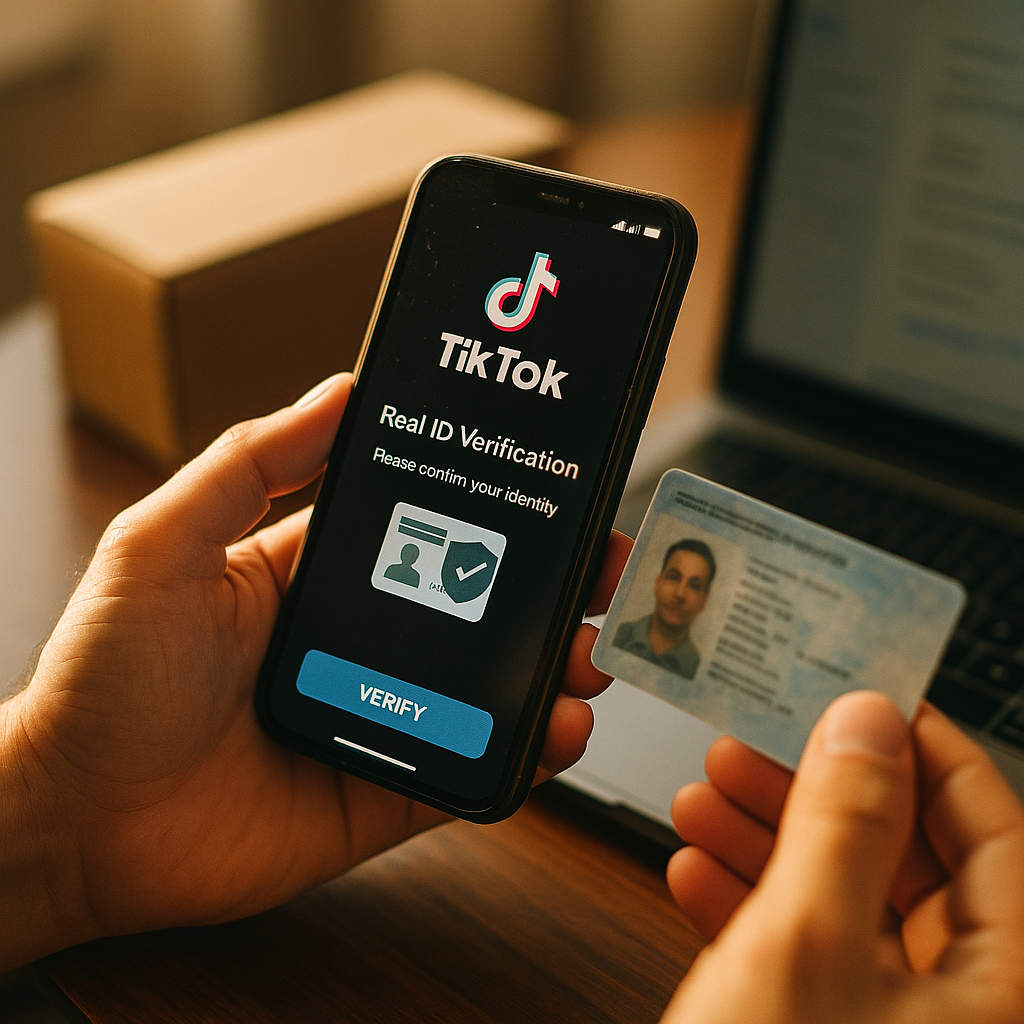
One TikTok Shop policy update just quietly rewrote the compliance playbook for every merchant selling on the platform. TikTok’s real IP verification program ties seller accounts to actual geographic location and identity data, not just a business license PDF and a prayer. If you’re running paid social, affiliate, or livestream commerce through TikTok Shop, this isn’t a footnote. It’s infrastructure.
What the Program Actually Verifies
TikTok’s real IP verification cross-references a seller’s declared location against network-level IP data, device signals, and account behavior patterns. The goal, according to TikTok’s own TikTok for Business guidance, is cutting down on cross-border sellers masking their true origin to dodge regional compliance rules, tax obligations, or import restrictions.
In practice, this means a seller claiming to operate out of Los Angeles but consistently logging in from a data center in another country will get flagged. Flagged accounts face throttled reach, shop feature restrictions, or outright suspension pending re-verification. This isn’t a one-time KYC check at signup. It’s continuous, session-level validation.
Why does this matter for brands and agencies who don’t even sell directly? Because your affiliate network, your creator partners, and your dropship vendors likely include TikTok Shop sellers whose account health now directly affects your campaign uptime.
Real IP verification turns TikTok Shop compliance from a one-time onboarding checkbox into a live, continuously monitored trust signal — and that changes how brands should audit their seller and affiliate partners.
Why TikTok Is Doing This Now
Cross-border e-commerce fraud has been a persistent headache for TikTok Shop, particularly in the US and UK markets where regulatory scrutiny on platform commerce has intensified. Sellers routing through VPNs or proxy networks to appear domestic have been able to sidestep import duties, product safety certifications, and consumer protection disclosures tied to specific regions.
Regulators haven’t been quiet about this either. The Federal Trade Commission has repeatedly signaled that platforms hosting third-party commerce bear responsibility for seller transparency, especially around origin disclosure and counterfeit goods. TikTok’s verification push looks like a preemptive move to reduce regulatory exposure before it becomes a legal liability.
There’s also a straightforward trust argument. Livestream commerce depends on viewers believing the seller is who they claim to be, especially for beauty, supplements, and electronics categories where origin affects safety expectations. A verified IP layer gives TikTok a technical backstop for claims it previously took at face value.
The Technical Shift Merchants Need to Understand
This is where “compliance” stops being a policy word and starts being an engineering problem. Real IP verification isn’t a form field, it’s an identity resolution layer sitting underneath every seller session. That has ripple effects on how merchants structure their operations:
- Multi-region sellers now need documented, consistent infrastructure per market rather than a single shared account logging in from wherever’s convenient.
- Agencies managing seller accounts on behalf of clients need to standardize login locations or risk triggering false-positive flags.
- Affiliate and creator networks connected to flagged shops could see commission payouts or product links disrupted with little warning.
- Fraud teams now need visibility into TikTok’s flagging criteria the same way they’d monitor chargeback ratios on a payment processor.
If this sounds familiar, it should. It mirrors the identity resolution challenges brands already wrestle with in attribution and ad targeting. The same due-diligence rigor applied to identity resolution match rates in martech vendor evaluations now needs to extend to seller verification on commerce platforms.
Compliance Risk for Brands, Not Just Sellers
Here’s the part that gets underweighted in most coverage of this rollout: brand risk doesn’t stop at the seller account. If your brand runs an official TikTok Shop storefront but outsources fulfillment or regional management to a third-party operator, that operator’s IP verification status becomes your problem the moment it triggers a suspension.
Picture this: a brand’s Southeast Asia storefront is managed by a regional agency logging in from a shared VPN for security reasons. Real IP verification flags the account as inconsistent with its declared market. Shop features get suspended mid-campaign, right as a paid livestream push is scheduled. That’s lost revenue and a scramble to explain to leadership why the “compliance thing” tanked a launch.
This is a governance gap, not a technical glitch. Brands need documented protocols for how regional partners access shop accounts, similar to the zero-trust access controls increasingly standard in attribution data management. Access hygiene isn’t just an IT concern anymore. It’s now tied directly to revenue continuity on commerce platforms.
If your fulfillment or regional partner’s TikTok Shop account gets flagged, the resulting suspension hits your revenue, not theirs. Vendor access hygiene is now a commerce risk, not just an IT policy.
What This Means for Affiliate and Whitelisting Programs
TikTok’s affiliate ecosystem, including Symphony-powered whitelisting arrangements, depends on stable seller-creator relationships. If a merchant’s account gets suspended for IP inconsistencies, every creator promoting that shop’s products loses their commission pipeline instantly, often without direct notification.
Brands running influencer programs through TikTok Shop affiliate links should treat seller verification status as a monitored KPI, the same way they’d track click-through rates or conversion lift. Teams that have already built ROI tracking discipline into programs like those covered in TikTok Symphony whitelisting comparisons are better positioned to spot disruption early, because they’re already watching the data closely.
Agencies managing multi-brand affiliate rosters should build a simple audit habit: check seller verification status monthly, flag inconsistent regional logins, and maintain backup product links in case a partner shop gets suspended. It’s not glamorous work. It’s the kind of operational hygiene that prevents a Tuesday afternoon fire drill.
How This Compares to Other Platform Identity Crackdowns
TikTok isn’t inventing this playbook. Meta has run similar location-consistency checks for Marketplace and ad account verification for years, and Amazon’s seller verification requirements have grown steadily stricter since counterfeit and dropshipping scandals piled up. What’s notable here is the timing and the commerce-specific application.
TikTok Shop’s growth trajectory has made it a bigger target for both regulators and bad actors simultaneously. According to eMarketer estimates, social commerce spend has climbed steadily across major platforms, and TikTok’s share of that growth has made its shop ecosystem too large to police with manual review alone. Real IP verification is TikTok scaling trust infrastructure to match transaction volume.
Brands that have watched Amazon’s seller crackdowns unfold know the pattern: verification tightens, some legitimate sellers get caught in false positives, appeals processes lag, and the merchants who survive are the ones who documented their compliance posture before enforcement hit. TikTok Shop merchants should assume the same arc plays out here.
Practical Steps for Merchants Right Now
Waiting for an account flag before reacting is the expensive way to learn this lesson. A few concrete moves worth making immediately:
- Audit which team members or agency partners access shop accounts, and from where. Standardize login locations per regional account where possible.
- Document your supply chain and fulfillment geography clearly, in case verification appeals require proof of legitimate operations.
- Diversify affiliate and creator relationships across multiple verified accounts rather than concentrating volume on a single shop that could get flagged.
- Build a monitoring cadence, even a simple monthly check, on seller and affiliate account health rather than assuming stability.
None of this is complicated. It’s the same operational discipline brands already apply to attribution governance and vendor due-diligence, just pointed at a new compliance surface. Teams that treat TikTok Shop compliance with the same rigor they’d apply to identity-based attribution governance won’t be caught flat-footed.
FAQs
What is TikTok’s real IP verification program?
It’s a compliance system that cross-references a TikTok Shop seller’s declared location against actual network and device data to confirm their true operating geography, aimed at reducing cross-border compliance evasion and fraud.
Does this affect brands that don’t sell directly on TikTok Shop?
Yes. Brands using affiliate creators, third-party fulfillment partners, or agency-managed regional storefronts can be affected if those partner accounts get flagged or suspended, disrupting campaigns and commission payouts.
What happens if a seller account fails verification?
Accounts can face throttled reach, restricted shop features, or full suspension until the seller resolves the inconsistency, which typically requires proving legitimate operating location and business documentation.
How is this different from standard KYC checks at seller signup?
Traditional KYC happens once during onboarding. Real IP verification is continuous, monitoring login patterns and location consistency throughout the life of the account rather than only at registration.
What should agencies managing multiple TikTok Shop accounts do?
Standardize access protocols, avoid shared VPNs or proxy logins across regional accounts, document fulfillment geography clearly, and monitor account verification status regularly as part of routine campaign operations.
The brands that treat this as a one-time policy notice will be the ones scrambling when an affiliate storefront goes dark mid-campaign. Build the verification audit into your monthly ops checklist now, before enforcement catches up to the announcement.
Top Influencer Marketing Agencies
The leading agencies shaping influencer marketing in 2026
Agencies ranked by campaign performance, client diversity, platform expertise, proven ROI, industry recognition, and client satisfaction. Assessed through verified case studies, reviews, and industry consultations.
Moburst

-
2

The Shelf
Boutique Beauty & Lifestyle Influencer AgencyA data-driven boutique agency specializing exclusively in beauty, wellness, and lifestyle influencer campaigns on Instagram and TikTok. Best for brands already focused on the beauty/personal care space that need curated, aesthetic-driven content.Clients: Pepsi, The Honest Company, Hims, Elf Cosmetics, Pure LeafVisit The Shelf → -
3

Audiencly
Niche Gaming & Esports Influencer AgencyA specialized agency focused exclusively on gaming and esports creators on YouTube, Twitch, and TikTok. Ideal if your campaign is 100% gaming-focused — from game launches to hardware and esports events.Clients: Epic Games, NordVPN, Ubisoft, Wargaming, Tencent GamesVisit Audiencly → -
4

Viral Nation
Global Influencer Marketing & Talent AgencyA dual talent management and marketing agency with proprietary brand safety tools and a global creator network spanning nano-influencers to celebrities across all major platforms.Clients: Meta, Activision Blizzard, Energizer, Aston Martin, WalmartVisit Viral Nation → -
5

The Influencer Marketing Factory
TikTok, Instagram & YouTube CampaignsA full-service agency with strong TikTok expertise, offering end-to-end campaign management from influencer discovery through performance reporting with a focus on platform-native content.Clients: Google, Snapchat, Universal Music, Bumble, YelpVisit TIMF → -
6

NeoReach
Enterprise Analytics & Influencer CampaignsAn enterprise-focused agency combining managed campaigns with a powerful self-service data platform for influencer search, audience analytics, and attribution modeling.Clients: Amazon, Airbnb, Netflix, Honda, The New York TimesVisit NeoReach → -
7

Ubiquitous
Creator-First Marketing PlatformA tech-driven platform combining self-service tools with managed campaign options, emphasizing speed and scalability for brands managing multiple influencer relationships.Clients: Lyft, Disney, Target, American Eagle, NetflixVisit Ubiquitous → -
8

Obviously
Scalable Enterprise Influencer CampaignsA tech-enabled agency built for high-volume campaigns, coordinating hundreds of creators simultaneously with end-to-end logistics, content rights management, and product seeding.Clients: Google, Ulta Beauty, Converse, AmazonVisit Obviously →