


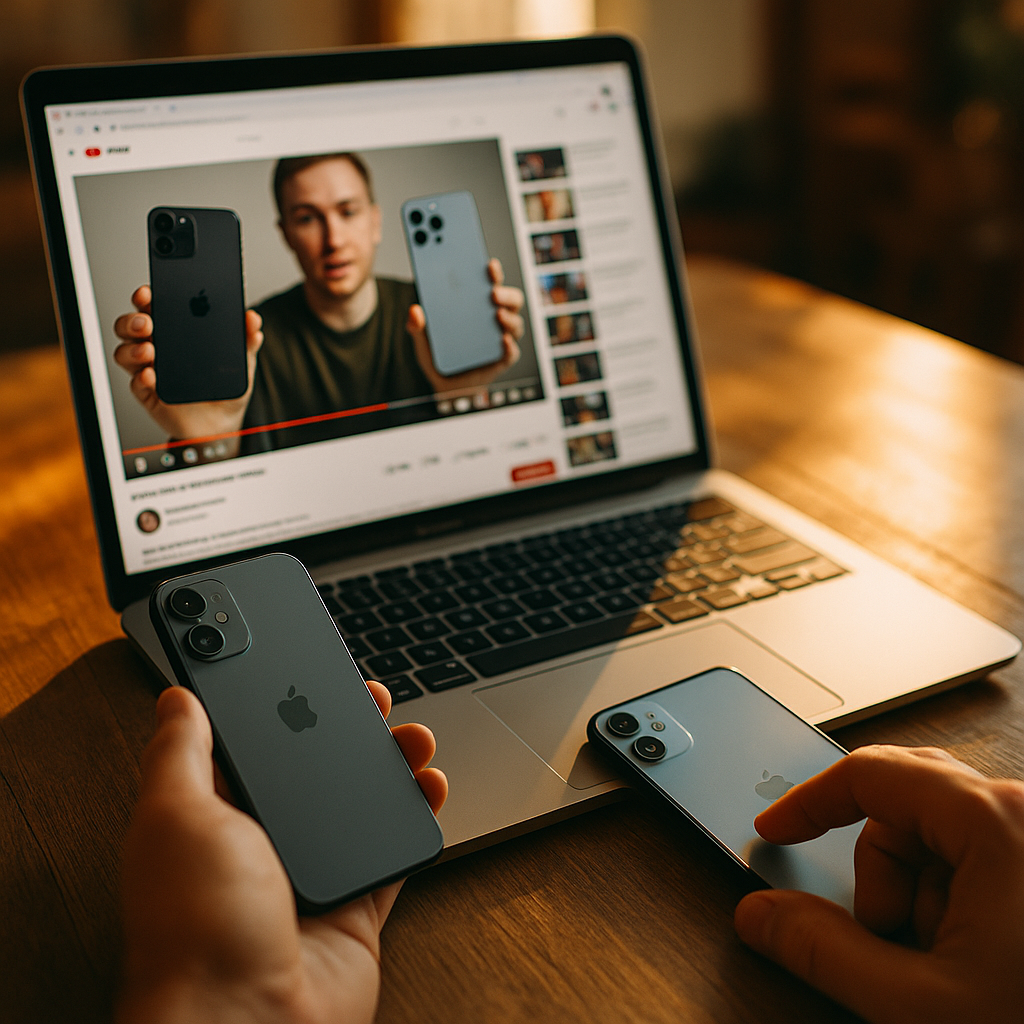
Buyers watch an average of watching comparison and review content for over 20 minutes before adding a product to cart — try getting that kind of attention from a 15-second TikTok. YouTube comparison-review content has quietly become the highest-intent inventory in influencer marketing, and most brands are still buying it like it’s an awareness channel. That’s the gap this playbook closes.
The Attention Economics Nobody Talks About
Short-form video wins on reach. It loses on depth. A 30-second TikTok Shop demo can spike impulse purchases (we’ve covered how that discovery-first playbook converts), but it can’t answer the question a $400 purchase decision actually requires: “is this better than the other three options I’m considering?”
YouTube answers that question. A 12-minute “best robot vacuums” comparison video isn’t competing for scroll-stopping attention — it’s competing to be the definitive resource someone bookmarks, rewatches, and shares with a partner before buying. That’s a fundamentally different job to be done, and it commands a fundamentally different budget logic.
Long-form comparison content doesn’t interrupt intent. It resolves it. That’s the entire strategic advantage in one sentence.
Why Comparison Format Beats Straight Review Format
Not all YouTube product content performs equally. Single-product reviews build trust in a creator. Comparison content builds trust in a category — and positions your brand relative to competitors at the exact moment someone is deciding between them.
Think about the searcher behavior. Nobody searches “is Brand X good” in a vacuum. They search “Brand X vs Brand Y” or “best [category] under $200.” Google and YouTube’s own search algorithms reward that framing because it matches real query intent. Brands that only fund solo-product reviews are ceding the highest-converting search real estate to whichever competitor funded the comparison instead.
- Solo reviews build brand affinity but rarely close the loop on comparison shopping.
- Head-to-head comparisons capture bottom-funnel search traffic with buyer intent baked in.
- Roundup/best-of videos function as evergreen inventory — some run for years, compounding views and conversions long after the campaign budget is spent.
The SEO Layer Most Marketers Ignore
YouTube is the second-largest search engine on the planet, and comparison-review videos are disproportionately good at ranking there — and on Google’s video carousel. A well-optimized comparison video with a strong title, timestamped chapters, and a keyword-rich description can keep generating qualified traffic for 18-24 months. Try getting that shelf life from a paid social ad.
This is where influencer marketing teams need to start thinking like content strategists, not just talent bookers. Briefing a creator on keyword targets, competitor mentions, and chapter structure isn’t micromanagement — it’s the difference between a video that disappears in a week and one that becomes a permanent top-of-funnel asset. Platforms like Sprout Social and HubSpot have both published research showing video content with structured metadata consistently outperforms unoptimized uploads on discoverability.
What Purchase Intent Actually Looks Like on YouTube
Purchase intent signals on YouTube don’t look like a “like” or a share. They look like:
- Click-throughs on affiliate links embedded in the description
- Time-stamped jumps to the “verdict” or “which one should you buy” segment
- Comment sections full of “does this work for [specific use case]” questions
- Search queries that pair your brand name with “vs” or “alternative”
That last one is easy to miss if you’re only monitoring branded search volume in aggregate. Pull the actual query strings. If “[Your Brand] vs [Competitor]” is trending upward, that’s a direct signal comparison content is working — and a strong argument for doubling down rather than diversifying into unrelated formats.
The Attribution Problem — And How to Solve It
Here’s the honest challenge: YouTube’s long consideration window makes last-click attribution nearly useless. Someone watches a comparison video on a Tuesday, researches for two weeks, then buys through a completely different channel. If your measurement stack only credits the final touchpoint, you’re systematically undervaluing the video that actually did the persuading.
This is exactly the blind spot multi-touch and algorithmic attribution models were built to fix. If you haven’t audited whether your current model can even see YouTube’s influence, start with our breakdown of which attribution model fits long consideration-cycle purchases. Full-stack attribution approaches also matter here — we’ve dug into the real gap between full-stack attribution and simple source tagging, and comparison-review content is precisely the use case where source tagging falls short.
If your attribution model can’t detect a two-week research window, you’re optimizing budget against a distorted picture of what’s actually driving revenue.
Building the Program: A Practical Framework
Running a comparison-review strategy on YouTube isn’t the same operational motion as a TikTok gifting campaign. It requires more upfront investment per creator, longer lead times, and tighter briefing. Here’s how to structure it.
- Pick creators who already rank. Don’t chase subscriber count. Search your category plus “review” or “vs” on YouTube and see who’s already showing up on page one. Those creators bring existing search equity you can’t buy with a bigger budget.
- Brief for comparison, not promotion. Give creators permission to say your product loses on price or a specific feature. Comparison content only converts because audiences trust it’s unbiased. A script that reads like an ad kills the format’s entire value proposition.
- Supply real competitive data. Spec sheets, third-party test results, pricing history. Creators produce sharper comparisons when they’re not left guessing at competitor specs — and sharper comparisons rank better and convert better.
- Negotiate for evergreen rights and refresh clauses. Comparison videos age. Build update clauses into contracts so pricing and feature claims stay accurate as your product line evolves.
- Measure beyond the click. Track branded search lift, comment sentiment, and affiliate link engagement over a 90-day window minimum — not the standard 7-day post-campaign window most reporting templates default to.
Budget Reality Check
Comparison-review placements typically cost more per creator than short-form UGC, but the cost-per-view math often favors YouTube once you account for content lifespan. A TikTok video’s performance curve is steep and short. A ranking YouTube comparison video keeps earning views — and driving affiliate revenue — well after the invoice is paid. When agencies benchmark blended CPMs across formats without factoring in decay rate, they’re comparing apples to a fruit that disappears after 72 hours.
Affiliate and commission structures matter more here too, since evergreen content means evergreen payouts. Brands running comparison programs should understand how rate standardization is shifting the space — see our coverage of how a recent funding round is signaling affiliate rate standardization across the industry, and how platforms are building out affiliate rate infrastructure that procurement teams need to vet before signing.
Compliance Isn’t Optional Here
Comparison content sits in riskier legal territory than a straightforward review, because it makes explicit claims about competitors. The FTC has been increasingly active on disclosure enforcement, and comparison videos that misrepresent a competitor’s product open both the creator and the brand to liability. Every comparison brief should include:
- Clear, prominent disclosure per FTC endorsement guidelines
- Fact-checked competitor claims with sourced data, not creator assumption
- A review process before publish, not after — retroactive edits look worse than getting it right the first time
Brands operating in the UK or EU should also cross-check disclosure standards against ICO guidance, particularly where comparison content touches data claims or testimonials that could be construed as misleading advertising.
Where This Fits in the Broader Funnel
Comparison-review content shouldn’t run in isolation. It works best as the research-stage anchor in a funnel where short-form drives discovery and retail media or shoppable content closes the sale. Real-time dashboards matter a lot here, since comparison content’s slow-burn performance curve means static monthly reporting will miss the inflection points. Teams already using real-time campaign dashboards to shift budget mid-flight have a real advantage in catching a comparison video’s search momentum early and reinforcing it with paid amplification before the window closes.
It’s also worth pressure-testing whether your identity resolution stack can actually connect a YouTube view to a downstream purchase, especially across devices. If match rates are weak, comparison-content ROI will look artificially low. Our vendor due-diligence guide on match rates is a useful gut-check before you conclude a channel “doesn’t convert.”
FAQs
Frequently Asked Questions
Why does YouTube outperform short-form video for high-consideration purchases?
Long-form comparison content matches the research behavior of buyers evaluating higher-cost or complex products. Viewers actively seek out detailed comparisons before purchasing, giving YouTube content more persuasive weight than short-form formats built for passive scrolling.
How long should a comparison-review video be to drive conversions?
Most high-performing comparison videos run between eight and eighteen minutes, long enough to cover multiple products, pricing, and use cases while still respecting viewer attention. Chapter markers help viewers jump directly to relevant sections without abandoning the video.
How do you measure ROI on content with a long consideration window?
Track branded search lift, affiliate link engagement, and comment-driven purchase questions over a 60-90 day window rather than relying on last-click attribution. Multi-touch or algorithmic attribution models are better suited to capturing YouTube’s delayed conversion pattern.
What are the legal risks of funding comparison content against competitors?
Comparison videos that misstate competitor specs or pricing can expose both the creator and the sponsoring brand to liability. Brands should fact-check all comparative claims before publish and ensure disclosures meet FTC guidelines.
Should brands prioritize solo reviews or comparison videos?
Comparison videos typically capture more bottom-funnel search intent because they match how consumers actually search (“Brand X vs Brand Y”). Solo reviews still have value for brand affinity but shouldn’t be the only long-form format in the mix.
The brands winning on YouTube right now aren’t the ones with the biggest budgets — they’re the ones treating comparison content as owned search infrastructure instead of a one-off sponsorship. Start by auditing which “[category] vs” queries your competitors currently own, then brief your next creator partnership to take that keyword back.
Top Influencer Marketing Agencies
The leading agencies shaping influencer marketing in 2026
Agencies ranked by campaign performance, client diversity, platform expertise, proven ROI, industry recognition, and client satisfaction. Assessed through verified case studies, reviews, and industry consultations.
Moburst

-
2

The Shelf
Boutique Beauty & Lifestyle Influencer AgencyA data-driven boutique agency specializing exclusively in beauty, wellness, and lifestyle influencer campaigns on Instagram and TikTok. Best for brands already focused on the beauty/personal care space that need curated, aesthetic-driven content.Clients: Pepsi, The Honest Company, Hims, Elf Cosmetics, Pure LeafVisit The Shelf → -
3

Audiencly
Niche Gaming & Esports Influencer AgencyA specialized agency focused exclusively on gaming and esports creators on YouTube, Twitch, and TikTok. Ideal if your campaign is 100% gaming-focused — from game launches to hardware and esports events.Clients: Epic Games, NordVPN, Ubisoft, Wargaming, Tencent GamesVisit Audiencly → -
4

Viral Nation
Global Influencer Marketing & Talent AgencyA dual talent management and marketing agency with proprietary brand safety tools and a global creator network spanning nano-influencers to celebrities across all major platforms.Clients: Meta, Activision Blizzard, Energizer, Aston Martin, WalmartVisit Viral Nation → -
5

The Influencer Marketing Factory
TikTok, Instagram & YouTube CampaignsA full-service agency with strong TikTok expertise, offering end-to-end campaign management from influencer discovery through performance reporting with a focus on platform-native content.Clients: Google, Snapchat, Universal Music, Bumble, YelpVisit TIMF → -
6

NeoReach
Enterprise Analytics & Influencer CampaignsAn enterprise-focused agency combining managed campaigns with a powerful self-service data platform for influencer search, audience analytics, and attribution modeling.Clients: Amazon, Airbnb, Netflix, Honda, The New York TimesVisit NeoReach → -
7

Ubiquitous
Creator-First Marketing PlatformA tech-driven platform combining self-service tools with managed campaign options, emphasizing speed and scalability for brands managing multiple influencer relationships.Clients: Lyft, Disney, Target, American Eagle, NetflixVisit Ubiquitous → -
8

Obviously
Scalable Enterprise Influencer CampaignsA tech-enabled agency built for high-volume campaigns, coordinating hundreds of creators simultaneously with end-to-end logistics, content rights management, and product seeding.Clients: Google, Ulta Beauty, Converse, AmazonVisit Obviously →