


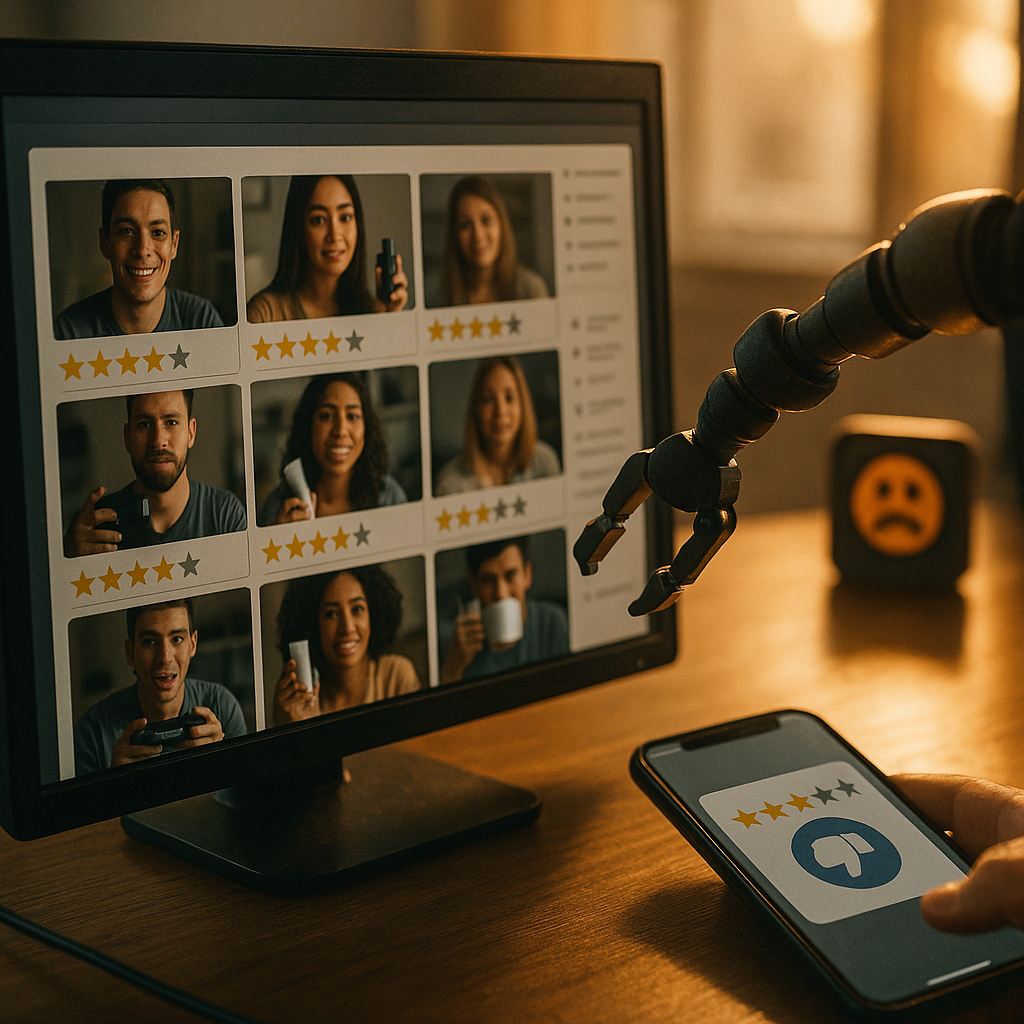
Brands running automated UGC production pipelines are shipping content 10x faster than manual workflows, according to internal benchmarks from tools like Billo and Aftershoot style editors. But engagement on that content often lags 20 to 40 percent behind the deliberately imperfect stuff creators shoot on their phones. The uncomfortable truth: the more you automate UGC, the more you risk automating away the exact quality that made it convert in the first place.
The Scale Trap Nobody Warned You About
Automated UGC production pipelines exist because manual sourcing doesn’t scale. You need fifty variants for a paid social test, three hooks per creator, platform-native cuts for TikTok, Reels, and Shorts, all before the campaign brief goes stale. So marketing ops teams built pipelines: AI captioning, auto-editing, voice cloning for reshoots, batch subtitle generation, template-based hook insertion. It works. Production timelines that used to take three weeks now take three days.
Here’s the catch. UGC’s entire value proposition rests on it looking unproduced. The shaky camera, the awkward pause, the “wait, let me start over” left in the final cut, these aren’t bugs. They’re trust signals. A Sprout Social analysis of consumer trust patterns has repeatedly found that audiences discount content that reads as polished or scripted, even when the polish is subtle. Once a pipeline smooths every rough edge, it starts producing something that looks like UGC but performs like an ad. And audiences, even algorithmically, seem to know the difference.
The paradox of automated UGC production is that the more efficiently you manufacture authenticity, the less authentic it reads to the people you’re trying to convert.
Where Pipelines Actually Break Authenticity
It’s rarely one dramatic failure. It’s death by a thousand small optimizations. Auto-captioning tools default to perfect grammar, stripping out the verbal stumbles that signal a real person talking. AI upscalers sharpen footage shot on a mid-range phone until it looks suspiciously like a studio setup. Template libraries insert the same three hook structures across hundreds of creators, and eagle-eyed viewers start recognizing the pattern within a single scroll session.
Then there’s caption remixing. Automated systems increasingly rewrite creator captions to match brand tone or SEO targets, and that’s a bigger risk than most teams clock. We’ve covered how automated caption rewriting can quietly strip the creator’s actual voice out of a post, leaving brands with content that’s technically on-brief and functionally dead on arrival. If your pipeline is rewriting what creators say, you’re not scaling UGC anymore. You’re scaling branded content wearing a UGC costume.
Ask yourself: would this clip survive if a real follower screenshotted it and compared it to the creator’s organic feed? If the answer is no, the pipeline has already gone too far.
The Compliance Layer Most Teams Skip
Automated pipelines also tend to bury disclosure requirements under production speed. When you’re pushing hundreds of variants a week, it’s easy for AI-assisted edits to slip past FTC-required disclosure language, especially on video where labels get cropped or covered by auto-generated captions. The FTC’s endorsement guidelines don’t care how the content was produced. If it’s sponsored, it needs to read as sponsored, regardless of how many AI steps touched the final cut.
Platforms are adding their own friction here too. Disclosure labels on AI-touched video are increasingly triggering distribution penalties, something we broke down in detail when covering how disclosure labels affect reach. If your automated pipeline is inserting AI edits without a compliance checkpoint, you’re not just risking authenticity, you’re risking distribution.
What The Performance Data Actually Says
This is where it gets interesting for the people holding the budget. Performance data doesn’t universally punish automation. It punishes specific automation choices. Brands that automate logistics (sourcing, briefing, rights management, payout reconciliation) while keeping creative production loose tend to outperform brands that automate the creative itself.
Put differently: automate the pipeline, not the performance. The parts of UGC production that benefit most from automation are the parts audiences never see. Creator discovery, contract generation, usage rights tracking, payout timing. These are pure operational overhead, and shaving hours off them is free ROI with zero authenticity risk. We’ve written before about how automated reconciliation tools close payout gaps that used to eat weeks of finance team time. Nobody’s engagement drops because your Stripe integration got faster.
Compare that to automating the actual filming, scripting, or editing decisions, and you start seeing measurable engagement decay. A useful mental model: split your pipeline into a “backstage” layer (logistics, tracking, compliance) and a “frontstage” layer (what the audience actually consumes). Automate backstage aggressively. Automate frontstage cautiously, and always with a human sign-off before publish.
A Quick Framework: Where To Draw The Line
- Safe to automate fully: caption transcription (unedited), subtitle timing, format resizing for platform specs, usage rights tracking, payout scheduling.
- Automate with human review: hook selection from creator-shot raw footage, thumbnail generation, A/B variant assembly, brief-to-creator matching.
- Keep manual or creator-controlled: caption copy and tone, on-camera dialogue, disclosure placement, any edit that changes what was actually said or shown.
This isn’t a permanent list. As detection tools and platform policies shift, the line moves. But it’s a defensible starting point for a governance conversation with legal and brand safety teams.
Building A Pipeline That Doesn’t Kill What It’s Scaling
Some brands are handling this by running a dual-track system: a fully automated pipeline for top-of-funnel awareness content where volume matters more than nuance, and a lightly-touched, mostly manual pipeline for conversion-stage UGC where trust signals do the heaviest lifting. The awareness content can look a little more templated because its job is reach, not persuasion. The conversion content needs to feel like a real recommendation from a real person, which means resisting the urge to smooth it out.
Governance matters more here than most teams admit. Without a review layer, automated pipelines drift toward over-polish because that’s what most AI editing tools default to optimizing for. We’ve covered how content governance committees catch this kind of drift before it ships, and it’s worth setting up even a lightweight version, one person with veto power over anything that reads as “too clean.”
There’s also a measurement problem worth naming directly. If your attribution stack only tracks clicks and conversions, you’ll never see the authenticity decay until engagement has already cratered for a quarter. Tools that track AI referral traffic and platform-native engagement signals, the kind compared in pieces like Parse.ly versus GA4 tracking, give you an earlier warning system. Watch save rate, share rate, and comment sentiment, not just view count. Views can hold steady on over-polished content for weeks while trust quietly erodes underneath.
Track save rate and comment sentiment before view count. View count is the last metric to notice when a pipeline has over-polished its way into audience distrust.
Vendor Selection: What To Actually Test Before Signing
Not every UGC automation vendor is built the same, and the sales demo will never show you the failure mode. Before signing a contract, run the same clip through the platform two ways: once with default auto-editing settings, once with maximum manual override. If the two outputs look nearly identical, the tool doesn’t actually let you preserve rawness, it just has a “raw” filter slapped on top.
Ask vendors directly whether their AI touches spoken dialogue, caption copy, or only production elements like cuts and subtitles. That’s the single most important line item, and it maps closely to the vetting approach outlined in testing AI vendor claims before signing. Most procurement teams skip this test because it’s slower than trusting the demo, but it’s the difference between a tool that scales your creative and one that quietly replaces it.
Also check how the platform handles disclosure insertion. Some tools auto-place FTC labels in a fixed screen position that platforms then crop in certain aspect ratios. That’s a compliance gap hiding inside a UX decision, and it’s exactly the kind of detail that HubSpot’s content compliance resources flag as a growing risk area for brands scaling creator content programs.
The Real Metric That Matters
Here’s a blunt way to evaluate any automated UGC production pipeline: does removing the automation change how the content feels, or only how fast it was made? If a human editor doing the same task manually would produce something noticeably different in tone, the automation is making creative decisions it probably shouldn’t be trusted with. If the manual version would look basically the same, just slower, the automation is doing its job.
Brands that get this right treat automated UGC pipelines as logistics infrastructure with a creative ceiling built in, not as a creative engine in its own right. The pipeline should make good creators faster to work with. It should never be the thing deciding what “authentic” sounds like.
FAQs
What is an automated UGC production pipeline?
It’s a workflow that uses AI and software tools, rather than manual editors, to handle steps like transcription, captioning, resizing, hook selection, and rights tracking for user-generated content used in marketing. Most brands use it to scale variant volume for paid social testing.
Does automating UGC production hurt engagement?
It can, specifically when automation touches spoken dialogue, caption tone, or visual polish. Automating operational tasks like rights management and payout tracking generally doesn’t affect performance, since audiences never see that layer.
How do you keep UGC looking authentic after automation?
Limit AI edits to production logistics (subtitles, resizing, format conversion) and keep a human reviewer checking that captions and dialogue haven’t been rewritten. Compare automated and manual versions of the same clip periodically to catch drift toward over-polish.
What compliance risks come with automated UGC pipelines?
The biggest risk is disclosure labels getting cropped, covered, or omitted during automated editing, which can violate FTC endorsement guidelines regardless of intent. Automated caption remixing can also unintentionally alter sponsored content claims.
Which metrics show if automation is hurting authenticity?
Watch save rate, share rate, and comment sentiment rather than view count alone. Views often stay stable for weeks even as trust erodes, making them a lagging indicator of pipeline problems.
Next step: audit your current UGC pipeline against the backstage versus frontstage split above, and pull one automated caption or hook edit for manual comparison this week. If the manual version sounds meaningfully more human, that’s your signal to dial the automation back before the next campaign ships.
FAQs
What is an automated UGC production pipeline?
It’s a workflow that uses AI and software tools, rather than manual editors, to handle steps like transcription, captioning, resizing, hook selection, and rights tracking for user-generated content used in marketing. Most brands use it to scale variant volume for paid social testing.
Does automating UGC production hurt engagement?
It can, specifically when automation touches spoken dialogue, caption tone, or visual polish. Automating operational tasks like rights management and payout tracking generally doesn’t affect performance, since audiences never see that layer.
How do you keep UGC looking authentic after automation?
Limit AI edits to production logistics (subtitles, resizing, format conversion) and keep a human reviewer checking that captions and dialogue haven’t been rewritten. Compare automated and manual versions of the same clip periodically to catch drift toward over-polish.
What compliance risks come with automated UGC pipelines?
The biggest risk is disclosure labels getting cropped, covered, or omitted during automated editing, which can violate FTC endorsement guidelines regardless of intent. Automated caption remixing can also unintentionally alter sponsored content claims.
Which metrics show if automation is hurting authenticity?
Watch save rate, share rate, and comment sentiment rather than view count alone. Views often stay stable for weeks even as trust erodes, making them a lagging indicator of pipeline problems.
Top Influencer Marketing Agencies
The leading agencies shaping influencer marketing in 2026
Agencies ranked by campaign performance, client diversity, platform expertise, proven ROI, industry recognition, and client satisfaction. Assessed through verified case studies, reviews, and industry consultations.
Moburst

-
2

The Shelf
Boutique Beauty & Lifestyle Influencer AgencyA data-driven boutique agency specializing exclusively in beauty, wellness, and lifestyle influencer campaigns on Instagram and TikTok. Best for brands already focused on the beauty/personal care space that need curated, aesthetic-driven content.Clients: Pepsi, The Honest Company, Hims, Elf Cosmetics, Pure LeafVisit The Shelf → -
3

Audiencly
Niche Gaming & Esports Influencer AgencyA specialized agency focused exclusively on gaming and esports creators on YouTube, Twitch, and TikTok. Ideal if your campaign is 100% gaming-focused — from game launches to hardware and esports events.Clients: Epic Games, NordVPN, Ubisoft, Wargaming, Tencent GamesVisit Audiencly → -
4

Viral Nation
Global Influencer Marketing & Talent AgencyA dual talent management and marketing agency with proprietary brand safety tools and a global creator network spanning nano-influencers to celebrities across all major platforms.Clients: Meta, Activision Blizzard, Energizer, Aston Martin, WalmartVisit Viral Nation → -
5

The Influencer Marketing Factory
TikTok, Instagram & YouTube CampaignsA full-service agency with strong TikTok expertise, offering end-to-end campaign management from influencer discovery through performance reporting with a focus on platform-native content.Clients: Google, Snapchat, Universal Music, Bumble, YelpVisit TIMF → -
6

NeoReach
Enterprise Analytics & Influencer CampaignsAn enterprise-focused agency combining managed campaigns with a powerful self-service data platform for influencer search, audience analytics, and attribution modeling.Clients: Amazon, Airbnb, Netflix, Honda, The New York TimesVisit NeoReach → -
7

Ubiquitous
Creator-First Marketing PlatformA tech-driven platform combining self-service tools with managed campaign options, emphasizing speed and scalability for brands managing multiple influencer relationships.Clients: Lyft, Disney, Target, American Eagle, NetflixVisit Ubiquitous → -
8

Obviously
Scalable Enterprise Influencer CampaignsA tech-enabled agency built for high-volume campaigns, coordinating hundreds of creators simultaneously with end-to-end logistics, content rights management, and product seeding.Clients: Google, Ulta Beauty, Converse, AmazonVisit Obviously →