


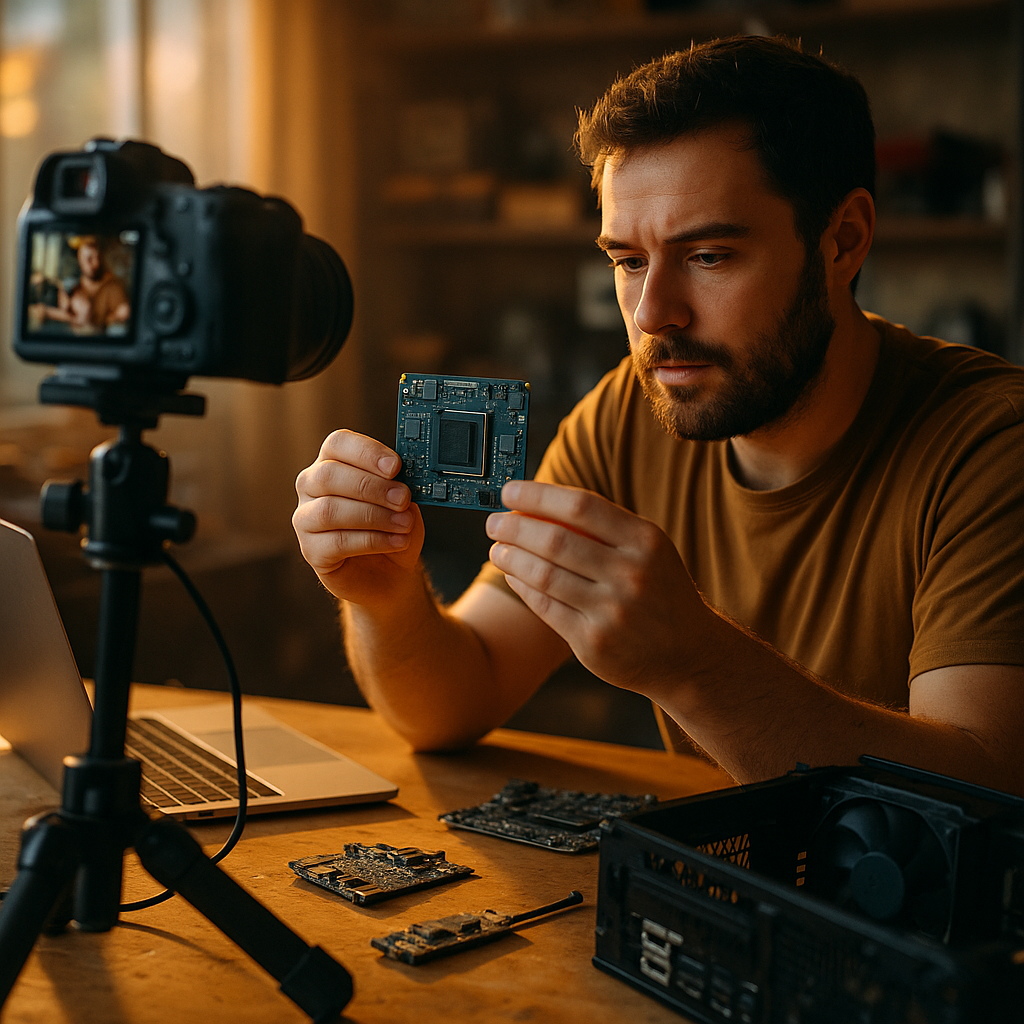
Hardware and tech brands spend six figures on a single trade show booth and call it strategy. Meanwhile, a $4,000-a-month creator program sits in the “nice to have” column, waiting for budget scraps. That math is backwards. Building a genuine creator-led acquisition channel isn’t a brand awareness experiment anymore. It’s a demand generation line item that competes directly with paid search and retail media, and for physical products with a real story to tell, it often wins.
This piece is a planning framework, not a hype pitch. If you sell routers, wearables, smart home devices, or B2B hardware, here’s how to build the business case, structure the budget, and prove it works before your CFO asks the hard questions.
Why hardware brands are different (and why that’s an advantage)
Software companies can iterate a landing page overnight. Hardware can’t. Every SKU, teardown, and unboxing carries physical proof that’s hard to fake and easy to trust. That’s exactly why creator content converts so well for tangible products: viewers see the thing working, breaking, or surprising someone in real time. According to eMarketer, product demonstration content consistently outperforms static ads on watch time and click-through for consumer electronics categories.
Compare that to a typical paid social ad for a router or a smart thermostat. Viewers scroll past specs they don’t understand. A creator who films a real install, complains about the setup, then shows the app dashboard working, does more persuasion in ninety seconds than most spec sheets do in a year. This is the acquisition angle that hardware marketers underuse: creators aren’t just reach, they’re a trust-transfer mechanism for products people are otherwise hesitant to buy sight unseen.
For considered purchases like hardware, the creator isn’t selling the product, they’re pre-answering the objections a shopper would otherwise research for hours.
The acquisition math your finance team actually cares about
Forget follower counts. Build the case on customer acquisition cost and lifetime value, because that’s the language finance speaks. Track blended CAC for creator-driven traffic against paid search and paid social CAC for the same SKU over a full quarter, not a single campaign flight. Hardware has longer consideration cycles, sometimes 30 to 90 days from first exposure to purchase, so attribution windows need to reflect that reality rather than a standard 7-day click model.
Our sister piece on CAC and LTV creator KPIs walks through the exact model for tying creator spend to acquisition cost rather than vanity engagement. Use it as your template, then adjust for hardware’s longer path to purchase and higher average order value.
Building the planning framework: five decision points
A planning framework isn’t a spreadsheet of creator names. It’s a set of decisions made in order, each one constraining the next. Here’s the sequence that works for hardware and tech brands specifically.
- Define the acquisition goal before the creator tier. Are you driving first-time purchases, pre-orders, or retail traffic? Each goal points to a different creator profile and platform mix.
- Separate reach creators from revenue creators. A 500,000-follower tech reviewer builds category awareness. A 20,000-follower creator with a hyper-engaged niche audience often drives the actual add-to-cart. Budget for both, but track them differently. The reach versus revenue creator split framework maps this cleanly for finance approval.
- Choose platform mix based on purchase intent, not popularity. YouTube long-form still drives the highest-intent hardware traffic because viewers actively seek reviews before buying. TikTok and Instagram Reels build the top of funnel and retarget audiences. Don’t put your entire budget on one platform; the platform risk budget split approach protects you when an algorithm shift tanks reach overnight.
- Score creators on conversion history, not audience size. Ask for past performance data. If a creator can’t show you click-through or code redemption rates from prior brand deals, treat that as a red flag, not a negotiating point. The conversion-focused scoring model gives you a repeatable rubric here.
- Split budget into always-on and campaign spikes. Hardware launches need a spike (new SKU drop, CES-adjacent buzz, holiday push), but the channel only compounds if there’s a baseline of always-on content keeping the product in consideration between launches. The always-on budget structure is the clearest version of this we’ve published.
What percentage of budget should move to creators?
There’s no universal number, but a useful starting range for hardware brands testing a creator-led channel is 10 to 15 percent of total demand generation spend in year one, scaling to 20 to 25 percent once CAC data proves out. That’s roughly in line with broader industry benchmarks; Statista data on influencer marketing spend shows consumer electronics and tech consistently ranking among the faster-growing categories for creator budget allocation. Don’t reallocate paid search budget on day one. Run creator spend in parallel for at least two quarters so you can compare CAC apples to apples before shifting dollars permanently.
The compliance layer nobody wants to plan for, but should
Hardware reviews involve claims: battery life, speed, durability, safety certifications. That makes disclosure and accuracy compliance more consequential than in fashion or beauty verticals, where the stakes of an overstated claim are lower. The FTC’s endorsement guidelines apply fully to gifted hardware and affiliate codes, and enforcement has increased in tech-adjacent categories where product claims can mislead consumers around performance or safety. Build a review process into your creator brief: technical specs get approved by product marketing before a creator publishes, not after.
This isn’t about legal fear, it’s about brand equity protection. One viral video with an inaccurate battery claim can undo months of trust-building. Bake fact-checking into your onboarding flow and you avoid the scramble later.
Operationalizing the channel: who owns it?
Creator-led acquisition fails most often not because the creators underperform, but because nobody inside the brand owns the pipeline end to end. Hardware companies frequently split influencer relationships across PR, product marketing, and paid media, and the seams show. Product marketing wants technical accuracy; paid media wants performance creative; PR wants brand safety. Without a clear owner, creators get three different briefs and the program stalls.
Look at how larger tech and CPG brands have solved this. Our breakdown of the creator hiring sequence at Google, Coty, and TP-Link shows a consistent pattern: brands that scale creator programs successfully hire a dedicated owner before they scale spend, not after. For hardware brands specifically, this usually means a cross-functional structure where product, growth, and creator ops share a single calendar and a single set of KPIs, an approach detailed in cross-functional creator ops planning.
If three departments can each veto a creator brief, you don’t have a channel, you have a committee. Assign one owner before you scale spend.
Measurement: the KPIs that actually predict scale
Beyond CAC, track these four metrics monthly:
- Assisted conversion rate: purchases where creator content appeared anywhere in the customer journey, even if a paid ad closed the sale.
- Code and link redemption decay: how quickly a creator’s unique code stops converting after posting. Fast decay signals audience fatigue or weak fit.
- Repeat purchase lift: whether customers acquired via creators buy accessories or upgrade at higher rates than customers from other channels.
- Cost per qualified lead for B2B hardware: if you sell enterprise or prosumer gear, track MQLs generated from creator content separately from consumer-grade conversion metrics.
According to Sprout Social’s research on social commerce behavior, consumers increasingly expect to discover products through creators before they ever hit a brand’s owned channels. That discovery-to-consideration gap is exactly where hardware brands can win, provided the measurement stack is built to catch it rather than just counting likes.
Common mistakes that stall a creator acquisition channel
A few patterns show up repeatedly when hardware brands try creator programs and quietly give up after two quarters:
- Treating creators as a PR line item instead of a performance channel with its own budget and KPIs.
- Chasing follower count over demonstrated conversion history.
- Running one-off campaigns instead of building a repeat-purchase pipeline with ambassadors who understand the product deeply. See ambassador-first budgeting for how to structure this shift.
- Ignoring usage rights negotiation, then paying inflated renewal fees every year to keep using the same content. The usage rights pricing framework solves this before it becomes a recurring cost problem.
Each of these mistakes is fixable, but only if you catch them in the planning stage, before the budget’s locked and the creators are already under contract.
Next step
Start with one SKU, one quarter, and a CAC benchmark pulled straight from your paid search data, then measure the creator channel against that number, not against impressions. If creator-driven CAC beats or matches paid CAC within two quarters, you have the business case. Scale from there, not before.
Frequently Asked Questions
What makes creator-led acquisition different from influencer marketing for brand awareness?
Acquisition-focused programs are built and measured against CAC, conversion, and revenue KPIs from day one, rather than reach or engagement metrics. The creator selection, briefing, and budget structure all follow that revenue goal instead of an awareness goal.
How much should a hardware brand budget for a creator acquisition channel in the first year?
A reasonable starting point is 10 to 15 percent of total demand generation spend, tested in parallel with existing paid channels for at least two quarters before reallocating budget permanently.
Which platforms work best for hardware and tech product launches?
YouTube long-form content typically drives the highest-intent traffic because viewers actively search for reviews before buying. TikTok and Instagram Reels are stronger for top-of-funnel awareness and retargeting rather than direct conversion.
How do you measure ROI on creator content for a product with a long consideration cycle?
Extend attribution windows to match the actual purchase timeline, often 30 to 90 days for hardware, and track assisted conversions alongside last-click data rather than relying solely on short attribution windows built for impulse purchases.
Who should own the creator acquisition program inside a hardware company?
A single dedicated owner should sit across product marketing, growth, and creator operations, holding one shared calendar and KPI set rather than splitting creator relationships across PR, product, and paid media teams.
Frequently Asked Questions
What makes creator-led acquisition different from influencer marketing for brand awareness?
Acquisition-focused programs are built and measured against CAC, conversion, and revenue KPIs from day one, rather than reach or engagement metrics. The creator selection, briefing, and budget structure all follow that revenue goal instead of an awareness goal.
How much should a hardware brand budget for a creator acquisition channel in the first year?
A reasonable starting point is 10 to 15 percent of total demand generation spend, tested in parallel with existing paid channels for at least two quarters before reallocating budget permanently.
Which platforms work best for hardware and tech product launches?
YouTube long-form content typically drives the highest-intent traffic because viewers actively search for reviews before buying. TikTok and Instagram Reels are stronger for top-of-funnel awareness and retargeting rather than direct conversion.
How do you measure ROI on creator content for a product with a long consideration cycle?
Extend attribution windows to match the actual purchase timeline, often 30 to 90 days for hardware, and track assisted conversions alongside last-click data rather than relying solely on short attribution windows built for impulse purchases.
Who should own the creator acquisition program inside a hardware company?
A single dedicated owner should sit across product marketing, growth, and creator operations, holding one shared calendar and KPI set rather than splitting creator relationships across PR, product, and paid media teams.
Top Influencer Marketing Agencies
The leading agencies shaping influencer marketing in 2026
Agencies ranked by campaign performance, client diversity, platform expertise, proven ROI, industry recognition, and client satisfaction. Assessed through verified case studies, reviews, and industry consultations.
Moburst

-
2

The Shelf
Boutique Beauty & Lifestyle Influencer AgencyA data-driven boutique agency specializing exclusively in beauty, wellness, and lifestyle influencer campaigns on Instagram and TikTok. Best for brands already focused on the beauty/personal care space that need curated, aesthetic-driven content.Clients: Pepsi, The Honest Company, Hims, Elf Cosmetics, Pure LeafVisit The Shelf → -
3

Audiencly
Niche Gaming & Esports Influencer AgencyA specialized agency focused exclusively on gaming and esports creators on YouTube, Twitch, and TikTok. Ideal if your campaign is 100% gaming-focused — from game launches to hardware and esports events.Clients: Epic Games, NordVPN, Ubisoft, Wargaming, Tencent GamesVisit Audiencly → -
4

Viral Nation
Global Influencer Marketing & Talent AgencyA dual talent management and marketing agency with proprietary brand safety tools and a global creator network spanning nano-influencers to celebrities across all major platforms.Clients: Meta, Activision Blizzard, Energizer, Aston Martin, WalmartVisit Viral Nation → -
5

The Influencer Marketing Factory
TikTok, Instagram & YouTube CampaignsA full-service agency with strong TikTok expertise, offering end-to-end campaign management from influencer discovery through performance reporting with a focus on platform-native content.Clients: Google, Snapchat, Universal Music, Bumble, YelpVisit TIMF → -
6

NeoReach
Enterprise Analytics & Influencer CampaignsAn enterprise-focused agency combining managed campaigns with a powerful self-service data platform for influencer search, audience analytics, and attribution modeling.Clients: Amazon, Airbnb, Netflix, Honda, The New York TimesVisit NeoReach → -
7

Ubiquitous
Creator-First Marketing PlatformA tech-driven platform combining self-service tools with managed campaign options, emphasizing speed and scalability for brands managing multiple influencer relationships.Clients: Lyft, Disney, Target, American Eagle, NetflixVisit Ubiquitous → -
8

Obviously
Scalable Enterprise Influencer CampaignsA tech-enabled agency built for high-volume campaigns, coordinating hundreds of creators simultaneously with end-to-end logistics, content rights management, and product seeding.Clients: Google, Ulta Beauty, Converse, AmazonVisit Obviously →