


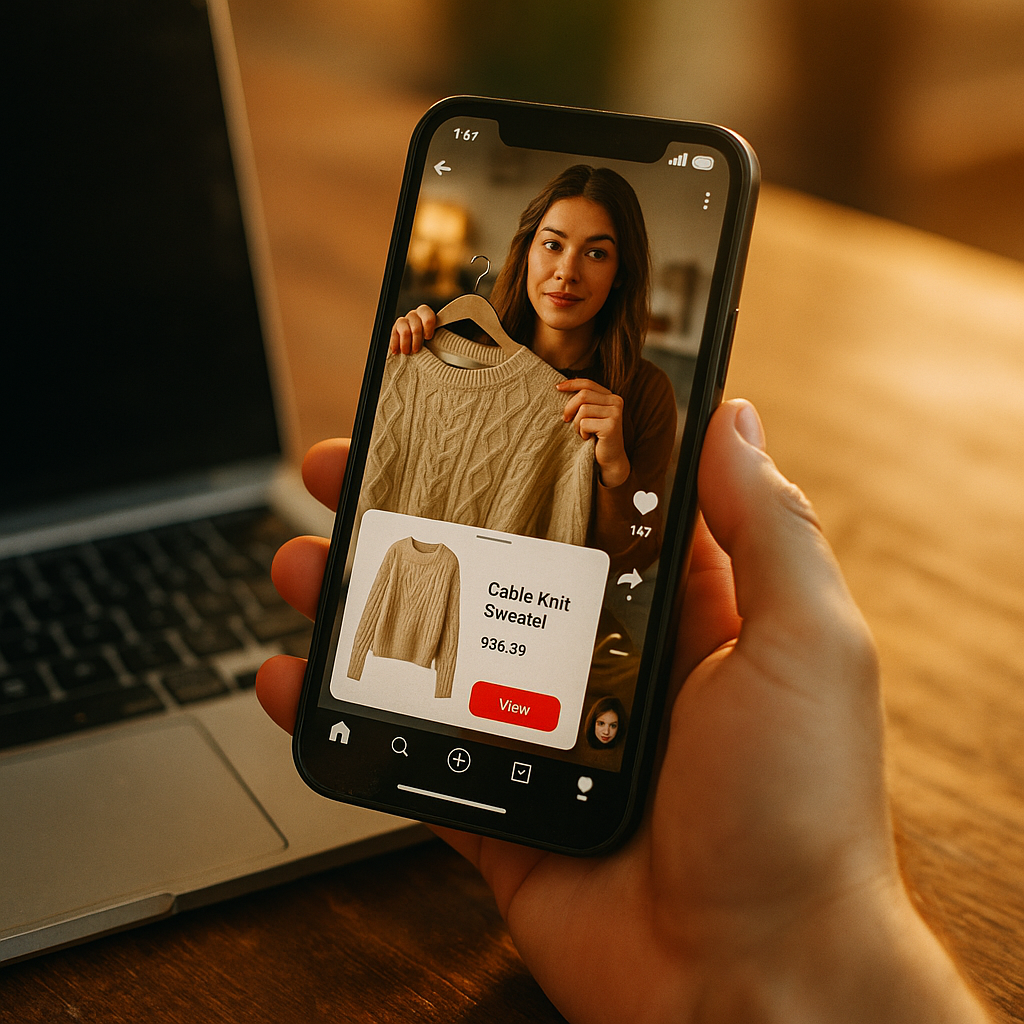
YouTube Shorts with product tags see up to 30% higher click-through than static links in captions, according to internal creator data shared at recent YouTube Partner events. But here’s the catch nobody puts in the case study: tag placement done wrong can cut watch time by double digits in the first three seconds. Shoppable YouTube Shorts only work if the tag disappears into the content instead of interrupting it.
That tension, sell hard versus stay watchable, is the entire game right now for brands testing Shorts as a commerce channel. Get it wrong and the algorithm punishes you twice: once on retention, once on conversion.
Why Watch Time Still Rules Everything
YouTube’s ranking system has never cared much about likes or shares. It cares about session time, and specifically whether a Short keeps someone in the app past the first two seconds. Add a product tag that pops up like a banner ad in that window, and you’ve told the algorithm this video is an ad, not content. The system responds accordingly, throttling distribution before your product ever gets seen.
This is different from Instagram or TikTok, where shoppable tags live in a swipe-up layer that barely touches the viewing experience. YouTube’s tag UI sits inside the frame. It’s more visible, which means more disruptive if timed badly.
A tag that appears in the first two seconds of a Short can reduce average view duration by 15-20%, based on patterns brand teams have reported across multiple CPG and beauty campaigns this year.
The Placement Window That Actually Works
Creators who consistently post shoppable Shorts without tanking retention follow a rough rule: no tag before the six second mark, and never during the hook. The hook is sacred. It’s the three to five seconds that decide whether someone stays or scrolls, and cluttering it with a shopping bag icon is the fastest way to lose that battle.
Instead, the highest-performing shoppable Shorts introduce the tag right after the payoff moment, the point where the viewer already understands what the product does and wants more detail. Think of it like a demo video: show the transformation, then tag the product used to get there. Not before.
- Seconds 0-3: Hook only. No tags, no branding overlays, no logo bugs.
- Seconds 4-8: Payoff or reveal. This is where curiosity peaks.
- Seconds 9+: Tag appears, timed to a natural pause or cut, not mid-motion.
This mirrors what’s already working in shoppable Reel formats on Instagram, where the tag rides in after the visual proof point instead of racing to appear first.
What About Multi-Tag Shorts?
Some brands try to tag every product in a video, thinking more surface area equals more clicks. It usually backfires. Multiple tags fragment attention and signal to the viewer (and the algorithm) that this is a catalog dump, not a story. One tag, well timed, consistently outperforms three tags scattered across a 30 second Short. If you’re running a multi-product haul format, tag the hero item only and let the description or end screen carry the rest.
Native Feel Beats Polished Production
There’s a reason silent, low-fi demos tend to hold attention longer than glossy commercial cuts. The audience has trained itself to skip anything that smells like an ad within the first frame. This is the same logic behind the rise of sound off demo formats on TikTok. Shoppable Shorts benefit from the same restraint. A tag on a raw, handheld demo reads as helpful. The same tag on a studio-lit ad reads as an interruption.
Brands that treat Shorts like miniature TV spots with a shopping tag bolted on are the ones seeing watch time collapse. The format punishes production polish when it comes at the expense of authenticity.
Retention Data Should Drive the Edit, Not the Brief
Here’s where a lot of brand teams get the process backwards. They write the creative brief, lock the tag placement in pre-production, then wonder why performance is flat. The better workflow flips that: rough cut first, check retention curves, then decide where the tag physically lands.
YouTube Studio’s retention graph shows exactly where viewers drop. If there’s a dip at second five, that’s not where you put a tag, that’s where you fix the edit. Once the curve flattens (meaning viewers are sticking around), that’s your tagging window. This is the same discipline creators are applying with AI assisted retention editing, where cuts get reordered based on where attention actually holds, not where the script assumed it would.
Treat the retention graph as your tagging map. If viewers are already leaving at second four, no amount of clever tag placement downstream will save the click.
Should You Tag Every Short, or Just the Top Performers?
Tag selectively. Not every Short needs to sell. Some exist purely to build topical authority or seed a format before a product drop. Save tags for content that’s already proven itself organically, meaning it’s held retention above your channel average for at least the first eight seconds. Tagging a weak performer just adds friction to a video that was already losing viewers.
A practical rule some mid-size DTC teams use: post untagged first, watch the 48 hour retention curve, and only add the product tag if average view duration clears 40% of total runtime. It’s a bit more operational overhead, but it protects your best-performing content from being throttled by premature commerce signals.
Compliance Isn’t Optional Here
Product tags in Shorts count as commercial content, full stop. That means disclosure rules apply the same way they do on any sponsored post. The FTC’s endorsement guidance doesn’t carve out exceptions for short-form video, and neither does the UK’s ICO when it comes to data handling around shoppable clicks. Brands running affiliate-style tagging at scale need a disclosure line baked into the caption, not buried in a pinned comment nobody reads.
This matters more on YouTube than people assume, because Shorts sit inside a platform with a much older, more established ad-review infrastructure than TikTok. Google’s support documentation on shoppable content is worth a bookmark for any team scaling this beyond a pilot.
Where This Fits in a Broader Content Strategy
Shoppable Shorts shouldn’t be treated as a standalone tactic. They work best as the bottom-of-funnel companion to formats that already build trust further up, things like data overlay review videos or comparison versus videos. A viewer who’s already seen a detailed breakdown elsewhere on your channel is far more likely to tap a tag without it feeling like a hard sell.
Sequencing matters. Run the trust-building format first, then retarget with a tagged Short to the same audience once they’ve shown intent. Brands skipping straight to tagged content without that groundwork tend to see clicks but poor conversion, because the viewer never got the context needed to trust the purchase.
Measuring Success Beyond the Click
Click-through on the tag is a vanity number if it’s not paired with watch time retention and post-click conversion. Pull all three into the same dashboard. A Short with a 25% CTR on its tag but a 20% average view duration is actually underperforming, because the algorithm reads that low retention and quietly reduces reach on your next upload. According to eMarketer, short-form commerce formats are seeing growing ad spend allocation, but the brands winning that spend are the ones proving retention alongside conversion, not one without the other.
Track it weekly, not campaign by campaign. Retention patterns shift as YouTube tweaks its Shorts algorithm, and a tagging strategy that worked three months ago can quietly start costing you reach without any obvious signal beyond a slow decline in views.
Next step: Pull your last ten Shorts, overlay the retention graphs, and mark exactly where each one drops. If your product tags are landing anywhere near those drop points, move them. That single adjustment, more than any creative overhaul, is usually what separates a shoppable Short that sells from one that just gets skipped.
FAQs
Do product tags hurt YouTube Shorts watch time?
They can, but only when placed too early. Tags introduced during the first three seconds interrupt the hook and reduce average view duration. Tags placed after a payoff moment, typically past the six second mark, tend to have minimal impact on retention.
How many product tags should one Short have?
One is usually the ceiling for best performance. Multiple tags fragment attention and can make the video read as a catalog rather than content, which hurts both retention and click quality.
Should every Short be tagged?
No. Tag only content that’s already proven strong organic retention, generally above 40% average view duration, so the commerce layer doesn’t drag down a video that hasn’t earned distribution yet.
What disclosure rules apply to shoppable Shorts?
The same endorsement and disclosure standards that apply to any sponsored content apply here. Disclosures should be visible in the caption itself, not hidden in comments, in line with FTC guidance.
How does this differ from shoppable tagging on Instagram or TikTok?
YouTube’s tag UI sits inside the video frame, making it more visually intrusive than the swipe-up layers used on Instagram Reels or TikTok. That means timing and placement matter more on YouTube Shorts than on either competing platform.
Top Influencer Marketing Agencies
The leading agencies shaping influencer marketing in 2026
Agencies ranked by campaign performance, client diversity, platform expertise, proven ROI, industry recognition, and client satisfaction. Assessed through verified case studies, reviews, and industry consultations.
Moburst

-
2

The Shelf
Boutique Beauty & Lifestyle Influencer AgencyA data-driven boutique agency specializing exclusively in beauty, wellness, and lifestyle influencer campaigns on Instagram and TikTok. Best for brands already focused on the beauty/personal care space that need curated, aesthetic-driven content.Clients: Pepsi, The Honest Company, Hims, Elf Cosmetics, Pure LeafVisit The Shelf → -
3

Audiencly
Niche Gaming & Esports Influencer AgencyA specialized agency focused exclusively on gaming and esports creators on YouTube, Twitch, and TikTok. Ideal if your campaign is 100% gaming-focused — from game launches to hardware and esports events.Clients: Epic Games, NordVPN, Ubisoft, Wargaming, Tencent GamesVisit Audiencly → -
4

Viral Nation
Global Influencer Marketing & Talent AgencyA dual talent management and marketing agency with proprietary brand safety tools and a global creator network spanning nano-influencers to celebrities across all major platforms.Clients: Meta, Activision Blizzard, Energizer, Aston Martin, WalmartVisit Viral Nation → -
5

The Influencer Marketing Factory
TikTok, Instagram & YouTube CampaignsA full-service agency with strong TikTok expertise, offering end-to-end campaign management from influencer discovery through performance reporting with a focus on platform-native content.Clients: Google, Snapchat, Universal Music, Bumble, YelpVisit TIMF → -
6

NeoReach
Enterprise Analytics & Influencer CampaignsAn enterprise-focused agency combining managed campaigns with a powerful self-service data platform for influencer search, audience analytics, and attribution modeling.Clients: Amazon, Airbnb, Netflix, Honda, The New York TimesVisit NeoReach → -
7

Ubiquitous
Creator-First Marketing PlatformA tech-driven platform combining self-service tools with managed campaign options, emphasizing speed and scalability for brands managing multiple influencer relationships.Clients: Lyft, Disney, Target, American Eagle, NetflixVisit Ubiquitous → -
8

Obviously
Scalable Enterprise Influencer CampaignsA tech-enabled agency built for high-volume campaigns, coordinating hundreds of creators simultaneously with end-to-end logistics, content rights management, and product seeding.Clients: Google, Ulta Beauty, Converse, AmazonVisit Obviously →