


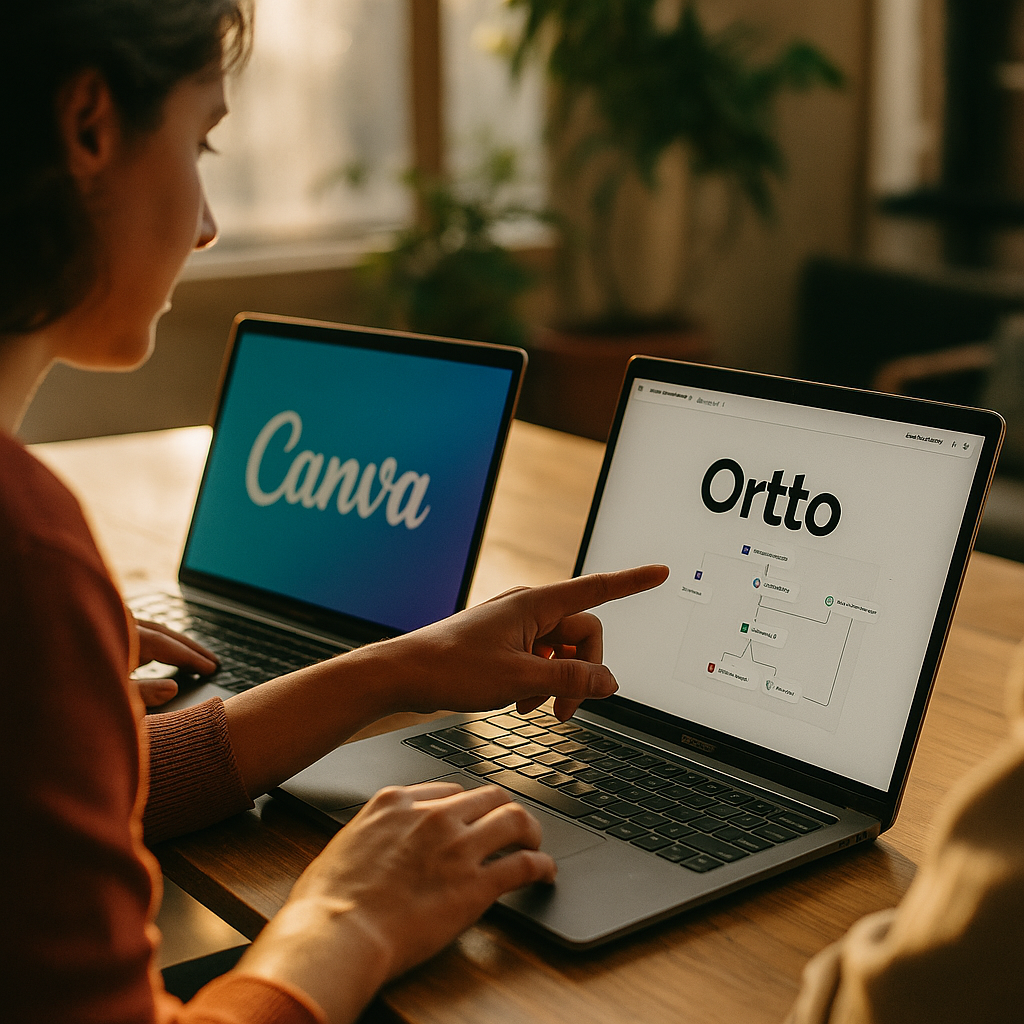
Design platforms don’t buy marketing automation companies for fun. When Canva confirmed its acquisition of Ortto, it put a price tag on a trend every brand marketer has felt coming for years: the wall between “making the asset” and “sending the asset” is dissolving. For creative teams who spent a decade treating Canva as a design tool and their martech stack as someone else’s problem, that wall just came down without warning.
The Deal in Context
Ortto built its reputation as a mid-market marketing automation and customer journey platform, the kind of tool that sits between a CRM and an email service provider and tries to do both jobs adequately. It never had Canva’s brand recognition, but it had something more valuable to an acquirer: workflow logic, customer data handling, and automation triggers that Canva’s design suite has never natively owned.
Canva has spent the last several product cycles pushing outward from “simple design tool” into brand management, video editing, and AI content generation. Buying an automation platform is the next logical move: it lets Canva own the handoff from creative production to campaign execution, rather than watching that value get captured by HubSpot, Klaviyo, or a dozen point solutions in between.
The real story isn’t that Canva bought a smaller automation vendor. It’s that design tools and martech platforms are now competing for the same budget line, and creative teams are the ones who have to reconcile the difference.
Consolidation Isn’t New, But the Direction Is
Marketing software has been consolidating for years. What’s different here is the direction of the acquisition. Historically, CRM and automation giants bought creative tools to round out their suites (think Adobe’s steady acquisition trail). Canva flipping that script, buying automation to extend a design platform, tells you where the leverage sits now. Creative output has become the scarce resource; distribution logic is what everyone’s trying to bolt onto it.
According to eMarketer’s ongoing martech spend tracking, marketing organizations continue to consolidate vendor counts year over year, driven largely by budget scrutiny and integration fatigue. Fewer logins, fewer contracts, fewer places for data to leak. That’s the pitch behind every one of these deals, and it’s usually true for about eighteen months before the next wave of point solutions appears to fill the gaps the consolidated platform inevitably leaves.
Why This Matters More for Creative Teams Than IT Teams
It’s tempting to file this under “martech news” and move on. Don’t. If Canva embeds Ortto-style automation directly into its design environment, creative teams stop being upstream of the campaign process and start being inside it. That’s a meaningful operational shift.
- Asset creation and triggering merge. A creative team building a promotional graphic could theoretically set the send logic, audience segment, and follow-up sequence in the same workspace where they’re editing the design.
- Brand teams inherit data responsibility. Once design tools touch customer records and automation triggers, creative teams are handling personal data, not just brand assets. That’s a compliance conversation most design leads have never had to have.
- Approval workflows get murkier. Who signs off when the design tool also decides when the email fires? Legal and brand safety teams need a seat at a table they didn’t know existed six months ago.
None of this is hypothetical anxiety. It mirrors what’s already happened in the creator and influencer stack, where CDPs, CRMs, and automation layers have been colliding for a few years now. Our own breakdown of CDP, CRM, and automation overlap covers the same tension: consolidated platforms promise efficiency but often blur accountability lines that used to be clean.
What Happens to the Existing Martech Stack?
Here’s the practical question every marketing ops lead is asking right now: does this replace HubSpot, Klaviyo, or Marketo in a brand’s stack, or does it just add another tool that half does the job?
Realistically, for most enterprise brands, Canva plus Ortto won’t replace an established automation platform overnight. Migration costs, existing integrations, and sunk training time make wholesale replacement unlikely in the short term. But for small and mid-market teams that never fully committed to a heavyweight automation platform, this changes the calculus. Why pay for a separate automation seat if your design tool now does journey mapping natively?
HubSpot’s own market positioning has long leaned on the “all in one” pitch. Canva entering that conversation from the creative side, rather than the CRM side, is a genuinely different wedge. It’s coming at automation from the asset outward instead of the database outward.
If your automation platform choice was ever driven by “we already use Canva for everything else,” that logic just got a lot more literal.
Data, Consent, and the Compliance Blind Spot
Every consolidation story eventually runs into the same wall: data governance. When a design platform starts holding customer contact data, behavioral triggers, and automation logs, it becomes a data processor in a much more serious sense than “stores your logo files.”
Brand and legal teams should be asking Canva (and any vendor pitching a similar bundled stack) pointed questions:
- Where is customer data stored, and does it meet the same standards your CRM vendor already meets?
- What’s the audit trail for consent when a design tool triggers a send?
- How does this integrate with existing identity resolution and suppression lists?
This isn’t paranoia. Regulatory scrutiny on marketing data handling has only intensified, and the FTC’s guidance on marketing data practices makes clear that “we didn’t know our design tool was also our CDP” isn’t a defensible position. Teams evaluating consolidated platforms should treat this exactly like any other vendor risk assessment, not a design tool upgrade.
For teams already wrestling with identity and consent across fragmented creator and customer data sources, the issues aren’t new, just newly relevant to a tool marketers didn’t think of as a data platform. Our piece on identity resolution and consent gaps is worth revisiting with this deal in mind: the same principles apply whether the trigger comes from an ESP, a CDP, or now, apparently, a design canvas.
The Creative Team’s New Job Description
Assume the integration ships well and creative teams do get native automation controls inside Canva. What does that actually change day to day?
First, expect creative leads to start owning campaign sequencing decisions that used to belong entirely to lifecycle marketers. That’s not necessarily bad; it can shorten the gap between “we made a great asset” and “the asset reached the right person at the right time.” But it does mean creative teams need at least a working fluency in segmentation logic, send frequency rules, and basic attribution concepts. A designer who understands why a welcome sequence shouldn’t fire the same asset three times in a week is more valuable than one who doesn’t.
Second, expect friction with existing marketing ops teams who’ve spent years building governance around automation platforms. If design teams can now trigger sends independently, marketing ops needs new guardrails, not fewer. This is the same pattern we’ve seen in influencer and creator tooling, where API-first platforms closing the CRM-to-payout gap forced brands to rethink who owns which handoff. Consolidation doesn’t remove coordination work; it just relocates it.
Third, budget conversations shift. If a design subscription starts absorbing automation spend, procurement teams need updated vendor comparison criteria. This is where a lot of teams get lazy, treating a bundled tool as a like-for-like swap without stress-testing deliverability, reporting depth, or list hygiene against what they’re replacing.
A Practical Checklist Before You Shift Budget
Don’t move automation spend toward a Canva-Ortto bundle just because it’s convenient. Run it through the same rigor you’d apply to any platform decision:
- Benchmark deliverability and reporting depth against your current ESP or automation platform before assuming parity.
- Confirm data residency and consent audit trails meet your existing compliance bar, not a lighter one.
- Map out who owns approval sign off when creative and automation live in the same tool.
- Pilot on a low-risk campaign segment before migrating core lifecycle programs.
- Reassess vendor contracts annually. Consolidation deals often mean feature sets shift fast in the first year post-acquisition.
Teams that have already gone through similar consolidation evaluations in the creator and attribution space, like those comparing match rate benchmarks across CDP vendors, know the pattern: the sales pitch always sounds like it solves everything, and the actual gaps only show up three months into implementation.
Broader industry data backs the caution. Sprout Social’s research on marketing team structures consistently shows that tool sprawl, not tool scarcity, is the more common complaint among mid-size marketing teams. That’s worth remembering before adding “consolidation” to a vendor’s marketing copy without checking what it actually consolidates.
Where This Leaves Agencies
Agencies managing multiple client accounts should watch this deal closely for a different reason: platform consolidation at the vendor level often means pricing and access tier changes downstream. If Canva folds Ortto’s automation features into higher-tier Canva plans, agencies billing clients for separate automation tool access need to revisit those line items. It’s a small thing operationally, but it adds up across a client roster, and clients will ask why they’re paying twice for functionality now bundled into a tool they already license.
Bottom line: treat the Canva-Ortto deal as a signal, not a shopping list. Audit where design and automation already overlap in your stack today, assign clear data ownership before any migration conversation starts, and pilot the bundled workflow on one low-stakes campaign before touching your core lifecycle programs.
FAQs
What is the Canva acquisition of Ortto about?
Canva acquired Ortto, a marketing automation and customer journey platform, to extend its design suite into campaign execution, giving Canva users native tools for audience segmentation and automated sends alongside creative production.
Does this replace tools like HubSpot or Klaviyo?
Not immediately for most enterprise brands with established stacks and integrations. It’s more likely to appeal to small and mid-market teams that haven’t fully committed to a dedicated automation platform yet.
What compliance risks should marketing teams consider?
Once a design tool handles customer contact data and triggers automated sends, it becomes a data processor subject to the same scrutiny as any CRM or ESP. Teams should confirm data residency, consent tracking, and audit trails before migrating workflows.
How should creative teams prepare for this shift?
Build basic fluency in segmentation, send frequency, and attribution concepts, and clarify with marketing ops who owns approval sign off when design and automation functions live in the same platform.
Is marketing automation consolidation a broader industry trend?
Yes. Design tools, CDPs, and automation platforms have been converging for several years, driven by budget pressure and integration fatigue, and this acquisition is one of the more visible examples of that direction reversing, with a creative platform acquiring automation rather than the other way around.
FAQs
What is the Canva acquisition of Ortto about?
Canva acquired Ortto, a marketing automation and customer journey platform, to extend its design suite into campaign execution, giving Canva users native tools for audience segmentation and automated sends alongside creative production.
Does this replace tools like HubSpot or Klaviyo?
Not immediately for most enterprise brands with established stacks and integrations. It’s more likely to appeal to small and mid-market teams that haven’t fully committed to a dedicated automation platform yet.
What compliance risks should marketing teams consider?
Once a design tool handles customer contact data and triggers automated sends, it becomes a data processor subject to the same scrutiny as any CRM or ESP. Teams should confirm data residency, consent tracking, and audit trails before migrating workflows.
How should creative teams prepare for this shift?
Build basic fluency in segmentation, send frequency, and attribution concepts, and clarify with marketing ops who owns approval sign off when design and automation functions live in the same platform.
Is marketing automation consolidation a broader industry trend?
Yes. Design tools, CDPs, and automation platforms have been converging for several years, driven by budget pressure and integration fatigue, and this acquisition is one of the more visible examples of that direction reversing, with a creative platform acquiring automation rather than the other way around.
Top Influencer Marketing Agencies
The leading agencies shaping influencer marketing in 2026
Agencies ranked by campaign performance, client diversity, platform expertise, proven ROI, industry recognition, and client satisfaction. Assessed through verified case studies, reviews, and industry consultations.
Moburst

-
2

The Shelf
Boutique Beauty & Lifestyle Influencer AgencyA data-driven boutique agency specializing exclusively in beauty, wellness, and lifestyle influencer campaigns on Instagram and TikTok. Best for brands already focused on the beauty/personal care space that need curated, aesthetic-driven content.Clients: Pepsi, The Honest Company, Hims, Elf Cosmetics, Pure LeafVisit The Shelf → -
3

Audiencly
Niche Gaming & Esports Influencer AgencyA specialized agency focused exclusively on gaming and esports creators on YouTube, Twitch, and TikTok. Ideal if your campaign is 100% gaming-focused — from game launches to hardware and esports events.Clients: Epic Games, NordVPN, Ubisoft, Wargaming, Tencent GamesVisit Audiencly → -
4

Viral Nation
Global Influencer Marketing & Talent AgencyA dual talent management and marketing agency with proprietary brand safety tools and a global creator network spanning nano-influencers to celebrities across all major platforms.Clients: Meta, Activision Blizzard, Energizer, Aston Martin, WalmartVisit Viral Nation → -
5

The Influencer Marketing Factory
TikTok, Instagram & YouTube CampaignsA full-service agency with strong TikTok expertise, offering end-to-end campaign management from influencer discovery through performance reporting with a focus on platform-native content.Clients: Google, Snapchat, Universal Music, Bumble, YelpVisit TIMF → -
6

NeoReach
Enterprise Analytics & Influencer CampaignsAn enterprise-focused agency combining managed campaigns with a powerful self-service data platform for influencer search, audience analytics, and attribution modeling.Clients: Amazon, Airbnb, Netflix, Honda, The New York TimesVisit NeoReach → -
7

Ubiquitous
Creator-First Marketing PlatformA tech-driven platform combining self-service tools with managed campaign options, emphasizing speed and scalability for brands managing multiple influencer relationships.Clients: Lyft, Disney, Target, American Eagle, NetflixVisit Ubiquitous → -
8

Obviously
Scalable Enterprise Influencer CampaignsA tech-enabled agency built for high-volume campaigns, coordinating hundreds of creators simultaneously with end-to-end logistics, content rights management, and product seeding.Clients: Google, Ulta Beauty, Converse, AmazonVisit Obviously →