


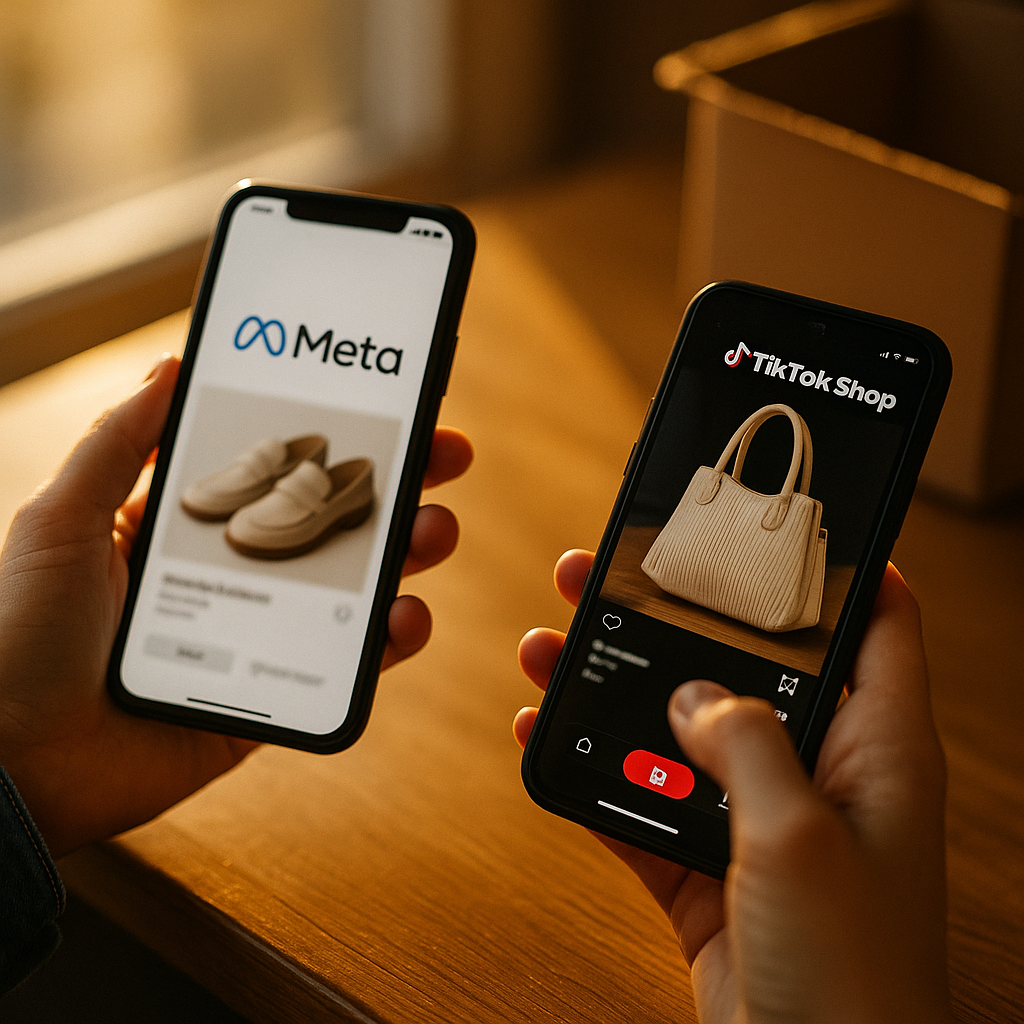
Four platforms. Four checkout systems. Four content specs. Zero shared attribution model. If you’re planning a social commerce rollout across Meta, Flipkart, Myntra and TikTok Shop simultaneously, you’re not being ambitious, you’re setting up a resourcing disaster. eMarketer pegs global social commerce sales past $1 trillion, but most brands still launch every channel at once and wonder why nothing scales.
Sequencing isn’t a compromise. It’s the strategy.
Why Order Matters More Than Speed
Marketing leaders love to say “omnichannel from day one.” That instinct is expensive. Each of these four platforms has a different buyer intent, a different content format, and a different data exhaust. Launch them together and your creative team burns out reformatting assets, your analytics team drowns in mismatched conversion definitions, and your finance team can’t tell which platform actually drove the incremental sale.
Sequencing lets you build muscle memory. You learn Meta’s catalog sync quirks before you inherit Flipkart’s return-heavy category rules. You learn TikTok Shop’s live commerce cadence before you layer in Myntra’s fashion-specific discovery algorithm. Each platform teaches you something the next one needs.
Brands that sequence platform rollouts by buyer intent, not by hype cycle, typically hit stable unit economics two to three quarters faster than those launching everything in parallel.
Start With Meta: Your Attribution Backbone
Meta goes first for one reason: it’s the only platform in this lineup with mature, exportable attribution infrastructure that plugs into your existing martech stack. Conversions API, Advantage+ shopping campaigns, catalog-based dynamic ads: none of it is new, and that’s the point. You want your first platform to be the one where you’re troubleshooting creative and audience fit, not fighting the plumbing.
Use this phase to build your baseline. What’s your blended CAC on paid social before any TikTok Shop or Flipkart traffic muddies the water? What creator content formats actually move add-to-cart rates versus just driving likes? Meta’s ad manager gives you enough granularity to answer both, and that baseline becomes your control group for every platform that follows.
This is also where you should stand up your creator to CRM data pipeline. If checkout data isn’t flowing back into your CRM cleanly on platform one, it won’t magically clean itself up on platform four. Fix the plumbing early. For deeper detail on Meta’s own commerce tooling, Meta’s business platform documents the current catalog and checkout requirements, which shift often enough to warrant a quarterly recheck.
What to actually measure in phase one
- Creator-driven CAC versus paid-media-only CAC, segmented by content format
- Catalog sync error rate (a proxy for how clean your product data feed actually is)
- Time from click to first purchase, which sets your baseline for cross-platform comparison later
Flipkart Second: Test Marketplace Logic Without Fashion Complexity
Once Meta is generating predictable, attributable revenue, move to Flipkart. Why second and not third? Because Flipkart’s marketplace mechanics (seller ratings, category-specific compliance, GST invoicing nuances) are a different operational animal from anything in paid social, and you want to absorb that complexity before you also have to deal with Myntra’s fashion-specific discovery layer.
Flipkart rewards operational discipline over creative flash. Listing quality, delivery SLAs, and review velocity matter as much as your influencer content. This is where your team learns to operate inside someone else’s storefront rules rather than your own branded checkout. That’s a genuinely different skill, and it’s better to learn it on a general marketplace before you layer on category-specific pressure.
If your influencer program spans multiple markets already, this is also a natural point to revisit your cross market creator calendar structure. Flipkart’s promotional calendar (Big Billion Days, festive sales) doesn’t align with Meta’s always-on pacing, and your creator content cadence needs to flex accordingly.
Myntra Third: Fashion-Native Discovery Meets Higher Stakes
Myntra comes after Flipkart deliberately. By now your team understands marketplace compliance basics. Myntra adds a layer most brands underestimate: its discovery algorithm rewards visual consistency and creator-led styling content far more heavily than generic product listings. If you’re in apparel, beauty, or accessories, this is often where influencer content actually starts driving disproportionate GMV relative to other platforms.
But Myntra also raises the stakes on creative production. You can’t just repurpose Meta reels here. Myntra shoppers expect styling context, size guidance, and creator credibility specific to fashion discovery. This is where the canvas UGC economics conversation becomes relevant: you’re now budgeting for creators who can act as stylists and presenters, not just casual reviewers.
Run your kill criteria rigorously here. Myntra’s creator ROI curve is steeper than Flipkart’s, meaning underperforming partnerships need to be cut faster, not slower. If you haven’t formalized this, the kill criteria framework gives a workable structure for deciding when a creator relationship isn’t earning its keep.
Fashion-category creators on Myntra convert at meaningfully higher rates when content includes explicit sizing or fit guidance, a detail generic reviewer content almost always skips.
TikTok Shop Last: Because Live Commerce Demands Everything You’ve Already Built
TikTok Shop goes last, not because it’s less important, but because it’s the most operationally demanding platform in the sequence. Live shopping requires real-time inventory sync, instant creator payout structures, and a content team that can produce at a pace closer to broadcast television than traditional social media. You don’t want to be learning attribution basics, marketplace compliance, and fashion discovery algorithms while also managing a live-stream sales event.
By the time you reach TikTok Shop, your team should already know: how to read creator-driven CAC (from Meta), how to operate inside someone else’s storefront rules (from Flipkart), and how to brief creators for high-conversion, category-specific content (from Myntra). TikTok Shop just adds speed and real-time pressure on top of skills you already have.
GMV targets on TikTok Shop also behave differently than the other three platforms; they spike hard around live events and creator drops rather than following a steady curve. If you’re setting revenue expectations for this phase, the TikTok Shop GMV budget framework is worth reviewing before you commit spend, and TikTok’s own ads platform documentation updates its commerce specs frequently enough that a quarterly refresh is genuinely necessary. Real-time payout expectations also shift here: creators doing live commerce expect faster settlement than a standard 30-day invoice cycle, which is why a real time revenue share payout system matters more on this platform than any of the previous three.
Budget and Headcount: What Actually Shifts Between Phases
Sequencing isn’t just about platform order. It’s about resourcing that changes shape at every phase. Meta phase needs strong paid media and analytics talent. Flipkart phase needs operations and compliance skill. Myntra phase needs fashion-fluent content producers. TikTok Shop phase needs live commerce production capability, arguably the hardest skill set to hire for right now.
Rather than hiring four separate specialist teams up front, most mid-market brands are better served reviewing the in house hiring versus agency retainer tradeoff at each phase gate. Agencies make more sense early, when you’re still validating whether a platform earns permanent headcount. By the TikTok Shop phase, if GMV projections justify it, in-house live commerce production usually pays for itself faster than a retainer.
Budget-wise, resist the temptation to split spend evenly across all four platforms from month one. A zero based budgeting approach, where each phase has to justify its own spend against the previous phase’s proven CAC, keeps finance comfortable and prevents the classic mistake of overfunding a platform before you know it converts.
A rough phase-gate checklist
- Don’t advance to the next platform until CAC on the current one is stable for at least two consecutive reporting cycles
- Confirm creator payout and compliance workflows are documented before scaling creator count
- Re-benchmark blended CAC every phase, not just at rollout completion
- Keep a standing kill list review cadence across all active platforms, not just the newest one
One more thing worth saying plainly: this sequence assumes a brand with genuine cross-category or cross-market ambitions. If you’re a single-category, single-market brand, you may never need all four platforms, and forcing the sequence just to “cover the bases” wastes budget nobody asked you to spend. Sequence toward your actual growth plan, not toward platform FOMO. For teams managing this across multiple geographies simultaneously, the multilingual creator rollout approach offers a parallel framework worth cross-referencing, since language and platform sequencing often need to happen together rather than in isolation.
FAQs
Frequently Asked Questions
Why not launch Meta, Flipkart, Myntra and TikTok Shop at the same time?
Launching all four simultaneously spreads your team too thin across incompatible operational models. Each platform has distinct attribution, compliance, and content requirements, and parallel launches typically produce mismatched data that makes it impossible to tell which platform is actually driving incremental revenue.
How long should each phase last before moving to the next platform?
Most brands need at least two consecutive stable reporting cycles, roughly two to three months, of predictable CAC before advancing. Rushing the phase gate is the most common reason sequencing plans collapse into simultaneous launches anyway.
Does this sequence apply to every product category?
No. Fashion and beauty brands generally benefit most from the Myntra phase, while categories like electronics or home goods may find Flipkart delivers stronger returns and could reasonably deprioritize Myntra altogether.
Should agencies handle every phase, or should some move in-house?
Agencies typically make sense during early validation phases when you’re still confirming a platform’s ROI. Once a platform proves its unit economics, particularly TikTok Shop’s live commerce operations, in-house teams often become more cost-effective long term.
What’s the biggest risk in sequencing a social commerce rollout?
Treating the sequence as rigid rather than data-driven. If a platform underperforms its phase-gate benchmarks, the right move is to pause and diagnose, not to push forward on schedule just to stay on plan.
Next step: pick your phase-one platform based on where your attribution infrastructure is already strongest, run it for two full reporting cycles, and don’t greenlight platform two until CAC there is boring and predictable.
Frequently Asked Questions
Why not launch Meta, Flipkart, Myntra and TikTok Shop at the same time?
Launching all four simultaneously spreads your team too thin across incompatible operational models. Each platform has distinct attribution, compliance, and content requirements, and parallel launches typically produce mismatched data that makes it impossible to tell which platform is actually driving incremental revenue.
How long should each phase last before moving to the next platform?
Most brands need at least two consecutive stable reporting cycles, roughly two to three months, of predictable CAC before advancing. Rushing the phase gate is the most common reason sequencing plans collapse into simultaneous launches anyway.
Does this sequence apply to every product category?
No. Fashion and beauty brands generally benefit most from the Myntra phase, while categories like electronics or home goods may find Flipkart delivers stronger returns and could reasonably deprioritize Myntra altogether.
Should agencies handle every phase, or should some move in-house?
Agencies typically make sense during early validation phases when you’re still confirming a platform’s ROI. Once a platform proves its unit economics, particularly TikTok Shop’s live commerce operations, in-house teams often become more cost-effective long term.
What’s the biggest risk in sequencing a social commerce rollout?
Treating the sequence as rigid rather than data-driven. If a platform underperforms its phase-gate benchmarks, the right move is to pause and diagnose, not to push forward on schedule just to stay on plan.
Top Influencer Marketing Agencies
The leading agencies shaping influencer marketing in 2026
Agencies ranked by campaign performance, client diversity, platform expertise, proven ROI, industry recognition, and client satisfaction. Assessed through verified case studies, reviews, and industry consultations.
Moburst

-
2

The Shelf
Boutique Beauty & Lifestyle Influencer AgencyA data-driven boutique agency specializing exclusively in beauty, wellness, and lifestyle influencer campaigns on Instagram and TikTok. Best for brands already focused on the beauty/personal care space that need curated, aesthetic-driven content.Clients: Pepsi, The Honest Company, Hims, Elf Cosmetics, Pure LeafVisit The Shelf → -
3

Audiencly
Niche Gaming & Esports Influencer AgencyA specialized agency focused exclusively on gaming and esports creators on YouTube, Twitch, and TikTok. Ideal if your campaign is 100% gaming-focused — from game launches to hardware and esports events.Clients: Epic Games, NordVPN, Ubisoft, Wargaming, Tencent GamesVisit Audiencly → -
4

Viral Nation
Global Influencer Marketing & Talent AgencyA dual talent management and marketing agency with proprietary brand safety tools and a global creator network spanning nano-influencers to celebrities across all major platforms.Clients: Meta, Activision Blizzard, Energizer, Aston Martin, WalmartVisit Viral Nation → -
5

The Influencer Marketing Factory
TikTok, Instagram & YouTube CampaignsA full-service agency with strong TikTok expertise, offering end-to-end campaign management from influencer discovery through performance reporting with a focus on platform-native content.Clients: Google, Snapchat, Universal Music, Bumble, YelpVisit TIMF → -
6

NeoReach
Enterprise Analytics & Influencer CampaignsAn enterprise-focused agency combining managed campaigns with a powerful self-service data platform for influencer search, audience analytics, and attribution modeling.Clients: Amazon, Airbnb, Netflix, Honda, The New York TimesVisit NeoReach → -
7

Ubiquitous
Creator-First Marketing PlatformA tech-driven platform combining self-service tools with managed campaign options, emphasizing speed and scalability for brands managing multiple influencer relationships.Clients: Lyft, Disney, Target, American Eagle, NetflixVisit Ubiquitous → -
8

Obviously
Scalable Enterprise Influencer CampaignsA tech-enabled agency built for high-volume campaigns, coordinating hundreds of creators simultaneously with end-to-end logistics, content rights management, and product seeding.Clients: Google, Ulta Beauty, Converse, AmazonVisit Obviously →