


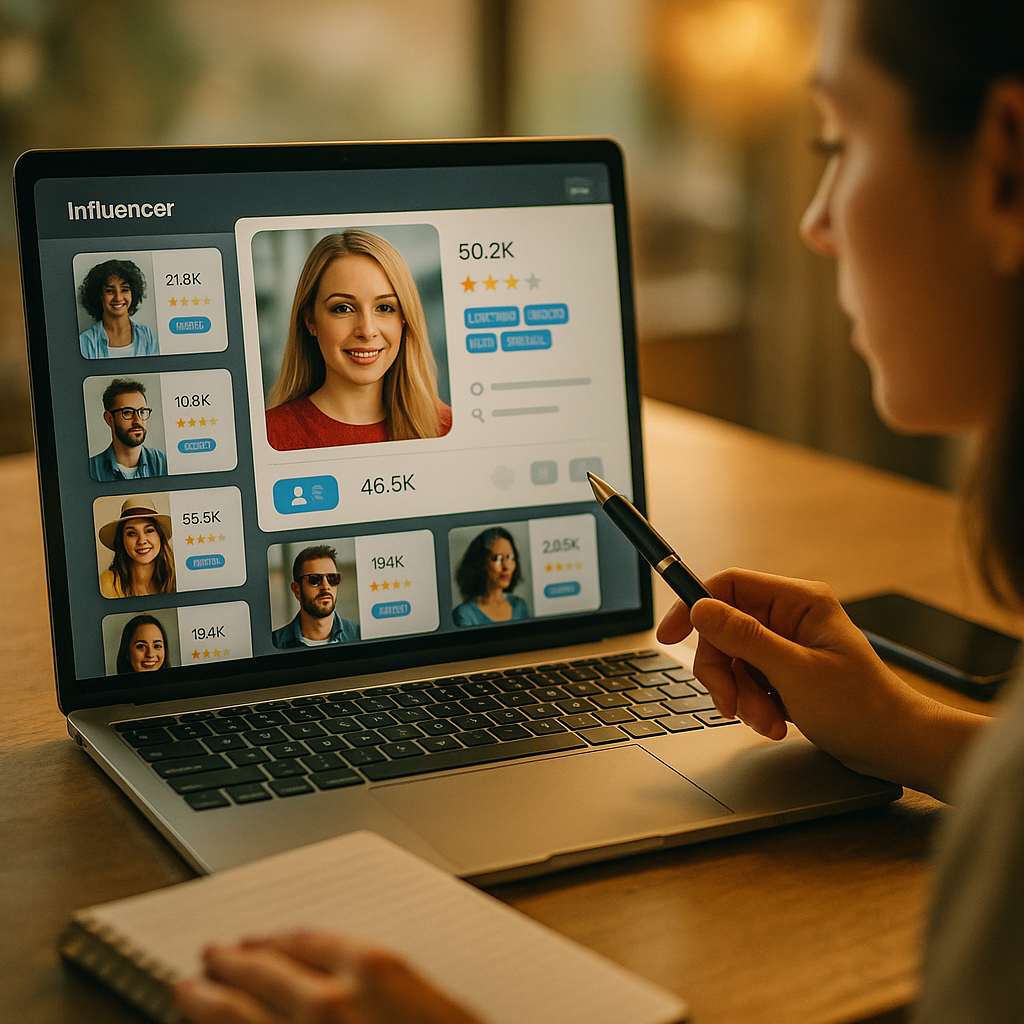
Every major influencer CRM platform now claims some version of “agentic AI.” CreatorIQ has it. Traackr has it. A dozen smaller players are racing to bolt autonomous agents onto dashboards that, eighteen months ago, just sent email templates. The pitch sounds great: let the software find creators, negotiate rates, and flag risk while your team sleeps. The reality is messier, and brands that upgrade without a structured test plan are going to pay for it in bad matches and wasted spend.
What “Agentic” Actually Means in a Creator CRM
Strip away the marketing language and an agentic feature is software that takes multi-step action without a human clicking “approve” at every stage. In an influencer CRM, that typically shows up as four capabilities: autonomous creator discovery based on campaign briefs, automated outreach and follow-up sequencing, dynamic rate benchmarking, and predictive performance scoring that ranks creators before a single deliverable goes live.
That’s a meaningful jump from the old workflow, where the CRM was basically a searchable database with a CRM layer bolted on. Now the platform is making judgment calls. It decides which creators fit a brief, how much to offer them, and when to escalate a conversation to a human. That’s exactly where brands need to slow down, because judgment calls carry liability that a search filter never did.
An agent that auto-sends a rate offer based on flawed benchmark data doesn’t just waste time, it sets a contractual anchor point you may struggle to walk back in later negotiations.
Why Vendors Are Moving Fast on Agentic Features
The push isn’t just product innovation for its own sake. Marketing teams are under pressure to do more with flat or shrinking headcount, and vendors know it. According to Gartner research on marketing technology adoption, AI-driven automation is one of the few areas where CMOs are still approving net-new budget even as broader martech spend faces scrutiny. If you’ve read our breakdown of the martech stack bloat problem, you already know procurement teams are tired of paying for tools that don’t earn their keep. Agentic features are the new justification for renewal pricing, whether or not the underlying model performs.
There’s also a competitive dynamic at play. Once CreatorIQ ships an autonomous discovery agent, Traackr and Grin feel pressure to match it within a quarter or two, regardless of whether the feature is production-ready. That’s a familiar pattern from the martech world generally, and it means some of what’s shipping right now is closer to a beta than a finished product.
The Discovery Agent Test: Does It Actually Understand Your Brief?
Before trusting any autonomous discovery feature, run it against a brief you already know the answer to. Pick a past campaign where you hand-selected 20 creators and achieved a known outcome. Feed the same brief parameters into the agent and see how much overlap you get.
Anything below 60% overlap with your known-good list is a red flag. It doesn’t mean the tool is useless, it means the model’s weighting of audience quality versus follower count versus past brand affinity doesn’t match your actual decision criteria. Ask the vendor directly what signals the model prioritizes. If they can’t answer in plain language, that’s its own answer.
Pay close attention to how the agent handles edge cases: micro-creators with inconsistent posting cadence, creators who’ve worked with a direct competitor, or accounts with recent engagement anomalies. These are exactly the scenarios where human vetting has historically added the most value, and they’re also where agentic tools are most likely to quietly get it wrong.
Rate Negotiation Agents Need a Hard Ceiling
Automated rate benchmarking is maybe the most seductive agentic feature, and also the riskiest to deploy without guardrails. If a CRM’s agent is pulling comparable rates from a database with stale or self-reported figures, you’re not getting a negotiation advantage, you’re inheriting someone else’s bad data. This is the same concern we raised when comparing rate accuracy across platform databases, and it applies even more when an agent is empowered to act on that data without review.
Set a firm rule during testing: no agent sends an offer, counteroffer, or rejection without human sign-off for at least the first full campaign cycle. Treat the agent’s output as a recommendation, not a transaction. Track how often your team overrides the suggested rate and in which direction. If you’re consistently overriding upward by more than 15 to 20%, the model is underpricing your creators and potentially damaging relationships before you even realize it.
Compliance and Data Rights Don’t Pause for Automation
An agent that automates outreach is also an agent that’s generating, storing, and sometimes sharing creator data across systems faster than your legal team can review it. That raises the same governance questions we outlined in our creator data governance checklist. Before any agentic feature goes live across your whole roster, confirm where creator contact data flows, whether the vendor’s AI training policy touches your proprietary campaign data, and whether creators have been notified their information is processed by an automated system.
This matters more in regions with active enforcement. The FTC’s guidance on automated decision-making and consumer protection increasingly applies to B2B vendor relationships, not just consumer-facing AI. If an agent is making decisions that affect a creator’s compensation or opportunity access, you want documentation showing a human reviewed that outcome, especially if a dispute ever surfaces. Our piece on vetting data rights in AI copilot contracts walks through the specific contract language to request before signing an upgrade agreement.
Build a 30-Day Pilot, Not a Full Rollout
The temptation with any big CRM upgrade is to flip the switch for the whole team at once. Resist it. Agentic features should get a contained pilot with a single campaign category, ideally one that’s low-stakes enough that a misfire doesn’t torch a key brand relationship.
- Choose one campaign type (gifting, paid UGC, or a single platform like TikTok Shop) to run the pilot against.
- Assign one team member to shadow every agentic decision for the full 30 days, logging overrides and near-misses.
- Set measurable thresholds in advance: acceptable override rate, acceptable rate-variance, acceptable false-positive rate on brand safety flags.
- Compare total time saved against total time spent correcting the agent’s output. Be honest about the math.
This mirrors the approach we recommended when evaluating automated budget tools in our CreatorIQ budget optimization review: automation earns trust incrementally, campaign by campaign, not through a single demo in a sales call.
Watch the Brand Safety Layer Especially Closely
Agentic brand safety scoring is advancing fast, but speed and accuracy aren’t the same thing. We’ve covered this tension directly in our analysis of brand safety automation claims and in why human review still outperforms automated scoring in several documented cases. If your CRM’s new agent auto-flags or auto-approves creators based on a safety score, insist on seeing the model’s false-positive rate on a sample set before letting it make unsupervised calls. A tool that auto-rejects a legitimate creator over an out-of-context clip costs you a relationship. A tool that auto-approves a risky one costs you a lot more.
Questions to Ask Before You Sign the Upgrade
Most vendors will walk you through a glossy roadmap demo. Push past it with specific operational questions:
- What percentage of agentic decisions in production required human override last quarter, across the vendor’s full client base?
- Can the agent’s reasoning be audited after the fact, or is it a black box?
- Does the upgrade change your contract’s data usage or consumption-based pricing terms? Our piece on consumption-based pricing in platform contracts is worth reviewing before you sign anything tied to AI usage tiers.
- Is there a kill switch to revert to manual workflows mid-campaign if the agent underperforms?
If a vendor can’t give you a straight answer on override rates, treat that as a maturity signal. A tool that’s genuinely production-ready has that data on hand because the vendor’s own team is tracking it internally.
Run a bounded 30-day pilot on one campaign type, log every override, and only expand agentic features to the rest of your roster once the numbers, not the sales deck, prove it’s ready.
Frequently Asked Questions
What does “agentic” mean in an influencer CRM platform?
It refers to AI features that take multi-step action with limited human input, such as autonomously finding creators, sending outreach, negotiating rates, or scoring brand safety risk, rather than simply presenting data for a human to act on.
Are agentic features in influencer CRM platforms reliable yet?
Reliability varies widely by vendor and feature. Discovery and outreach automation tend to be more mature than autonomous rate negotiation or brand safety scoring, which still show meaningful override rates in production.
How long should a brand pilot agentic CRM features before full rollout?
A minimum of 30 days against a single, lower-stakes campaign type is a reasonable baseline, long enough to surface override patterns without risking a major brand relationship.
Can an AI agent legally negotiate rates with creators on a brand’s behalf?
Technically yes, but it creates liability exposure if the agent acts on flawed benchmark data or sends binding offers without review. Most brands keep a human sign-off step for at least the first several campaign cycles.
What should brands check in vendor contracts before enabling agentic features?
Confirm how creator data flows through the AI system, whether the vendor trains models on your proprietary campaign data, whether pricing shifts to a consumption-based model tied to AI usage, and whether there’s a way to revert to manual workflows if the feature underperforms.
Top Influencer Marketing Agencies
The leading agencies shaping influencer marketing in 2026
Agencies ranked by campaign performance, client diversity, platform expertise, proven ROI, industry recognition, and client satisfaction. Assessed through verified case studies, reviews, and industry consultations.
Moburst

-
2

The Shelf
Boutique Beauty & Lifestyle Influencer AgencyA data-driven boutique agency specializing exclusively in beauty, wellness, and lifestyle influencer campaigns on Instagram and TikTok. Best for brands already focused on the beauty/personal care space that need curated, aesthetic-driven content.Clients: Pepsi, The Honest Company, Hims, Elf Cosmetics, Pure LeafVisit The Shelf → -
3

Audiencly
Niche Gaming & Esports Influencer AgencyA specialized agency focused exclusively on gaming and esports creators on YouTube, Twitch, and TikTok. Ideal if your campaign is 100% gaming-focused — from game launches to hardware and esports events.Clients: Epic Games, NordVPN, Ubisoft, Wargaming, Tencent GamesVisit Audiencly → -
4

Viral Nation
Global Influencer Marketing & Talent AgencyA dual talent management and marketing agency with proprietary brand safety tools and a global creator network spanning nano-influencers to celebrities across all major platforms.Clients: Meta, Activision Blizzard, Energizer, Aston Martin, WalmartVisit Viral Nation → -
5

The Influencer Marketing Factory
TikTok, Instagram & YouTube CampaignsA full-service agency with strong TikTok expertise, offering end-to-end campaign management from influencer discovery through performance reporting with a focus on platform-native content.Clients: Google, Snapchat, Universal Music, Bumble, YelpVisit TIMF → -
6

NeoReach
Enterprise Analytics & Influencer CampaignsAn enterprise-focused agency combining managed campaigns with a powerful self-service data platform for influencer search, audience analytics, and attribution modeling.Clients: Amazon, Airbnb, Netflix, Honda, The New York TimesVisit NeoReach → -
7

Ubiquitous
Creator-First Marketing PlatformA tech-driven platform combining self-service tools with managed campaign options, emphasizing speed and scalability for brands managing multiple influencer relationships.Clients: Lyft, Disney, Target, American Eagle, NetflixVisit Ubiquitous → -
8

Obviously
Scalable Enterprise Influencer CampaignsA tech-enabled agency built for high-volume campaigns, coordinating hundreds of creators simultaneously with end-to-end logistics, content rights management, and product seeding.Clients: Google, Ulta Beauty, Converse, AmazonVisit Obviously →