


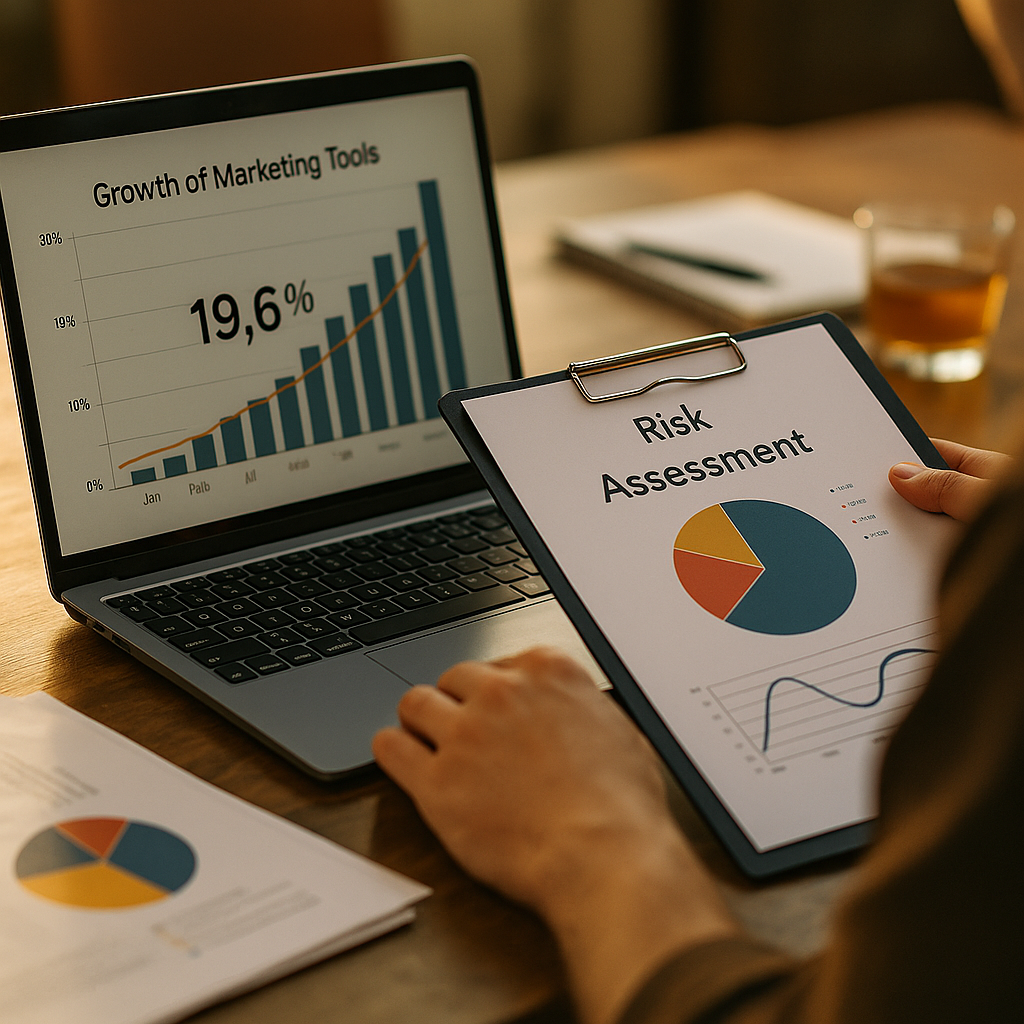
A 19.6 percent compound annual growth rate doesn’t happen by accident. It happens when an entire industry decides that software should stop waiting for instructions and start making decisions on its own. That’s the trajectory analysts are now projecting for the agentic marketing services market, a category built around AI agents that plan campaigns, allocate budgets, and optimize creator partnerships with minimal human sign off. For brands still approving every line item manually, the math is about to get uncomfortable.
What Counts as “Agentic” Marketing Anyway?
There’s a lot of loose talk about AI agents right now, so let’s be precise. Agentic marketing tools don’t just generate content or surface recommendations. They take action: adjusting bids, pausing underperforming creator deals, reallocating spend across channels, even negotiating within preset parameters. Think of the difference between a chatbot that suggests a subject line and a system that tests twelve subject lines, picks a winner, and ships the campaign while you’re asleep.
That autonomy is the whole value proposition, and also the whole risk. Vendors pitching this category, from martech incumbents bolting agent layers onto existing suites to venture backed startups built agent first, are selling speed and scale. The 19.6 percent CAGR figure reflects real enterprise appetite, not hype alone. Marketing leaders are tired of bottlenecks, and agentic tools promise to remove them.
Agentic marketing doesn’t just automate tasks, it automates decisions, which means brands are effectively outsourcing judgment calls that used to require a human sign off.
Why the Growth Rate Matters More Than the Headline
Double digit CAGR projections get thrown around constantly in martech forecasting, and skepticism is healthy. But a few things make this number worth tracking closely. First, it’s compounding off a relatively small base, which means absolute dollar growth will accelerate fast once enterprise adoption crosses a tipping point. Second, the growth isn’t evenly distributed. Agencies and in house teams managing high volume creator programs, think CPG, beauty, and retail, are adopting agentic tools faster than B2B or regulated sectors like finance and healthcare, where compliance friction slows everything down.
That uneven adoption curve is already visible in how creator tools absorb budget faster than traditional display or search spend. Agentic capability is becoming a feature expectation inside the platforms brands already use for influencer discovery, contracting, and payment, not a standalone purchase decision. That’s a meaningful shift for procurement teams who thought they were buying “AI features” and are now buying decision making authority.
The Budget Angle CFOs Will Ask About
Every CMO pitching agentic tools to finance needs a clean answer to one question: what’s the actual ROI, and how do we prove it? This is where the creator economy’s existing measurement problems collide head on with AI automation. If brands already struggle to prove the value of campaigns run by humans, as the research behind the creator ROI paradox makes painfully clear, handing decisions to an algorithm doesn’t automatically fix attribution. It just moves the blind spot upstream.
Smart finance teams are asking vendors for audit trails, not just dashboards. They want to see the decision logic an agent used to shift $50,000 from one creator tier to another, not just the end result. That’s pushing vendors toward explainable AI features, which, frankly, should have been table stakes from the start.
Where Brands Are Actually Deploying Agentic Tools First
The use cases gaining traction aren’t the flashy ones you’d expect. It’s not AI generated influencer avatars running entire campaigns (though that’s coming). It’s much more mundane, and much more valuable:
- Creator discovery and shortlisting: agents scan thousands of profiles against brand safety and audience fit criteria, cutting manual vetting time dramatically.
- Dynamic budget reallocation: agents shift spend between creator tiers mid campaign based on real time engagement signals, a natural extension of the shifts outlined in creator tier budget math.
- Contract and payment automation: agents trigger payments once deliverables clear compliance checks, reducing the disputes documented in reporting on pay terms disputes.
- Content compliance screening: agents flag FTC disclosure gaps or brand guideline violations before a post goes live, not after it’s already screenshotted and trending for the wrong reasons.
Notice what’s missing from that list: full creative strategy and brand voice decisions. That’s not an accident. Most practitioners still want a human making the call on tone, narrative, and cultural nuance. Agents are better at the operational middle layer, the stuff that’s rules based and data heavy but still soul crushing to do manually.
The Compliance Problem Nobody’s Fully Solved
Here’s the uncomfortable part. Autonomous agents making real time decisions about influencer partnerships raise fresh regulatory questions that most legal teams haven’t finished answering. If an agent approves a creator contract that violates FTC disclosure rules, who’s liable? The brand, obviously, but good luck explaining that to a board when the decision trail runs through a black box algorithm instead of a named employee.
This isn’t hypothetical anxiety. It’s an extension of problems already surfacing across creator marketplace compliance risk, where expanding platform ecosystems already outpace brand oversight capacity. Add autonomous decision making on top of that, and the risk surface grows again. The FTC’s disclosure guidance wasn’t written with AI agents negotiating deals in mind, and brands shouldn’t assume vendor terms of service will protect them if an agent makes a call that triggers an enforcement action.
Smart legal teams are already requiring documentation standards similar to what’s emerging in deal diligence audit trails, treating every agent decision as something that needs to be reconstructable after the fact. If you can’t explain why an agent did something, you don’t actually control it. You’re just hoping it behaves.
What’s Driving Vendor Consolidation in This Space
Big holding companies aren’t sitting this one out. The same consolidation pressure pushing WPP and Omnicom to build internal creator teams, covered in depth in our piece on agency creator team buildouts, is now extending into agentic infrastructure. Agencies that can offer brands an agent layer on top of their existing creator networks have a pitch that’s hard to ignore: faster execution, lower headcount costs, and a story about innovation that plays well in new business pitches.
Expect a wave of acquisitions over the next several quarters as martech platforms buy smaller agentic startups to bolt capability onto existing suites rather than building from scratch. HubSpot, Salesforce, and Adobe have all signaled intent in this direction, and industry trackers at eMarketer and Statista have flagged agentic AI as one of the fastest growing subcategories inside broader marketing technology spend.
What Brands Should Actually Do Right Now
Don’t wait for a mature vendor landscape before engaging, but don’t hand over full autonomy on day one either. A staged approach works better:
- Start with low risk, high volume tasks: discovery, screening, and reporting, where errors are cheap to catch and correct.
- Require explainability from any vendor before expanding agent permissions into budget or contracting decisions.
- Build an internal review cadence, weekly at minimum during rollout, to audit agent decisions against brand safety and compliance standards.
- Keep a human in the loop for anything touching creator payment terms, given how often hidden cost drivers already complicate pricing without AI involved.
Treat this like any other high stakes automation rollout. Move fast enough to capture efficiency gains, slow enough that you’re not the cautionary case study in next year’s compliance report.
Frequently Asked Questions
What is the agentic marketing services market?
It’s the category of software and services built around AI agents that autonomously execute marketing tasks, such as budget allocation, creator vetting, and campaign optimization, rather than simply offering recommendations for a human to act on.
Why is the agentic marketing services market growing so fast?
Brands are under pressure to cut operational costs and speed up campaign execution. Agentic tools promise to remove manual bottlenecks in areas like creator discovery, budget reallocation, and compliance screening, which is driving strong enterprise demand.
Is agentic marketing the same as generative AI marketing?
No. Generative AI creates content, like copy or images, based on prompts. Agentic AI goes further by taking autonomous actions, such as approving a contract or shifting ad spend, often without requiring human approval at each step.
What are the biggest risks of adopting agentic marketing tools?
The main risks are compliance exposure (if an agent approves a deal that violates disclosure rules), weak attribution (if you can’t explain why an agent made a decision), and over reliance on automation for judgment calls that still need human nuance.
Which parts of influencer marketing are best suited to agentic automation today?
Creator discovery, compliance screening, contract triggering, and dynamic budget reallocation are the most mature use cases. Creative strategy and brand voice decisions still largely require human oversight.
Next step: audit one existing creator workflow, ideally discovery or payment approval, and pilot an agentic tool there before expanding scope. Measure the decision trail, not just the output.
FAQs
What is the agentic marketing services market?
It’s the category of software and services built around AI agents that autonomously execute marketing tasks, such as budget allocation, creator vetting, and campaign optimization, rather than simply offering recommendations for a human to act on.
Why is the agentic marketing services market growing so fast?
Brands are under pressure to cut operational costs and speed up campaign execution. Agentic tools promise to remove manual bottlenecks in areas like creator discovery, budget reallocation, and compliance screening, which is driving strong enterprise demand.
Is agentic marketing the same as generative AI marketing?
No. Generative AI creates content, like copy or images, based on prompts. Agentic AI goes further by taking autonomous actions, such as approving a contract or shifting ad spend, often without requiring human approval at each step.
What are the biggest risks of adopting agentic marketing tools?
The main risks are compliance exposure (if an agent approves a deal that violates disclosure rules), weak attribution (if you can’t explain why an agent made a decision), and over reliance on automation for judgment calls that still need human nuance.
Which parts of influencer marketing are best suited to agentic automation today?
Creator discovery, compliance screening, contract triggering, and dynamic budget reallocation are the most mature use cases. Creative strategy and brand voice decisions still largely require human oversight.
Top Influencer Marketing Agencies
The leading agencies shaping influencer marketing in 2026
Agencies ranked by campaign performance, client diversity, platform expertise, proven ROI, industry recognition, and client satisfaction. Assessed through verified case studies, reviews, and industry consultations.
Moburst

-
2

The Shelf
Boutique Beauty & Lifestyle Influencer AgencyA data-driven boutique agency specializing exclusively in beauty, wellness, and lifestyle influencer campaigns on Instagram and TikTok. Best for brands already focused on the beauty/personal care space that need curated, aesthetic-driven content.Clients: Pepsi, The Honest Company, Hims, Elf Cosmetics, Pure LeafVisit The Shelf → -
3

Audiencly
Niche Gaming & Esports Influencer AgencyA specialized agency focused exclusively on gaming and esports creators on YouTube, Twitch, and TikTok. Ideal if your campaign is 100% gaming-focused — from game launches to hardware and esports events.Clients: Epic Games, NordVPN, Ubisoft, Wargaming, Tencent GamesVisit Audiencly → -
4

Viral Nation
Global Influencer Marketing & Talent AgencyA dual talent management and marketing agency with proprietary brand safety tools and a global creator network spanning nano-influencers to celebrities across all major platforms.Clients: Meta, Activision Blizzard, Energizer, Aston Martin, WalmartVisit Viral Nation → -
5

The Influencer Marketing Factory
TikTok, Instagram & YouTube CampaignsA full-service agency with strong TikTok expertise, offering end-to-end campaign management from influencer discovery through performance reporting with a focus on platform-native content.Clients: Google, Snapchat, Universal Music, Bumble, YelpVisit TIMF → -
6

NeoReach
Enterprise Analytics & Influencer CampaignsAn enterprise-focused agency combining managed campaigns with a powerful self-service data platform for influencer search, audience analytics, and attribution modeling.Clients: Amazon, Airbnb, Netflix, Honda, The New York TimesVisit NeoReach → -
7

Ubiquitous
Creator-First Marketing PlatformA tech-driven platform combining self-service tools with managed campaign options, emphasizing speed and scalability for brands managing multiple influencer relationships.Clients: Lyft, Disney, Target, American Eagle, NetflixVisit Ubiquitous → -
8

Obviously
Scalable Enterprise Influencer CampaignsA tech-enabled agency built for high-volume campaigns, coordinating hundreds of creators simultaneously with end-to-end logistics, content rights management, and product seeding.Clients: Google, Ulta Beauty, Converse, AmazonVisit Obviously →