


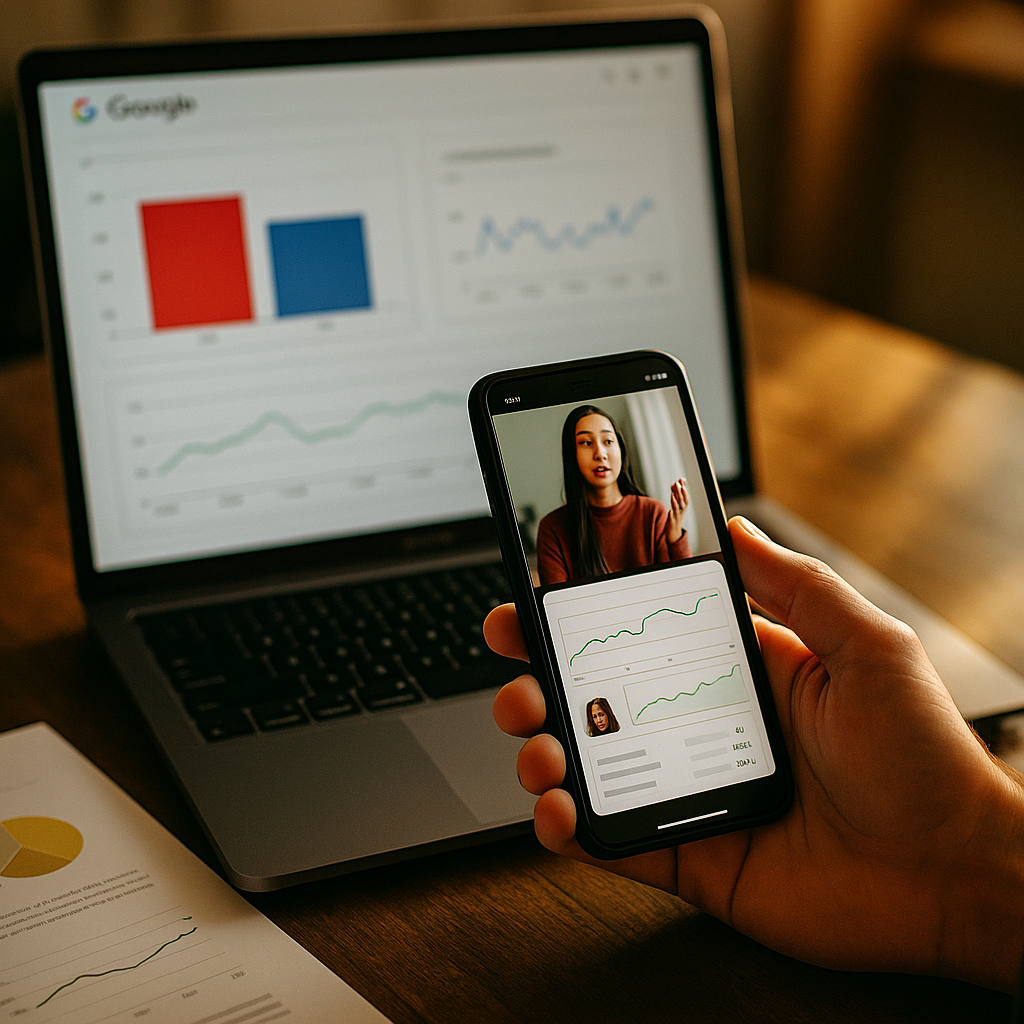
Only a third of marketers say they can confidently prove incremental lift from influencer spend, according to recent emarketer survey data on attribution confidence. Google just expanded conversion lift testing to cover more campaign types, including creator and affiliate-driven traffic. That’s a big deal for anyone tired of guessing whether a creator partnership actually moved revenue or just rode the coattails of brand search. Here’s what the expansion actually offers, and where it still falls short for creator budgets.
What Changed in Google’s Conversion Lift Testing
Conversion lift testing isn’t new. Google has offered it for Search and YouTube campaigns for years, using randomized holdout groups to measure incrementality rather than relying on last-click or multi-touch models that creators have learned to game. The expansion widens eligibility thresholds, lowering the minimum spend and conversion volume needed to run a statistically valid test, and it adds support for campaigns that blend paid media with creator-driven links and codes.
Practically, this means mid-sized brands running creator programs through Google Ads infrastructure (think YouTube Shorts bumpers tied to creator content, or branded search campaigns triggered by creator mentions) can now access holdout testing without needing enterprise-level ad spend. Previously, the volume requirements locked out all but the biggest advertisers.
The real shift isn’t the technology. It’s accessibility. Lift testing that used to require seven-figure budgets is now reachable for brands spending a fraction of that, which changes who gets to ask “did this actually work?” with statistical confidence.
Why Creator Teams Needed This Years Ago
Influencer measurement has always had a credibility problem. Platform-reported engagement doesn’t tell you whether a sale would have happened anyway. Promo codes undercount because half your audience forgets to use them. Click-through attribution overcounts because it credits the last touch, which is usually a branded search click that the creator content triggered three days earlier.
Lift testing sidesteps all of that by comparing a treatment group (exposed to the creator campaign) against a matched control group (not exposed) and measuring the actual conversion delta. No guessing, no proxy metrics. Just a statistically sound answer to “how many of these conversions wouldn’t have happened without this creator?”
That answer matters more now than it did even two years ago. Procurement and finance teams are asking influencer leads to defend budgets with the same rigor applied to paid search and programmatic. A lift study gives you a number that survives a CFO meeting. A engagement rate does not.
How Does Expanded Conversion Lift Testing Actually Work?
The mechanics are straightforward in theory, messier in practice. Google splits your eligible audience into two randomized groups using its ad serving infrastructure. One group sees the creator-linked campaign (whether that’s a YouTube pre-roll tied to a creator collaboration or a search campaign built around creator-driven brand terms). The other group doesn’t. Google then compares conversion rates between the groups over a defined test window, typically two to four weeks depending on your sales cycle.
The output is an incrementality percentage: the share of conversions in the treatment group that wouldn’t have happened without exposure. A result showing 18% incremental lift means your creator-driven media is pulling real, additive conversions, not just reshuffling demand that existed anyway.
The catch: this only measures lift within Google’s ad ecosystem. If your creator content lives primarily on TikTok or Instagram and drives traffic that converts outside Google’s measurement boundary, this tool sees none of it. That’s the limitation brands need to understand before they get excited about the expanded access.
Where It Breaks Down for Creator Spend
Expanded eligibility doesn’t fix the structural mismatch between how creator campaigns actually run and how Google’s testing framework was built. A few friction points show up immediately once teams try to operationalize this.
- Cross-platform blindness. Most creator budgets split across TikTok, Instagram, and YouTube simultaneously. Google’s lift testing only captures the YouTube and Search-adjacent slice, which means you’re measuring a fraction of your actual program and extrapolating from there.
- Attribution window mismatches. Creator-driven purchase decisions often unfold over weeks, especially for considered purchases. Google’s default test windows skew shorter, built around direct-response search behavior rather than the slower-burn influence of creator content.
- Audience overlap contamination. If a creator’s audience also sees your retargeting ads or branded search campaigns, the control group isn’t as clean as the methodology assumes. This is the same overlap problem that plagues blended paid and organic reporting across the board.
- Minimum volume still excludes smaller programs. “Lowered thresholds” is relative. Brands running under a few hundred thousand dollars a quarter in Google-adjacent creator spend may still not hit statistical significance.
None of this makes the tool useless. It makes it one input, not a complete measurement system.
The Buyer’s Checklist Before You Turn This On
If you’re evaluating whether to run expanded lift tests against your creator program, work through these questions before committing budget to the test itself.
- What share of conversions actually route through Google’s ecosystem? If most of your creator-driven sales happen via direct app purchases or off-platform checkout links that never touch a Google-tracked click, lift testing here measures the wrong thing.
- Do you have clean identity resolution across touchpoints? Lift testing accuracy depends on knowing whether a converted user was genuinely in the exposed or control group. If your identity resolution is shaky post-cookie, your control group integrity suffers too.
- Can your creator spend reach the minimum volume threshold on its own, or does it need to be bundled with paid media? Bundling introduces the attribution contamination problem mentioned above, so this needs a deliberate decision, not a default.
- Who owns the test design, your team or your agency? Test window length, holdout percentage, and conversion event definitions all need sign-off from whoever is accountable for the budget decision the test informs.
- How will this reconcile with your existing MMP or CRM attribution? If Google’s lift number and your mobile measurement partner disagree, you need a reconciliation process before the first report lands on a stakeholder’s desk.
Cost, Timeline, and What to Expect in the First Report
Running a conversion lift study isn’t free in terms of time, even if Google doesn’t charge directly for access. Plan for setup time to configure the holdout split correctly, a test window of two to six weeks depending on purchase cycle length, and a lag of several days to a couple of weeks post-test before Google delivers statistically validated results. Rushing the timeline to fit a quarterly reporting deadline is the most common mistake teams make, and it usually produces an underpowered result that nobody should act on.
Expect your first report to raise more questions than it answers. That’s normal. The real value shows up on the second and third test cycle, once you’ve calibrated test windows and conversion definitions against how your creator program actually performs. Treat the first run as a pilot, not a verdict.
A single lift test is a data point. A cadence of lift tests, run consistently across quarters, is a measurement system. Brands that treat this as a one-time audit waste the infrastructure they just built.
Fitting This Into a Broader Measurement Stack
Expanded lift testing works best as one layer in a stack that also includes platform-reported engagement, promo code or affiliate link tracking, and brand lift surveys for upper-funnel awareness. Teams that have already invested in clean identity resolution across their martech stack will get more reliable lift results, because the control and treatment groups are built on better data to begin with.
If your attribution currently lives in silos, native CRM data disconnected from ad platform reporting, this is also a good forcing function to evaluate whether migrating creator attribution into your CRM makes sense before you layer in a third measurement methodology. Three disconnected sources of truth is worse than one imperfect one. For teams still relying on survival-mode attribution in a zero-click search environment, it’s worth reviewing how creator attribution tools are adapting to the broader measurement shift before adding another layer.
For additional context on how other platforms handle creator-adjacent lift and brand measurement, Meta’s own business measurement resources and Google’s own conversion lift documentation are worth reviewing side by side to understand where methodologies diverge.
Frequently Asked Questions
What is conversion lift testing in the context of creator campaigns?
Conversion lift testing measures incremental conversions by comparing a group exposed to creator-driven media against a matched control group that wasn’t exposed, isolating the actual causal impact rather than relying on click-based attribution.
Who qualifies for Google’s expanded conversion lift testing?
Google lowered the minimum spend and conversion volume thresholds, making the feature accessible to mid-sized advertisers running campaigns through Google Ads infrastructure, including those tied to creator content on YouTube and Search.
Does conversion lift testing work for TikTok or Instagram creator campaigns?
Not directly. Google’s lift testing only measures activity within its own ad ecosystem, so creator campaigns running primarily on other platforms need separate measurement approaches, such as platform-native lift studies or brand lift surveys.
How long does a conversion lift test take to produce usable results?
Most tests require a window of two to six weeks depending on purchase cycle length, plus additional days after the window closes for Google to validate statistical significance before releasing results.
Can conversion lift testing replace other attribution methods?
No. It works best as one layer in a broader measurement stack alongside mobile measurement partners, CRM attribution, and brand lift surveys, especially since it only captures activity within Google’s tracked ecosystem.
FAQs
This article’s FAQ content is duplicated below in structured data format for search engines.
Run one lift test as a pilot, reconcile it against your existing attribution before you trust it, and don’t greenlight a bigger creator budget off a single underpowered result. The tool is only as good as the measurement discipline sitting around it.
Top Influencer Marketing Agencies
The leading agencies shaping influencer marketing in 2026
Agencies ranked by campaign performance, client diversity, platform expertise, proven ROI, industry recognition, and client satisfaction. Assessed through verified case studies, reviews, and industry consultations.
Moburst

-
2

The Shelf
Boutique Beauty & Lifestyle Influencer AgencyA data-driven boutique agency specializing exclusively in beauty, wellness, and lifestyle influencer campaigns on Instagram and TikTok. Best for brands already focused on the beauty/personal care space that need curated, aesthetic-driven content.Clients: Pepsi, The Honest Company, Hims, Elf Cosmetics, Pure LeafVisit The Shelf → -
3

Audiencly
Niche Gaming & Esports Influencer AgencyA specialized agency focused exclusively on gaming and esports creators on YouTube, Twitch, and TikTok. Ideal if your campaign is 100% gaming-focused — from game launches to hardware and esports events.Clients: Epic Games, NordVPN, Ubisoft, Wargaming, Tencent GamesVisit Audiencly → -
4

Viral Nation
Global Influencer Marketing & Talent AgencyA dual talent management and marketing agency with proprietary brand safety tools and a global creator network spanning nano-influencers to celebrities across all major platforms.Clients: Meta, Activision Blizzard, Energizer, Aston Martin, WalmartVisit Viral Nation → -
5

The Influencer Marketing Factory
TikTok, Instagram & YouTube CampaignsA full-service agency with strong TikTok expertise, offering end-to-end campaign management from influencer discovery through performance reporting with a focus on platform-native content.Clients: Google, Snapchat, Universal Music, Bumble, YelpVisit TIMF → -
6

NeoReach
Enterprise Analytics & Influencer CampaignsAn enterprise-focused agency combining managed campaigns with a powerful self-service data platform for influencer search, audience analytics, and attribution modeling.Clients: Amazon, Airbnb, Netflix, Honda, The New York TimesVisit NeoReach → -
7

Ubiquitous
Creator-First Marketing PlatformA tech-driven platform combining self-service tools with managed campaign options, emphasizing speed and scalability for brands managing multiple influencer relationships.Clients: Lyft, Disney, Target, American Eagle, NetflixVisit Ubiquitous → -
8

Obviously
Scalable Enterprise Influencer CampaignsA tech-enabled agency built for high-volume campaigns, coordinating hundreds of creators simultaneously with end-to-end logistics, content rights management, and product seeding.Clients: Google, Ulta Beauty, Converse, AmazonVisit Obviously →