


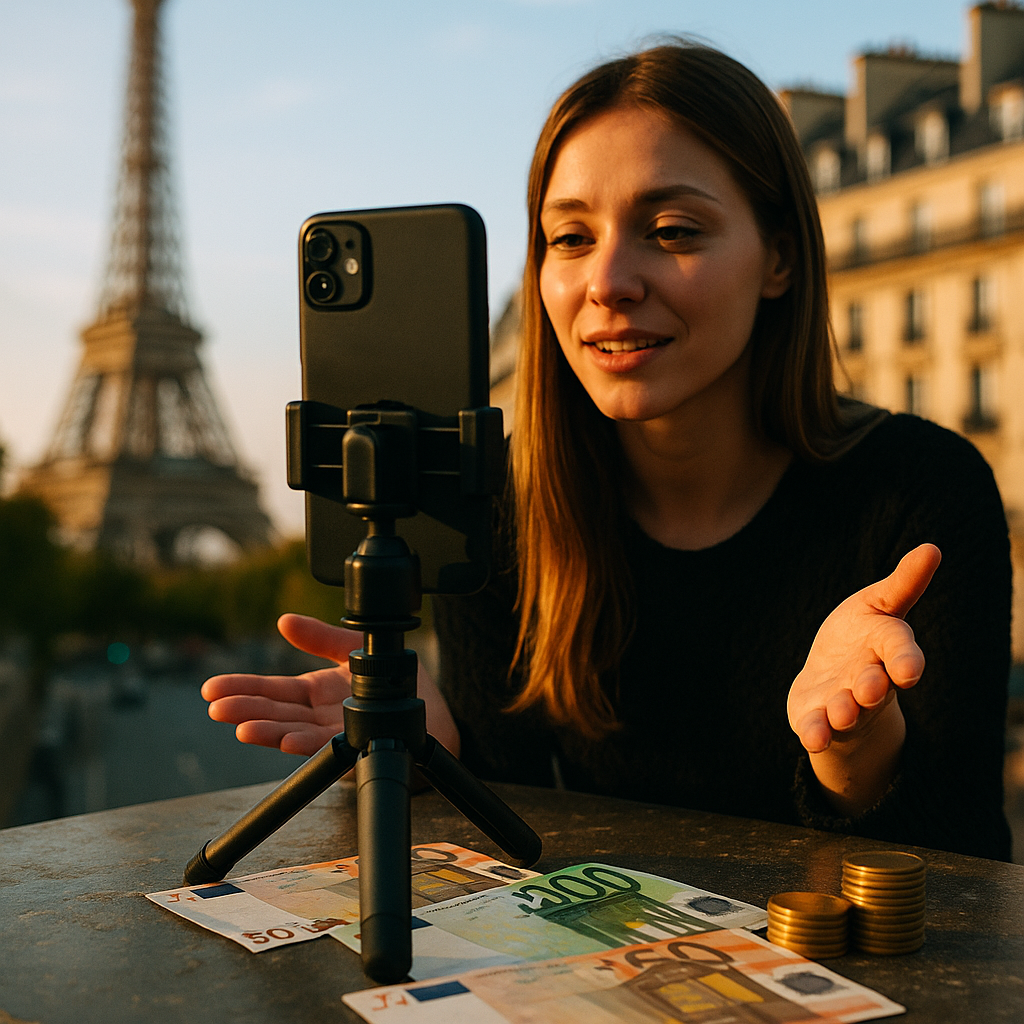
Three thousand euros. That’s the new median fee French micro influencers command for a single branded campaign, roughly triple what the same tier charged just a few seasons ago. If your budget deck still assumes micro influencer fees land in the low hundreds, you’re planning against a market that no longer exists. The France micro influencer fees shift is not a fluke in one region. It’s a preview of where pricing power is headed across Europe.
What Actually Happened to Pricing
Micro influencers, typically defined as creators with 10,000 to 50,000 followers, used to be the budget-friendly workhorse of European campaigns. Brands leaned on them precisely because they delivered strong engagement at a fraction of macro or celebrity rates. That math has changed in France. Industry rate cards and agency surveys now put the median fee for a single piece of sponsored content at roughly 3,000 euros, up from figures closer to 1,000 euros not long ago.
Several forces converged at once. Demand for French-language, culturally specific content spiked as brands pulled back from blanket pan-European campaigns. Creator agencies professionalized their rate cards, borrowing negotiation tactics from talent management in music and sports. And a wave of new disclosure and influencer marketing legislation in France raised the compliance bar, pushing serious creators to price in the legal and administrative overhead that now comes with every post.
A tripled median fee isn’t inflation. It’s a market correcting for years of underpricing a tier brands had grown used to treating as disposable.
Why Three Thousand Euros Is the Number to Watch
Medians matter more than averages here because they strip out the outlier mega-deals that skew headline numbers. A 3,000 euro median tells you the typical, everyday micro creator, not just the breakout star, now expects professional-grade compensation. That’s a structural shift, not a seasonal spike.
Compare this to the broader European picture, where overall influencer budgets jumped 72 percent to a 175,000 euro median program spend. France’s micro tier tripling fits inside that larger trend of brands committing more dollars to creator programs, but it also reveals something sharper: the cheap tier is disappearing. If micro creators now charge closer to what mid-tier creators used to charge, brands lose the low-cost testing ground they relied on to pilot new products or messaging before scaling spend.
Reading It as a Market Signal, Not an Anomaly
Why does this matter beyond France? Because pricing behavior in mature creator markets tends to migrate. What happens in Paris rate negotiations this year often shows up in Berlin, Milan, or Madrid briefs within a few cycles. Paris to Malta to Toronto pay gaps already show how uneven creator compensation is across markets, and France closing that gap from the bottom up is exactly the kind of signal procurement teams should be tracking now, not reacting to later.
There’s also a compliance angle brands can’t ignore. France’s updated influencer marketing rules require clearer sponsorship disclosure and impose real penalties for non-compliant content. Creators who operate as legitimate small businesses, filing taxes properly and carrying liability coverage, are not going to absorb that administrative burden for free. The fee increase is partly a direct pass-through of regulatory cost. Brands that still treat micro influencer deals as informal handshake arrangements are exposed on two fronts: budget shock and legal risk.
The CPM Math Brands Need to Rerun
Here’s the uncomfortable part. Tripling fees doesn’t automatically mean tripling value. Brands need to rerun cost-per-engagement and cost-per-mille math against the new baseline before committing budget. A micro creator at 3,000 euros per post needs to prove out performance that macro creators and even some mid-tier talent were delivering at similar price points a year ago.
This is where the earlier logic of micro creators cutting CPM gets tested. The entire rationale for leaning into micro tiers was cost efficiency at scale. If French micro fees now sit close to mid-tier pricing elsewhere in Europe, the CPM advantage shrinks or disappears entirely. Brands running pan-European campaigns need market-by-market rate benchmarking, not a single blended assumption, the same way UGC rates span a 32x range across Europe and demand country-specific budgeting.
What Brands Should Do Differently Now
- Rebuild rate benchmarks quarterly, not annually. A market moving this fast punishes anyone planning off last year’s numbers.
- Separate content fees from usage and licensing fees. French creators increasingly itemize these, and brands that lump everything into one number lose negotiating leverage.
- Audit roster composition. If your France strategy depended on dozens of cheap micro deals, model what happens to total program cost at the new median before the next campaign cycle.
- Treat compliance as a line item. Disclosure requirements, contract terms, and tax status all factor into why fees rose, so build that cost into the brief from day one, not as an afterthought.
- Revisit scale strategy. Programs built around 50 plus creator rosters to cut CPM and risk need fresh math when the per-creator baseline triples.
None of this means micro influencers stop being valuable. It means the value proposition shifts from “cheap volume” to “targeted, culturally fluent reach at a fair professional rate.” That’s arguably a healthier market, even if it’s a more expensive one for brands that got comfortable with bargain pricing.
Is This Reversible?
Probably not, at least not in the short term. Rate increases driven by regulation and professionalization tend to stick, unlike demand spikes that fade once a trend cools. France’s creator economy has matured to the point where micro influencers increasingly operate like small agencies, complete with managers, standardized contracts, and tiered pricing based on usage rights. That infrastructure doesn’t unwind easily.
Brands banking on fees reverting to pre-tripling levels are likely to be disappointed. The smarter bet is adapting sourcing and negotiation strategy to the new baseline, the same way marketing teams have had to adjust to shifting social platform dynamics and tightening disclosure enforcement in other major markets. For a data-driven read on how rising rates intersect with hiring and budget allocation more broadly, the October hiring heat map on creator budget moves offers useful cross-market context.
It’s also worth watching how agencies respond. Expect more standardized briefing templates and rate transparency tools to emerge as brands push back against opaque pricing, and expect French creator unions or associations to formalize rate cards further, the way talent guilds have done in adjacent creative industries. Benchmarking tools from firms like eMarketer and Statista will likely start tracking micro tier pricing by country with more granularity, given how material these swings have become to program budgeting.
The Bottom Line for Budget Planners
France’s tripled micro influencer fees are a market correction, not a glitch. Brands that keep budgeting as if micro creators are the cheap entry point into French audiences will overspend, underperform, or both. Rebuild your rate assumptions now, itemize usage rights separately, and treat the 3,000 euro median as the new floor for serious campaign planning in this market.
Frequently Asked Questions
Why did French micro influencer fees triple?
A combination of stronger demand for French-language content, more professionalized creator agencies setting rate cards, and new disclosure and compliance requirements that add administrative cost to every sponsored post.
Does the 3,000 euro median apply to all micro influencers in France?
It reflects a typical fee for a single sponsored content piece from a creator in the 10,000 to 50,000 follower range, though actual rates vary by niche, platform, and usage rights requested.
Should brands stop working with French micro influencers?
No. Micro creators still deliver strong engagement and cultural fluency. Brands should instead rerun CPM calculations against the new rate baseline and budget accordingly rather than avoiding the tier entirely.
How does France’s trend compare to the rest of Europe?
French micro fees are rising faster than many neighboring markets, but the broader European trend also shows overall influencer budgets increasing significantly, suggesting France may be an early signal rather than an isolated case.
What should brands change in their contracts because of this shift?
Separate content creation fees from usage and licensing fees, build in compliance costs explicitly, and benchmark rates by country rather than applying a single European average.
Top Influencer Marketing Agencies
The leading agencies shaping influencer marketing in 2026
Agencies ranked by campaign performance, client diversity, platform expertise, proven ROI, industry recognition, and client satisfaction. Assessed through verified case studies, reviews, and industry consultations.
Moburst

-
2

The Shelf
Boutique Beauty & Lifestyle Influencer AgencyA data-driven boutique agency specializing exclusively in beauty, wellness, and lifestyle influencer campaigns on Instagram and TikTok. Best for brands already focused on the beauty/personal care space that need curated, aesthetic-driven content.Clients: Pepsi, The Honest Company, Hims, Elf Cosmetics, Pure LeafVisit The Shelf → -
3

Audiencly
Niche Gaming & Esports Influencer AgencyA specialized agency focused exclusively on gaming and esports creators on YouTube, Twitch, and TikTok. Ideal if your campaign is 100% gaming-focused — from game launches to hardware and esports events.Clients: Epic Games, NordVPN, Ubisoft, Wargaming, Tencent GamesVisit Audiencly → -
4

Viral Nation
Global Influencer Marketing & Talent AgencyA dual talent management and marketing agency with proprietary brand safety tools and a global creator network spanning nano-influencers to celebrities across all major platforms.Clients: Meta, Activision Blizzard, Energizer, Aston Martin, WalmartVisit Viral Nation → -
5

The Influencer Marketing Factory
TikTok, Instagram & YouTube CampaignsA full-service agency with strong TikTok expertise, offering end-to-end campaign management from influencer discovery through performance reporting with a focus on platform-native content.Clients: Google, Snapchat, Universal Music, Bumble, YelpVisit TIMF → -
6

NeoReach
Enterprise Analytics & Influencer CampaignsAn enterprise-focused agency combining managed campaigns with a powerful self-service data platform for influencer search, audience analytics, and attribution modeling.Clients: Amazon, Airbnb, Netflix, Honda, The New York TimesVisit NeoReach → -
7

Ubiquitous
Creator-First Marketing PlatformA tech-driven platform combining self-service tools with managed campaign options, emphasizing speed and scalability for brands managing multiple influencer relationships.Clients: Lyft, Disney, Target, American Eagle, NetflixVisit Ubiquitous → -
8

Obviously
Scalable Enterprise Influencer CampaignsA tech-enabled agency built for high-volume campaigns, coordinating hundreds of creators simultaneously with end-to-end logistics, content rights management, and product seeding.Clients: Google, Ulta Beauty, Converse, AmazonVisit Obviously →