


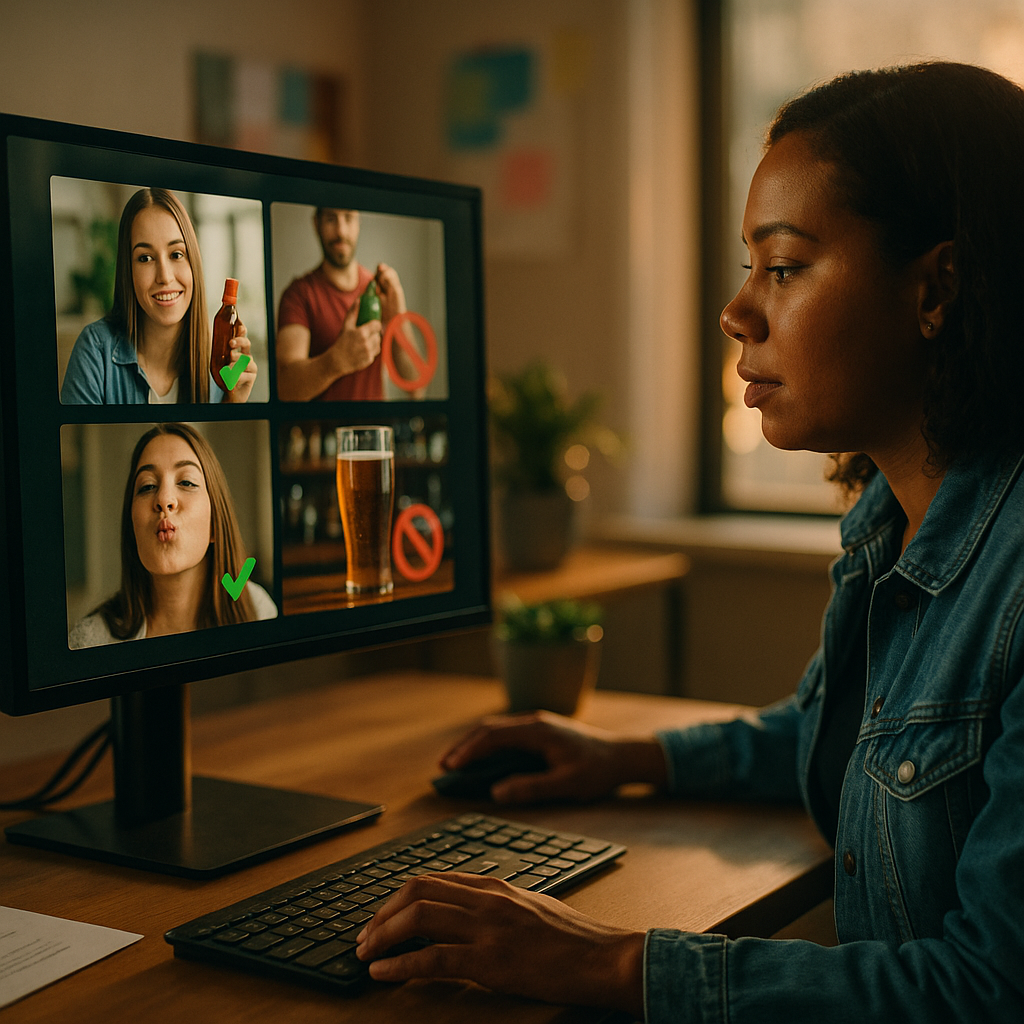
Here’s an uncomfortable number: brands running large scale UGC contests and creator submission programs now report rejection rates between 15% and 30% on raw incoming content, and most still rely on human reviewers who can clear maybe 200 to 400 assets a day. Do the math on a campaign pulling in 50,000 submissions. That’s not a review process, that’s a backlog. AI brand safety moderation tools exist precisely to close that gap, but most marketing teams still treat them as an afterthought bolted onto the submission form instead of core infrastructure.
The Bottleneck Nobody Budgets For
Marketing leaders love to talk about UGC volume. Fewer want to talk about what happens after the content arrives. A submission pipeline that collects 10,000 videos in a week looks great in a board deck. It looks a lot less great when legal discovers three of them contain unlicensed music, two feature a competitor’s logo, and one includes a minor without guardian consent.
This is the part of the funnel that scaling advice conveniently skips. Teams that have already solved discovery and collection, covered well in our breakdown of creator content pipeline tools, often hit a wall the moment volume outpaces their review capacity. Moderation becomes the hidden tax on growth.
A pipeline that can collect 50,000 UGC assets but only safely review 2,000 isn’t a scaling success, it’s a liability waiting on a hard drive.
What AI Moderation Actually Screens For
Not all moderation is equal, and “AI powered” has become a lazy catch all term vendors slap on anything with a classifier. Useful brand safety moderation for UGC pipelines needs to handle several distinct layers simultaneously:
- Visual content classification: nudity, violence, weapons, hate symbols, drug paraphernalia, flagged via computer vision models.
- Audio and transcript screening: profanity, hate speech, copyrighted music detection, and tone analysis for sarcasm that might undercut a brand message.
- Logo and trademark detection: catching competitor branding or unauthorized third party marks in the background of a frame.
- Likeness and consent verification: flagging minors, identifying public figures, and checking for visible release form indicators.
- Contextual brand fit scoring: a more subjective layer that ranks content against brand voice guidelines, not just legal compliance.
Tools like Hive Moderation, ActiveFence, Checkstep, and Besedo have built reputations handling the first three layers at serious scale, originally for social platforms and now increasingly licensed to brands running their own submission funnels. The last two layers, consent and brand fit, remain where AI still needs a human in the loop. That’s not a failure of the technology. It’s an acknowledgment that liability decisions deserve a person’s signature.
Why “Good Enough” Filtering Isn’t Good Enough
A classifier that catches 94% of policy violations sounds impressive until you realize the 6% it misses is exactly the content most likely to end up screenshotted and circulated. Brand safety isn’t graded on a curve. One viral mistake erases the goodwill from a thousand clean assets.
This is where teams that rushed into automation without proper thresholds get burned. Setting confidence thresholds too low means your reviewers drown in false positives. Set them too high and genuinely risky content slips through untouched. The fix isn’t a single magic threshold, it’s tiered routing: auto approve high confidence clean content, auto reject high confidence violations, and route the ambiguous middle, typically 15% to 25% of volume, to trained human moderators with full context flags attached.
According to eMarketer, brands are increasing UGC-driven ad spend year over year, which means the ambiguous middle only grows in absolute volume even as the percentage shrinks. Scale doesn’t make moderation easier. It makes the edge cases more numerous and more expensive to miss.
Build, Buy, or License: The Real Decision Matrix
Marketing ops leads keep asking whether they should build in house moderation or license a vendor layer. The honest answer depends less on budget and more on submission velocity and risk exposure.
If you’re running occasional campaigns collecting a few hundred assets a month, a managed service with human review baked in, the kind we unpacked in our piece on managed UGC platforms versus DIY, is almost always cheaper than standing up your own ML pipeline. The math flips once you’re processing thousands of weekly submissions across multiple markets with different legal standards (hello, GDPR versus CCPA versus whatever the UK’s evolving framework requires).
At that scale, licensing an API layer like Microsoft’s Azure AI Content Safety or a specialist vendor and integrating it directly into your submission form becomes cost effective, often running a fraction of a cent per asset compared to the fully loaded cost of human review teams. You still need humans. You just need far fewer of them, reserved for the cases AI can’t confidently resolve.
- Low volume, high stakes: managed service or boutique human review team.
- High volume, standardized formats: API based AI layer with tiered human escalation.
- High volume, multi market, regulated category: hybrid stack with jurisdiction specific rule sets and localized human reviewers.
Compliance Isn’t a Feature, It’s the Floor
Here’s where brand safety moderation stops being a creative quality question and becomes a legal one. The Federal Trade Commission has made clear that disclosure and endorsement standards apply regardless of whether content came from a paid creator or an organic contest entrant. If your pipeline pushes unmoderated UGC straight into paid ad placements, you inherit the compliance risk of every submitter, not just your contracted creators.
In the UK, the Information Commissioner’s Office has similarly tightened expectations around consent for any submission involving identifiable individuals, especially minors. AI moderation tools that flag age indicators and missing consent metadata aren’t a nice to have anymore. They’re the baseline defense against a regulatory complaint turning into a fine.
This connects directly to the broader liability questions brands are now wrestling with around synthetic and AI generated submissions. If a contest entrant submits content partially generated by an AI avatar tool, who’s responsible for its accuracy and disclosure? We’ve dug into this exact tension in synthetic creator content liability, and the short version is: your moderation layer needs to detect AI generated submissions specifically, not just screen them like organic footage.
Operational Lift: What Integration Actually Looks Like
Marketing teams underestimate integration complexity. Plugging a moderation API into a submission form isn’t a weekend project if you want it done properly. Expect to budget time for:
- Defining your brand’s specific policy taxonomy beyond generic “safe/unsafe” categories (what counts as off brand tone, competitor mentions, prohibited claims).
- Training or calibrating confidence thresholds against a sample of your own historical submissions, not generic benchmark datasets.
- Building the escalation workflow so flagged content routes to the right reviewer with context, not a blank video file and a guess.
- Establishing an audit trail. Regulators and legal teams will eventually ask “why was this approved,” and “the algorithm said so” isn’t an answer anyone wants to give.
Teams that have scaled editing workflows alongside moderation, similar to what we covered in AI UGC editing pipelines, find the two systems need to talk to each other. Moderation flags should travel with the asset through editing, not get lost the moment content moves to the next stage of production.
According to research compiled by Sprout Social, consumer trust in UGC remains significantly higher than trust in branded content, which is exactly why the moderation layer matters so much. The trust advantage disappears the instant a brand gets caught amplifying something harmful because nobody checked it properly.
The Volume Trap
There’s a temptation to treat moderation purely as a speed problem: more submissions, faster clearing, bigger campaign. But velocity without judgment is how brands end up quietly approving borderline content just to hit a publishing calendar. If you’re scaling submission volume, as detailed in our analysis of UGC volume platforms, your moderation capacity needs to scale proportionally, not as an afterthought squeezed in once the campaign is already live.
The brands getting this right treat moderation thresholds as a living policy document, reviewed quarterly, not a set it and forget it configuration from launch day.
Next Step
Before your next UGC campaign brief goes out, audit your current moderation stack against actual submission volume projections, not last year’s numbers. If your review capacity can’t realistically clear 90% of expected volume within 24 hours, fix that gap before you turn on the submission form, not after the first viral mistake forces the conversation.
FAQs
What is AI brand safety moderation for UGC pipelines?
It’s the use of machine learning classifiers, computer vision, and audio analysis to automatically screen user generated content submissions for policy violations, legal risks, and brand fit issues before they move further into a marketing workflow.
Can AI moderation fully replace human reviewers?
No. AI handles high confidence approvals and rejections efficiently, but ambiguous cases involving consent, context, or nuanced brand fit still require trained human judgment, typically 15% to 25% of total submission volume.
How much does AI moderation reduce review time?
Brands using tiered AI routing report clearing the majority of submissions in minutes rather than days, since only the ambiguous middle tier requires manual review instead of every single asset.
Does AI moderation help with legal compliance?
It helps significantly by flagging missing consent indicators, potential minor involvement, and undisclosed endorsements, but it doesn’t eliminate the need for a documented compliance policy and human sign off on edge cases.
What’s the biggest mistake brands make when adopting these tools?
Treating moderation as a one time setup rather than a living system. Thresholds, taxonomies, and escalation rules need regular recalibration as submission patterns and platform trends shift.
Top Influencer Marketing Agencies
The leading agencies shaping influencer marketing in 2026
Agencies ranked by campaign performance, client diversity, platform expertise, proven ROI, industry recognition, and client satisfaction. Assessed through verified case studies, reviews, and industry consultations.
Moburst

-
2

The Shelf
Boutique Beauty & Lifestyle Influencer AgencyA data-driven boutique agency specializing exclusively in beauty, wellness, and lifestyle influencer campaigns on Instagram and TikTok. Best for brands already focused on the beauty/personal care space that need curated, aesthetic-driven content.Clients: Pepsi, The Honest Company, Hims, Elf Cosmetics, Pure LeafVisit The Shelf → -
3

Audiencly
Niche Gaming & Esports Influencer AgencyA specialized agency focused exclusively on gaming and esports creators on YouTube, Twitch, and TikTok. Ideal if your campaign is 100% gaming-focused — from game launches to hardware and esports events.Clients: Epic Games, NordVPN, Ubisoft, Wargaming, Tencent GamesVisit Audiencly → -
4

Viral Nation
Global Influencer Marketing & Talent AgencyA dual talent management and marketing agency with proprietary brand safety tools and a global creator network spanning nano-influencers to celebrities across all major platforms.Clients: Meta, Activision Blizzard, Energizer, Aston Martin, WalmartVisit Viral Nation → -
5

The Influencer Marketing Factory
TikTok, Instagram & YouTube CampaignsA full-service agency with strong TikTok expertise, offering end-to-end campaign management from influencer discovery through performance reporting with a focus on platform-native content.Clients: Google, Snapchat, Universal Music, Bumble, YelpVisit TIMF → -
6

NeoReach
Enterprise Analytics & Influencer CampaignsAn enterprise-focused agency combining managed campaigns with a powerful self-service data platform for influencer search, audience analytics, and attribution modeling.Clients: Amazon, Airbnb, Netflix, Honda, The New York TimesVisit NeoReach → -
7

Ubiquitous
Creator-First Marketing PlatformA tech-driven platform combining self-service tools with managed campaign options, emphasizing speed and scalability for brands managing multiple influencer relationships.Clients: Lyft, Disney, Target, American Eagle, NetflixVisit Ubiquitous → -
8

Obviously
Scalable Enterprise Influencer CampaignsA tech-enabled agency built for high-volume campaigns, coordinating hundreds of creators simultaneously with end-to-end logistics, content rights management, and product seeding.Clients: Google, Ulta Beauty, Converse, AmazonVisit Obviously →