


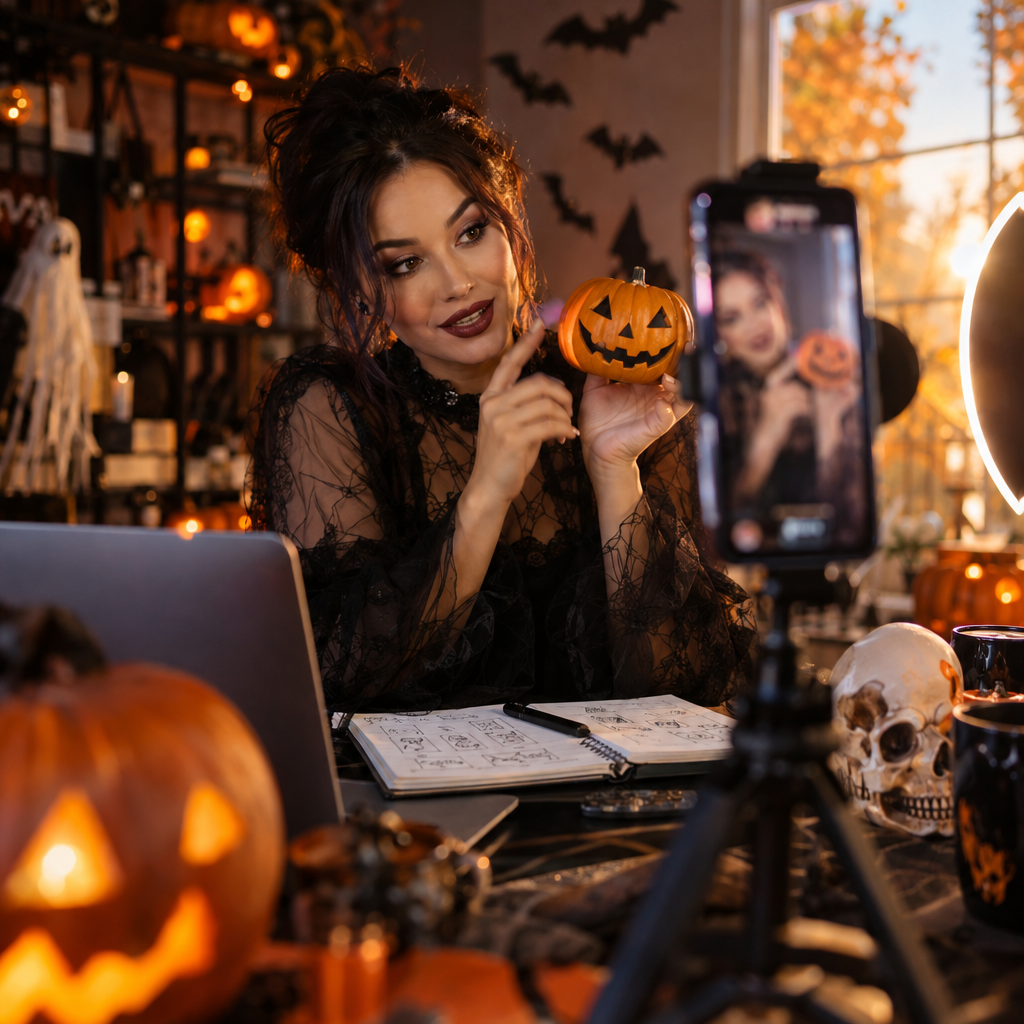
Halloween now drives over 10 billion dollars in US retail spending, and a growing share of that money moves through short form video before anyone sets foot in a store. If your brand is still treating this holiday as a one-off costume joke or a pumpkin filter, you are leaving conversion on the table. The brands winning this season are scripting Halloween short form video content with the same rigor they apply to Black Friday: clear hooks, fast payoffs, and a direct line from the scroll to the cart.
This isn’t about jump scares or spooky aesthetics for their own sake. It’s about using a high-engagement cultural moment to move product. Below are the concepts, scripting frameworks, and compliance notes that marketing teams should be briefing creators on right now.
Why Halloween Content Converts Differently Than Other Holidays
Halloween content behaves unlike Thanksgiving or winter holiday content. There’s no gift-giving obligation pulling viewers toward a purchase decision. Instead, Halloween content thrives on identity, humor, and impulse. People buy costumes, snacks, and decor because something made them laugh or because a transformation reveal hit a nerve of “I need that now.”
That changes the scripting math. Where holiday gift guide UGC leans on practical need, Halloween content leans on spectacle and payoff. The hook has to promise a transformation, a twist, or a laugh within the first two seconds, or the viewer is gone.
Impulse-driven holidays reward speed to payoff. If your Halloween video takes more than three seconds to show the “wow” moment, you’re optimizing for the wrong metric.
The Five Concepts That Actually Move Product
Agencies and in-house teams keep reinventing the wheel every October. Don’t. These five formats have a proven track record across beauty, CPG, fashion, and home goods verticals.
- Transformation reveals. Before-and-after costume, makeup, or decor transitions. The hook is the question “wait, how did they do that?” Keep the transition under one second using a whip-pan or finger snap cut.
- Costume try-on hauls with a twist. Standard try-on content is saturated. Add a constraint, like “five costumes under twenty dollars” or “one item, five looks,” to give the video a reason to exist beyond vanity.
- Spooky recipe and snack hacks. Food and beverage brands can lean on the same structure that works for recipe and hack videos that convert, just themed around candy, drinks, or party snacks.
- Prank or jump-scare product demos. Risky but effective when done with consent and clear framing, these work well for home security, snack, and beverage brands looking for high share rates.
- Haunted house or decor walkthroughs. POV-style walkthroughs of decorated spaces drive strong saves and give home goods and decor brands a native way to showcase full product lines.
Notice what’s missing: generic “happy Halloween from our brand” posts. Those get buried. Every concept above has a built-in reason for someone to stop scrolling, and more importantly, a built-in reason to tap the product tag.
Scripting the Hook: What Actually Stops the Scroll
The first line of dialogue or on-screen text matters more than the rest of the script combined. For Halloween content specifically, three hook patterns consistently outperform generic greetings:
- The dare hook: “I bet you can’t guess what this costume is made of.”
- The countdown hook: “Three days until Halloween and I still didn’t have a costume, until I found this.”
- The reveal-delay hook: Show the finished transformation first for half a second, then cut back to “day one” to create a loop that rewards rewatching.
If your team is already running countdown content calendars for other product launches, the same cadence logic applies here. Build anticipation across a week of posts rather than dumping everything on October 31st, when feed competition peaks and CPMs spike.
Make It Shoppable, Not Just Watchable
Here’s where a lot of Halloween campaigns fall apart. The video gets views, the comments are full of “where is this from,” and the brand has no native shopping path attached. That’s a direct revenue leak.
Every Halloween short form video should carry a shoppable layer. For TikTok and Instagram, that means product tags live from the first frame, not added as an afterthought in editing. For brands running livestream or drop-based moments around the holiday, the structure used in shoppable carousels for multi product slides translates well to costume bundles or snack multipacks.
If your brand sells through a mix of owned site and marketplace, make sure the creator’s caption and pinned comment both carry the link. Don’t rely on viewers to find the “shop now” sticker. Script the CTA into the dialogue itself: “Link’s in my bio if you want the exact one I used,” delivered naturally, outperforms a silent on-screen tag by a wide margin according to internal creator platform benchmarks shared by TikTok’s business resources.
A video with 2 million views and no native shopping path is a vanity metric. A video with 50,000 views and a tagged product is a revenue channel.
Silent Scroll, Loud Sell
A huge share of Halloween browsing happens on mute, at work, in line, or in bed next to a sleeping partner. If your video depends entirely on audio to land the joke or explain the product, you’re losing half your audience before the punchline. Borrow the discipline from silent-first video ads that sell on mute and build burned-in captions that carry the narrative without sound. For costume reveals especially, text overlays like “wait for it” or “cost: $14” do double duty: they build suspense and answer the price objection before the comment section asks.
Trend-Jacking Without Losing the Brand Voice
Halloween generates its own micro-trends every season, a specific sound, a filter, a meme format. Brands that move fast on these see outsized reach, but speed without judgment creates risk. Use the same evaluation filter outlined in stitch and duet trend jacking for fast brand reactions: does this trend fit the product naturally, or are we forcing it? A skincare brand jumping on a horror-movie sound to showcase a “scary good” ingredient list works. The same brand doing an unrelated dance trend just to appear current does not.
Data from eMarketer consistently shows that seasonal trend participation drives short-term reach spikes but only converts when the product tie-in is explicit within the first few seconds. Reach without relevance is noise.
Compliance Still Applies on October 31st
Jump scares, pranks, and exaggerated “this changed my life” claims around costumes or novelty products can drift into misleading territory fast. The FTC’s endorsement guidance still applies to seasonal content exactly as it does the rest of the year. Disclosures need to be clear and unavoidable, not buried in a hashtag string after three paragraphs of caption text.
For prank-style or reaction content, treat it the same way you’d brief vox pop street interviews that clear legal review: get consent from anyone featured, keep claims about product performance honest, and avoid implying injury or harm even in a comedic frame. Brand safety teams should review Halloween scripts with the same checklist used for any paid partnership, holiday urgency is not a reason to skip the review.
Casting the Right Creators for the Moment
Not every creator should touch Halloween content. Comedy-forward creators handle prank and transformation formats well. Lifestyle and home creators carry decor walkthroughs better than a beauty-focused account would. Match the creator’s existing content pillars to the concept rather than forcing a costume try-on onto someone whose audience follows them for finance tips.
If budget allows for a founder or executive cameo, Halloween is a surprisingly good moment for it. A quick, self-aware founder appearance in costume humanizes the brand without the heavier lift of a full festive founder video production. Keep it under fifteen seconds and let the product do the talking in the second half.
Measuring What Matters
Views and likes tell you almost nothing about Halloween ROI. Track these instead:
- Click-through rate on product tags or bio links, segmented by video within 48 hours of posting.
- Comment sentiment specifically around “where to buy” or price questions, a strong leading indicator of purchase intent.
- Save rate on decor or recipe content, which predicts return visits closer to the actual event date.
- Conversion lag: Halloween content often gets saved days before purchase, so attribution windows need to stretch beyond the standard 24-hour click window.
Platforms like Sprout Social and native analytics dashboards on Meta’s business suite can help isolate these signals, but the real work is in setting up UTM parameters and tagging discipline before the campaign launches, not after.
FAQs
Common questions brand teams ask before greenlighting Halloween short form video campaigns.
Frequently Asked Questions
What makes a Halloween short form video convert instead of just going viral?
A native shoppable link, a hook that delivers payoff within three seconds, and a caption or spoken CTA that tells viewers exactly how to buy. Views without a shopping path rarely translate into revenue.
How early should brands start posting Halloween content?
Most brands see the strongest return starting two to three weeks before the holiday, with a second content push in the final three days for last-minute costume and snack purchases.
Are prank or jump-scare videos worth the brand risk?
They can drive strong share rates, but only with clear consent from everyone featured and no implication of real harm or deception. Run them through the same legal review as any other sponsored content.
Which creators perform best for Halloween campaigns?
Comedy and lifestyle creators tend to outperform niche experts for transformation and prank formats, while home and food creators do better with decor and recipe content.
How should brands measure Halloween content ROI?
Track product tag click-through rate, save rate, and comment sentiment around purchase intent, and extend attribution windows since Halloween purchases often happen days after the video is first seen.
Halloween short form video isn’t a creative side project, it’s a measurable revenue window with a hard deadline. Script the hook, tag the product, and review the claims before you post, then let the data tell you which format to double down on next season.
Frequently Asked Questions
What makes a Halloween short form video convert instead of just going viral?
A native shoppable link, a hook that delivers payoff within three seconds, and a caption or spoken CTA that tells viewers exactly how to buy. Views without a shopping path rarely translate into revenue.
How early should brands start posting Halloween content?
Most brands see the strongest return starting two to three weeks before the holiday, with a second content push in the final three days for last-minute costume and snack purchases.
Are prank or jump-scare videos worth the brand risk?
They can drive strong share rates, but only with clear consent from everyone featured and no implication of real harm or deception. Run them through the same legal review as any other sponsored content.
Which creators perform best for Halloween campaigns?
Comedy and lifestyle creators tend to outperform niche experts for transformation and prank formats, while home and food creators do better with decor and recipe content.
How should brands measure Halloween content ROI?
Track product tag click-through rate, save rate, and comment sentiment around purchase intent, and extend attribution windows since Halloween purchases often happen days after the video is first seen.
Top Influencer Marketing Agencies
The leading agencies shaping influencer marketing in 2026
Agencies ranked by campaign performance, client diversity, platform expertise, proven ROI, industry recognition, and client satisfaction. Assessed through verified case studies, reviews, and industry consultations.
Moburst

-
2

The Shelf
Boutique Beauty & Lifestyle Influencer AgencyA data-driven boutique agency specializing exclusively in beauty, wellness, and lifestyle influencer campaigns on Instagram and TikTok. Best for brands already focused on the beauty/personal care space that need curated, aesthetic-driven content.Clients: Pepsi, The Honest Company, Hims, Elf Cosmetics, Pure LeafVisit The Shelf → -
3

Audiencly
Niche Gaming & Esports Influencer AgencyA specialized agency focused exclusively on gaming and esports creators on YouTube, Twitch, and TikTok. Ideal if your campaign is 100% gaming-focused — from game launches to hardware and esports events.Clients: Epic Games, NordVPN, Ubisoft, Wargaming, Tencent GamesVisit Audiencly → -
4

Viral Nation
Global Influencer Marketing & Talent AgencyA dual talent management and marketing agency with proprietary brand safety tools and a global creator network spanning nano-influencers to celebrities across all major platforms.Clients: Meta, Activision Blizzard, Energizer, Aston Martin, WalmartVisit Viral Nation → -
5

The Influencer Marketing Factory
TikTok, Instagram & YouTube CampaignsA full-service agency with strong TikTok expertise, offering end-to-end campaign management from influencer discovery through performance reporting with a focus on platform-native content.Clients: Google, Snapchat, Universal Music, Bumble, YelpVisit TIMF → -
6

NeoReach
Enterprise Analytics & Influencer CampaignsAn enterprise-focused agency combining managed campaigns with a powerful self-service data platform for influencer search, audience analytics, and attribution modeling.Clients: Amazon, Airbnb, Netflix, Honda, The New York TimesVisit NeoReach → -
7

Ubiquitous
Creator-First Marketing PlatformA tech-driven platform combining self-service tools with managed campaign options, emphasizing speed and scalability for brands managing multiple influencer relationships.Clients: Lyft, Disney, Target, American Eagle, NetflixVisit Ubiquitous → -
8

Obviously
Scalable Enterprise Influencer CampaignsA tech-enabled agency built for high-volume campaigns, coordinating hundreds of creators simultaneously with end-to-end logistics, content rights management, and product seeding.Clients: Google, Ulta Beauty, Converse, AmazonVisit Obviously →