


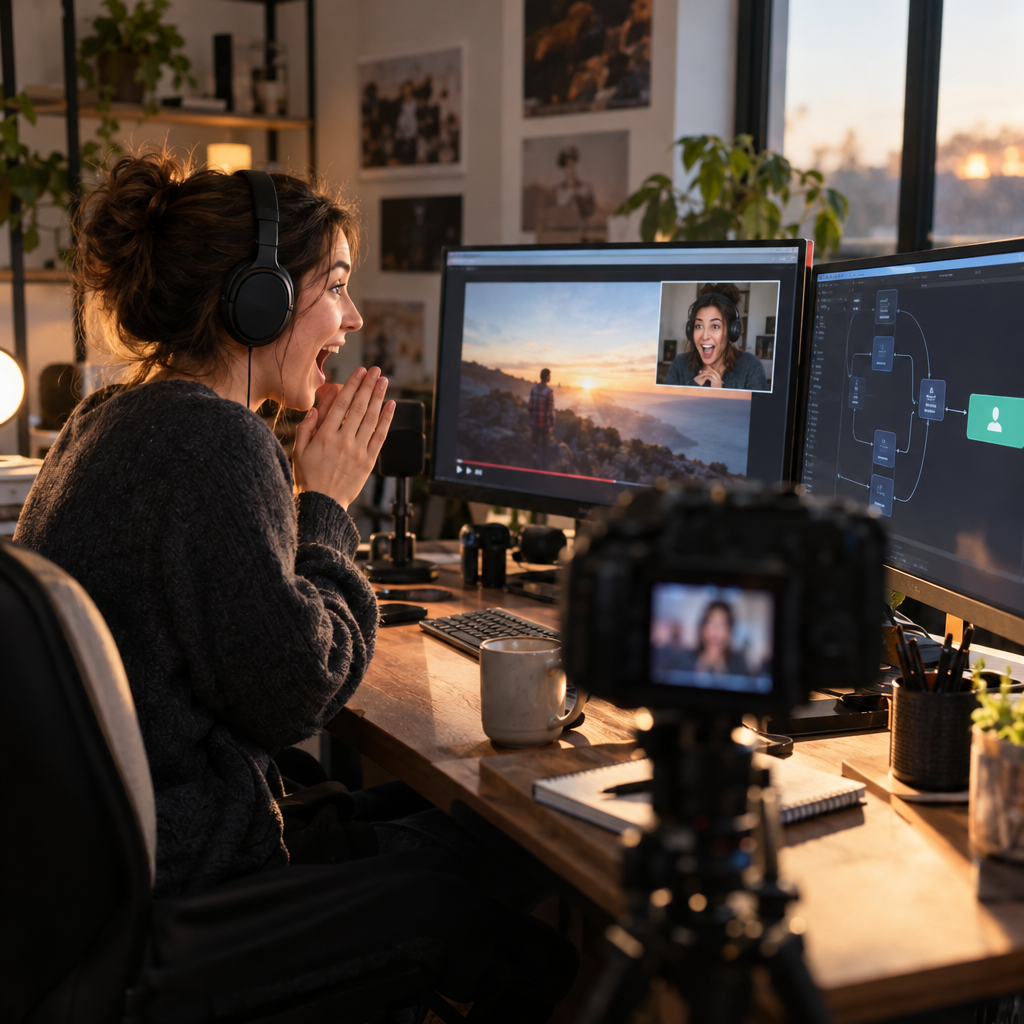
Eighty percent of New Year’s resolutions fail by February, yet fitness and wellness brands still pour a disproportionate share of annual ad budget into the first six weeks of the year. Why? Because that window is when consumer intent peaks and buying resistance is lowest. The smartest brands aren’t running polished “new year, new you” commercials anymore. They’re leaning on new year resolution reaction videos, unscripted-looking creator content that captures genuine (or convincingly genuine) first impressions of a product, app, or program. If you’re planning January content now, this format deserves a line item.
Why Reaction Content Beats Polished Resolution Ads
Resolution season is saturated. Every gym, supplement brand, and app is shouting the same message in the same two-week window. Consumers have built up a defense mechanism against it, call it “January ad blindness.” Reaction videos cut through because they don’t look like ads. They look like a friend trying something and reacting honestly, whether that’s surprise at how a recovery tool feels, relief that a meal kit actually tastes decent, or mild embarrassment at how hard a first spin class hits.
This isn’t just a hunch. Platforms consistently reward content that keeps viewers watching past the first three seconds, and reaction formats are built for that. The uncertainty of “what will they say” is the hook itself. Compare that to a scripted testimonial where the outcome is obvious from frame one.
Reaction videos work because the audience is watching a real-time decision get made, not a conclusion being delivered. That tension is what keeps the thumb still.
There’s also a trust dividend. According to consumer trust research, peer and creator recommendations consistently outperform brand-produced advertising in purchase influence, and wellness categories (where skepticism runs high due to years of overpromising supplement ads) benefit even more from that credibility transfer.
The Anatomy of a Resolution Reaction Video That Actually Converts
Not every reaction clip performs. The ones that drive sign-ups and sales share a structure, even when they feel loose and spontaneous. Here’s the pattern worth briefing creators on:
- The setup (0-3 seconds): Creator states the resolution or goal plainly. “I’m trying to actually stick to a workout plan this year” works better than a branded intro.
- The unknown (3-8 seconds): They introduce the product without telling viewers how they feel about it yet. This is the suspense beat.
- The reaction (8-20 seconds): Genuine (or well-rehearsed genuine) response. Facial expression matters more than words here.
- The verdict (20-30 seconds): A specific, concrete takeaway, not “I loved it” but “this is the first app that didn’t make me feel guilty for missing a day.”
- The nudge (final seconds): A soft CTA, often just a caption or on-screen text rather than a spoken pitch.
Brands that skip the “unknown” beat and jump straight to positivity lose the format’s entire advantage. If a creator seems to already know they’ll love the product, the video reads as an ad, and engagement drops accordingly. This is the same principle covered in our breakdown of resolution campaign scripting, where pacing before Q4 ends determines how authentic the January rollout feels.
Casting: Who Should Be Reacting?
This is where a lot of fitness and wellness brands get it wrong. They cast their most aesthetic, already-fit creators and wonder why resolution audiences (who are, by definition, not where they want to be yet) don’t connect. A reaction video needs a creator whose starting point resembles the target customer’s starting point.
Consider three creator tiers for a resolution push:
- Relatable strugglers: Micro and mid-tier creators who are visibly early in their own fitness or wellness journey. Highest conversion for apps, meal plans, and beginner equipment.
- Credible experts: Trainers, dietitians, or physical therapists reacting to a product from a professional lens. Best for higher-ticket items like recovery devices or supplements with clinical claims.
- Skeptics-turned-believers: Creators known for being hard to impress or for calling out gimmicky wellness trends. Their reaction carries extra weight precisely because they’re not easy sells.
Mixing all three across a campaign, rather than leaning on one archetype, tends to outperform single-creator-type rollouts. It’s also a natural fit for formats like creator AMA sessions, where the audience gets to interrogate the reaction after the fact and the trust compounds.
Timing: Don’t Wait for January 1
Resolution intent doesn’t start on the day the ball drops. Search and shopping behavior around fitness and wellness products starts climbing in the final week of December and peaks roughly ten to fourteen days into January, per seasonal trend data from Meta’s advertising insights and comparable platform reporting. Brands that wait until January 1 to publish are already behind.
A staggered release schedule works better than a single drop:
- Late December: “setting my 2026 goals” teaser content, low production, high relatability.
- First week of January: the core reaction videos, timed to catch peak search and app-download intent.
- Weeks two through four: follow-up content showing the creator’s actual progress, which doubles as retention proof for anyone who bought based on the original reaction.
That follow-up beat matters more than brands think. Resolution fatigue is real, and a creator who disappears after week one implicitly signals that the product didn’t hold their interest either. Keeping the thread alive, even with low-lift check-in clips, extends the campaign’s credibility well past the initial hook.
Compliance Isn’t Optional Here
Fitness and wellness is one of the most scrutinized categories for influencer disclosure and claims, and for good reason. Reaction videos, because they feel spontaneous, create a temptation to skip disclosure or to let creators improvise health claims that legal never reviewed. That’s a fast way to end up on the wrong side of the FTC’s endorsement guidelines.
An unscripted-feeling video still needs a scripted compliance checklist behind it. “Authentic” is not the same as “unreviewed.”
Build these guardrails into every brief:
- Disclosure language (#ad, #sponsored) must appear in the first three seconds of on-screen text, not buried in a caption.
- Any health or performance claim (“this fixed my back pain,” “I lost weight in a week”) needs pre-approval, especially for supplements and medical-adjacent devices.
- Before-and-after framing requires substantiation on file, not just a confident tone of voice.
- Regional disclosure rules differ, and brands running UK or EU creators should cross-check against ICO guidance alongside FTC rules.
The good news is that compliant content doesn’t have to feel stiff. A creator can say “I was today-years-old when I found out this actually works, #ad” and still hit every disclosure requirement while keeping the reaction energy intact.
Measuring Reaction Video Performance Beyond Vanity Metrics
Views and likes tell you almost nothing about whether a reaction video is doing its job for a fitness or wellness brand. The metrics that actually matter:
- Comment sentiment ratio: Are viewers asking “where do I get this” or arguing about whether the reaction is staged? The former signals purchase intent, the latter signals trust erosion.
- Completion rate on the verdict beat: If viewers drop off before the creator delivers their actual opinion, the setup is too slow or the product tease is too vague.
- Attributed sign-ups or redemptions: Unique promo codes or trackable links per creator, not blended campaign totals.
- Week four retention: For subscription fitness products, the real test is whether resolution-driven sign-ups are still active a month later. A spike in January cancellations is a signal the reaction oversold the experience.
Tools like Sprout Social and standard platform analytics suites can surface comment sentiment and completion data, but brands should also build a simple internal scorecard that ties creator-level content back to CRM or app analytics. Without that connection, you’re optimizing for engagement that may not be moving revenue at all.
Reaction content also pairs well with real-time response tactics. If a reaction video sparks debate in the comments, that’s a prompt to engage directly rather than let the thread die, a tactic covered in our piece on comment prompt hooks. And if a competitor’s resolution content starts trending, a fast creator response using the same reaction format can be scripted using the approach in trend-jacking reaction scripts.
Reusing What Works
One underrated advantage of reaction videos: they generate a library of raw, usable footage well beyond the initial post. A strong reaction clip can be re-cut into paid ads, repurposed for the brand’s own channels, or turned into a “best reactions” compilation once the campaign winds down. Rather than commissioning entirely new assets for every retargeting push, brands can extend the life of top-performing reactions the same way outlined in winner-adjacent ad reuse, cutting production costs while keeping the format fresh through February and beyond.
Resolution season rewards brands that treat reaction content as a system, not a one-off stunt: cast for relatability, script the compliance checklist, stagger the release, and measure retention over vanity metrics. Start briefing creators this week, not after the ball drops.
FAQs
What makes a resolution reaction video different from a standard testimonial?
A reaction video captures a creator’s first, unscripted-looking impression in real time, while a testimonial typically summarizes an opinion after the fact. The suspense of not knowing the outcome is what drives higher watch time on reaction formats.
How many creators should a fitness brand use for a resolution campaign?
Most mid-sized campaigns perform best with a mix of five to fifteen creators spanning different fitness levels and content styles, rather than relying on one or two high-follower accounts. Variety in starting point helps the content reach a broader slice of resolution-driven shoppers.
Do reaction videos need FTC disclosure even if they look casual?
Yes. The FTC’s endorsement guidelines apply regardless of production style, and disclosure needs to appear clearly and early in the video, not buried in a caption or hashtag pile.
When should brands start publishing resolution content?
Teaser content should start in the final week of December, with core reaction videos published in the first one to two weeks of January when search and purchase intent typically peak.
How long should a resolution reaction video be?
Most high-performing reaction videos run between twenty and forty-five seconds, long enough to include setup, reaction, and verdict, but short enough to maintain completion rates on short-form platforms.
Top Influencer Marketing Agencies
The leading agencies shaping influencer marketing in 2026
Agencies ranked by campaign performance, client diversity, platform expertise, proven ROI, industry recognition, and client satisfaction. Assessed through verified case studies, reviews, and industry consultations.
Moburst

-
2

The Shelf
Boutique Beauty & Lifestyle Influencer AgencyA data-driven boutique agency specializing exclusively in beauty, wellness, and lifestyle influencer campaigns on Instagram and TikTok. Best for brands already focused on the beauty/personal care space that need curated, aesthetic-driven content.Clients: Pepsi, The Honest Company, Hims, Elf Cosmetics, Pure LeafVisit The Shelf → -
3

Audiencly
Niche Gaming & Esports Influencer AgencyA specialized agency focused exclusively on gaming and esports creators on YouTube, Twitch, and TikTok. Ideal if your campaign is 100% gaming-focused — from game launches to hardware and esports events.Clients: Epic Games, NordVPN, Ubisoft, Wargaming, Tencent GamesVisit Audiencly → -
4

Viral Nation
Global Influencer Marketing & Talent AgencyA dual talent management and marketing agency with proprietary brand safety tools and a global creator network spanning nano-influencers to celebrities across all major platforms.Clients: Meta, Activision Blizzard, Energizer, Aston Martin, WalmartVisit Viral Nation → -
5

The Influencer Marketing Factory
TikTok, Instagram & YouTube CampaignsA full-service agency with strong TikTok expertise, offering end-to-end campaign management from influencer discovery through performance reporting with a focus on platform-native content.Clients: Google, Snapchat, Universal Music, Bumble, YelpVisit TIMF → -
6

NeoReach
Enterprise Analytics & Influencer CampaignsAn enterprise-focused agency combining managed campaigns with a powerful self-service data platform for influencer search, audience analytics, and attribution modeling.Clients: Amazon, Airbnb, Netflix, Honda, The New York TimesVisit NeoReach → -
7

Ubiquitous
Creator-First Marketing PlatformA tech-driven platform combining self-service tools with managed campaign options, emphasizing speed and scalability for brands managing multiple influencer relationships.Clients: Lyft, Disney, Target, American Eagle, NetflixVisit Ubiquitous → -
8

Obviously
Scalable Enterprise Influencer CampaignsA tech-enabled agency built for high-volume campaigns, coordinating hundreds of creators simultaneously with end-to-end logistics, content rights management, and product seeding.Clients: Google, Ulta Beauty, Converse, AmazonVisit Obviously →