


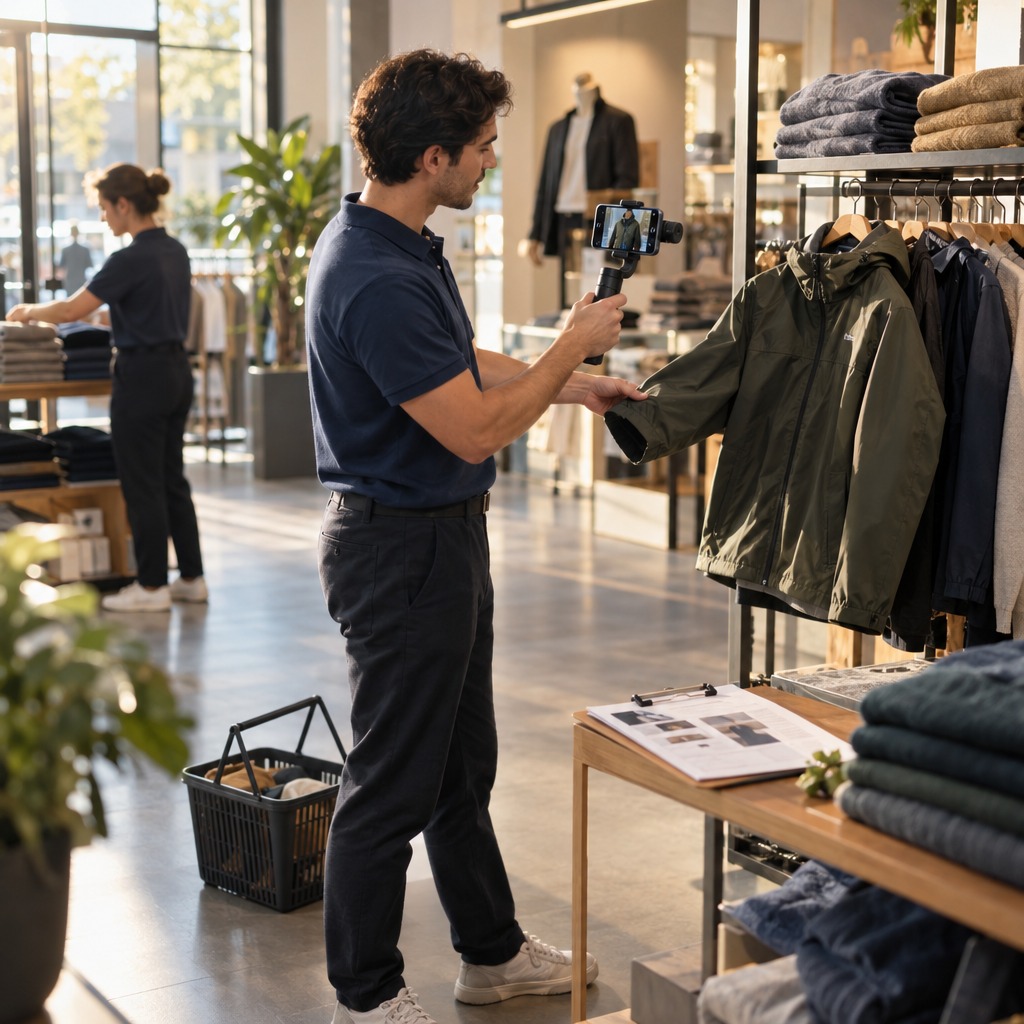
Seventy-eight percent of consumers in a Harris Poll said employee posts feel more authentic than content from official corporate accounts. Your store teams already have that credibility. Most retailers just hand them nothing to work with. This guide covers employee generated content formats and gives you a creative brief template your retail teams can use this week.
Why retail is the natural home for EGC
Retail employees touch product all day. They hear the objections, watch the returns, and know which fitting room question comes up forty times a Saturday.
The Harris Poll findings reported by the U.S. Chamber of Commerce back this up. In that survey, 74% of respondents considered employees more influential than a company’s traditional marketing in shaping a brand, and 70% said they would buy from or support a company after seeing a real employee share their experience.
The same report flags the catch: only about two-thirds of employees ever post about their employer. Many want to keep work and personal life separate. So the problem is rarely demand. It’s friction, fear, and unclear rules.
EGC fails in retail for operational reasons, not creative ones. A one-page brief removes the two biggest blockers: “what do I say?” and “am I allowed?”
The five formats worth briefing
Don’t brief “a TikTok.” Brief a format. Each one below has a different effort level, risk profile, and job to do.
1. Behind-the-scenes drops
New stock arriving, a window being dressed, a store reset at 7 a.m. Low effort, low risk, high curiosity. Best for awareness and for showing the store as a place worth visiting.
2. Day-in-the-life
One employee, one shift, three to five beats. Modern Retail’s reporting names day-in-the-life videos and behind-the-scenes product looks as examples of what employees film and publish in EGC. They build familiarity, which is slow ROI but durable.
3. Floor expertise explainers
“How to tell if a boot fits” or “three things I tell every first-time buyer.” This is your conversion format. It borrows the employee’s product knowledge and answers the pre-purchase question directly.
4. Customer moment recreations
Staff act out the most common in-store question or objection, with consent from anyone who appears. Funny, relatable, shareable. Watch the humor guardrails, though. Our guide to meme briefs that pass review covers how to keep jokes brand-safe.
5. Honest product picks
A staff favorite, a “returned most” item, a “what I’d actually buy.” High trust, higher claim risk. Anything touching performance or results needs review before posting.
Where formats sit on the effort and risk scale
- Lowest risk: behind-the-scenes, day-in-the-life (no product claims, no customers on camera).
- Medium risk: floor expertise explainers (claims about fit, material, use).
- Highest risk: customer recreations and honest picks (consent, claims, disclosure).
Start new programs in the first group. Graduate stores to the others once they’ve shown they can follow the brief.
The creative brief template
Keep it to one page. If a part-time associate can’t read it in two minutes at the stockroom door, it’s too long. Here’s the structure I’d use, field by field.
- Objective (one line). Pick one: awareness, footfall, product education, or recruitment. Example: “Show new-arrival boots and drive weekend visits to the flagship.”
- Format. Name it from the list above. One format per brief.
- The single message. One idea the viewer should remember. If you have two, you need two briefs.
- Hook options. Give three opening lines or visuals, and invite the employee to write a fourth in their own words. Scripts read as ads. Prompts read as people.
- Required beats. Three to five bullet moments, such as “show the product in hand,” “say one thing you’d tell a customer,” “end on the store location.”
- Must-include. Disclosure language, store tag, hashtag, and any product name spelled correctly.
- Must-avoid. Pricing claims, medical or performance claims, competitor mentions, unreleased product, customers’ faces without signed release, confidential sales data.
- Filming logistics. Vertical, 15 to 45 seconds, natural light, shot during agreed windows (not mid-rush), phone is fine.
- Approval path. Who reviews, how fast (24 hours is a good target), and what happens on silence.
- Success measure. The one metric you’ll check: saves, store-tag visits, link clicks, or direct messages asking about a product.
- Opt-out line. A plain sentence: participation is voluntary and declining has no consequences.
That last field matters more than it looks. The Harris report summarized by the Chamber found that 36% of employees weren’t confident they could share honest opinions about their employer online without fear of retaliation. A brief that ignores this produces stiff, nervous videos. Or none.
Disclosure: the part retail teams skip
Here’s the question legal will ask first. Does an employee have to disclose that they work for you?
Generally, yes, when the post works as an endorsement. The FTC’s guidance says that if an ad features an endorser who is an employee of the marketer, it is misleading unless the connection is made clear. A store associate recommending your product from the shop floor falls squarely in that territory.
The FTC also noted, in announcing its updated Endorsement Guides, that reviews by employees are among the issues the revised guides address. Treat that as a signal, not a footnote.
Practical rules for your brief:
- Put the disclosure in the video itself (spoken or on-screen), not only in a caption or bio.
- Use plain wording: “I work at [Brand]” or “I work at [Store].” Don’t hide it in a pile of hashtags.
- Apply the rule to employees who post on their own, too, and train for it in onboarding.
For wording that holds up without killing performance, see our breakdown of disclosure scripting that still converts. I’m not your lawyer, so run the final language past counsel.
Approvals that don’t kill momentum
Slow review is the quiet killer of EGC. A video about Saturday’s window display is stale by Tuesday.
Tier it. Behind-the-scenes content with no claims can go through a store manager checklist. Explainers and product picks go to a brand reviewer. Anything with customers or performance language goes to legal. We lay out the logic in our piece on tiered approval workflows, and it transfers cleanly to human-shot content.
Learning from Starbucks and Mephisto
Two retail examples show the range. According to Modern Retail, Mephisto’s USA CEO went looking for a store manager who could sell shoes and create content every day, with the hire treated as an affiliate on top of a base salary. That’s EGC as a job description.
Starbucks sits at the other end. The same report says the company is piloting a program with TikTok’s Creator Network where it shares content briefs and compensates select employee creators through ad revenue sharing. It also says Starbucks employees already post three times more than employees at similarly sized retailers, much of it outside the formal program.
The lesson for mid-market teams: formalize gently. Briefs and support, yes. Scripts that flatten personality, no. Some of the best Starbucks content, per the article, doesn’t push product at all.
Brief the outcome and the guardrails. Let the employee own the voice. The moment a video sounds like a press release, you’ve paid for an ad that looks like EGC.
Measuring whether the brief worked
Judge each format against its own job. Behind-the-scenes content should earn reach and follows. Explainers should earn saves and product-page clicks. Honest picks should earn direct messages and store visits.
Use a unique store hashtag or tracked link per format so you can compare. After six to eight posts per store, review which formats and which employees consistently outperform, then give those people more support, not more rules.
One shoot can also feed several channels. Our guide to repurposing a single shoot shows how to cut variants without restarting approvals.
FAQs
What is employee generated content?
It is content created and published by a company’s staff about their work, products, or workplace. In retail, that usually means short videos shot on the shop floor, such as product explainers, behind-the-scenes looks, and day-in-the-life clips.
Do employees need to disclose they work for the brand?
In most cases, yes. FTC guidance says an endorsement from an employee of the marketer is misleading unless the connection is made clear. Build a clear, in-video disclosure into every brief and confirm final wording with your legal team.
Should we pay employees for creating content?
It depends on your program. Mephisto treats its content-creating hire as an affiliate on top of a base salary, and Starbucks’ TikTok pilot compensates select creators through ad revenue sharing. At minimum, make participation voluntary and decide upfront whether content creation counts as paid work time.
How long should an EGC brief be?
One page. Include the objective, format, single message, hook options, required beats, must-include and must-avoid items, approval path, and one success metric. Longer briefs get ignored on a busy shop floor.
Which format should a retailer start with?
Start with behind-the-scenes or day-in-the-life content. Neither involves product claims or customers on camera, so legal risk is low and stores can build confidence before moving to explainers and product picks.
How do we keep EGC authentic when we provide a brief?
Offer hook options instead of full scripts, and invite employees to add their own line. Keep the must-avoid list short and specific. Authenticity breaks when the video is recited, not when it’s guided.
Next step: pick one store, one low-risk format, and one metric, then run the one-page brief above with three willing employees for two weeks before you scale.
Top Influencer Marketing Agencies
The leading agencies shaping influencer marketing in 2026
Agencies ranked by campaign performance, client diversity, platform expertise, proven ROI, industry recognition, and client satisfaction. Assessed through verified case studies, reviews, and industry consultations.
Moburst

-
2

The Shelf
Boutique Beauty & Lifestyle Influencer AgencyA data-driven boutique agency specializing exclusively in beauty, wellness, and lifestyle influencer campaigns on Instagram and TikTok. Best for brands already focused on the beauty/personal care space that need curated, aesthetic-driven content.Clients: Pepsi, The Honest Company, Hims, Elf Cosmetics, Pure LeafVisit The Shelf → -
3

Audiencly
Niche Gaming & Esports Influencer AgencyA specialized agency focused exclusively on gaming and esports creators on YouTube, Twitch, and TikTok. Ideal if your campaign is 100% gaming-focused — from game launches to hardware and esports events.Clients: Epic Games, NordVPN, Ubisoft, Wargaming, Tencent GamesVisit Audiencly → -
4

Viral Nation
Global Influencer Marketing & Talent AgencyA dual talent management and marketing agency with proprietary brand safety tools and a global creator network spanning nano-influencers to celebrities across all major platforms.Clients: Meta, Activision Blizzard, Energizer, Aston Martin, WalmartVisit Viral Nation → -
5

The Influencer Marketing Factory
TikTok, Instagram & YouTube CampaignsA full-service agency with strong TikTok expertise, offering end-to-end campaign management from influencer discovery through performance reporting with a focus on platform-native content.Clients: Google, Snapchat, Universal Music, Bumble, YelpVisit TIMF → -
6

NeoReach
Enterprise Analytics & Influencer CampaignsAn enterprise-focused agency combining managed campaigns with a powerful self-service data platform for influencer search, audience analytics, and attribution modeling.Clients: Amazon, Airbnb, Netflix, Honda, The New York TimesVisit NeoReach → -
7

Ubiquitous
Creator-First Marketing PlatformA tech-driven platform combining self-service tools with managed campaign options, emphasizing speed and scalability for brands managing multiple influencer relationships.Clients: Lyft, Disney, Target, American Eagle, NetflixVisit Ubiquitous → -
8

Obviously
Scalable Enterprise Influencer CampaignsA tech-enabled agency built for high-volume campaigns, coordinating hundreds of creators simultaneously with end-to-end logistics, content rights management, and product seeding.Clients: Google, Ulta Beauty, Converse, AmazonVisit Obviously →