


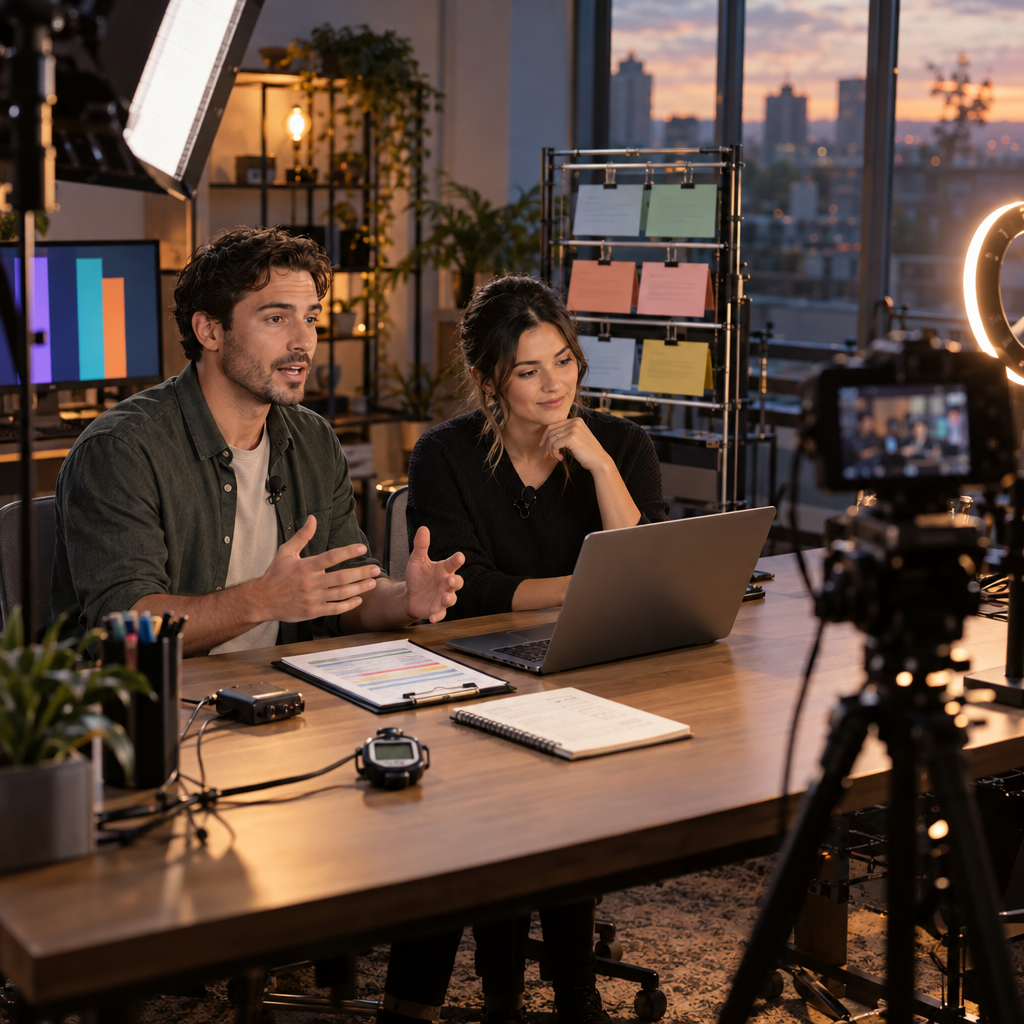
Livestreaming is no longer a side channel, and Streams Charts reports that the global market passed 30 billion hours watched in a single quarter, with TikTok alone passing 10 billion. That is not a niche channel anymore. Yet most brand lives still run on a talking-points doc and hope. Scripting live formats for the YouTube and TikTok live viewership surge means building a repeatable run of show that survives chat chaos, legal review and a CFO’s questions.
The numbers behind the surge
Streams Charts’ quarterly report is the cleanest read on where attention is going. Its Q4 2025 analysis says the global livestreaming market surpassed 30 billion hours watched. The Streams Charts report also says YouTube remained the largest platform by total watch time, with roughly 35% more than its closest competitor.
One detail matters more to brand teams than the headline. The same Streams Charts report says TikTok had the lowest share of gaming content among the top services, at under 15% of total viewership. So the growth is not only gamers watching gamers. Shopping, talk, education and everyday-life streams are filling the room.
That changes who you can brief. A skincare brand, a B2B software company and a home goods retailer all have a plausible audience now.
Why live punishes unscripted brands
Live has no retakes. A scripted TikTok video can be trimmed until the claim is clean. A two-hour stream cannot. Every offhand comparison, every “this cured my…” aside and every forgotten disclosure goes out in real time and sits in the VOD.
“Scripted” does not mean robotic. It means you decide in advance what must happen, when, and what happens if it does not. The creator owns the voice. The brand owns the skeleton.
Script the structure, not the sentences. Fixed segments, fixed disclosure moments and fixed claims, with the creator’s voice filling everything in between.
The five-part live skeleton
The most reliable live formats share a spine. Think of it as a template you can reuse across creators, much like the repeatable creator formats approach for short video. Here is the version I recommend briefing.
- The cold open (first 3 minutes). A reason to stay, a first disclosure, and a promise of what is coming. Live audiences arrive in a trickle, so do not hide the best material here.
- The anchor segment (10-15 minutes). The core demo, tutorial or story. This is where approved claims live, so write them on a card the creator can see.
- The chat segment. Pre-seeded questions plus live ones. Prepare answers for the five questions you know will come (price, shipping, ingredients, comparisons, results).
- The offer beat. One clear call to action with a visible reason to act now.
- The reset loop. Restate the hook every 15 to 20 minutes for people who just joined, then repeat the disclosure.
The reset loop is the piece most teams skip. Live viewers drop in constantly, so the stream is really a series of fresh openings. If you are already testing openers on short video, the logic in scripted openers carries over directly.
Platform differences that change the script
YouTube and TikTok reward different behavior, so one script rarely fits both.
- YouTube Live tolerates longer arcs. The stream lives on as a VOD, so write segments that can be clipped, chaptered and watched later. Pinned comments and descriptions can carry links and disclosures.
- TikTok LIVE is about momentum inside the room. Shorter segments, faster pacing, and an offer that can be acted on without leaving the app. For commerce-led streams, see how a launch run of show is structured in practice.
Does that mean two scripts? Not quite. Keep one skeleton and swap the pacing and the call to action. Build once, adapt twice.
Disclosure belongs in the script, not the footnotes
Compliance is where live formats quietly go wrong. The FTC’s Disclosures 101 guidance says that for an endorsement made in a live stream, the disclosure should be repeated periodically so viewers who catch only part of the stream still see it. It also says viewers are more likely to notice disclosures made in both audio and video.
So write it in. Put a disclosure line in the cold open, in every reset loop, and in the offer beat. Add an on-screen text overlay and a pinned comment. Use plain language, such as thanks to the brand for the free product, rather than vague tags.
Who checks it? Assign a producer or community manager as a compliance monitor with authority to cue the creator. For Q&A-heavy formats, the disclosure patterns in AMA livestream scripting are a useful model.
Build a claims card and a “do not say” list
Chat is where improvisation gets risky. A viewer asks whether the product works for a medical condition, and a friendly creator says yes.
Give every host a one-page claims card with three columns: approved claims, claims that need substantiation on screen, and phrases to avoid. Add a graceful deflection line for off-limits questions. Something like “I can only speak to what I have tested, and the brand’s page has the details.”
Rehearse it. A fifteen-minute dry run with a producer playing hostile chat catches more problems than any legal memo.
Measure the stream, then measure what comes after
Live ROI is slippery because purchases do not all happen in the room. TikTok Shop is trying to address that. According to PPC Land’s coverage, a new Brand LIVE Impact module credits a brand’s livestreams with sales made up to 14 days after a viewer interacts with a product in the live room, including purchases on the brand’s own website. The same piece notes the module is limited to certain brand tiers and self-operated accounts, so creator-hosted streams on accounts the brand does not run fall outside its scope as described.
Two practical lessons follow. First, do not judge a stream on in-room sales alone. Second, agree on attribution rules with your finance team before the stream, not after, because the same coverage warns that shared Pixels may double count.
Track these for every live:
- Unique viewers and average watch time per segment
- Chat questions answered versus unanswered
- Offer beat conversion, in room and over the following two weeks
- Disclosure delivery: was it said and shown at every scheduled beat?
- Clips and VOD views generated afterward
A live stream is a pilot episode. Review the segment-level data, rewrite the weakest beat, and run it again.
Turning one live into a series
Single streams spike and fade. Series compound. Pick a recurring slot, a recurring segment name and a recurring offer mechanic so audiences know what they are showing up for. Cost drops too, because the template does the heavy lifting, as covered in templated creator series.
Use urgency honestly. A real inventory limit or a real end time works. A fake countdown does not, and it creates a legal problem. The guardrails in countdown urgency scripting apply equally to live offers.
Then recycle. Clip the anchor segment, pull the best chat answers into short replies, and feed the next stream’s pre-seeded questions from what viewers asked this time.
FAQs
How long should a branded live stream be?
Long enough to run the full skeleton and at least two reset loops, which usually means 45 to 90 minutes. Start shorter on TikTok LIVE and test longer YouTube sessions once you have retention data from your own streams.
Should we script a live stream word for word?
No. Script the segment order, approved claims, disclosure timing and the offer. Let the creator handle phrasing and personality, because audiences notice when a host is reading.
How often must creators disclose a partnership during a live stream?
The FTC says disclosures in a live stream should be repeated periodically so late joiners see them. In practice, build them into the open, every reset loop and the offer beat, and show them on screen as well as saying them aloud.
How do we measure live stream ROI?
Look beyond in-room sales. TikTok Shop’s Brand LIVE Impact module, available to eligible brand tiers, credits sales up to 14 days after a viewer interacts with a product in the live room. Whatever tool you use, set attribution rules with finance ahead of time and track post-stream VOD and clip performance.
Do we need different scripts for YouTube Live and TikTok LIVE?
Use one skeleton and adapt pacing and calls to action. YouTube suits longer, clip-friendly segments with VOD value. TikTok favors shorter beats and in-app offers.
What is the biggest risk in live brand content?
Unscripted claims and missed disclosures. Both are preventable with a claims card, a compliance monitor and a rehearsal.
Next step: draft one reusable five-part skeleton this week, run a fifteen-minute rehearsal with hostile chat, and pilot it on a single stream with disclosure and attribution rules signed off beforehand.
Top Influencer Marketing Agencies
The leading agencies shaping influencer marketing in 2026
Agencies ranked by campaign performance, client diversity, platform expertise, proven ROI, industry recognition, and client satisfaction. Assessed through verified case studies, reviews, and industry consultations.
Moburst

-
2

The Shelf
Boutique Beauty & Lifestyle Influencer AgencyA data-driven boutique agency specializing exclusively in beauty, wellness, and lifestyle influencer campaigns on Instagram and TikTok. Best for brands already focused on the beauty/personal care space that need curated, aesthetic-driven content.Clients: Pepsi, The Honest Company, Hims, Elf Cosmetics, Pure LeafVisit The Shelf → -
3

Audiencly
Niche Gaming & Esports Influencer AgencyA specialized agency focused exclusively on gaming and esports creators on YouTube, Twitch, and TikTok. Ideal if your campaign is 100% gaming-focused — from game launches to hardware and esports events.Clients: Epic Games, NordVPN, Ubisoft, Wargaming, Tencent GamesVisit Audiencly → -
4

Viral Nation
Global Influencer Marketing & Talent AgencyA dual talent management and marketing agency with proprietary brand safety tools and a global creator network spanning nano-influencers to celebrities across all major platforms.Clients: Meta, Activision Blizzard, Energizer, Aston Martin, WalmartVisit Viral Nation → -
5

The Influencer Marketing Factory
TikTok, Instagram & YouTube CampaignsA full-service agency with strong TikTok expertise, offering end-to-end campaign management from influencer discovery through performance reporting with a focus on platform-native content.Clients: Google, Snapchat, Universal Music, Bumble, YelpVisit TIMF → -
6

NeoReach
Enterprise Analytics & Influencer CampaignsAn enterprise-focused agency combining managed campaigns with a powerful self-service data platform for influencer search, audience analytics, and attribution modeling.Clients: Amazon, Airbnb, Netflix, Honda, The New York TimesVisit NeoReach → -
7

Ubiquitous
Creator-First Marketing PlatformA tech-driven platform combining self-service tools with managed campaign options, emphasizing speed and scalability for brands managing multiple influencer relationships.Clients: Lyft, Disney, Target, American Eagle, NetflixVisit Ubiquitous → -
8

Obviously
Scalable Enterprise Influencer CampaignsA tech-enabled agency built for high-volume campaigns, coordinating hundreds of creators simultaneously with end-to-end logistics, content rights management, and product seeding.Clients: Google, Ulta Beauty, Converse, AmazonVisit Obviously →